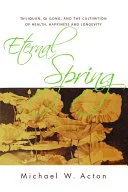
Eternal Spring
 80
80

Eternal Spring
Michael W. Acton’s *Eternal Spring* attempts to bridge the gap between Eastern movement arts and Western sensibilities, a commendable goal for a 2009 publication. The book’s strength lies in its clear articulation of how Taijiquan and Qi Gong can serve as potent antidotes to contemporary stressors. Acton effectively positions these practices as holistic strategies for health and rejuvenation, moving beyond a purely physical interpretation. However, the text occasionally leans toward a generalized Western framework, sometimes glossing over nuances that might be critical for deeper understanding. A passage discussing the concept of 'emptiness' in relation to mental calm, while well-intentioned, could benefit from more rigorous engagement with its philosophical roots. Overall, *Eternal Spring* provides a functional, if somewhat generalized, introduction for those new to these disciplines.
📝 Description
80
Michael W. Acton's 2009 book, Eternal Spring, translates Taijiquan and Qi Gong for Western practitioners.
Published in 2009, Eternal Spring by Michael W. Acton offers a Western perspective on the core theories and practices of Taijiquan and Qi Gong. Acton's aim was to clarify these Chinese disciplines, presenting them as complete systems for improving health, not simply as martial arts or exercises. The book is intended for people looking for practical ways to handle the pressures of contemporary Western life. It speaks to those who want to build better health, happiness, and a feeling of renewal through simple, usable techniques grounded in Eastern philosophies.
Acton writes at a time when global interest in Eastern philosophies and practices had grown considerably in the late 20th and early 21st centuries. As Western audiences became more receptive to alternative health and wellness approaches, books explaining complex traditions like Taijiquan and Qi Gong for a local audience gained importance. The book discusses the basic ideas of Qi, or vital energy, and how to cultivate it using particular movements and breathwork. It shows Taijiquan and Qi Gong as combined methods for physical health, mental focus, and emotional stability, suggesting a way to achieve lasting energy and a stronger constitution.
Eternal Spring enters a tradition of Westerners interpreting and adapting Eastern spiritual and health practices. For centuries, figures have sought to bring concepts like meditation, yoga, and martial arts from Asia to a Western audience, often recontextualizing them within existing Western frameworks. Acton's work follows this pattern, translating the principles of Qi and energy cultivation from Taijiquan and Qi Gong into terms understandable to those unfamiliar with traditional Chinese cosmology, aiming to make these practices accessible for personal development and health.
💡 Why Read This Book?
• Learn specific Qi Gong breathing techniques that Acton details for stress reduction, offering a tangible method to cultivate inner calm beyond generic advice. • Understand the foundational principles of Taijiquan, as explained in the book’s 2009 publication context, to see how its slow, deliberate movements promote physical and mental resilience. • Discover how the integration of Taijiquan and Qi Gong, as presented in Acton’s work, can be applied as a comprehensive strategy for combating daily strains and fostering personal rejuvenation.
⭐ Reader Reviews
Honest opinions from readers who have explored this book.
❓ Frequently Asked Questions
When was Michael W. Acton's 'Eternal Spring' first published?
Michael W. Acton's 'Eternal Spring' was first published in 2009, making it a relatively contemporary guide to Taijiquan and Qi Gong for Western readers.
What is the primary focus of 'Eternal Spring' regarding Taijiquan and Qi Gong?
The book focuses on explaining the essential theories and strategies of Taijiquan and Qi Gong for a Western audience, highlighting their value in daily life for combating stress and illness.
Does 'Eternal Spring' offer practical advice for health and happiness?
Yes, Acton positions Taijiquan and Qi Gong as comprehensive strategies for health, happiness, and rejuvenation, offering practical applications for improving well-being.
Is 'Eternal Spring' suitable for beginners in Eastern practices?
The book is written for a Western audience and explains theories and strategies in an insightful way, suggesting it is accessible to those new to Taijiquan and Qi Gong.
What is the book's perspective on the benefits of these practices?
It expounds their value as an effective means of combating stresses, strains, and illnesses, presenting them as tools for sustained vitality and personal balance.
Who is the intended audience for 'Eternal Spring'?
The intended audience is Western individuals interested in understanding and applying the principles of Taijiquan and Qi Gong for improved health, stress management, and overall life quality.
🔮 Key Themes & Symbolism
Qi Cultivation for Well-being
The work systematically details the concept of Qi, or vital energy, as understood in traditional Chinese medicine and martial arts. Acton explains how practices like Qi Gong and Taijiquan are not merely physical exercises but sophisticated methods for cultivating, balancing, and directing this energy. The book explores how the deliberate movements and focused breathing prescribed in these disciplines can enhance the flow of Qi throughout the body, thereby addressing blockages that may contribute to physical ailments and mental fatigue. This theme positions energy work as central to achieving a state of holistic health and internal harmony.
Stress as a Modern Ailment
Eternal Spring frames contemporary Western life as a significant source of chronic stress, strain, and related illnesses. Acton argues that the fast-paced, often disconnected nature of modern existence disrupts natural energetic and psychological equilibrium. The book then presents Taijiquan and Qi Gong as direct counter-measures, offering practical techniques to mitigate these detrimental effects. It emphasizes how the mindful practice of these arts can foster resilience, promote relaxation, and provide a much-needed anchor of calm amidst daily pressures and anxieties.
Rejuvenation Through Ancient Practice
A central thesis of the book is that consistent engagement with Taijiquan and Qi Gong can lead to profound rejuvenation, impacting physical vitality, mental clarity, and emotional well-being. Acton explains how these practices contribute to a cyclical process of renewal, combating the effects of aging and weariness. By harmonizing the body's energies and calming the mind, practitioners can achieve a sustained sense of vigor and aliveness. This theme underscores the book's promise of a path toward lasting health and a more vibrant existence.
Western Adaptation of Eastern Arts
Recognizing its target audience, Eternal Spring focuses on presenting the core theories and strategies of Taijiquan and Qi Gong in a manner that is accessible and relevant to Western readers. The book seeks to translate complex concepts and practices into a framework that speaks to contemporary life and understanding, without necessarily sacrificing the integrity of the original disciplines. This adaptation aims to make the benefits of these ancient arts available and applicable to individuals working through the specific challenges of a Western cultural context.
💬 Memorable Quotes
Direct passages from the work, attributed to the author.
“Taijiquan and Qi Gong offer comprehensive strategies for health, happiness, and rejuvenation.”
— This statement expresses the book's core argument, presenting these ancient Chinese practices not just as exercises, but as integrated systems for holistic well-being applicable to modern Western life.
“The work expounds their value in our daily lives as an effective means of combating stresses, strains and illnesses.”
— This highlights the practical utility of the disciplines discussed, emphasizing their role as potent tools for managing the everyday pressures and health challenges faced by contemporary individuals.
“Written for a Western audience, it explains essential theories and strategies in an insightful way.”
— This points to the book's accessibility and its aim to clarify complex Eastern concepts for readers unfamiliar with their origins, offering clear explanations tailored to a Western perspective.
“It elucidates their value in combating contemporary stresses and ailments.”
— This interpretation focuses on the remedial aspects of the practices, suggesting the book provides insights into how Taijiquan and Qi Gong can serve as effective antidotes to the specific health issues arising from modern lifestyles.
💡 Key Ideas
Editorial paraphrase of the work's core concepts — not direct quotes.
Positioning these disciplines as comprehensive strategies for health, happiness and rejuvenation.
This paraphrased concept emphasizes the integrated approach the book advocates, suggesting that Taijiquan and Qi Gong address multiple facets of well-being, from physical health to emotional contentment.
🌙 Esoteric Significance
Tradition
While not strictly adhering to a single esoteric lineage, *Eternal Spring* draws heavily from Taoist principles that underpin many Eastern esoteric traditions. The emphasis on cultivating Qi (vital energy), harmonizing Yin and Yang, and aligning with the natural flow of the Tao connects it to Hermeticism's focus on correspondence and the manipulation of subtle energies. It positions these practices as methods for achieving inner balance and longevity, echoing alchemical pursuits of transformation and renewal, albeit through physical and energetic cultivation rather than purely spiritual or chemical means.
Symbolism
The concept of 'Qi' itself is a primary symbolic element, representing the fundamental life force that animates all existence. Within the book, Qi's flow and balance are central, symbolizing health and vitality, while stagnation or imbalance signifies illness. The slow, circular movements of Taijiquan are also symbolic, representing the cyclical nature of life, the continuous transformation of energy, and the interconnectedness of all things—a recurring motif in many esoteric cosmologies. The notion of 'Spring' in the title symbolizes renewal, growth, and the overcoming of winter's dormancy, aligning with esoteric themes of rebirth and regeneration.
Modern Relevance
Acton's work remains relevant for contemporary practitioners and thinkers interested in somatic practices for mental and physical health. Its accessible explanation of Qi Gong and Taijiquan speaks to modern fields like mindfulness-based stress reduction (MBSR) and somatic psychology, which explore the body's role in emotional regulation and healing. Thinkers and practitioners in the burgeoning field of embodied cognition and those exploring integrated approaches to wellness, blending Eastern philosophy with Western science, often find such foundational texts valuable for understanding the historical and theoretical underpinnings of these practices.
👥 Who Should Read This Book
• Individuals experiencing chronic stress or seeking non-pharmacological methods for managing physical ailments, who will gain practical techniques for energy cultivation and relaxation. • Students of comparative philosophy and Eastern traditions, particularly Taoism, who will find an accessible explanation of core concepts like Qi and its role in well-being. • Anyone interested in developing a consistent personal practice for enhanced health, vitality, and a greater sense of inner balance, who will benefit from Acton's strategies for rejuvenation.
📜 Historical Context
Published in 2009, Michael W. Acton's *Eternal Spring* arrived during a period of heightened global interest in Eastern contemplative and movement practices, a trend amplified throughout the late 20th and early 21st centuries. Western societies were increasingly receptive to alternative health modalities, seeking ways to counter the perceived stresses of industrialized life. Books like Acton's aimed to bridge cultural divides, translating complex traditions like Taijiquan and Qi Gong for a Western readership. This era saw a proliferation of such texts, often appearing alongside works on yoga, meditation, and martial arts. While Acton's work focuses on the practical health benefits, it emerged in dialogue with a broader intellectual current that valued the integration of mind, body, and spirit. Contemporaries like Stephen Mitchell, who translated Lao Tzu's *Tao Te Ching* in 1988, were also making ancient Eastern wisdom more accessible. Acton's contribution lies in its specific focus on the therapeutic applications of Taijiquan and Qi Gong, offering a Western-oriented framework for understanding their efficacy.
📔 Journal Prompts
The concept of Qi cultivation as presented in the 2009 text.
Strategies for combating daily stresses through Taijiquan movements.
The practice of Qi Gong for achieving personal rejuvenation.
Western audience interpretation of Eastern energy theories.
Balancing health, happiness, and vitality through integrated disciplines.
🗂️ Glossary
Taijiquan
A traditional Chinese martial art practiced for both its defensive applications and its health benefits. Known for its slow, flowing, and deliberate movements, it is often described as 'meditation in motion'.
Qi Gong
A system of coordinated body posture and movement, breathing, and meditation used for health, spirituality, and martial arts training. It involves cultivating and balancing Qi (vital energy).
Qi
Often translated as 'vital energy' or 'life force,' Qi is a fundamental concept in Traditional Chinese Medicine and Taoism. It is believed to animate all living things and influence health and vitality.
Rejuvenation
The process of making something or someone look or feel younger, fresher, or more lively. In the context of the book, it refers to restoring vitality and health through practice.
Stress
A state of mental or emotional strain or tension resulting from adverse or demanding circumstances. The book positions Taijiquan and Qi Gong as antidotes to this condition.
Western audience
Refers to readers from cultures originating in Europe and North America, for whom the book's explanations and framing of Taijiquan and Qi Gong are specifically adapted.
Comprehensive strategies
An approach that addresses all or most aspects of a problem or situation. The book presents Taijiquan and Qi Gong as such for health and well-being.