Reading Neoplatonism

 81
81

Reading Neoplatonism
Sara Rappe’s Reading Neoplatonism presents a commendable effort to demystify a dense philosophical tradition. The strength of the work lies in its meticulous unpacking of core Neoplatonic concepts, particularly the emanationist cosmology originating from The One. Rappe’s analysis of the relationship between Plotinus’s thought and its later Christian reception is particularly illuminating. However, the text occasionally suffers from an academic dryness that might alienate readers less familiar with philosophical jargon; the section on Porphyry’s commentaries, while important, could benefit from more direct contextualization for the uninitiated. A particularly striking point is the exploration of the Neoplatonic concept of henosis, the union with The One, as a goal achievable through intellectual discipline rather than sheer faith.
Ultimately, Rappe provides a solid academic resource for understanding Neoplatonism’s foundational ideas.
📝 Description
81
Sara Rappe's Reading Neoplatonism examines a philosophical system that shaped Western thought from its origins.
This book unpacks the core tenets of Neoplatonism and traces its impact across intellectual and spiritual traditions. Rappe structures the work to guide readers through foundational ideas with clarity. Neoplatonism began in the 3rd century CE, a time of intellectual and religious change in the Roman Empire. Thinkers like Plotinus synthesized Platonic philosophy with other ideas to create a complex metaphysical system. This movement connected ancient pagan philosophy with later monotheistic religions, influencing figures such as Augustine of Hippo and Pseudo-Dionysius the Areopagite.
The book covers concepts like the One, the source of all reality; Intellect (Nous), the domain of Forms; and Soul, the force linking the divine and material worlds. It also discusses the Neoplatonic focus on mystical ascent, the soul's return to its divine origin through contemplation and purification.
Neoplatonism emerged as a synthesis of Platonic philosophy with other streams of thought in the 3rd century CE. It provided a metaphysical framework that profoundly influenced both pagan and later monotheistic traditions. Its emphasis on emanation from a single divine source, the nature of the Intellect and Soul, and the path of mystical ascent became central to many esoteric and mystical systems that followed, bridging classical antiquity and the medieval world.
💡 Why Read This Book?
• Gain a clear understanding of the Neoplatonic concept of 'The One' as the ultimate source of all existence, a foundational idea for many mystical traditions. • Grasp the philosophical underpinnings of Plotinus’s emanationist cosmology, essential for comprehending the development of Western esoteric thought after the 3rd century CE. • Explore the intellectual bridge Neoplatonism created between classical pagan philosophy and early Christian theology, offering context for figures like Augustine.
⭐ Reader Reviews
Honest opinions from readers who have explored this book.
❓ Frequently Asked Questions
What is the primary philosophical system discussed in Reading Neoplatonism?
The primary system is Neoplatonism, a philosophical and mystical tradition that emerged in the 3rd century CE. It is most famously associated with Plotinus and his successors, who developed complex metaphysical theories about emanation and the soul's ascent.
Who was Plotinus and why is he important to Neoplatonism?
Plotinus (c. 205 – 270 CE) is widely regarded as the founder of Neoplatonism. His philosophical system, recorded by his student Porphyry in the Enneads, laid the groundwork for subsequent Neoplatonic thought and profoundly influenced Western philosophy and religion.
How did Neoplatonism influence later religious traditions?
Neoplatonism significantly influenced early Christianity, Judaism, and Islam. Its concepts of emanation, the One, and mystical ascent provided philosophical frameworks for theologians and mystics seeking to explain the divine and the human relationship to it, notably impacting Augustine of Hippo.
What is the concept of 'emanation' in Neoplatonism?
Emanation in Neoplatonism describes the process by which all reality flows or proceeds from a single, transcendent source, The One, without diminishing The One itself. This is often depicted as a hierarchy of being, from the divine down to the material world.
What is the goal of the Neoplatonic path?
The ultimate goal of the Neoplatonic path is henosis, or union with The One. This is achieved through philosophical contemplation, intellectual purification, and ethical living, aiming to elevate the soul back to its divine origin.
When was Reading Neoplatonism first published?
Reading Neoplatonism was first published in 2000, offering a modern academic perspective on this ancient philosophical school.
🔮 Key Themes & Symbolism
The Hierarchical Cosmos
The work meticulously details the Neoplatonic cosmological model, originating from Plotinus. It explains how reality emanates from an ultimate, ineffable principle known as The One. This emanation proceeds through successive hypostases: Intellect (Nous), containing the Forms, and Soul, which bridges the intelligible and sensible realms. Understanding this hierarchy is crucial for grasping the Neoplatonic worldview, where everything is interconnected and ultimately derives its being from the divine source.
The Soul's Ascent
A central theme is the Neoplatonic doctrine of the soul's journey. The text explores how the individual soul, having descended into the material world, can strive for purification and return to its divine origin. This ascent is typically understood as a philosophical and ethical process, involving intellectual contemplation and detachment from material concerns. The concept of henosis, or mystical union with The One, represents the culmination of this spiritual journey.
Neoplatonism and Esotericism
Reading Neoplatonism illuminates the profound connections between this philosophical system and various esoteric traditions. Its emphasis on hidden knowledge, mystical experience, and the hierarchical structure of reality provided a philosophical bedrock for later movements such as Gnosticism, Hermeticism, and medieval Kabbalah. The book examines how Neoplatonic ideas were adapted and integrated into these diverse spiritual paths.
Influence on Western Thought
The text underscores the pervasive influence of Neoplatonism on the development of Western philosophy and theology. It traces its impact from late antiquity through the Renaissance and beyond, highlighting its role in shaping the thought of key figures like Augustine of Hippo and Pseudo-Dionysius the Areopagite. Understanding Neoplatonism is thus essential for comprehending the intellectual lineage of much of Western metaphysics and mysticism.
💬 Memorable Quotes
Direct passages from the work, attributed to the author.
“The One is beyond being and description.”
— This statement captures the apophatic theology central to Neoplatonism, particularly Plotinus's thought. It signifies that the ultimate reality is so transcendent that it cannot be defined by positive attributes, existing beyond the limitations of language and conceptualization.
“The soul's journey is a return to its source.”
— This captures the Neoplatonic goal of spiritual and intellectual ascent. It suggests that human consciousness, through philosophical discipline and purification, can re-orient itself towards its divine origin, moving away from the material world towards higher realities.
“Intellect (Nous) contains the perfect Forms.”
— This highlights the second hypostasis in the Neoplatonic hierarchy. Intellect is the realm where the eternal blueprints or archetypes of all things reside, derived from The One, and it serves as the source of intelligibility for the cosmos.
“Emanation is a necessary outflow, not a diminishment.”
— This explains how the multiplicity of the universe arises from the absolute simplicity of The One. The process is likened to light radiating from a source; the light does not deplete the source, but rather reflects its nature.
“The sensible world reflects the intelligible realm.”
— This points to the Neoplatonic belief in the interconnectedness of different levels of reality. The physical world is seen as an imperfect copy or manifestation of the perfect Forms existing in the area of Intellect, thus holding a degree of reality and intelligibility.
🌙 Esoteric Significance
Tradition
Neoplatonism serves as a foundational pillar for much of Western esotericism, particularly traditions rooted in Hermeticism, Gnosticism, and the Kabbalah. It provides a sophisticated metaphysical structure, emphasizing a transcendent One, hierarchical emanation, and the potential for human spiritual ascent. While not a religion itself, its philosophical concepts offered a framework for understanding mystical experiences and esoteric cosmologies that became central to these later traditions.
Symbolism
Key symbols within the Neoplatonic framework include The One, often represented by unity or the point, signifying the ultimate, ineffable source. The hierarchy of Nous (Intellect) and Soul represents the structure of reality, with the Soul acting as a mediator. The journey of the soul itself, often depicted as an ascent or return, symbolizes the process of spiritual purification and enlightenment sought in many esoteric practices.
Modern Relevance
Contemporary esoteric practitioners and scholars of mysticism continue to draw heavily on Neoplatonic thought. Its emphasis on the ascent of consciousness, the interconnectedness of all things, and the pursuit of union with the divine appeals to modern New Age spirituality, Western occultism, and certain contemplative Christian and Sufi mystical paths. Thinkers exploring consciousness studies and comparative mysticism often reference Plotinus and his successors.
👥 Who Should Read This Book
['• Students of classical philosophy and ancient history seeking a rigorous introduction to the Neoplatonic system and its historical context.', '• Scholars of comparative religion and theology interested in the philosophical underpinnings of early Christianity and its relationship to pagan thought.', '• Practitioners of Western esotericism exploring the roots of traditions like Hermeticism and the Kabbalah, seeking to understand foundational metaphysical concepts.']
📜 Historical Context
Emerging in the 3rd century CE, Neoplatonism arose during a period of intense philosophical and religious synthesis within the Roman Empire. Thinkers like Plotinus, whose ideas were compiled by Porphyry, sought to systematize Platonic philosophy, integrating elements from Aristotelianism, Stoicism, and mystical traditions. This intellectual project offered a sophisticated metaphysical framework that profoundly impacted both pagan and early Christian thought. It provided a coherent worldview distinct from prevailing Stoic materialism and nascent Gnostic dualisms. Porphyry himself, a student of Plotinus, played a central role in disseminating Neoplatonic ideas, engaging critically with traditions like Christianity and advocating for a sophisticated interpretation of ancient texts. The influence of Neoplatonism was so pervasive that it became a dominant philosophical current, shaping theological discourse for centuries and providing intellectual tools for figures like Augustine of Hippo.
📔 Journal Prompts
Reflect on the concept of The One as described in Neoplatonism.
Consider the Neoplatonic idea of the soul's ascent and its implications for personal growth.
Analyze the relationship between Plotinus's philosophy and early Christian theology.
Explore the concept of emanation and its role in creating the cosmos.
How does the Neoplatonic view of the sensible world differ from materialistic philosophies?
🗂️ Glossary
The One
The ultimate, transcendent, and ineffable principle from which all reality emanates in Neoplatonism. It is beyond being, thought, and description, representing absolute unity and perfection.
Nous (Intellect)
The second hypostasis in Neoplatonism, emanating from The One. It is the area of the Forms or Ideas, the intelligible world, and the source of all thought and order.
Soul (Psyche)
The third hypostasis, emanating from Nous. It bridges the intelligible and sensible worlds, animating the cosmos and individual beings. The human soul seeks to ascend back to its divine source.
Emanation
The Neoplatonic doctrine describing the process by which reality flows or proceeds from The One without diminishing it. It explains the derivation of the multiplicity of existence from absolute unity.
Henosis
The ultimate goal in Neoplatonism: mystical union or oneness with The One. It is achieved through philosophical discipline, purification, and contemplation.
Hypostasis
A fundamental reality or principle; a level of being within the Neoplatonic hierarchy, such as The One, Nous, and Soul.
Porphyry
A 3rd-century CE Neoplatonic philosopher and student of Plotinus, renowned for compiling and editing Plotinus's works into the Enneads, significantly shaping the transmission of Neoplatonic thought.
🔮 Readers Also Liked
Browse all →









More by Sara Rappe
All books →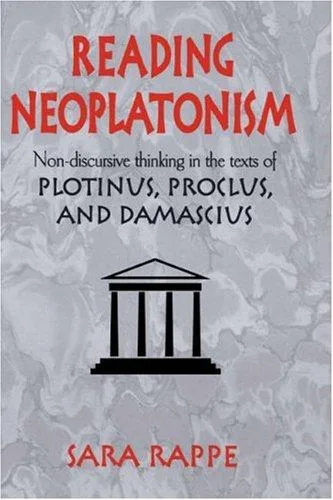


More Free Occult Philosophy Books
View all →