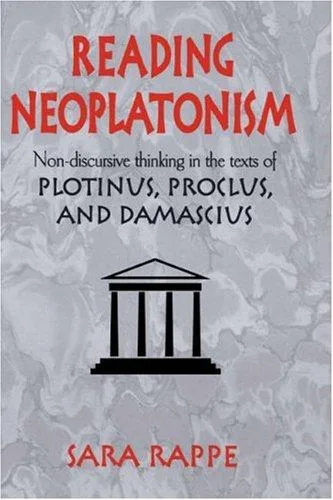
Sara Rappe
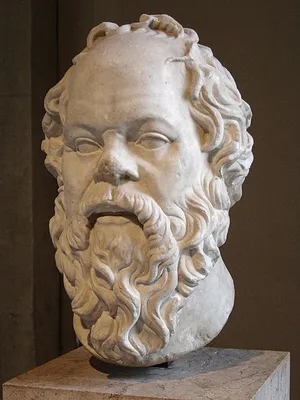
Socrates was an ancient Greek philosopher whose teachings, known through his students' writings, profoundly shaped Western thought despite the difficulty in reconstructing his exact philosophy.
Socrates, an influential philosopher from Classical Athens, is recognized as a foundational figure in Western moral philosophy and a significant inspiration to his student Plato. He did not leave behind any written works himself; our understanding of his ideas comes primarily from the accounts of his students, most notably Plato and Xenophon, as well as other classical writers. These accounts, often presented as dialogues, detail Socrates's method of questioning and examination, which gave rise to the Socratic dialogue literary genre. The differing and sometimes contradictory nature of these sources makes it challenging to definitively reconstruct Socrates's philosophy, a problem known as the Socratic problem.
Despite the challenges in accessing his original thought, Socrates's influence has been vast, impacting philosophers throughout antiquity and continuing into the modern era. His methods and ideas were studied by scholars across different cultures and historical periods, including the Italian Renaissance and by figures like Kierkegaard and Nietzsche. His enduring legacy is also evident in his pervasive presence in art, literature, and popular culture, solidifying his status as a central figure in the Western philosophical tradition.
The Socratic Problem and Sources
Reconstructing the historical Socrates and his precise philosophical views presents a significant challenge, termed the Socratic problem. This difficulty arises because Socrates himself authored no texts. Our knowledge is derived from the writings of his contemporaries and students, such as Plato, Xenophon, and the playwright Aristophanes, as well as later philosophers like Aristotle. These accounts, particularly those by Plato and Xenophon, are often contradictory, offering differing portrayals of Socrates's personality and philosophical tenets. Plato's dialogues, while extensive, are debated for their accuracy in representing Socrates's own views versus Plato's developing ideas. Xenophon's accounts are generally considered less philosophically rigorous, focusing more on Socrates's character and practical wisdom. Aristophanes's comedic portrayal offers a caricature, and Aristotle's analysis, while valuable, is limited in scope and often focused on Plato's early dialogues. The varied and sometimes conflicting nature of these sources makes a definitive historical reconstruction of Socrates's thought a complex endeavor.
Socratic Method and Influence
The Socratic method, as depicted in Plato's dialogues, is a distinctive approach to philosophical inquiry. It involves a process of rigorous questioning and answer, known as elenchus, where Socrates engages his interlocutors in examining concepts, often related to virtues, leading them to a state of recognized ignorance or impasse. Socrates famously professed his own lack of knowledge, stating his certainty only in his own ignorance. This dialectical approach, characterized by short questions and answers, aimed to expose inconsistencies in understanding and encourage deeper thought. The Socratic method and Socratic irony became enduring concepts, shaping subsequent philosophical discourse. Socrates's intellectual legacy has been profound, influencing generations of thinkers from ancient Greece through the medieval and Islamic worlds, the Renaissance humanists, and modern philosophers, cementing his position as a pivotal figure in the development of Western philosophy.
Key Ideas
- Socratic method (elenchus): A form of cooperative argumentative dialogue between individuals, based on asking and answering questions to stimulate critical thinking and draw out ideas and underlying presuppositions.
- Socratic irony: A rhetorical device where the speaker feigns ignorance to expose the ignorance or flaws in another's reasoning.
Books by Sara Rappe
4 free public domain books · Read online or download