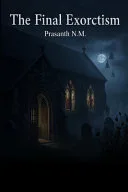
The Final Exorcism
 73
73

The Final Exorcism
Prasanth N M’s *The Final Exorcism* plunges into the heart of a parish where sacred ground becomes cursed territory. The author effectively crafts an atmosphere of dread, particularly in the scenes detailing Father Gabriel D'Souza's discovery of the forbidden ritual within the church crypt. The prose often carries a chilling weight, mirroring the spiritual decay described. However, the narrative occasionally falters in fully developing the complex theological underpinnings of the 'dark covenant' it introduces. The rapid escalation of events in the latter half, while propulsive, leaves some character motivations feeling underdeveloped. A particular strength lies in the depiction of how familiar religious practices, such as prayer, are subverted into tools of terror. The work’s central premise is potent, but its execution could benefit from more sustained exploration of the esoteric lore it hints at. Ultimately, *The Final Exorcism* offers a potent, if occasionally uneven, descent into spiritual corruption.
📝 Description
73
Prasanth N M's The Final Exorcism details events at Saint Helene's Church following the discovery of a forbidden ritual.
The narrative follows Father Gabriel D'Souza in a rural English parish as his discovery of a hidden, forbidden ritual unleashes a malevolent force. Saint Helene's Church becomes the center of a spiritual conflict, where the lines between divine protection and demonic influence blur. The story pits established church doctrine, personified by Bishop Anthony Vale, against Father Gabriel's pursuit of unearthed, dangerous knowledge.
The book draws on folklore and theological debate concerning possession and the efficacy of rites like the *Rituale Romanum*. It touches on anxieties about maintaining faith against resurfacing ancient evils. This work will appeal to those interested in theological horror, occult mysteries, and the darker aspects of faith, particularly concerning the Catholic Church's history with exorcism and demonology.
The novel engages with traditions of theological horror and occult lore, focusing on the Catholic Church's historical engagement with exorcism and demonology. It touches upon the concept of a 'dark covenant,' a pact with malevolent entities, and the corruption of sacred objects and rituals. The tension between orthodox doctrine and forbidden knowledge mirrors historical debates within esoteric circles regarding the boundaries of spiritual practice and the potential for ancient evils to manifest.
💡 Why Read This Book?
• Gain insight into the subversion of sacred rites, as demonstrated by Father Gabriel D'Souza’s encounter with the forbidden ritual in Saint Helene's Church, offering a unique perspective on how faith can be twisted. • Explore the concept of a 'dark covenant' as presented in the narrative, understanding how ancient agreements can manifest in contemporary settings and impact a community. • Experience a chilling depiction of faith tested by extreme supernatural forces, mirroring historical anxieties surrounding demonic possession and the power of ancient evils.
⭐ Reader Reviews
Honest opinions from readers who have explored this book.
❓ Frequently Asked Questions
When was *The Final Exorcism* first published?
The book *The Final Exorcism* by Prasanth N M was first published on November 17, 2025. This publication date places it within contemporary explorations of esoteric themes.
What is the primary setting for *The Final Exorcism*?
The primary setting for *The Final Exorcism* is a rural English parish, specifically within the confines of Saint Helene's Church and its crypt, creating an atmosphere of isolated dread.
Who are the main clerical figures involved in the events of the book?
The main clerical figures are Father Gabriel D'Souza, who unearths the forbidden ritual, and Bishop Anthony Vale, who represents the established church authority.
What is the central conflict in *The Final Exorcism*?
The central conflict involves the awakening of an ancient, malevolent force through a forbidden ritual, which turns the parish into a battleground between salvation and possession.
Does the book explore specific historical exorcism practices?
While fictional, the book draws upon the historical context and theological debates surrounding exorcism and demonic possession within the Catholic tradition, referencing sacred texts and rituals.
What kind of spiritual threat does the book describe?
The book describes a threat stemming from an ancient, dark covenant that blurs the lines between salvation and terror, manifesting as possessions and the corruption of sacred spaces.
🔮 Key Themes & Symbolism
Corruption of Sacred Space
The narrative powerfully illustrates how a place consecrated for divine worship, Saint Helene's Church, becomes a nexus for demonic influence. The discovery of a forbidden ritual within the crypt is not merely an act of transgression but a catalyst that actively corrupts the spiritual integrity of the parish. This theme questions the sanctity of established religious structures when confronted by ancient, unearthed malevolence, suggesting that even the holiest sites can become vessels for darkness.
Forbidden Knowledge and Ritual
Central to the plot is the unearthing of a forbidden ritual by Father Gabriel D'Souza. This highlights the esoteric principle that certain knowledge is dangerous and capable of unleashing forces beyond human control. The narrative explores the allure and peril of seeking power or answers outside orthodox doctrines, demonstrating how such pursuits can lead to possession and spiritual terror, twisting sacred texts and prayers into instruments of the profane.
The Nature of a Dark Covenant
The concept of a 'dark covenant' introduces a layer of ancient, binding agreements that exert influence over the present. This suggests a spiritual lineage of malevolence predating the current characters, operating through a pact that threatens to consume souls. The book uses this idea to explore the idea of inherited spiritual burdens and the persistent power of old pacts that can resurface, challenging the notion of individual salvation apart from historical spiritual contracts.
Faith vs. Terror
The core tension in *The Final Exorcism* lies in the struggle between faith and terror. As Father Gabriel D'Souza and Bishop Anthony Vale grapple with the escalating supernatural events, the narrative examines how religious belief is tested when confronted by palpable evil. Prayers become pronouncements of possession, and salvation seems indistinguishable from utter annihilation, forcing a re-evaluation of spiritual defenses and the very nature of divine protection against overwhelming darkness.
💬 Memorable Quotes
Direct passages from the work, attributed to the author.
“Sacred texts twisted and prayers turned into possession.”
— This phrase captures the perversion of religious practice central to the book's horror. It signifies a profound spiritual corruption where the tools of salvation become instruments of terror and control by malevolent forces.
“The parish itself became a vessel for a dark covenant.”
— This highlights the pervasive influence of an ancient pact. It suggests that the entire community and its spiritual infrastructure are compromised, acting as conduits for a sinister agreement that threatens to consume all inhabitants.
“An ancient faith, one that blurs the lines between salvation and terror.”
— This interpretation points to the discovery of a primal, dangerous form of belief. It signifies a spiritual power that is not benignly protective but inherently dualistic, capable of both deliverance and profound dread.
“A secret buried beneath centuries of stone and silence.”
— This evocative phrase suggests the hidden, long-dormant nature of the evil encountered. It implies that the threat is not new but has been waiting, concealed within the very foundations of the church and its history.
“He awakens an ancient faith.”
— This refers to the moment Father Gabriel D'Souza's actions disturb a dormant, powerful spiritual force. It implies the re-emergence of a belief system or power that predates current religious structures and carries significant, potentially dangerous, implications.
🌙 Esoteric Significance
Tradition
The work draws heavily from the Western Esoteric tradition, specifically touching upon themes within esoteric Christianity and demonology. It engages with the idea of hidden spiritual lineages and the corruptibility of sacred rites, concepts explored in various occult orders and mystical philosophies. While not explicitly Gnostic or Kabbalistic, it shares a concern with hidden knowledge and the struggle against malevolent forces that are often personified or conceptualized in these traditions.
Symbolism
Key symbols likely include the church crypt, representing the subconscious or less-obvious layers of spiritual history; forbidden texts, symbolizing dangerous or suppressed knowledge; and the corrupted ritual, signifying the perversion of divine order. The blurring of salvation and terror itself acts as a potent symbol for the liminal states experienced in intense spiritual or psychological crisis.
Modern Relevance
Contemporary practitioners of occult studies and those interested in theological horror find relevance in its exploration of how ancient spiritual forces can manifest in modern settings. Thinkers examining the intersection of psychology, religion, and the supernatural may find its depiction of faith tested by extreme circumstances a valuable case study, resonating with modern explorations of belief and doubt in the face of inexplicable phenomena.
👥 Who Should Read This Book
• Students of theological horror and occult narratives seeking atmospheric tension and explorations of faith under duress. • Readers interested in the historical context of exorcism and demonology within religious traditions, presented through a fictional lens. • Individuals drawn to narratives that explore the corruption of sacred spaces and the dangerous allure of forbidden spiritual knowledge.
📜 Historical Context
Published in 2025, *The Final Exorcism* emerges in an era where interest in esoteric Christianity and occult traditions has seen a resurgence, often fueled by digital dissemination of texts and online communities. While fictional, its narrative echoes historical anxieties surrounding demonic possession and the Catholic Church's rites of exorcism, particularly prominent in European history from the late medieval period through the 17th century. This period saw intense theological debate, exemplified by works like the *Malleus Maleficarum* (1487), which codified beliefs about witchcraft and demonic influence. The book’s depiction of a rural parish grappling with ancient evils can be seen as a modern interpretation of localized spiritual crises that were often attributed to demonic interference or heresy, sometimes leading to intense social scrutiny and fear. It implicitly engages with contemporary discussions on the psychological versus supernatural aspects of possession, a debate that has evolved significantly since figures like Bishop Alphonse de Spina published on the topic in the 15th century.
📔 Journal Prompts
The dark covenant's influence on the parish.
Father Gabriel D'Souza's unearthing of forbidden ritual.
The transformation of sacred rites into instruments of terror.
Bishop Anthony Vale's perspective on spiritual warfare.
The blurring of lines between salvation and terror in Saint Helene's.
🗂️ Glossary
Dark Covenant
An ancient, malevolent pact or agreement that exerts influence over a place or group of people, often associated with demonic entities or forbidden spiritual forces.
Forbidden Ritual
A ceremony or practice deemed heretical, dangerous, or outside established religious doctrine, capable of unleashing powerful, often malevolent, spiritual energies.
Sacred Texts
Religious scriptures or documents considered holy or divinely inspired, which in this context are shown to be capable of corruption or misinterpretation by dark forces.
Possession
The state of being controlled or influenced by a supernatural entity, often a demon, where the individual's will is subjugated.
Saint Helene's Church
The fictional setting for the narrative, a rural English parish church that becomes the focal point of supernatural conflict and the site of a hidden, ancient evil.
Father Gabriel D'Souza
A central character who discovers the forbidden ritual, initiating the events of the story and confronting the unleashed spiritual threat.
Bishop Anthony Vale
A figure representing the established church authority, likely tasked with addressing the supernatural phenomena affecting the parish.