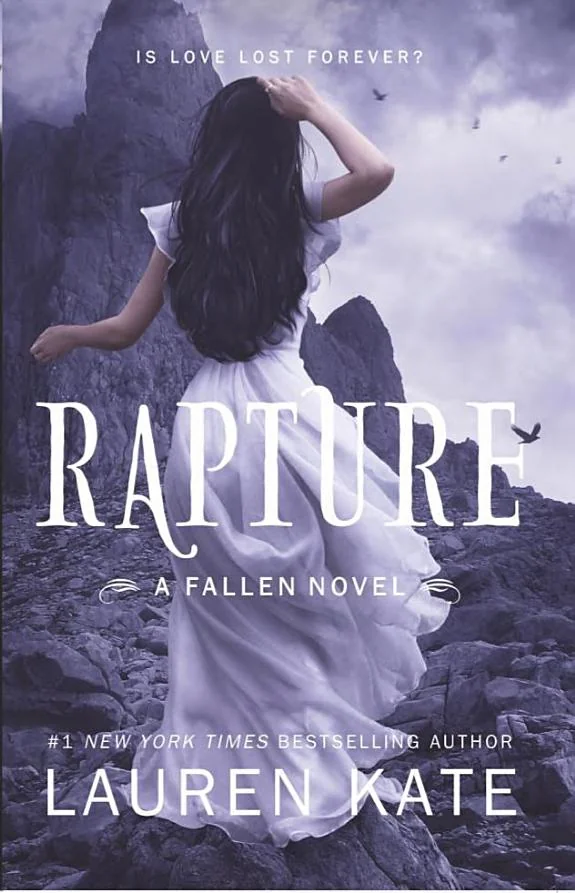
Rapture
 78
78

Rapture
Lauren Kate’s Rapture concludes a saga that has kept young adult readers invested in the celestial struggles of Luce and Daniel. The book’s strength lies in its ambitious scope, attempting to tie up intricate plot threads concerning angelic factions and millennia-spanning romance. However, the sheer volume of lore and character motivations introduced can, at times, feel overwhelming, occasionally slowing the pacing.
A particularly memorable sequence involves Luce grappling with the true nature of her soul’s connection to Daniel, questioning whether their bond is predestined or a choice. This internal conflict provides a solid emotional anchor amidst the grander supernatural conflict. While the resolution offers closure, some readers might find certain character arcs less satisfying than anticipated.
Read more ↓
Rapture delivers a definitive, albeit dense, conclusion to a popular series.
📝 Description
78
Rapture, published in 2012, concludes Lauren Kate's young adult series centered on Luce Price's supernatural destiny.
This novel follows Luce Price as she navigates a cosmic war between angels and demons. Her choices hold the fate of the world, forcing her to confront her own role in an eternal conflict. The story emphasizes her relationships with Daniel, a fallen angel, and Cam, a demon, as she grapples with a destiny she did not choose. Luce must ultimately decide which path to take, understanding the vast consequences for all involved.
The narrative weaves together elements of romance, action, and mystery. Luce's past lives and her connection to Daniel are central to unraveling the mystery of her existence and the ongoing war. The book explores the idea that love can transcend time and death, even in the face of immense sacrifice. It aims to bring closure to the complex plot threads established in earlier installments.
Rapture engages with themes of reincarnation and soul cycles, concepts found in various spiritual traditions. The idea of souls returning across lifetimes to fulfill a particular purpose or relationship echoes Gnostic and Neoplatonic thought, which often posited cyclical existence. The conflict between angelic and demonic forces also draws from established religious and occult lore, framing Luce's personal struggle within a grander, cosmic battle between opposing spiritual powers.
💡 Why Read This Book?
• You will gain insight into the narrative’s resolution of the millennia-long conflict between angelic forces, understanding how Luce’s choices in the final book, Rapture (2012), impact the spiritual balance. • You will experience a detailed exploration of reincarnation as a core plot device, examining how past lives and connections shape Luce and Daniel’s present struggle. • You will encounter specific angelic lore, including the roles of characters like Daniel Grigori and Roland, and their involvement in the celestial war that culminates in this installment.
⭐ Reader Reviews
Honest opinions from readers who have explored this book.
❓ Frequently Asked Questions
What is the primary conflict in Lauren Kate's Rapture?
The primary conflict involves Luce Price and her destined love, Daniel Grigori, facing a cosmic war between angels and demons, forcing Luce to make a critical choice about her own destiny and the fate of the world.
Who are the main angel characters in the Rapture novel?
Key angel characters include Daniel Grigori, Luce's immortal love interest, and his adversaries such as Cam, who represents a different faction of supernatural beings, and Lucifer, the fallen angel.
What year was the book Rapture by Lauren Kate first published?
Rapture was first published in 2012, serving as the final installment in the Fallen series.
Does Rapture explore themes of free will versus destiny?
Yes, a central theme in Rapture is the struggle between predetermined fate, particularly concerning Luce and Daniel's eternal love, and the characters' ability to exercise free will and alter their destined paths.
What is the significance of reincarnation in Rapture?
Reincarnation is a foundational concept, explaining the recurring connection between Luce and Daniel across centuries. Their souls are drawn together in each life, creating the basis for their epic romance and the ongoing celestial conflict.
Where does the story of Rapture take place?
The story unfolds across various significant locations, including the Sword & Cross reform school and other earthly settings, as well as celestial realms and historical periods relevant to the angels' ancient conflict.
🔮 Key Themes & Symbolism
Eternal Love and Reincarnation
The novel deeply explores the concept of souls destined to find each other across countless lifetimes. Luce and Daniel’s relationship, spanning centuries and numerous reincarnations, is presented as an unbreakable bond. This theme draws parallels with ancient spiritual ideas of soulmates and the cyclical nature of existence, suggesting that certain connections transcend mortal time and space. The narrative questions whether this love is a matter of predestination or a conscious choice made anew in each life.
Free Will vs. Destiny
A significant tension within Rapture is the conflict between what is fated and what characters choose for themselves. Luce, in particular, grapples with the idea that her life and love are preordained by a divine plan. The narrative challenges readers to consider the extent to which individuals control their own paths, even when faced with immense cosmic forces and ancient prophecies. The climax hinges on Luce’s agency to defy established orders.
Angelic Warfare and Morality
The book depicts a grand war amongst angels, dividing them into distinct factions with opposing ideologies. This celestial conflict serves as a backdrop for the human drama, exploring themes of loyalty, betrayal, and the nature of good and evil. It presents a nuanced view of angelic beings, not all of whom adhere to a singular divine purpose, prompting reflection on moral ambiguity within a supernatural context.
Sacrifice and Self-Discovery
Luce’s journey is marked by profound acts of sacrifice, both personal and existential. She must confront difficult truths about her past lives and her role in the ongoing angelic war. The process of self-discovery is intertwined with understanding her unique abilities and her connection to Daniel, pushing her to evolve beyond her perceived limitations and embrace her power, often at great personal cost.
💬 Memorable Quotes
Direct passages from the work, attributed to the author.
“Every choice she made was her own. Not a path laid out by angels or demons, but one she forged herself.”
— This interpretation emphasizes Luce's assertion of free will. It signifies her rejection of predetermined destiny, asserting her right to forge her own path independent of supernatural influence or ancient prophecies that sought to dictate her actions.
“Their love was a story written across lifetimes, a connection too strong for any war.”
— This statement reflects the enduring nature of Luce and Daniel's bond. It suggests their relationship is not merely a product of circumstance but a fundamental, eternal connection that transcends the immediate conflicts and challenges they face across their many existences.
“The battle wasn't just for the world, but for the very definition of love.”
— This concept suggests the stakes of the celestial war are not merely political or territorial but deeply philosophical. It implies that the conflict is also about what love truly is, challenging different interpretations and forms of connection presented by the various factions.
💡 Key Ideas
Editorial paraphrase of the work's core concepts — not direct quotes.
She had to choose. Her fate. Her life. Her love.
This paraphrased concept expresses Luce's important moment of decision. It highlights the core conflict of the novel, emphasizing her agency in determining her future and the destiny of those she cares about, rather than passively accepting what is foretold.
She saw the traces of past lives, each a whisper of who she had been.
This quote vividly illustrates Luce's connection to her past incarnations. It portrays her as sensitive to the lingering essence of her former selves, suggesting that her identity is a cumulative experience shaped by the entirety of her soul's journey.
🌙 Esoteric Significance
Tradition
While not explicitly aligned with a single historical esoteric tradition, Rapture engages with themes resonant in Gnosticism and Hermeticism, particularly concerning the nature of the soul, reincarnation, and the struggle against perceived cosmic determinism. The concept of a soul destined for a specific union across lifetimes and the presence of powerful, often conflicting, spiritual entities echo Gnostic ideas of a flawed creation and the search for divine knowledge (gnosis). The narrative's exploration of choice against a backdrop of predetermined events also touches on Hermetic principles of understanding universal laws to achieve liberation.
Symbolism
The angel wings, often depicted in the book's imagery, symbolize spiritual freedom, protection, and the celestial origin of the characters. Luce's connection to light and shadow can be seen as a representation of the dualistic forces at play in many esoteric cosmologies, representing the struggle between higher spiritual aspirations and darker, more earthly temptations or destinies. The recurring motif of eyes, particularly Luce's, often signifies hidden knowledge, awareness, and the soul's perception of deeper truths beyond the physical realm.
Modern Relevance
Contemporary readers and writers continue to draw inspiration from Rapture's blend of romance and supernatural conflict. The novel's exploration of complex relationships within epic, world-altering stakes appeals to modern fantasy and paranormal fiction. Its engagement with themes of destiny, free will, and the search for identity speaks to ongoing philosophical discussions in spiritual and secular circles, particularly among younger demographics exploring their place in the world and the nature of meaningful connections.
👥 Who Should Read This Book
• Young adult readers aged 13-18 who enjoy paranormal romance and fantasy with strong emotional arcs and supernatural elements. • Fans of the Fallen series seeking a definitive conclusion to Luce and Daniel's story, exploring the resolution of their epic romance and the angelic war. • Readers interested in modern interpretations of angel lore and themes of reincarnation, presented within an accessible, action-driven narrative.
📜 Historical Context
Published in 2012, Rapture arrived as the young adult paranormal romance genre, greatly influenced by the success of Stephenie Meyer's Twilight series, was reaching its zenith. Lauren Kate's Fallen series, which Rapture concludes, tapped into this popular vein of star-crossed lovers caught in supernatural conflicts. The novel's themes of reincarnation and eternal love echo older spiritual traditions, such as those found in Hinduism and Neoplatonism, which explore the soul's journey through multiple lives. However, Rapture presented these concepts through a distinctly modern, youth-oriented lens, focusing on angelic hierarchies and a cosmic war that divided supernatural beings. The era was also marked by a burgeoning interest in angelology and demonology within popular culture, often drawing from, or reinterpreting, biblical and Gnostic texts. Unlike earlier, more academic explorations of these themes, Kate's work aimed for broad commercial appeal, contributing to a cultural conversation about destiny, choice, and the nature of immortal relationships.
📔 Journal Prompts
Luce's final choice between destiny and free will.
The nature of eternal love as depicted between Luce and Daniel.
Daniel Grigori's role as a protector across lifetimes.
The symbolism of angelic wings in the narrative.
Reflecting on the consequences of the angelic war.
🗂️ Glossary
Nephilim
In this context, refers to the offspring of angels and humans, a concept that plays a role in the supernatural lineage and conflicts within the series.
Sword & Cross
A reform school setting where Luce Price is initially placed. It serves as a crucial location for her introduction to many key characters and the unfolding supernatural events.
Shadow Play
A supernatural ability or phenomenon related to the manipulation of shadows, often associated with certain characters and their powers within the series.
Cherubim
A specific order of angels, often depicted as guardians, whose nature and role are explored within the angelic hierarchy presented in the book.
Fallen Angels
Angels who were cast out of heaven, often associated with rebellion or opposition to divine will, playing significant roles as antagonists or complex characters.
Reincarnation
The belief that the soul, after biological death, begins a new life in a new body. This is a central theme driving the relationship between Luce and Daniel.
The Annunciation
An important event or prophecy within the series' lore, often related to Luce's destiny and the unfolding of the angelic conflict.
🔮 Readers Also Liked
Browse all →









More by Lauren Kate
All books →




More Free Occult Philosophy Books
View all →