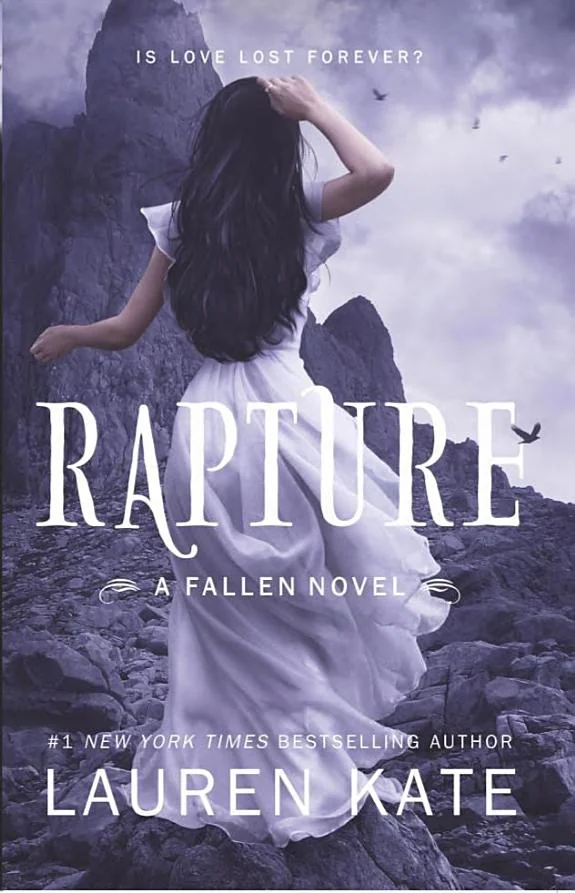
Rapture
 81
81

Rapture
Lauren Kate’s *Rapture* brings the sprawling Fallen series to a conclusion that prioritizes emotional catharsis over theological complexity. The narrative’s strength lies in its relentless pacing, propelling Luce and Daniel toward their inevitable confrontation with Lucifer. Kate crafts moments of genuine peril, particularly in the sequences detailing the gathering 'Dark Forces' and the potential erasure of history itself. However, the resolution, while satisfying for established fans, sometimes feels overly convenient, with celestial mechanics bending to serve the romantic endgame. The concept of Luce’s soul being a linchpin for cosmic balance, while central, could have benefited from more rigorous exploration beyond its plot-driving function. The climax, set in the place where the original Fall began, offers a visually striking, if somewhat predictable, denouement. Ultimately, *Rapture* delivers the expected emotional beats, offering a finality that will resonate with its dedicated readership.
📝 Description
81
Rapture, published in 2013, is the final novel in Lauren Kate's Fallen series.
This novel concludes the story of Luce Price and Daniel Grigori, following their journey through a celestial conflict. The narrative centers on Luce, who is reborn repeatedly, and Daniel, her immortal protector, as they confront Lucifer. Their struggle involves the fate of humanity and the established celestial order, forcing them to make ultimate choices that define their destiny. The book engages with themes of forbidden love set against a backdrop of cosmic stakes and angelic factions.
Rapture is written for established fans of the Fallen series, continuing the paranormal romance arc. Young adult readers who enjoy stories with significant angelic lore and high stakes will find the plot engaging. It addresses concepts of free will versus destiny, the nature of good and evil, and the consequences of ancient celestial wars.
Published in 2013, Rapture aligns with a surge in young adult paranormal romance that often incorporated supernatural elements and grand romantic narratives. The Fallen series, like others in its genre, drew on themes of destiny and choice, placing immortal beings against mortal protagonists. This subgenre reflected a wider cultural interest in mythology and the supernatural, evident in literature and film from the late 2000s to early 2010s. The book's focus on angels and a cyclical 'Fall' event situates it within fictional explorations of celestial hierarchies and fallen beings.
💡 Why Read This Book?
• Gain insight into the culmination of Luce and Daniel's millennia-spanning romance, understanding the specific sacrifices required to break the eternal curse as detailed in the climactic chapters. • Explore the narrative's resolution regarding Lucifer's ultimate goal to erase the past and the celestial consequences of Luce’s final choice. • Experience the resolution of the 'angelic war' subplot, observing how the factions and their motivations are finally addressed by the book's conclusion.
⭐ Reader Reviews
Honest opinions from readers who have explored this book.
❓ Frequently Asked Questions
What is the main conflict in Rapture by Lauren Kate?
The primary conflict involves Luce and Daniel racing against Lucifer to prevent him from erasing the past and rewriting celestial history. Luce must make a critical choice to break a curse and decide the fate of all involved.
Who is Lucifer in the context of the Fallen series?
Lucifer is presented as a key antagonist in the Fallen series, seeking to undo his banishment and the subsequent cosmic order by erasing pivotal historical events, particularly those related to Luce's soul.
What does the 'Fall' refer to in Rapture?
The 'Fall' refers to a foundational event in celestial history, the consequences of which have led to the series' central conflicts. The book aims to find where this event originated and how Luce can alter its outcome.
Is Rapture a standalone novel or part of a series?
Rapture is the fourth and final book in Lauren Kate's Fallen series. It concludes the storyline that began with the first book, Fallen, published earlier.
What kind of sacrifices are mentioned in Rapture?
The book implies significant sacrifices will be made by the characters, including potentially Luce, Daniel, and other angelic figures, in their struggle against Lucifer and the forces seeking to preserve the existing cosmic order.
When was Rapture published?
Rapture was first published in 2013, serving as the concluding volume to the Fallen series.
🔮 Key Themes & Symbolism
Destiny vs. Free Will
The narrative deeply engages with the struggle between predetermined fate and the power of individual choice. Luce, as a soul cursed with repeated rebirths, embodies this conflict. Her ultimate decision in Rapture is not just about her own destiny or that of Daniel, but the fate of the entire celestial and mortal realms. The concept of the 'curse' itself highlights a predestined path, while her agency in choosing to break it or alter its course explores the wide implications of free will, even against cosmic odds.
Sacrifice and Redemption
Central to the resolution of the Fallen series is the theme of sacrifice. Characters are repeatedly faced with choices that demand immense personal cost for the greater good or for love. Luce's journey, in particular, is framed by the potential for ultimate sacrifice to undo the ancient wrongs and prevent further suffering. This ties into a broader exploration of redemption, questioning whether even figures like Lucifer can be redeemed or if their actions necessitate perpetual punishment, and what forms redemption can take.
The Nature of Good and Evil
Rapture challenges simplistic interpretations of good and evil, particularly through its portrayal of Lucifer and the angelic hierarchy. The narrative suggests that motivations can be complex and that the lines between right and wrong can blur, especially when dealing with ancient grievances and perceived injustices. The story questions who truly defines 'good' and 'evil' in a cosmic context and whether the established order is inherently just, inviting readers to consider the nuanced perspectives of its celestial characters.
Eternal Love and Reincarnation
The enduring love between Luce and Daniel, spanning countless lifetimes, is the emotional core of the series. Rapture culminates their story, exploring the idea that certain souls are fated to find each other across time and existence. The concept of reincarnation is not merely a plot device but a fundamental aspect of Luce's being and the source of her unique power. This theme examines the persistence of love and connection beyond death and rebirth.
💬 Memorable Quotes
Direct passages from the work, attributed to the author.
“The sky is dark with wings.”
— This evocative phrase sets a tone of impending conflict and supernatural presence, signaling the massive scale of the celestial battle about to unfold and the overwhelming forces Luce and Daniel face.
“And time is running out for Luce and Daniel.”
— This highlights the urgency of the narrative. The protagonists are under immense pressure to achieve their goals before a critical deadline, amplifying the tension and stakes of their quest.
“In order to stop Lucifer from erasing the past, they must find the place where the Fall began.”
— This sentence captures the central quest of the novel: a journey to a specific, significant location in celestial history as the key to averting a catastrophic alteration of reality.
“Only Luce can break the curse, and it is her choice alone that will decide all of their fates.”
— This emphasizes Luce's key role and the burden of responsibility she carries. Her agency is presented as the singular factor that can resolve the overarching conflict, placing the ultimate decision on her shoulders.
“But as Dark Forces gather, great sacrifices will have to be made in this final, epic struggle.”
— This foreshadows the high cost of victory, indicating that the climax will involve significant loss and difficult decisions, underscoring the gravity of the 'epic struggle' Luce and Daniel are engaged in.
🌙 Esoteric Significance
Tradition
While not explicitly tied to a single historical esoteric tradition like Hermeticism or Kabbalah, *Rapture* draws heavily from Gnostic and Neoplatonic themes concerning the nature of the soul, the existence of a demiurge-like antagonist (Lucifer in this context), and the concept of liberation through knowledge or a unique soul's destiny. The narrative's focus on an immortal soul cursed to repeated rebirths and the ultimate freedom achievable through a specific act echoes Gnostic ideas of spiritual awakening and escape from a flawed material or cosmic order.
Symbolism
The recurring motif of 'wings' symbolizes angelic beings, divine power, and the potential for both transcendence and judgment. The 'Fall,' a key concept, represents a primordial act of rebellion or error that created cosmic imbalance, akin to the fall of Lucifer in various theological traditions. The 'curse' afflicting Luce can be interpreted as a karmic entanglement or a predetermined fate imposed by a flawed cosmic system, from which liberation is sought.
Modern Relevance
Contemporary young adult fiction continues to explore themes of destiny, free will, and supernatural romance, with *Rapture*'s narrative arc serving as a prominent example. Authors exploring complex mythologies, angelic lore, or reincarnation narratives may find inspiration in its plot structures and character archetypes. The series' exploration of love transcending time and existence also aligns with broader popular interest in spiritual concepts and soul connections.
👥 Who Should Read This Book
• Dedicated fans of the Fallen series seeking the definitive conclusion to Luce and Daniel's story, eager to understand the final resolution of their eternal romance and the celestial conflict. • Young adult readers who enjoy paranormal romance featuring angels, epic stakes, and themes of destiny versus free will, looking for a narrative that combines supernatural elements with a strong romantic core. • Readers interested in explorations of Gnostic-like themes within a modern YA framework, particularly concerning soul cycles, cosmic battles, and the power of individual choice against predestined fate.
📜 Historical Context
Published in 2013, *Rapture* landed in the latter stages of the young adult paranormal romance boom, a period heavily influenced by the success of series like Stephenie Meyer's *Twilight* and Cassandra Clare's *The Mortal Instruments*. Kate's Fallen series, with its focus on angels, tapped into a popular vein of supernatural-driven romance. The genre often explored themes of forbidden love, destiny, and the clash between immortal beings and mortal protagonists. While *Rapture* offered a conclusion to its specific narrative, it existed within a crowded market where similar thematic elements were being explored by numerous authors. Critical reception at the time often focused on its romantic resolution and the pacing of its conclusion, with some noting its adherence to established genre tropes. The series navigated a cultural fascination with angelic lore and mythology, which had seen a resurgence in popular culture.
📔 Journal Prompts
Luce's choice to break the curse or not.
The gathering of Dark Forces.
Daniel's eternal vigil for Luce.
Lucifer's motivation to erase the past.
The significance of the place where the Fall began.
🗂️ Glossary
The Fall
A foundational event in the series' cosmology, representing a critical moment of rebellion or error that led to cosmic imbalance and the ongoing conflicts between angelic factions.
The Curse
An affliction placed upon Luce's soul, causing her to be reborn repeatedly throughout history, often placing her in danger and necessitating Daniel's protection.
Dark Forces
A collective term for entities and factions aligned against Luce and Daniel, often associated with Lucifer's agenda to alter or erase history.
Lucifer
A primary antagonist in the series, depicted as a powerful fallen angel seeking to undo his banishment and reshape existence by manipulating or erasing key past events.
Angelic Factions
Different groups of angels with varying allegiances and agendas, often involved in celestial power struggles that impact the mortal world and Luce's fate.
Reincarnation
The concept that Luce's soul is reborn into different bodies across different lifetimes, a central element driving her unique nature and the series' overarching plot.
Celestial Order
The established structure and hierarchy of the angelic realms and their relationship with the mortal world, which Lucifer seeks to disrupt.
This book appears in 1 collection
🔮 Readers Also Liked
Browse all →



![Tales of Mystery and Imagination [46 stories]](/img/thumb/tales-of-mystery-and-imagination-46-stories-edgar-allan-poe-013369.webp)





From the “Angels” Collection
View all →


More Free Occult Philosophy Books
View all →