What is 'Tai Chi'?
 78
78

What is 'Tai Chi'?
Peter Gilligan’s “What is ‘Tai Chi’?” offers a welcome departure from purely instructional guides, aiming instead for a conceptual unpacking of the practice. Gilligan effectively articulates the interplay between the physical form and the internal energetics, a distinction often glossed over in Western interpretations. His analysis of the body-mind-spirit nexus is particularly strong, presenting it not as a New Age abstraction but as an inherent component of the art’s mechanics. However, while the book promises to answer questions beyond typical class scope, it occasionally veers into a density that may challenge the absolute novice. For instance, the detailed discussion of energetic pathways, while accurate, could benefit from more visual aids or simpler analogies. Despite this, the work’s strength lies in its systematic approach to understanding Tai Chi as a complete system, rather than just a series of movements. It serves as a valuable companion for serious students. The verdict: A solid, if occasionally dense, exploration for those seeking deeper comprehension.
📝 Description
78
Peter Gilligan's 2009 book interrogates the core principles behind Tai Chi's movements and energetic effects.
Peter Gilligan's "What is 'Tai Chi'?" addresses questions often left unanswered in introductory courses, moving beyond superficial descriptions to examine the art's mechanics and underlying philosophy. The book is suitable for individuals seeking a thorough grounding in Tai Chi, from beginners curious about its origins to experienced practitioners aiming to deepen their understanding of its subtler aspects. It is particularly relevant for those interested in the mind-body connection and how physical movement integrates with spiritual awareness.
Gilligan situates Tai Chi within its historical and philosophical lineage, tracing its development and its place within Chinese martial and healing traditions. The work acknowledges the practice's evolution over centuries, distinguishing between its martial applications and its more recent focus on health and meditation. It considers how Tai Chi has been understood and adapted across different eras.
This book examines Tai Chi not just as a physical discipline, but as a holistic system for self-development rooted in Chinese philosophical traditions. It connects the practice to concepts like Qi, internal cultivation, and the integration of body, mind, and spirit. By differentiating its martial origins from its health and meditation applications, Gilligan places Tai Chi within a broader context of Chinese healing and spiritual practices that seek to harmonize internal energies.
💡 Why Read This Book?
• Gain a nuanced understanding of the mechanics of movement and the 'energetic' aspects of practice, as detailed in the book's analysis of Tai Chi principles, offering insights beyond basic instruction. • Explore the integral relationship between body, mind, and spirit as presented through Gilligan's framework, providing a holistic perspective on personal development through this ancient art. • Understand the historical lineage and philosophical underpinnings of Tai Chi, offering context that enriches the practice and differentiates it from superficial interpretations, as discussed in the book's historical context section.
⭐ Reader Reviews
Honest opinions from readers who have explored this book.
❓ Frequently Asked Questions
What is the primary focus of Peter Gilligan's 'What is 'Tai Chi'?'?
The book focuses on comprehensively explaining Tai Chi, covering its fundamental mechanics, energetic aspects, and the integration of body, mind, and spirit, aiming to answer questions beyond the scope of typical classes.
When was Peter Gilligan's 'What is 'Tai Chi'?' first published?
Peter Gilligan's 'What is 'Tai Chi'?' was first published on November 15, 2009.
Does 'What is 'Tai Chi'?' discuss the martial aspects of the art?
Yes, the book explores the historical context of Tai Chi, which includes its origins as a martial art, while also examining its development into a practice focused on health and meditation.
What are the 'energetic' aspects mentioned in the book?
The 'energetic' aspects refer to concepts like Qi, or vital energy, and how it is cultivated and circulated through the body during Tai Chi practice, influencing both physical well-being and mental state.
Is 'What is 'Tai Chi'?' suitable for absolute beginners?
The book offers a deep dive into Tai Chi's principles, making it suitable for dedicated beginners seeking thorough understanding, though its depth might require focused study.
What distinguishes this book from other Tai Chi resources?
This book distinguishes itself by addressing the philosophical and energetic dimensions of Tai Chi in detail, providing insights into the mind-body connection that often go beyond standard instructional material.
🔮 Key Themes & Symbolism
Body-Mind-Spirit Integration
This theme explores the profound connection between physical movement, mental focus, and spiritual awareness that is central to Tai Chi. Gilligan posits that the practice is not merely about physical posture but about cultivating a unified state of being. The book details how the deliberate movements and breathwork in Tai Chi foster a heightened sense of self-awareness, integrating the practitioner's internal landscape with their external actions. This holistic approach positions Tai Chi as a path for personal development, influencing not just physical health but also mental clarity and spiritual insight.
Energetic Cultivation (Qi)
A core concept examined is the cultivation and circulation of Qi, or vital energy. The book explains how Tai Chi movements are designed to facilitate the smooth flow of Qi throughout the body, removing blockages and promoting vitality. This energetic dimension is presented as crucial for the practice's therapeutic and martial applications. Gilligan discusses how understanding and working with Qi allows practitioners to develop internal strength, resilience, and a deeper connection to their own life force, moving beyond the purely biomechanical interpretation of the art.
Mechanics of Movement
Gilligan meticulously breaks down the fundamental principles governing Tai Chi movements. This section studies aspects like rooting, yielding, and the coordinated use of the entire body. It emphasizes that each posture and transition is based on specific biomechanical principles designed for efficiency and effectiveness, whether for self-defense or health. The book clarifies how these mechanics are intrinsically linked to the energetic flow, illustrating that the physical form serves as a vessel for the internal energy, making the precise execution of movement paramount.
Historical and Philosophical Roots
The book situates Tai Chi within its rich historical and philosophical context, tracing its lineage and evolution. It explores how the practice has been understood and transmitted through generations, often within secretive martial arts lineages before its broader dissemination. Gilligan touches upon the Taoist influences and the martial origins, providing a framework for understanding why Tai Chi embodies both dynamic force and profound stillness. This context is vital for appreciating the depth and breadth of the art beyond its modern health-focused iterations.
💬 Memorable Quotes
Direct passages from the work, attributed to the author.
“The energetic aspects of practice are inseparable from the mechanics of movement.”
— This highlights the book's central thesis that Tai Chi is a unified system. It suggests that understanding the physical form without acknowledging the internal energy flow, or vice versa, leads to an incomplete appreciation of the art's true nature and potential.
“Fundamental points about the mechanics of movement are key.”
— This statement underscores the importance Gilligan places on the technical foundation of Tai Chi. It suggests that a thorough understanding of how the body moves correctly is the bedrock upon which the more subtle energetic and spiritual aspects are built.
“Questions beyond the scope of many classes are addressed.”
— This indicates the book's value for practitioners seeking a deeper, more comprehensive understanding of Tai Chi. It promises to explore topics that are often omitted or only briefly touched upon in standard instructional settings.
“The emergence of the body, mind, and spirit relationship is a natural outcome.”
— This interpretation suggests that the integration of physical, mental, and spiritual elements in Tai Chi is not forced but arises organically from consistent and correct practice, as detailed in the book.
💡 Key Ideas
Editorial paraphrase of the work's core concepts — not direct quotes.
Tai Chi practice cultivates a relationship between body, mind, and spirit.
This paraphrased concept emphasizes the holistic approach of Tai Chi. It points to the book's exploration of how the physical discipline fosters mental clarity and a deeper spiritual awareness, integrating all facets of the practitioner's being.
🌙 Esoteric Significance
Tradition
While not explicitly aligning with a single Western esoteric lineage like Hermeticism or Kabbalah, Gilligan's work engages with principles common to many Eastern contemplative and martial traditions that have esoteric dimensions. It touches upon Taoist concepts of Qi and balance, which are foundational to many mystical practices seeking harmony between the individual and the cosmos. The book's emphasis on internal cultivation and the interconnectedness of body, mind, and spirit places it within the broader spectrum of mind-body practices that have long been explored within esoteric philosophy for personal transformation.
Symbolism
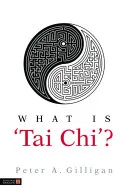
The practice itself is rich in symbolism. The concept of Yin and Yang, fundamental to Taoism and deeply embedded in Tai Chi theory, symbolizes the interplay of complementary opposites—softness and hardness, stillness and motion, emptiness and fullness. The slow, flowing movements can be seen as a metaphor for the cyclical nature of life and the universe, while the principle of 'yielding to overcome' symbolizes the power of adaptability and non-resistance in overcoming obstacles. The focus on rooting signifies stability and connection to the earth, a common motif in earth-aligned spiritual practices.
Modern Relevance
Contemporary thinkers and practitioners in fields like somatic psychology, embodied cognition, and integrative medicine draw upon the principles explored in works like Gilligan's. The book's detailed examination of the body-mind-spirit connection offers valuable insights for modern approaches to stress reduction, chronic pain management, and mental well-being. Furthermore, its exploration of Qi speaks to growing interest in vitalistic theories of health and energy medicine, making it relevant to those seeking holistic and experiential paths to self-understanding and personal development.
👥 Who Should Read This Book
• Dedicated students of Tai Chi seeking to deepen their theoretical understanding beyond physical form, particularly those interested in the energetic and philosophical underpinnings discussed in the book. • Practitioners of other martial arts or contemplative disciplines who are curious about the unique principles of Tai Chi and its integrated approach to mind-body cultivation. • Individuals interested in the intersection of Eastern philosophy and Western understandings of health and consciousness, looking for a grounded explanation of practices that foster holistic well-being.
📜 Historical Context
When Peter Gilligan's "What is 'Tai Chi'?" was published in 2009, the practice was widely known in the West, largely through popular health and martial arts classes. However, much of this popular understanding often focused on the slow movements for exercise, sometimes divorcing it from its deeper philosophical and martial roots. This era saw numerous interpretations of Eastern practices entering Western discourse, with varying degrees of authenticity. Gilligan's work emerged in a context where scholars like Benjamin Brose were meticulously documenting Chinese martial traditions, and popular authors like Mantak Chia were popularizing energetic cultivation systems. Gilligan's book aimed to provide a more grounded, systematic explanation of Tai Chi's core tenets, distinguishing it from superficial interpretations and reasserting its significance as a holistic discipline, addressing the need for deeper theoretical understanding that was not always met by contemporary instruction.
📔 Journal Prompts
The mechanics of movement in Tai Chi as a foundation for energetic flow.
Reflecting on the body-mind-spirit relationship cultivated through practice.
The concept of Qi and its observable effects on well-being.
Differentiating between martial origins and modern health applications of Tai Chi.
The principle of yielding: its application beyond physical movement.
🗂️ Glossary
Tai Chi
A traditional Chinese martial art practiced for both its defensive and health benefits. It involves slow, flowing movements coordinated with breath and mental focus, emphasizing internal energy cultivation.
Qi (Chi)
In Traditional Chinese Medicine and martial arts, Qi is considered the vital life force or energy that flows through all living things. Its cultivation and circulation are central to practices like Tai Chi.
Mechanics of Movement
Refers to the biomechanical principles governing the execution of Tai Chi postures and transitions, emphasizing proper alignment, rooting, balance, and coordinated body action.
Energetic Aspects
Pertains to the non-physical dimensions of Tai Chi practice, focusing on the cultivation, circulation, and balance of Qi within the body and its influence on health and vitality.
Body, Mind, Spirit
The three interconnected components of a human being. Tai Chi aims to harmonize these aspects, fostering a unified state of being where physical action, mental awareness, and spiritual connection are integrated.
Rooting
A fundamental Tai Chi principle that involves establishing a stable, grounded connection to the earth, providing balance and power, and allowing for efficient energy transfer.
Yielding
The principle of softness and non-resistance in Tai Chi, which involves redirecting an opponent's force rather than meeting it directly, demonstrating flexibility and strategic power.