The earth spirit

 72
72

The earth spirit
John F. Michell's "The Earth Spirit" presents a compelling, if unconventional, argument for the planet's inherent consciousness. The author's strength lies in his erudite synthesis of diverse material, from ancient folklore to geological anomalies. He meticulously details how historical cultures perceived and revered the earth's vitality, citing examples of sacred geometry in architecture and the significance of specific landscape features. One particularly striking passage discusses the potential energetic connections between ancient standing stones, suggesting they acted as conduits for terrestrial forces. However, the book's primary limitation is its speculative nature; Michell often asserts theories as fact without robust empirical evidence, relying heavily on correlation and suggestive interpretation. Despite this, "The Earth Spirit" offers a unique perspective on humanity's relationship with the planet, challenging readers to reconsider their environment. It remains a significant contribution to the literature of earth mysteries, urging a more sensitive engagement with the terrestrial world.
📝 Description
72
John F. Michell's 1983 book, The Earth Spirit, posits that our planet possesses an animating consciousness.
Published in 1983, John F. Michell's The Earth Spirit investigates the idea that the Earth itself has a consciousness or animating spirit that influences human affairs and the physical landscape. Michell draws on historical, mythological, and esoteric sources to argue for this pervasive, intelligent force. He examines how ancient cultures perceived and interacted with this 'earth spirit' through sacred sites, megalithic structures, and geomantic practices.
The book discusses concepts such as telluric currents, dragon lines, and the energetic grid of the planet as manifestations of this spirit. Michell also considers the potential decline of this connection in modern society and the possibility of its rediscovery. The work emerged during a time of renewed interest in alternative histories, finding an audience among independent researchers and spiritual seekers.
The Earth Spirit belongs to the tradition of earth mysteries and geomancy, a field concerned with the subtle energies and perceived consciousness of the planet. It follows in a lineage that includes authors who investigated ley lines and ancient sites, viewing them not merely as historical artifacts but as nodes in a global energetic network. This perspective often contrasts with mainstream scientific views, proposing that natural phenomena and human history are influenced by forces beyond conventional explanation. Michell's work contributes to a body of esoteric thought that seeks to understand humanity's connection to the terrestrial environment.
💡 Why Read This Book?
• Gain insight into the concept of earth energies and geomancy, understanding how ancient peoples may have perceived and interacted with the planet's vital forces, as explored through Michell's analysis of sacred sites. • Discover the historical context of earth mystery research, specifically Michell's contribution to popularizing ideas about ley lines and telluric currents in the late 20th century. • Develop a critical perspective on the relationship between humanity and the environment by examining Michell's arguments for a conscious terrestrial realm, encouraging a deeper appreciation for landscape symbolism.
⭐ Reader Reviews
Honest opinions from readers who have explored this book.
❓ Frequently Asked Questions
When was John F. Michell's 'The Earth Spirit' first published?
'The Earth Spirit' by John F. Michell was first published in 1983, contributing to the resurgence of interest in earth mysteries during that era.
What is the main subject of 'The Earth Spirit'?
The book primarily explores the concept of a 'spirit' or animating consciousness of the Earth, investigating geomancy, ley lines, and ancient sacred sites as expressions of this terrestrial energy.
What kind of evidence does Michell use in 'The Earth Spirit'?
Michell synthesizes evidence from mythology, folklore, archaeology, ancient architecture, and anecdotal observations of earth energies, often presenting correlations as strong indicators.
Who would benefit most from reading 'The Earth Spirit'?
Readers interested in esoteric geography, sacred landscapes, earth mysteries, comparative mythology, and alternative theories about the planet's energetic systems would find this book valuable.
Does 'The Earth Spirit' discuss ley lines?
Yes, the book is known for its discussion and popularization of ley lines, presenting them as significant energetic pathways across the Earth's surface.
Is 'The Earth Spirit' considered a scientific work?
While drawing on observations, 'The Earth Spirit' is generally considered an esoteric or speculative work rather than a scientific one, exploring concepts outside mainstream scientific paradigms.
🔮 Key Themes & Symbolism
Geomancy and Earth Energies
The work meticulously investigates geomancy, the art of divining terrestrial energies. Michell posits that the Earth possesses a subtle, animating spirit, often expressed through telluric currents and grid-like patterns. He examines how ancient civilizations recognized and interacted with these forces, evidenced by the strategic placement of megaliths and sacred sites, suggesting a deep, symbiotic relationship between humanity and the planet's energetic field.
Sacred Geography and Ancient Sites
Michell looks at the concept of sacred geography, where landscapes are imbued with spiritual significance. The book highlights how ancient peoples, particularly in Britain and Europe, oriented their settlements and monumental architecture along specific energetic lines, often referred to as 'dragon lines' or ley lines. These sites, like Stonehenge, are presented not merely as historical relics but as active nodes within the Earth's energetic network.
The Planet as a Living Organism
Central to 'The Earth Spirit' is the idea that the Earth is a living, conscious entity. Michell draws parallels between the planet and biological organisms, suggesting that its energetic flows and patterns are akin to circulatory or nervous systems. This perspective challenges materialistic views and encourages a re-enchantment with the natural world, viewing it as a sentient being with which humans can and should maintain a reciprocal connection.
Modern Disconnection and Rediscovery
The book implicitly critiques modern society's detachment from these terrestrial energies, attributing a loss of vitality and spiritual grounding to this disconnection. Michell suggests that rediscovering and re-engaging with the Earth's spirit is crucial for human well-being and ecological balance. He offers historical examples and symbolic interpretations as pathways for contemporary individuals to reconnect with this ancient wisdom.
💬 Memorable Quotes
Direct passages from the work, attributed to the author.
“Ancient peoples understood the energetic grid of the Earth.”
— This interpretation highlights the book's focus on how prehistoric cultures were sensitive to and actively worked with the subtle energetic lines and patterns of the Earth, often referred to as ley lines or dragon lines.
“Sacred sites acted as focal points for telluric currents.”
— This reflects Michell's exploration of megalithic structures and ancient temples not just as monuments, but as functional components within the Earth's energetic system, designed to interact with and amplify telluric forces.
“Modern society has lost its connection to the Earth spirit.”
— This captures the critical stance the work takes towards contemporary civilization, suggesting that a pervasive disconnection from natural terrestrial energies has led to a spiritual and ecological imbalance.
💡 Key Ideas
Editorial paraphrase of the work's core concepts — not direct quotes.
The Earth is not a dead lump of matter, but a living organism.
This paraphrased concept expresses Michell's core thesis that the planet possesses an inherent consciousness and vitality, akin to a biological entity, challenging purely materialistic interpretations of the Earth.
The landscape itself holds a form of intelligence.
This summarizes Michell's view that geographical features and the overall terrain are not merely passive backdrops but possess an active, perhaps conscious, quality that influences life upon them.
🌙 Esoteric Significance
Tradition
Michell's work engages with a broad spectrum of esoteric thought, particularly drawing from Western Hermeticism, ancient pagan traditions, and the concept of a planetary consciousness often found in Theosophical and later New Age literature. It departs from strictly ritualistic or magical traditions by focusing on the inherent spiritual qualities of the Earth itself, proposing a 'natural magic' rooted in landscape and geomancy rather than solely in human-invoked forces.
Symbolism
Key symbols include megalithic structures like Stonehenge, which are interpreted not just as astronomical calendars but as conduits or focal points for terrestrial energies ('telluric currents'). Ley lines, or 'dragon lines,' are depicted as the symbolic veins and arteries of the Earth spirit, crisscrossing the landscape. Sacred geometry, evident in the alignment and design of ancient sites, symbolizes the underlying order and intelligence of the planet.
Modern Relevance
Contemporary thinkers in fields like sacred geography, ecopsychology, and permaculture resonate with Michell's ideas about a living Earth. His concepts inform modern practices of landscape healing, dowsing, and the design of ecologically sensitive spaces. The renewed interest in indigenous wisdom and animistic perspectives also echoes Michell's emphasis on a conscious, interconnected terrestrial realm, making his work relevant for those seeking a deeper, more spiritual connection with nature.
👥 Who Should Read This Book
['• Students of earth mysteries and sacred geography seeking foundational texts on geomancy and ley lines, particularly those interested in the British megalithic tradition.', '• Esoteric practitioners interested in understanding the energetic qualities of landscapes and how ancient cultures interacted with terrestrial forces.', '• Comparative mythology scholars exploring non-mainstream interpretations of ancient sites and their spiritual significance within global traditions.']
📜 Historical Context
Published in 1983, "The Earth Spirit" emerged during a fertile period for esoteric thought and the burgeoning 'earth mysteries' movement, heavily influenced by the counter-culture of the preceding decades. John Michell, already known for his work on ley lines and ancient sites, tapped into a growing public fascination with alternative explanations for historical phenomena. This era saw figures like Paul Devereux also exploring similar themes. While academic archaeology and geology remained skeptical, often dismissing these theories as pseudoscientific, Michell's work found a receptive audience among independent researchers, spiritual seekers, and enthusiasts of paganism and geomancy. The book's popularity contributed to a broader cultural dialogue about humanity's relationship with the planet, distinct from but concurrent with environmental movements.
📔 Journal Prompts
The Earth Spirit's perceived intelligence in a specific landscape feature.
Personal experiences with telluric currents or earth energies.
Ancient site alignments and their potential geomantic purpose.
The concept of 'dragon lines' and their symbolic meaning.
Modern society's disconnection from the Earth spirit.
🗂️ Glossary
Geomancy
An ancient divinatory art and practice concerned with the interpretation of terrestrial energies and patterns in the landscape, often involving dowsing and the study of sacred sites.
Earth Spirit
The concept, central to Michell's work, that the planet possesses an inherent consciousness, animating force, or vital energy that influences the environment and life upon it.
Telluric Currents
Natural electrical currents that flow through the Earth's crust and surface, often considered by esotericists to be manifestations of the Earth's energy field.
Ley Lines
Alleged straight alignments or pathways of terrestrial energy that connect ancient sites, megaliths, and natural landmarks across the landscape.
Sacred Geography
The study and understanding of landscapes imbued with spiritual significance, often featuring sacred sites, ritualistic alignments, and energetic patterns.
Dragon Lines
An alternative term, often used interchangeably with ley lines, suggesting serpentine or flowing energetic pathways within the Earth, particularly in certain cultural contexts.
Megalithic Structures
Large stone monuments, such as Stonehenge or dolmens, constructed during prehistoric times, often interpreted in esoteric contexts as having geomantic or energetic functions.
🔮 Readers Also Liked
Browse all →









More by John F. Michell
All books →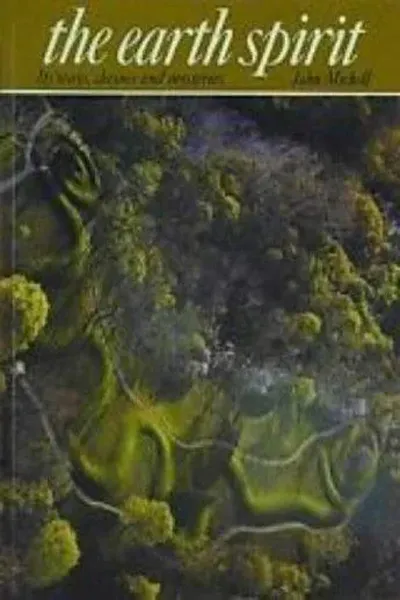

More Free Occult Philosophy Books
View all →