Reiki and the Seven Chakras

 71
71

Reiki and the Seven Chakras
Richard Ellis's Reiki and the Seven Chakras offers a clear, if somewhat conventional, exposition on the energetic architecture of the human form. The strength of the book lies in its straightforward presentation of complex concepts, making the seven chakras accessible even to those unfamiliar with Indian philosophical traditions. Ellis effectively connects the Usui Reiki Ryoho system, founded by Mikao Usui in the early 20th century, to the chakra model, providing a useful bridge for Western practitioners. However, the work occasionally lacks the depth found in more specialized texts on chakra theory or the history of Reiki, sometimes feeling more like an introductory manual than a critical analysis. The section detailing the Muladhara chakra's connection to grounding and survival instincts, while accurate, could benefit from further exploration of its energetic implications beyond basic well-being.
Ultimately, Ellis provides a competent guide for understanding the energetic interplay between Reiki and the chakra system.
📝 Description
71
Richard Ellis's 2009 book connects Reiki practices directly to the seven primary chakra centers.
Reiki and the Seven Chakras examines the human energetic anatomy through the lens of Reiki, a Japanese healing art. Richard Ellis presents Reiki not just as a therapeutic method but as a path for spiritual growth, explicitly linking its techniques to the seven main chakra centers.
This book is for individuals seeking a deeper understanding of energy healing, particularly those interested in the subtle body and its connection to consciousness. Reiki practitioners will find a more comprehensive theoretical background, while newcomers to esoteric studies can learn about the interplay between physical, emotional, and spiritual well-being.
Ellis details each of the seven major chakras, from the Root to the Crown, explaining their colors, elements, psychological roles, and spiritual significance. The work highlights how Reiki energy flow balances these centers, fostering healing and spiritual awakening. Working with the chakras, the book suggests, can lead to greater self-awareness and personal change.
Published in 2009, this work fits into a Western engagement with Eastern healing philosophies that gained momentum in the late 19th and early 20th centuries. Thinkers like Helena Blavatsky and the Theosophical Society introduced concepts of subtle energy bodies and spiritual centers to Western audiences. Ellis's book continues this dialogue, integrating these ideas with the practice of Reiki.
💡 Why Read This Book?
• Gain a structured understanding of the seven major chakras, learning their specific correspondences (colors, elements) and functions as presented by Ellis, offering a practical map for energetic self-assessment. • Explore the foundational principles of Usui Reiki Ryoho, understanding how its healing energy is conceptualized to interact with and balance the chakra system, as detailed in the text. • Discover how specific Reiki practices can be intentionally applied to address imbalances within each of the seven chakras, providing actionable techniques for personal growth and energetic hygiene.
⭐ Reader Reviews
Honest opinions from readers who have explored this book.
❓ Frequently Asked Questions
What is the primary focus of Richard Ellis's 'Reiki and the Seven Chakras'?
The book primarily focuses on the intersection of the Japanese healing art of Reiki and the seven major chakra energy centers within the human body, exploring their energetic connections and influence on well-being.
When was 'Reiki and the Seven Chakras' first published?
Richard Ellis's 'Reiki and the Seven Chakras' was first published in 2009, placing it within contemporary discussions of energy healing.
Is this book suitable for beginners in Reiki or chakra studies?
Yes, the book is designed to be accessible, offering a clear exposition for those new to Reiki or the concept of chakras, while also providing depth for practitioners.
Does the book discuss the historical origins of Reiki?
While the book focuses on the energetic principles, it acknowledges the origins of Reiki within the system founded by Mikao Usui in the early 20th century.
What are the key benefits of understanding the chakra system through Reiki?
Understanding this connection can lead to greater self-awareness, improved energetic balance, and a more profound personal healing and spiritual development practice.
Does the book offer practical exercises?
The work implicitly guides readers toward applying Reiki principles to chakra balancing, encouraging a practical understanding of energetic flow and its impact.
🔮 Key Themes & Symbolism
Chakra Energetic Anatomy
The book meticulously maps the human energetic system onto the seven primary chakras, detailing their specific locations, associated colors, elemental connections, and psycho-spiritual functions. Ellis explains how each chakra acts as a vital energy vortex, influencing physical health, emotional states, and spiritual awareness. The work posits that imbalances in these centers manifest as various challenges, and understanding their energetic signatures is crucial for holistic well-being.
Reiki as a Balancing Force
Reiki, particularly the system established by Mikao Usui, is presented as a potent modality for harmonizing the chakra system. Ellis illustrates how the universal life force energy channeled through Reiki directly interacts with and purifies the chakras. This interaction is described as a process that can clear energetic blockages, restore vital flow, and promote a state of equilibrium across the entire energetic matrix, fostering healing from the root chakra upwards.
Spiritual Development Through Energy Work
Beyond mere physical healing, Reiki and the Seven Chakras frames energy work as a path to spiritual awakening. The text suggests that by consciously working with the chakras and allowing Reiki to flow, individuals can access higher states of consciousness, develop greater self-awareness, and facilitate profound personal transformation. It emphasizes the interconnectedness of the physical and spiritual realms, viewing chakra balance as integral to one's evolutionary journey.
The Usui System and Chakra Correlations
The book specifically draws upon the principles of the Usui Reiki Ryoho system, founded in the early 20th century. Ellis elucidates how the attunement process and the energy itself, as understood within this tradition, are uniquely suited to addressing the specific energetic frequencies and needs of each of the seven chakras. This correlation provides a practical framework for practitioners to enhance their sessions.
💬 Memorable Quotes
Direct passages from the work, attributed to the author.
“The seven chakras are centers of spiritual power that govern our physical and emotional well-being.”
— This statement expresses the core premise: that these energy points are not merely abstract concepts but directly influence tangible aspects of our lives, acting as vital hubs for our holistic health.
“Reiki energy flows directly to where it is needed most, balancing the chakras.”
— This highlights the intuitive nature of Reiki, suggesting its inherent wisdom to seek out and rectify energetic imbalances within the chakra system without conscious direction from the practitioner.
“Balancing the root chakra is essential for establishing a secure foundation.”
— This interpretation emphasizes the foundational role of the Muladhara chakra, suggesting that addressing issues related to security and grounding is a prerequisite for higher energetic and spiritual work.
💡 Key Ideas
Editorial paraphrase of the work's core concepts — not direct quotes.
Each chakra is associated with specific colors, sounds, and emotional states.
This paraphrase points to the multi-faceted nature of the chakras, indicating that their energetic expression is complex and can be understood through various sensory and psychological correlations.
The crown chakra connects us to universal consciousness.
This paraphrase points to the ultimate energetic potential of the Sahasrara chakra, framing it as the gateway to expanded awareness and connection with something beyond the individual self.
🌙 Esoteric Significance
Tradition
The work fits within the modern Western esoteric tradition, particularly its branch focused on energy healing and consciousness studies. It draws heavily from Hindu Tantric philosophy concerning the chakra system, while simultaneously aligning with the Japanese spiritual practice of Usui Reiki Ryoho. Ellis bridges these traditions, presenting the chakra model not as a purely Indian concept but as a universal energetic framework that Reiki can effectively address and balance.
Symbolism
Central symbols include the seven chakras themselves, each representing a distinct energetic and consciousness center. For instance, the Muladhara (Root Chakra) symbolizes grounding and physical security, often depicted with the color red. The Sahasrara (Crown Chakra) symbolizes spiritual connection and cosmic consciousness, associated with the color violet or white. The flow of Reiki energy itself acts as a unifying symbol of universal life force, capable of purifying and balancing these distinct energetic points.
Modern Relevance
Contemporary practitioners of various energy healing modalities, including Reiki masters, crystal healers, and sound therapists, continue to draw upon the foundational understanding of chakras presented in works like Ellis's. The book's clear articulation of the chakra system's role in physical and emotional health remains relevant for mindfulness practitioners, yoga instructors, and those exploring holistic wellness approaches in the 21st century.
👥 Who Should Read This Book
• Aspiring Reiki practitioners seeking to understand the energetic map of the body and how Reiki interacts with it. • Individuals interested in holistic health and personal development who want to explore the connection between energy centers and well-being. • Established energy workers looking for a clear, concise text that correlates the principles of Usui Reiki with the widely recognized chakra system.
📜 Historical Context
Published in 2009, Richard Ellis's work emerged during a period of significant popularization for both Reiki and chakra theory in the West. This movement gained considerable traction from the late 20th century onwards, building upon earlier esoteric transmissions like those of Helena Blavatsky and the Theosophical Society, which introduced Indian metaphysical concepts to a wider audience. While authors like C.W. Leadbeater had already extensively detailed chakra systems in works like 'The Chakras' (1927), Ellis’s book aimed to integrate these concepts more directly with the practical application of Mikao Usui’s Reiki, a system formalized in Japan in the early 20th century. The book navigated a landscape already populated by numerous energy healing modalities and spiritual philosophies, distinguishing itself by its focused approach on the specific synergy between Reiki and the seven primary chakras, offering a clear pathway for practitioners seeking to deepen their understanding beyond basic hand positions.
📔 Journal Prompts
The grounding effect of the Muladhara chakra: explore your personal relationship with security and stability.
Reflect on the energetic flow between your Heart (Anahata) and Throat (Vishuddha) chakras.
Consider the concept of universal life force energy as channeled in Reiki.
How does the symbolism of the Sahasrara chakra relate to your spiritual aspirations?
Identify a personal challenge and consider which chakra imbalance might be contributing to it.
🗂️ Glossary
Chakra
From Sanskrit, meaning 'wheel' or 'vortex'. In esoteric traditions, these are energy centers within the subtle body that govern physical, emotional, and spiritual functions.
Reiki
A Japanese form of energy healing, founded by Mikao Usui, that involves channeling universal life force energy through the hands to promote relaxation and healing.
Usui Reiki Ryoho
The original system of Reiki founded by Mikao Usui in Japan, emphasizing spiritual development alongside healing.
Muladhara Chakra
The Root Chakra, located at the base of the spine, associated with grounding, security, and survival instincts.
Sahasrara Chakra
The Crown Chakra, located at the top of the head, associated with spiritual connection, consciousness, and enlightenment.
Energetic Imbalance
A state where the flow of life force energy within the subtle body, particularly through the chakras, is disrupted, blocked, or excessive.
Subtle Body
A non-physical dimension of the human being, composed of energy fields, channels (nadis), and centers (chakras), which is believed to influence the physical body.
🔮 Readers Also Liked
Browse all →









More by Richard Ellis
All books →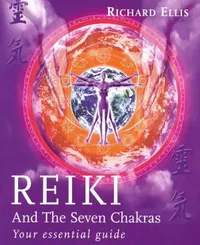


More Free Occult Philosophy Books
View all →