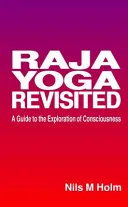
Raja Yoga Revisited
 71
71

Raja Yoga Revisited
Nils Holm’s Raja Yoga Revisited attempts a difficult but necessary task: bridging the chasm between ancient yogic philosophy and the skeptical, scientifically-oriented reader of the 21st century. Holm’s strength lies in his clear prose, which dissects complex ideas from the Upanishads and Yoga Sutras with an almost clinical precision. He rightly prioritizes the ethical and psychological dimensions, framing them as pragmatic prerequisites rather than optional extras. A particularly effective passage explains the Yamas and Niyamas not as moralistic commandments, but as essential scaffolding for mental stability. However, the very rigor that makes the book accessible can sometimes strip away the experiential depth that many seek in yoga. The modern metaphor for meditation, while clever, occasionally feels like an oversimplification of a deeply personal process. Despite this, the book serves as a valuable intellectual primer for understanding yoga's philosophical architecture. It is a solid, analytical re-examination of classical yoga for the modern rationalist.
📝 Description
71
Nils Holm's 2020 book offers a secular reading of classical yogic philosophy.
Raja Yoga Revisited presents a secular interpretation of classical Indian yogic philosophy. Nils Holm translates texts like the Upanishads, Bhagavad Gita, and Patañjali's Yoga Sutras into modern language. The book avoids esoteric jargon, favoring clear explanations of yogic principles for a scientifically-minded audience. It is for individuals interested in the philosophical and psychological aspects of yoga, especially those with a rational approach. Students of comparative religion, psychology, and philosophy will find it useful, as will yoga practitioners seeking a deeper intellectual understanding of its origins. Those skeptical of dogma but open to self-inquiry are also a target audience.
Published in 2020, the book addresses the contemporary disconnect between global yoga practices and their philosophical roots. Holm aims to reconnect physical yoga with the ethical and contemplative systems from ancient Indian scriptures. The work traces the historical development of yogic thought from Vedic times through the classical period. It systematically breaks down core yogic concepts, including the Yamas and Niyamas, viewing them as essential for practice. The book also examines consciousness, concentration, and liberation as described in key texts, framing them as tools for mental discipline. Holm uses a new metaphor to explain meditation's pedagogical process.
This book engages with the tradition of Raja Yoga, a classical path within Indian philosophy. It draws directly from foundational Sanskrit texts like the Upanishads, Bhagavad Gita, and Yoga Sutras. Holm's approach is to deconstruct these teachings, removing layers of tradition and interpretation that may obscure their philosophical and psychological content for contemporary readers. By focusing on the analytical and practical aspects, the work seeks to make these ancient contemplative systems accessible outside of traditional religious or spiritual contexts.
💡 Why Read This Book?
• Gain a scientifically accessible understanding of the ethical framework (Yamas and Niyamas) as outlined in classical yoga texts, appreciating their practical necessity for mental discipline, a concept detailed in the book's exploration of the Yoga Sutras. • Grasp the core philosophical underpinnings of classical yoga, including its Vedic origins and the psychological insights from the Bhagavad Gita, presented in prose designed for 21st-century analytical minds. • Understand a contemporary, secular metaphor for learning meditation, offering a structured approach to contemplative practice derived from the work's analysis of Patañjali's teachings.
⭐ Reader Reviews
Honest opinions from readers who have explored this book.
❓ Frequently Asked Questions
What are the primary yogic scriptures discussed in Nils Holm's Raja Yoga Revisited?
The book extensively analyzes foundational texts including the Upanishads, the Bhagavad Gita, and Patañjali's Yoga Sutras, translating their teachings into modern prose for a contemporary audience.
Is Raja Yoga Revisited suitable for someone with no prior knowledge of yoga philosophy?
Yes, the book is specifically designed for readers with a scientific orientation who may be new to yoga's philosophical background. It explains concepts clearly without assuming prior esoteric knowledge.
How does the book explain the importance of ethics in yoga practice?
Holm presents the Yamas and Niyamas not as moralistic rules, but as pragmatic requirements for building the mental stability and focus necessary for successful yoga and meditation.
What is the publication date of Nils Holm's Raja Yoga Revisited?
The book was first published on May 25, 2020, placing it firmly within contemporary discourse on yoga and philosophy.
Does the book offer practical meditation techniques?
While focusing on the philosophical underpinnings, the book develops a modern metaphor for teaching and learning meditation, aiming to demystify the process for beginners.
Who is the intended audience for this book?
It is intended for scientifically-oriented readers, students of comparative religion and philosophy, and yoga practitioners seeking a deeper intellectual understanding of yoga's origins.
🔮 Key Themes & Symbolism
Secular Yoga Philosophy
Raja Yoga Revisited dissects classical yogic texts like the Upanishads and Yoga Sutras, stripping away religious dogma to reveal their psychological and philosophical core. Holm presents ethical considerations (Yamas and Niyamas) and contemplative practices as pragmatic tools for self-mastery, accessible to a modern, secular mindset. The work emphasizes understanding yoga's origins not as a spiritual path for believers, but as a sophisticated system of mental training applicable to anyone seeking clarity and focus.
Pragmatic Ethics in Practice
This book reframes the Yamas and Niyamas, often seen as moralistic injunctions, as essential prerequisites for effective yoga and meditation. Holm argues that ethical conduct is not merely a spiritual ideal but a foundational requirement for stabilizing the mind and cultivating the concentration needed for deeper practice. The text explores these principles as practical psychological techniques for building inner discipline and resilience, drawing parallels to modern psychological concepts.
Modern Metaphors for Meditation
Recognizing the challenges many face in learning meditation, Holm introduces a novel, contemporary metaphor to explain the process. This approach aims to clarify the experience of sitting meditation, making it more approachable for individuals accustomed to scientific or logical frameworks. By translating ancient contemplative methods into relatable modern analogies, the book seeks to bridge the gap between traditional teachings and contemporary learning styles.
Intellectual Re-examination of Yoga
Raja Yoga Revisited offers a critical and analytical perspective on the historical development and philosophical content of yoga, stemming from its roots in texts like the Bhagavad Gita. It caters to readers who seek intellectual rigor and clear explanations, moving beyond anecdotal accounts or purely spiritual interpretations. The book provides a framework for understanding yoga as a sophisticated system of thought and practice relevant to contemporary intellectual inquiry.
💬 Memorable Quotes
Direct passages from the work, attributed to the author.
“Yoga's ethical considerations are pragmatic requirements for successful practice.”
— This interpretation highlights Holm's central argument that principles like the Yamas and Niyamas are not just ideals, but functional necessities for achieving the mental states associated with yoga.
“Developing a modern metaphor for teaching and learning meditation.”
— This points to the book's innovative approach to pedagogy, using contemporary analogies to explain the often-intimidating process of meditation practice.
“Explaining the backgrounds of traditional yoga as described in the Upanishads, the Bhagavad Gita, and the Yoga Sutras.”
— This highlights the book's scholarly foundation, grounding its modern interpretations in the analysis of key classical Indian philosophical texts.
💡 Key Ideas
Editorial paraphrase of the work's core concepts — not direct quotes.
Translating ancient yoga scriptures to prose that scientifically oriented readers of the 21st century can digest.
This paraphrase emphasizes the book's core mission: to make complex yogic philosophy accessible and understandable to a modern, rational audience, bridging the gap between tradition and contemporary thought.
Exercise and ethical considerations are presented as integral components.
This paraphrase underscores how Holm integrates physical practice and ethical guidelines, presenting them as interconnected elements crucial for a holistic understanding and application of yoga.
🌙 Esoteric Significance
Tradition
While rooted in the classical Indian yogic tradition, particularly the lineage stemming from Patañjali's Yoga Sutras and the Bhagavad Gita, Raja Yoga Revisited departs significantly by adopting a secular, analytical framework. It eschews overt metaphysical claims or devotional language common in many esoteric interpretations, focusing instead on the psychological and philosophical structures of yoga. This positions the work within a Hermetic-like endeavor of universalizing spiritual principles through rational understanding, making them applicable beyond specific religious or cultural contexts.
Symbolism
The book engages with core yogic concepts that function symbolically within the tradition. The 'Ashtanga' (eight limbs) of Raja Yoga, for instance, serves as a symbolic map of the path to self-realization, with each limb representing a stage of development. Ethical precepts like the Yamas (e.g., non-violence, truthfulness) function as symbolic representations of foundational mental states required for progress. The concept of 'Samadhi' itself acts as a potent symbol for ultimate states of consciousness and liberation, explored through a modern lens.
Modern Relevance
Contemporary thinkers and practitioners in fields ranging from mindfulness-based cognitive therapy (MBCT) to secularized meditation movements draw heavily on the philosophical and psychological insights found in classical yoga. Holm's work provides a vital intellectual bridge for these modern applications, offering a clear explanation of the foundational principles. It appeals to secular spirituality movements and cognitive science researchers exploring the benefits of contemplative practices, re-contextualizing ancient wisdom for contemporary psychological and philosophical discourse.
👥 Who Should Read This Book
• Scientific and rational thinkers seeking to understand the philosophical underpinnings of yoga without religious dogma, benefiting from clear prose and a focus on psychological mechanisms. • Students of comparative religion and philosophy interested in the historical and textual basis of yoga, particularly those exploring the Upanishads and Bhagavad Gita from an academic perspective. • Yoga practitioners who desire a deeper intellectual comprehension of their practice, moving beyond physical postures to explore the ethical and contemplative dimensions described by Nils Holm.
📜 Historical Context
Published in 2020, Nils Holm’s Raja Yoga Revisited arrives in an era saturated with popular yoga culture often disconnected from its philosophical origins. The book engages with a long tradition of scholarship that sought to interpret and transmit yogic philosophy, a lineage including figures like Swami Vivekananda, who introduced Vedanta and Raja Yoga to the West in the late 19th century. Holm’s approach distinguishes itself by specifically targeting a scientifically-minded, secular readership, diverging from more devotional or strictly academic interpretations. It implicitly responds to the widespread commodification of yoga, aiming to re-center the practice on its ethical and psychological foundations as described in seminal texts like Patañjali's Yoga Sutras. This work can be seen as part of a broader 21st-century trend in comparative philosophy and religious studies to re-examine classical traditions through contemporary intellectual lenses, often engaging with cognitive science and secular ethics.
📔 Journal Prompts
The pragmatic requirements of the Yamas and Niyamas: how do they function as psychological tools?
Holm's modern metaphor for meditation: what elements of the learning process does it illuminate most effectively?
The philosophical foundations of the Upanishads: what secular interpretations can be drawn?
Patañjali's Yoga Sutras: how do the concepts of concentration and absorption relate to modern cognitive states?
The Bhagavad Gita's ethical considerations: how can they be applied to 21st-century challenges?
🗂️ Glossary
Upanishads
A collection of ancient Sanskrit texts that contain some of the philosophical concepts and ideas of Hinduism, forming the theoretical basis for Vedanta philosophy.
Bhagavad Gita
A 700-verse Sanskrit scripture that is part of the Hindu epic Mahabharata, presenting a dialogue between Prince Arjuna and Lord Krishna on duty, devotion, and liberation.
Yoga Sutras
An ancient Sanskrit text compiled by Patañjali, considered the foundational text of classical yoga philosophy, outlining the path to liberation through focused practice.
Yamas
The ethical restraints or moral disciplines in Patañjali's Yoga Sutras, comprising non-violence (ahimsa), truthfulness (satya), non-stealing (asteya), chastity/right use of energy (brahmacharya), and non-possessiveness (aparigraha).
Niyamas
The observances or self-disciplines in Patañjali's Yoga Sutras, including purity (shaucha), contentment (santosha), austerity (tapas), self-study (svadhyaya), and surrender to a higher power (ishvara pranidhana).
Samadhi
A state of profound meditative consciousness or absorption in classical yoga, often translated as enlightenment, bliss, or union, representing the culmination of yogic practice.
Meditation Metaphor
A conceptual analogy developed by Nils Holm in Raja Yoga Revisited to explain the process of learning and practicing meditation in a way that is accessible to a modern, scientific audience.