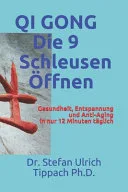
QI GONG Die 9 Schleusen Öffnen
 79
79

QI GONG Die 9 Schleusen Öffnen
Stefan Ulrich Tippach's "Qi Gong: Die 9 Schleusen Öffnen" offers a straightforward, functional approach to a complex energetic practice. The book's strength lies in its clear articulation of the "Opening the Nine Gates" sequence, making it accessible even for those new to Qi Gong. Tippach avoids overly esoteric jargon, focusing instead on the tangible physical benefits. A limitation, however, is the lack of deeper historical or philosophical context that might enrich the practice for more advanced students. The emphasis on joint mobility is well-explained, particularly in the section detailing how circular movements work to lubricate and strengthen these crucial areas. Ultimately, this book serves as a practical, no-nonsense guide to a foundational Qi Gong form.
📝 Description
79
Stefan Ulrich Tippach's "Qi Gong Die 9 Schleusen Öffnen" details a traditional energy cultivation sequence.
This volume focuses on the Qi Gong practice known as "Opening the Nine Gates." It describes a series of circular movements designed to improve physical health, specifically joint mobility and the circulation of vital energy, or Qi. The text grounds these exercises in established Qi Gong principles, presenting a clear method for increasing physical flexibility and inner balance. The exercises aim to build strength in muscles, ligaments, and tendons across the body.
Individuals looking to enhance their physical condition through gentle, regular practice will find this book useful. It is especially appropriate for those dealing with joint stiffness or aiming for greater overall body suppleness. The book is suitable for newcomers to traditional Chinese energetic arts and for those seeking ways to boost their Qi flow for more vitality. It also offers value to practitioners aiming to deepen their understanding of fundamental Qi Gong sequences.
Qi Gong, a practice with ancient Chinese origins, encompasses various health and spiritual cultivation methods. The "Opening the Nine Gates" sequence draws on traditional principles of energy cultivation and meridian theory. Its focus on circular motions and joint articulation connects it to classical Qi Gong forms passed down through generations, often within monastic or martial arts settings. The core idea is to systematically open energy pathways, or "gates," to allow for unimpeded Qi flow, which is central to health and vitality in Chinese medicine.
💡 Why Read This Book?
• Learn the specific "Opening the Nine Gates" sequence to improve joint flexibility and strength, a core tenet of traditional Qi Gong as presented by Stefan Ulrich Tippach. • Understand how targeted circular movements can enhance Qi circulation throughout the body, fostering a sense of internal harmony and vitality. • Gain practical techniques for strengthening muscles, ligaments, and tendons, directly contributing to increased physical suppleness and overall well-being.
⭐ Reader Reviews
Honest opinions from readers who have explored this book.
❓ Frequently Asked Questions
What is the primary benefit of the "Opening the Nine Gates" Qi Gong sequence?
The primary benefit is enhanced physical health, specifically through improved joint mobility, strengthened muscles, ligaments, and tendons, leading to greater overall body suppleness and better Qi circulation.
Are the exercises in "Qi Gong: Die 9 Schleusen Öffnen" difficult to learn?
No, the book emphasizes that the exercises are designed to be easily learnable, making it suitable for beginners interested in traditional Qi Gong practices.
What does 'Qi' mean in the context of this book?
Qi (or Chi) refers to the vital life force or energy believed to flow through the body in traditional Chinese medicine and Qi Gong practices. Enhancing its flow is a key objective of the exercises.
Does this book explain the historical origins of Qi Gong?
While the book focuses on a specific sequence, it situates the practices within the broader context of traditional Qi Gong, which has ancient roots in China.
Who is Stefan Ulrich Tippach?
Stefan Ulrich Tippach is the author who first published "Qi Gong: Die 9 Schleusen Öffnen" in 2019, presenting this traditional Qi Gong sequence.
Is this book suitable for advanced Qi Gong practitioners?
It can serve as a foundational refresher, but its primary focus is on accessible learning for beginners and those seeking to understand this specific sequence's mechanics.
🔮 Key Themes & Symbolism
Vital Energy Flow (Qi)
The central theme is the cultivation and free flow of Qi, the fundamental life force. The "Opening the Nine Gates" sequence is presented as a method to clear energetic blockages, allowing Qi to circulate unimpeded throughout the body. This enhanced flow is directly linked to improved health, vitality, and a sense of internal harmony, reflecting core principles of traditional Chinese energetic practices.
Joint Health and Suppleness
A significant focus is placed on the physical aspect of joint health. The book details circular movements designed to lubricate, strengthen, and increase the flexibility of joints, muscles, ligaments, and tendons. This emphasis aims to counteract stiffness and improve overall bodily suppleness, which is seen as crucial for enabling the smooth passage of Qi.
Traditional Qi Gong Practice
The work is rooted in established, traditional Qi Gong methods. It emphasizes the authenticity and health benefits of these time-tested exercises, distinguishing them from modern adaptations. By presenting the "Opening the Nine Gates" sequence, the book offers a structured way to engage with classical Qi Gong principles for physical and energetic well-being.
Holistic Body Cultivation
The sequence is designed to benefit the entire body, not just isolated parts. By addressing all major joints and promoting systemic Qi circulation, the exercises aim for a holistic integration of physical and energetic systems. This comprehensive approach seeks to bring the practitioner into a state of balance and overall well-being.
💬 Memorable Quotes
Direct passages from the work, attributed to the author.
“Die hier erläuterten kreisenden Übungen gehören zum gesunden und TRADITIONELLEN QI GONG.”
— This statement highlights the book's commitment to presenting authentic, traditional Qi Gong practices. It assures readers that the methods taught are not novel inventions but are rooted in established, health-promoting techniques from this ancient discipline.
“Die Sequenz ,,Die Neun Schleusen öffnen" widmet sich Ihrem gesamten Körper, vor allem den Gelenken.”
— This emphasizes the comprehensive nature of the "Opening the Nine Gates" sequence. It targets the whole body's energetic and physical systems, with a particular emphasis on the joints, suggesting their importance in the overall flow of Qi and physical health.
“Die Übungen sind leicht erlernbar und dienen dazu, Ihre Gelenke, Muskeln, Bänder und Sehnen zu kräftigen.”
— This highlights the accessibility and practical benefits of the exercises. They are designed for easy learning and directly contribute to strengthening the musculoskeletal system, promoting resilience and improved physical function.
“Dies führt dazu, dass Ihr gesamter Körper geschmeidiger wird, sodass QI (Lebenskraft) durch ihn fließen kann und alles in Ihnen zu einem harmonischen...”
— This describes the ultimate goal of the practice: achieving a more supple body that allows for the unimpeded flow of vital energy (Qi). This smooth circulation is presented as the pathway to achieving internal harmony and well-being.
“Sie können mit diesem Buch VIEL für IHRE GESUNDHEIT tun!”
— This direct assertion underscores the book's practical focus on health improvement. It positions the Qi Gong practices as a powerful, accessible tool for readers to actively enhance their own physical well-being.
🌙 Esoteric Significance
Tradition
This work fits within the broad tradition of Chinese Taoist internal arts, specifically focusing on Qi Gong, a practice aimed at cultivating and balancing vital energy (Qi). It aligns with Taoist principles of harmony with nature, internal alchemy, and longevity through energetic cultivation. While not explicitly exploring complex Taoist cosmology, the emphasis on Qi flow and bodily integration reflects foundational Taoist concepts of interconnectedness and the body as a microcosm.
Symbolism
The primary symbolic concept is the "Nine Gates" themselves, representing specific junctures or pathways within the body's energetic system (meridians). "Opening" these gates signifies clearing blockages and facilitating the unimpeded flow of Qi. The circular movements employed are also symbolic, representing the continuous, cyclical nature of universal energies and the body's own energetic processes, mirroring concepts found in the Yin-Yang dynamic.
Modern Relevance
Contemporary practices in somatic therapy, mindful movement, and holistic health frequently draw upon Qi Gong principles. Modern interpretations of Qi Gong, including those focusing on stress reduction, chronic pain management, and athletic conditioning, echo the goals presented in this book. Thinkers and practitioners exploring embodied consciousness and energy medicine often find value in foundational sequences like the "Nine Gates" for their direct impact on physical vitality and energetic balance.
👥 Who Should Read This Book
• Individuals new to Qi Gong seeking a practical, accessible introduction to traditional exercises for improving physical health and energy flow. • Practitioners experiencing joint stiffness or seeking to enhance overall body suppleness and mobility through gentle, consistent movement. • Those interested in foundational Chinese energetic practices who want to understand and perform the specific "Opening the Nine Gates" sequence.
📜 Historical Context
Published in 2019, Stefan Ulrich Tippach's work arrives in an era where Qi Gong, originating in ancient China, has gained global recognition as a health practice. While its roots trace back thousands of years, its systematic study and dissemination in the West accelerated significantly in the late 20th century. This book focuses on a specific, traditional sequence, "Opening the Nine Gates," which aligns with classical methods emphasizing joint mobility and energy flow. It exists within a landscape populated by numerous Qi Gong styles and interpretations, from medical Qi Gong to martial arts applications. Contemporary figures like Mantak Chia have also popularized various Qi Gong systems globally. Tippach's contribution lies in detailing a specific, accessible sequence rooted in traditional forms, offering a clear entry point for practitioners interested in its foundational aspects.
📔 Journal Prompts
The concept of 'Qi' as vital life force: how does the idea of its flow connect to your physical sensations?
Reflecting on the 'Nine Gates' sequence: which joint movements felt most challenging or most beneficial during practice?
The goal of body suppleness: what does increased flexibility mean for your daily activities and overall well-being?
Traditional Qi Gong principles: how does the emphasis on circular movements align with or contrast with your understanding of energy cultivation?
Health through practice: identify one specific physical benefit you hope to achieve by consistently performing these exercises.
🗂️ Glossary
Qi Gong (Chi Kung)
An ancient Chinese practice combining gentle physical movements, breathing techniques, and meditation to cultivate and balance vital life force (Qi) for health and spiritual development.
Qi (Chi)
The fundamental vital life force or energy believed to flow through all living beings and the universe in traditional Chinese philosophy and medicine.
Die 9 Schleusen Öffnen (Opening the Nine Gates)
A specific sequence of Qi Gong exercises focused on systematically opening energetic pathways, particularly related to the joints, to improve Qi circulation and physical health.
Gelenke (Joints)
The crucial points where bones connect, allowing for movement. In Qi Gong, joint health is emphasized for flexibility and unimpeded energy flow.
Lebenskraft (Life Force)
A direct translation of Qi, referring to the vital energy that animates living organisms and is central to health and vitality in many traditional systems.
Muskeln, Bänder und Sehnen (Muscles, Ligaments, and Tendons)
The components of the musculoskeletal system that the Qi Gong exercises aim to strengthen, contributing to overall physical resilience and suppleness.
Traditionell
Referring to methods, practices, or knowledge passed down through generations within a specific cultural or disciplinary context, emphasizing authenticity and established principles.