The Great and Powerful
 79
79

The Great and Powerful
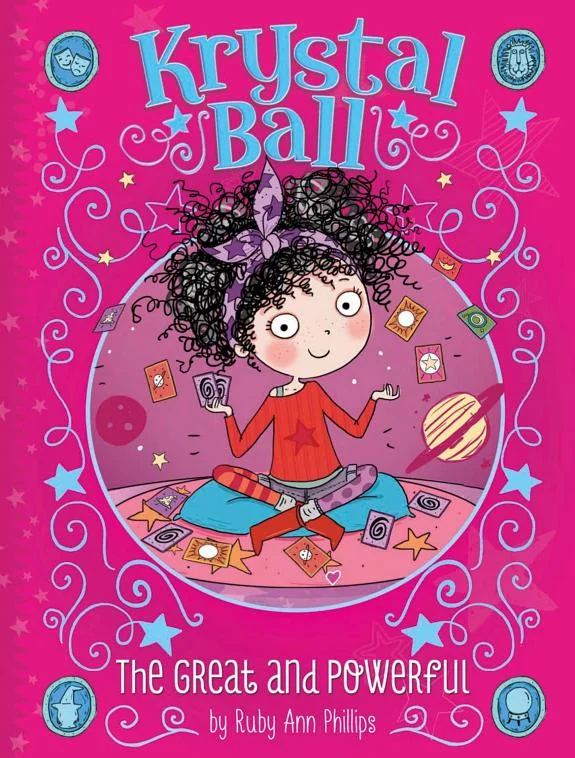
Phillips's "The Great and Powerful" offers a charming, if straightforward, exploration of childhood social dynamics through a familiar Oz lens. The premise of Krystal Ball, a nine-year-old with a penchant for fortune-telling, attempting to mend fences with a bully is endearing. The book's strength lies in its accessible portrayal of Krystal's internal conflict and her imaginative approach to conflict resolution. However, the narrative occasionally leans into predictability, with the resolution feeling somewhat swift. A notable moment is Krystal’s contemplation of Emily’s motivations, a quiet but significant turning point that hints at deeper psychological exploration. While the fortune-telling element serves more as a narrative device for Krystal’s agency than a literal magical system, its integration provides a unique angle. The work ultimately serves as a gentle reminder of the power of intention in shaping relationships.
📝 Description
79
In 2014, Ruby Ann Phillips wrote "The Great and Powerful" about a nine-year-old discovering her psychic abilities.
Krystal Ball, a nine-year-old protagonist in Ruby Ann Phillips's 2014 novel "The Great and Powerful," faces disappointment when she does not get the lead role in her class play, an adaptation of "The Wizard of Oz." The part goes to Emily, a classmate who bullies Krystal. This situation prompts Krystal to use her developing fortune-telling skills not for predicting the future, but as a tool to manage social conflicts. The narrative focuses on how Krystal applies her intuition to understand and influence the dynamics between herself and Emily.
The book is aimed at middle elementary school readers. It appeals to children who like familiar stories, such as those based on "The Wizard of Oz," and characters who find unique solutions to problems. Parents and educators might find the story useful for discussions on empathy, resolving disagreements, and using inner knowing to handle social challenges.
While "The Great and Powerful" uses a contemporary setting, its exploration of a child's psychic abilities connects it to a tradition of literature that examines the supernatural within everyday life. Phillips's work revisits the enduring appeal of "The Wizard of Oz," a story itself containing elements of the fantastical and the uncanny. The novel's focus on using intuition for social maneuvering aligns with broader esoteric interests in the practical application of inner perception, moving beyond simple prediction to personal empowerment.
💡 Why Read This Book?
• Learn how Krystal Ball uses her "fortune-telling talents" to navigate peer conflict, offering a unique strategy for social problem-solving beyond conventional methods. • Understand the significance of the 2014 publication date in the context of contemporary children's literature, which often revisits classic narratives like "The Wizard of Oz." • Discover how the story reinterprets the archetypal characters from L. Frank Baum's Oz for a modern audience, exploring themes of empathy through Krystal’s perspective.
⭐ Reader Reviews
Honest opinions from readers who have explored this book.
❓ Frequently Asked Questions
What is the original publication year of "The Great and Powerful"?
The book "The Great and Powerful" by Ruby Ann Phillips was first published in 2014, placing it within the contemporary landscape of children's literature.
What classic story is "The Great and Powerful" based on?
The book draws inspiration from L. Frank Baum's "The Wonderful Wizard of Oz," adapting its narrative framework for a story about contemporary childhood friendships and challenges.
Who is the protagonist of "The Great and Powerful"?
The protagonist is a nine-year-old girl named Krystal Ball, who possesses unique talents and faces a common childhood challenge: dealing with a class bully.
What is the main theme explored in the book?
The primary theme is conflict resolution and the transformation of adversarial relationships, particularly how one can use their unique abilities, like Krystal's fortune-telling, to foster understanding.
Is "The Great and Powerful" suitable for young readers?
Yes, with its focus on relatable childhood experiences, a clear narrative, and themes of empathy and problem-solving, it is well-suited for middle elementary school readers.
What is Krystal Ball's unique talent?
Krystal Ball's talent is described as fortune-telling, which she aims to use not for predicting the future, but for influencing present social dynamics and turning an enemy into a friend.
🔮 Key Themes & Symbolism
Transforming Adversaries
The narrative centers on Krystal Ball's ambition to transmute her relationship with Emily, a class bully, from one of antagonism to one of amity. This theme is explored through Krystal's belief in her "fortune-telling talents" as a tool for social intervention, suggesting that understanding and gentle influence can reshape negative interpersonal dynamics. It moves beyond simple avoidance or confrontation, proposing a more nuanced approach to conflict resolution rooted in empathy and strategic interaction, echoing the transformative journeys found in classic allegorical tales.
The Power of Intention
Phillips highlights how Krystal's intention to foster friendship, rather than simply win a role in a play, guides her actions. The concept of intention is portrayed as a powerful force capable of influencing outcomes, particularly in social contexts. Krystal's belief in her ability to "turn an enemy into a friend" stems from a focused, positive intent. This theme encourages readers to consider the impact of their own motivations and the potential for proactive, benevolent intentions to create positive change in their relationships and environments.
Oz Archetypes Reimagined
By framing the story around a class play of "The Wizard of Oz," the author taps into a well-understood narrative structure and character archetypes. Krystal's disappointment over the role of Dorothy and the presence of a bully like Emily serve as modern elements of the original Oz narrative's challenges. This reimagining allows for the exploration of familiar themes—friendship, courage, and finding one's way—within a contemporary school setting, making the classic lessons accessible to a new generation of readers.
Intuition as a Social Tool
Krystal's "fortune-telling talents" function less as literal divination and more as a metaphor for heightened intuition and emotional intelligence. The book suggests that understanding subtle cues and underlying motivations in others can be a powerful asset. Krystal’s approach to dealing with Emily implies a sophisticated reading of social situations, where her intuitive insights guide her strategy for de-escalation and connection. This positions intuition not as a mystical abstraction, but as a practical skill for navigating social complexities.
💬 Memorable Quotes
Direct passages from the work, attributed to the author.
“Maybe she can use her fortune-telling talents to turn an enemy into a friend.”
— This core idea captures the book's unique approach to conflict resolution. It suggests that Krystal's abilities are not for predicting events but for actively shaping social relationships, positioning her as a proactive agent in transforming negative dynamics through intention and intuition.
“Krystal is disappointed when class bully Emily gets the part of Dorothy.”
— This highlights the central conflict and Krystal's initial emotional response. It sets up the narrative arc where Krystal must overcome her disappointment and find a way to address the social hierarchy and bullying within her classroom.
“Nine-year-old Krystal Ball's class is performing a play based on The Wizard of Oz.”
— This establishes the narrative frame and the specific context for the story. The choice of "The Wizard of Oz" provides a rich backdrop of familiar themes and characters that the contemporary story can then reinterpret and build upon.
“Emily, class bully.”
— This concise description immediately defines Emily's role and her function as an antagonist within the classroom setting. It signals to the reader the primary social challenge Krystal must confront and overcome.
“Krystal Ball’s class...”
— This emphasizes the communal aspect of the narrative, grounding Krystal's personal challenges within the social environment of her classroom. It suggests that her struggles and resolutions will unfold within a shared space, involving peer interactions.
🌙 Esoteric Significance
Tradition
While not explicitly tied to a singular esoteric tradition like Hermeticism or Gnosticism, "The Great and Powerful" draws on archetypal narrative structures common in Western esoteric thought, particularly those related to personal transformation and the overcoming of shadow aspects. The concept of using one's inner faculties (intuition, "fortune-telling talents") to transmute external challenges echoes themes found in psychological alchemy and the development of inner will, as explored by figures like Carl Jung. The narrative's focus on intention and subtle influence aligns with certain philosophical underpinnings of manifestational practices found in modern occultism.
Symbolism
The most prominent symbol is "fortune-telling," which functions metaphorically for heightened intuition and the ability to perceive underlying social dynamics. Krystal's desire to "turn an enemy into a friend" symbolizes the alchemical process of transforming base (antagonistic) energies into higher (harmonious) ones. The play itself, based on "The Wizard of Oz," serves as a meta-symbol, representing a familiar journey of self-discovery and confronting perceived limitations, which Krystal's real-life situation mirrors.
Modern Relevance
Contemporary practices focusing on emotional intelligence, conflict resolution through empathy, and the power of positive intention in personal development can find resonance with the themes in "The Great and Powerful." While not a direct source for practitioners, the book's accessible approach to transforming social dynamics through internal agency aligns with modern self-help and mindfulness movements that encourage proactive engagement with one's environment and interpersonal relationships. Its focus on intuitive problem-solving also speaks to current interest in non-linear thinking and emotional cognition.
👥 Who Should Read This Book
• Young readers aged 8-12 who enjoy stories with relatable characters and a touch of the extraordinary, particularly those interested in overcoming social challenges. • Parents and educators seeking age-appropriate literature that explores themes of empathy, conflict resolution, and using one's unique abilities for positive social interaction. • Fans of "The Wizard of Oz" who appreciate creative retellings and reinterpretations of classic narratives within contemporary settings.
📜 Historical Context
Published in 2014, Ruby Ann Phillips's "The Great and Powerful" emerged during a period marked by a resurgence of interest in fairy tale retellings and adaptations across various media. This era saw numerous authors and filmmakers reinterpreting classic stories for contemporary audiences, often infusing them with modern sensibilities and psychological depth. Phillips's work engages with the enduring legacy of L. Frank Baum's "The Wonderful Wizard of Oz," first published in 1900. While Baum's original was itself a departure from earlier didactic children's literature, Phillips's 2014 novel situates itself within a tradition of secondary fantasy that builds upon established worlds. Unlike the more overtly philosophical or allegorical re-examinations of Oz by scholars or authors like Roger S. Baum, Phillips focuses on a relatable, age-appropriate social conflict, using the Oz framework as a familiar touchstone for young readers navigating their own social landscapes.
📔 Journal Prompts
Krystal Ball's approach to turning an enemy into a friend.
The role of intention in shaping social outcomes.
Interpreting the "fortune-telling talents" metaphor.
Navigating disappointment when a desired role is not obtained.
Empathy towards classmates like Emily.
🗂️ Glossary
Krystal Ball
The nine-year-old protagonist of the story. Her name is a playful nod to the fortune-telling theme and the 'Wizard of Oz' narrative.
Fortune-telling talents
Described as Krystal's unique ability, used metaphorically in the book to represent intuition, empathy, and the capacity to influence social dynamics rather than literal prediction.
Class bully
Refers to Emily, a character who creates social conflict for Krystal and her classmates, representing a common challenge in childhood social dynamics.
The Wizard of Oz
The classic children's novel by L. Frank Baum, which serves as the basis for the play Krystal's class is performing, providing a narrative framework and thematic echoes.
Turning an enemy into a friend
The central goal Krystal aims to achieve using her talents, representing the transformation of negative relationships into positive ones through understanding and proactive effort.
Dorothy
The main character in "The Wizard of Oz," whose role in the class play is desired by Krystal and ultimately given to Emily.
2014 publication
The year Ruby Ann Phillips's book was first released, situating it within the contemporary range of children's literature and fairy tale adaptations.
This book appears in 1 collection
🔮 Readers Also Liked
Browse all →








From the “Precognition” Collection
View all →





More Free Occult Philosophy Books
View all →