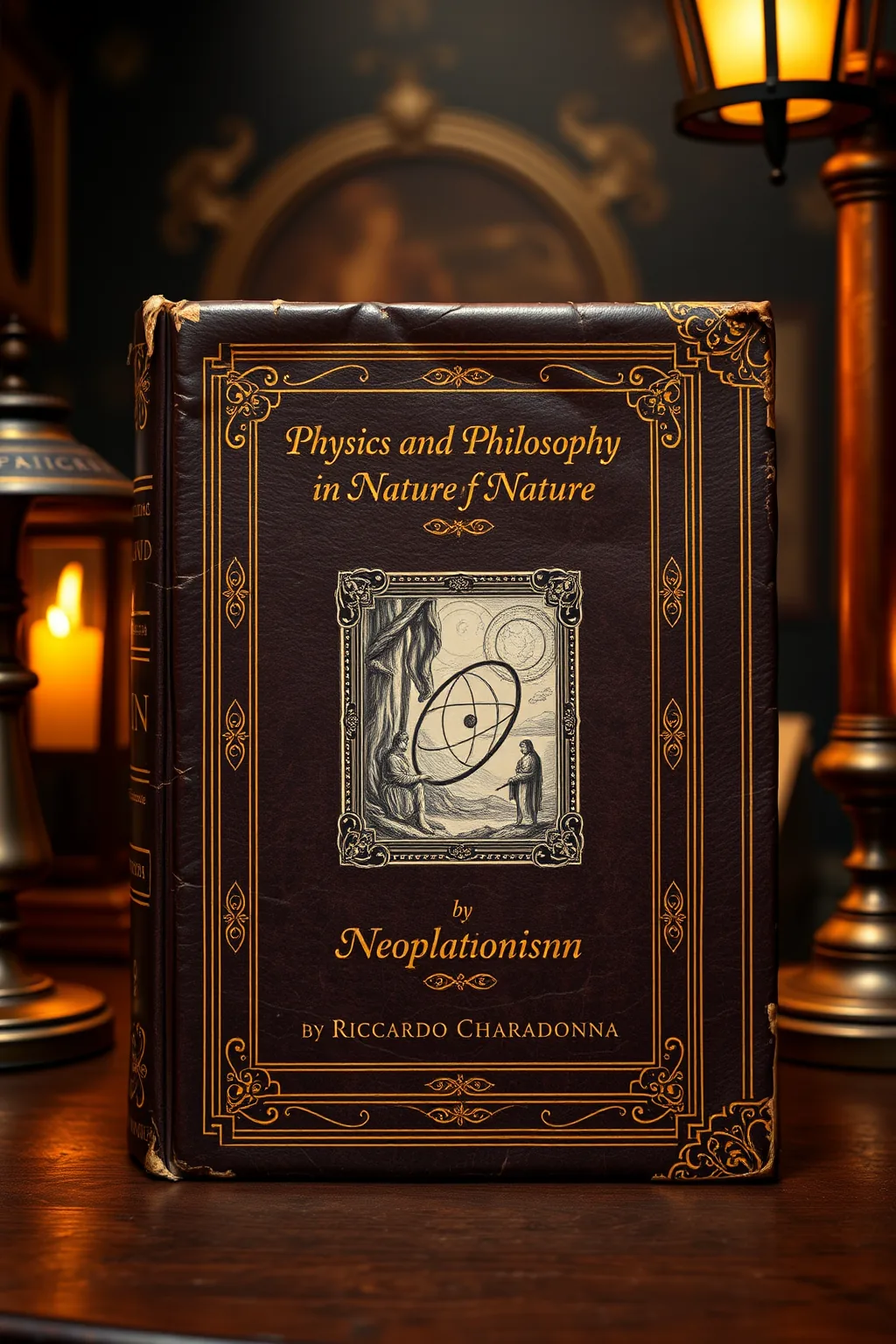
Physics and Philosophy of Nature in Greek Neoplatonism
 75
75

Physics and Philosophy of Nature in Greek Neoplatonism
The scholarship presented in Physics and Philosophy of Nature in Greek Neoplatonism effectively addresses a long-standing lacuna in the study of late antique thought. The essays collectively demonstrate the sophisticated engagement of Neoplatonists with the natural world, moving beyond simplistic interpretations of their metaphysics. A particular strength lies in the detailed analysis of Plotinus' physics, where the concept of matter is explored not as mere privation but as a necessary substrate for the sensible world’s existence, a point elaborated upon in relation to the primary matter discussed in Enneads III.6. While the collection is academically rigorous, its dense prose and specialized focus may present a barrier for readers without a strong background in classical philosophy. Nevertheless, for those seeking a deep dive into the physical cosmology and scientific underpinnings of Neoplatonism, this work offers substantial and well-researched material. It successfully argues for the centrality of nature's philosophy in the Neoplatonic system.
📝 Description
75
Ten papers collected in 2016 examine Greek Neoplatonism's natural philosophy.
This collection gathers ten essays on the natural philosophy of Greek Neoplatonism, a subject often neglected in scholarship. The papers trace the development of these ideas from Plotinus in the 3rd century CE to Simplicius in the 6th century CE. They argue for the importance of studying nature within late antique philosophy and its lasting historical impact.
The volume is aimed at academics, graduate students, and researchers specializing in ancient philosophy, the history of science, and late antique intellectual history. It will also interest scholars of esoteric traditions who want a text-based study of how metaphysical systems engaged with the natural world. Readers should have a basic understanding of Greek philosophy and the Neoplatonic school.
The essays engage with a period of significant philosophical activity after Neoplatonism was established. Thinkers of this time wrestled with Aristotelian physics, Platonic cosmology, and early Christian theology. The work reflects a scholarly shift from the late 20th century, moving beyond a sole focus on Neoplatonism's metaphysical or ethical aspects. It revisits an intellectual tradition where the cosmos was understood through divine emanation and hierarchical order.
Greek Neoplatonism, originating with Plotinus in the 3rd century CE, represents a philosophical system that sought to understand the cosmos as a divine emanation from a transcendent One. Its natural philosophy is not merely scientific inquiry but an integral part of a spiritual path aimed at ascent and reunification with the divine source. This collection shows how Neoplatonists like Porphyry and Simplicius interpreted the physical world as a reflection of intelligible realities, employing concepts like the World Soul and hierarchical order to explain natural phenomena. Their approach viewed nature as imbued with divine principles, making its study a crucial step in comprehending the structure of reality and achieving philosophical insight.
💡 Why Read This Book?
• Gain a nuanced understanding of the Neoplatonic conception of matter, moving beyond simplistic notions of it being purely negative, as explored in discussions related to Plotinus' physics (circa 250 CE). • Discover how Neoplatonic philosophers integrated mathematical principles into their cosmology, viewing them as fundamental to the order of the sensible world, a concept central to the work's exploration of the cosmos. • Appreciate the historical trajectory of Neoplatonic physics from Plotinus to Simplicius (circa 530 CE), understanding its influence and legacy within the broader context of ancient and medieval thought.
⭐ Reader Reviews
Honest opinions from readers who have explored this book.
❓ Frequently Asked Questions
What is the primary focus of 'Physics and Philosophy of Nature in Greek Neoplatonism'?
This collection of essays concentrates on the philosophy of nature within Greek Neoplatonism, tracing its development from Plotinus to Simplicius and highlighting its historical significance, which traditional scholarship has often overlooked.
Which key Neoplatonic figures are discussed in the book?
The book covers a range of influential Neoplatonists, prominently featuring Plotinus, the founder of the school, and extending through to later thinkers like Simplicius, who commented extensively on Aristotle.
What historical period does the book primarily address?
The book focuses on the late antique period, specifically examining Neoplatonic thought from its origins in the 3rd century CE through to the 6th century CE.
How does this book challenge traditional scholarship?
It directly challenges the traditional view that neglected Neoplatonism's philosophy of nature, asserting its crucial importance in late antique thought and outlining its significant historical legacy.
What is the academic level of this publication?
This is an academic work featuring ten scholarly papers, making it suitable for university students and researchers specializing in ancient philosophy and the history of science.
Does the book offer new interpretations of Neoplatonic physics?
Yes, by concentrating on this specific area, the book builds on recent scholarly interest to offer detailed analyses and new perspectives on Neoplatonic engagement with the natural world.
🔮 Key Themes & Symbolism
The Emanationist Cosmos
The Neoplatonic worldview presented here is fundamentally emanationist, positing that the physical universe is a direct outflow from the ultimate divine principle, the One. This is not a creation ex nihilo but a continuous outpouring of being. The work examines how this hierarchical structure, flowing from the Intellect (Nous) down to matter, informed the Neoplatonic understanding of natural phenomena. The sensible world, therefore, is viewed as a reflection, albeit imperfect, of higher intelligible realities, imbued with a soul (World Soul) that animates and orders it.
Matter as Substrate
Contrary to simplistic interpretations, Neoplatonists like Plotinus (in his discussions around 250 CE) did not entirely dismiss matter. Instead, they conceptualized it as a necessary substrate or receptacle for the forms emanated from the divine. The book examines how matter, often associated with 'the other' or 'difference', plays a central role in the existence of multiplicity and the material world. Understanding matter's place within the emanationist scheme is key to grasping the Neoplatonic physics of sensible reality.
The Role of Mathematics
Mathematics occupied a central position in Neoplatonic thought, serving as a bridge between the purely intelligible and the sensible realms. The collection explores how mathematical concepts and forms were seen as the underlying principles that structure the physical cosmos, providing order and intelligibility to nature. This approach reflects an ancient tradition of viewing the universe as governed by rational, quantifiable laws, a perspective that profoundly influenced subsequent scientific and philosophical thought.
Nature as Divine Reflection
The Neoplatonic philosophy of nature interprets the observable world not as an independent entity but as a manifestation or reflection of divine intelligence and beauty. Every natural form and process carries traces of its transcendent source. The work investigates how thinkers like Porphyry sought to understand the divine order within the intricacies of the natural world, seeing it as a ladder to ascend towards the contemplation of the ultimate Good.
💬 Memorable Quotes
Direct passages from the work, attributed to the author.
“The Neoplatonic physics is not about describing phenomena but about understanding the intelligible principles that make them possible.”
— This interpretation highlights that Neoplatonic natural philosophy was less empirical science and more metaphysical cosmology. The focus was on the 'why' and the 'from where' of existence, rooted in divine emanations rather than material observation alone.
“Plotinus' conception of matter is a necessary receptacle for the sensible world's existence.”
— This interpretation captures a key argument about Plotinus' physics, indicating that matter, far from being purely negative, served as the fundamental ground upon which the forms of the sensible world could be instantiated.
“Simplicius' commentaries provide a vital link to Aristotelian physics within the Neoplatonic framework.”
— This interpretation points to the importance of Simplicius' work in bridging Neoplatonic metaphysics with Aristotelian scientific thought, showing how later Neoplatonists engaged with and reinterpreted earlier philosophical traditions concerning nature.
“The inherent order of the cosmos reflects the divine Intellect.”
— This interpretation suggests that Neoplatonists saw the patterns, laws, and beauty in the natural world as direct manifestations of the rational structure of the divine Mind (Nous), implying a divinely ordered universe.
💡 Key Ideas
Editorial paraphrase of the work's core concepts — not direct quotes.
The collection revisits the crucial, often neglected, role of nature in the Neoplatonic system.
This paraphrased concept underscores the book's central thesis: that the study of nature was integral to Neoplatonism, not a peripheral concern, and that previous scholarly neglect has led to an incomplete understanding of these ancient thinkers.
🌙 Esoteric Significance
Tradition
This work is deeply rooted in the Hellenistic philosophical tradition, particularly the Platonic and Pythagorean streams that formed the bedrock of Neoplatonism. While not directly aligned with Hermeticism or Gnosticism, it engages with similar cosmological questions about the origin and structure of the universe from a divine source. Neoplatonism, as presented here, offers a philosophical framework for understanding the cosmos as a divinely ordered, hierarchical emanation, providing a metaphysical underpinning for many esoteric worldviews that see the material world as a reflection of higher realities.
Symbolism
Key symbols explored include the 'One' as the ultimate, ineffable source of all being, and the 'Intellect' (Nous) as the field of Forms and divine Mind. The 'World Soul' acts as a mediating principle, imbuing the cosmos with life and order. Matter, often seen as 'the other' or 'difference', is also a crucial concept, representing the receptacle that allows for the manifestation of multiplicity in the sensible world, a concept vital for understanding the Neoplatonic view of creation.
Modern Relevance
Contemporary esoteric schools and thinkers, particularly those within Western esotericism interested in perennial philosophy and traditional cosmology, draw heavily on Neoplatonic ideas. Modern Hermeticists, Theosophists, and even some psychological approaches to mythology and symbolism find resonance in the Neoplatonic concept of hierarchical emanation and the idea of the cosmos as a manifestation of divine Mind. The work's exploration of the relationship between the intelligible and sensible realms remains relevant for those seeking a metaphysical understanding of reality.
👥 Who Should Read This Book
• Academic researchers in ancient philosophy and the history of science seeking a comprehensive overview of Neoplatonic physics. • Graduate students in Classics or Religious Studies needing to understand the sophisticated cosmological theories of late antiquity. • Practitioners of Western Esoteric traditions interested in the philosophical underpinnings of concepts like emanation, the World Soul, and the divine order of the cosmos as explored by Plotinus and his successors.
📜 Historical Context
Physics and Philosophy of Nature in Greek Neoplatonism emerges from a crucial period in late antiquity, roughly spanning the 3rd to 6th centuries CE. This era saw the consolidation and development of Neoplatonism, a philosophical system that sought to synthesize Platonic, Aristotelian, and Pythagorean ideas, often in dialogue with nascent Christian theology. Thinkers like Plotinus, Porphyry, Iamblichus, Proclus, and Simplicius were active during this time, each contributing to the intricate metaphysical and cosmological frameworks of the school. While Neoplatonism is often studied for its metaphysics and ethics, this collection highlights the significant attention paid to the philosophy of nature. The work implicitly addresses a scholarly re-evaluation that gained traction in the late 20th century, countering earlier tendencies to dismiss Neoplatonic physics as mere speculative fancy. The intellectual climate was one where pagan philosophical traditions, including Platonism and Aristotelianism, were still vibrant, even as Christianity became the dominant religious and cultural force. Simplicius, writing in the 6th century, exemplifies this engagement by producing extensive commentaries on Aristotle's scientific works, attempting to reconcile them with a broadly Neoplatonic outlook.
📔 Journal Prompts
The Neoplatonic conception of matter as a receptacle for sensible forms.
The hierarchical structure of emanation from the One to the material world.
Plotinus' views on the relationship between the intelligible realm and the physical universe.
Simplicius' engagement with Aristotelian physics within a Neoplatonic context.
The World Soul as an animating and ordering principle of nature.
🗂️ Glossary
Neoplatonism
A school of philosophy originating in the 3rd century CE with Plotinus, characterized by a hierarchical view of reality emanating from an ultimate, ineffable One, and emphasizing the soul's ascent towards divine union.
The One
The ultimate, transcendent, and ineffable source of all reality in Neoplatonism, beyond being and thought, from which all existence emanates.
Nous (Intellect)
The second hypostasis in Neoplatonism, the divine Mind that contains the Platonic Forms and is the source of all intelligibility and rational order in the universe.
World Soul
The third hypostasis in Neoplatonism, a mediating principle that animates and orders the sensible cosmos, bridging the gap between the intelligible realm and physical matter.
Matter (hyle)
In Neoplatonism, matter is often understood as a receptacle or substrate for the Forms emanated from the Intellect, necessary for the existence of the sensible world, and associated with 'difference' or 'privation'.
Emanation
The Neoplatonic doctrine that all reality proceeds from the One in a hierarchical outpouring, without diminishing the source, analogous to light emanating from a source.
Hypostasis
A fundamental principle or level of reality in Neoplatonic metaphysics, such as the One, Intellect (Nous), and World Soul.