Psychic Development for Beginners
 73
73

Psychic Development for Beginners
Grace Loveman’s Psychic Development for Beginners offers a refreshingly direct entry point into the often-opaque world of psychic ability. Its strength lies in its no-nonsense presentation; it avoids the mystical jargon that can alienate newcomers. The exercises, such as those designed to hone clairvoyance through focused visualization, are practical and clearly explained. However, the work occasionally leans into an overly simplistic framing of complex phenomena, sometimes downplaying the psychological nuances that can mimic or interfere with genuine psychic perception. A passage discussing the interpretation of dream symbolism, while helpful, could benefit from deeper exploration of Jungian archetypes or even more esoteric dream dictionaries. Despite this limitation, the book serves as a competent primer for those stepping onto this particular path.
📝 Description
73
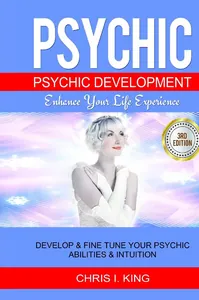
Grace Loveman's Psychic Development for Beginners, published in 2013, offers a structured path to building intuitive skills.
This book is for individuals new to psychic phenomena, requiring no prior experience beyond a willingness to practice. Loveman presents psychic abilities as inherent potentials that can be developed through consistent effort and an open mind, rather than exclusive gifts. The text focuses on practical, step-by-step guidance for understanding and strengthening one's own intuitive faculties. It emphasizes self-assessment and a gradual progression from basic awareness to more refined intuitive reception.
Loveman guides readers to distinguish authentic psychic impressions from ordinary thoughts or desires. The exercises are designed to awaken and hone these senses methodically. The approach aims to make esoteric knowledge accessible, mirroring a historical trend to democratize spiritual understanding beyond exclusive circles.
Published in 2013, Psychic Development for Beginners fits within a modern tradition of spiritual self-help. Its principles align with the democratizing aims of movements like Theosophy and New Age thought, which sought to make esoteric knowledge widely available. While not directly referencing 19th-century figures, the book echoes their efforts to present spiritual development as an accessible practice for everyday individuals.
💡 Why Read This Book?
• You will learn specific mental exercises designed to awaken your latent psychic abilities, directly addressing the 'how-to' aspect of intuitive development as outlined in the book's early chapters. • You will gain an understanding of how to assess your own psychic sensitivities, moving beyond abstract notions to concrete self-evaluation techniques presented by Loveman. • You will feel empowered by the book's core message that psychic potential is universal, providing practical steps that anyone with an open mind can follow, as emphasized in the initial chapters.
⭐ Reader Reviews
Honest opinions from readers who have explored this book.
❓ Frequently Asked Questions
What kind of psychic abilities does 'Psychic Development for Beginners' focus on?
The book covers a range of common psychic abilities, including intuition, telepathy, clairvoyance, and precognition. It aims to provide foundational exercises for developing awareness in these areas, rather than specializing in one particular gift.
Do I need any special talents to use this book?
No, Grace Loveman explicitly states that no special gifts or superior intellect are required. The book is designed for beginners who possess only an open mind and a willingness to learn and practice the provided exercises.
When was 'Psychic Development for Beginners' first published?
The book was first published on July 9, 2013. This contemporary publication date places it within modern discussions of spirituality and personal development.
Are the exercises in the book difficult to perform?
The exercises are presented as 'FANTASTIC mental exercises' intended for beginners. They are designed to be accessible and gradually build upon basic principles of focus, visualization, and self-awareness.
Does the book explain how to interpret psychic experiences?
Yes, the book addresses the interpretation of psychic impressions. It guides readers on how to discern genuine intuitive signals from everyday thoughts or imagination, a crucial aspect of psychic development.
What is the main goal of 'Psychic Development for Beginners'?
The primary goal is to guide readers toward fulfilling their psychic development by teaching them to tap into their innate psychic abilities through practical mental exercises and self-awareness.
🔮 Key Themes & Symbolism
Universal Psychic Potential
The core tenet of Loveman's work is that psychic abilities are not reserved for an elite few but are inherent potentials within everyone. This challenges the notion of 'chosen ones' and democratizes spiritual development, suggesting that anyone with an open mind and consistent effort can cultivate their intuition. The book aims to dismantle the idea that one needs pre-existing 'gifts' to begin this path, focusing instead on accessible techniques.
Practical Exercise Methodology
Loveman emphasizes a hands-on approach, providing a series of 'FANTASTIC mental exercises' designed for progressive development. These are not theoretical discussions but actionable steps intended to build focus, visualization skills, and receptivity. The book serves as a workbook, guiding the reader through specific practices to awaken and refine their intuitive faculties over time.
Self-Assessment and Discernment
A significant aspect of the book involves learning to accurately assess one's own psychic experiences. Loveman guides readers in distinguishing genuine intuitive insights from subconscious thoughts, desires, or external influences. This critical self-awareness is presented as foundational to reliable psychic development, ensuring that practitioners can trust the information they receive.
Mindset for Development
Beyond specific techniques, the book stresses the importance of an appropriate mental and emotional attitude. An 'open mind and a willingness to learn' are presented as the primary prerequisites for success. This highlights the psychological aspect of psychic work, suggesting that receptivity, patience, and a lack of rigid skepticism are crucial for unlocking one's potential.
💬 Memorable Quotes
Direct passages from the work, attributed to the author.
“You do not need to possess any special gifts or have a superior intellect in order to develop your psychic abilities - just an open mind and a willingness to learn.”
— This statement captures the book's accessible philosophy, aiming to explain psychic development and assure aspiring practitioners that the journey is available to anyone committed to the process.
“We all possess within us certain psychic gifts.”
— This assertion frames psychic ability not as an external bestowal but as an intrinsic human capacity, encouraging readers to look inward and recognize their own potential for intuitive perception.
“Learn how to tap into your own innate psychic ability.”
— This direct instruction highlights the practical, skill-building nature of the book, promising readers tangible methods to access and utilize their inherent intuitive powers.
“FANTASTIC mental exercises that will help guide you down the path towards the fulfillment of your psychic development.”
— This phrase emphasizes the book's core offering: a structured series of engaging mental practices designed to facilitate a progressive journey toward psychic realization.
“assess the question, 'Which psychic abilities do I possess?'”
— This points to a key objective of the book: enabling readers to identify and understand their unique intuitive strengths through guided self-exploration.
🌙 Esoteric Significance
Tradition
This work fits broadly within the modern New Age and self-help spiritual traditions, which often draw eclectically from various esoteric lineages without strict adherence to any single one. It democratizes concepts previously explored within more formal Hermetic, Theosophical, or even parapsychological frameworks, making them accessible through practical, individual effort rather than requiring initiation into a specific school.
Symbolism
While the book focuses heavily on practical exercises rather than symbolic systems, the underlying concept of 'tapping into' innate abilities can be seen as a metaphor for accessing the inner divine spark or higher self, common in Neoplatonic and Hermetic thought. The 'path' mentioned in the blurb also evokes the classic esoteric concept of the spiritual journey or the 'path of return'.
Modern Relevance
Loveman's approach speaks to contemporary interest in mindfulness, intuition, and personal empowerment. It serves as an entry point for individuals exploring practices found in modern intuitive development circles, energy healing modalities, and even certain branches of positive psychology that investigate subjective experience and potential.
👥 Who Should Read This Book
• Aspiring psychics seeking a structured, step-by-step introduction to developing their intuitive faculties, providing clear exercises and foundational knowledge. • Individuals curious about their own latent psychic potential but intimidated by complex esoteric doctrines, offering an accessible entry point without requiring prior expertise. • Personal development enthusiasts interested in exploring the mind-body-spirit connection through practical techniques for enhancing awareness and perception.
📜 Historical Context
Published in 2013, Grace Loveman's 'Psychic Development for Beginners' arrived during a period where interest in esoteric practices and personal growth remained robust, building upon foundations laid by earlier movements. While Loveman doesn't explicitly cite figures like Edgar Cayce or the spiritualist mediums of the late 19th century, her work echoes their emphasis on accessible psychic training. The book’s approach, focused on practical exercises for the layperson, stands in contrast to more academic or strictly dogmatic traditions. It emerged in an era where online forums and self-help literature provided ample avenues for exploring such topics, often bypassing the more formalized structures or controversies that surrounded earlier psychic research, such as the public debates surrounding figures like J.B. Rhine at Duke University in the mid-20th century.
📔 Journal Prompts
Reflect on the concept of 'innate psychic ability' as presented by Loveman.
Detail a mental exercise you practiced from the book and your observations.
Consider the prerequisite of an 'open mind' in the context of developing psychic skills.
Analyze a perceived psychic impression using the discernment techniques discussed.
Describe your personal definition of 'psychic development' after reading the initial chapters.
🗂️ Glossary
Psychic Ability
An innate capacity to perceive or influence information beyond the normal range of the five physical senses, often involving intuition, telepathy, or clairvoyance.
Intuition
The ability to understand something immediately, without the need for conscious reasoning; a gut feeling or inner knowing often considered a primary psychic sense.
Clairvoyance
The purported psychic ability to see objects, people, or events that are not physically present, often described as seeing with the 'mind's eye'.
Telepathy
The supposed communication of thoughts or ideas by means other than the known senses, often referred to as mind-to-mind communication.
Mental Exercise
A specific practice or technique designed to train the mind, enhance focus, develop visualization skills, or cultivate psychic awareness as outlined in the book.
Discernment
The ability to judge well, particularly in distinguishing between genuine psychic impressions and other mental phenomena like imagination or wishful thinking.
Open Mind
A receptive attitude towards new ideas or possibilities, considered essential by the author for successfully engaging with psychic development practices.