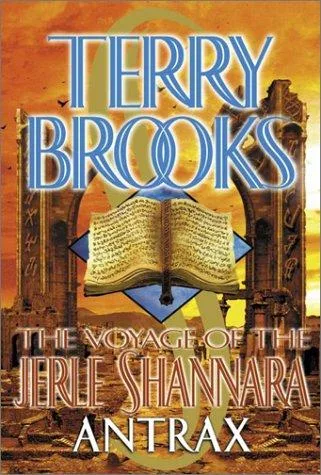
Antrax
 76
76

Antrax
Terry Brooks' "Antrax" presents a familiar fantasy framework, but one that offers subtle avenues for esoteric interpretation. The primary strength lies in Brooks' consistent ability to build believable worlds and engaging characters, even when grappling with a somewhat conventional good-versus-evil narrative. The encroaching threat of Antrax itself, while abstract, serves as a potent symbol for destructive forces. However, the book's pacing can feel deliberate, and some plot developments might seem predictable to seasoned fantasy readers. A particularly effective passage involves the characters discovering the true nature of the Antrax's influence, showcasing the insidious way it corrupts the land and its inhabitants. While not a deep dive into occult philosophy, "Antrax" provides a solid fantasy adventure with thematic undercurrents that reward closer examination. It functions competently as an entertaining story with a touch of the arcane.
📝 Description
76
Terry Brooks' 2001 novel Antrax pits characters with unique abilities against a hidden, pervasive evil.
Antrax, published in 2001, is a fantasy novel by Terry Brooks. The story centers on a concealed menace, referred to as Antrax, which embodies a widespread malevolence. The narrative follows characters who must confront this threat, employing their special talents and facing significant danger to their world. Brooks builds a setting where the natural and supernatural realms are interwoven.
This book appeals to readers who enjoy fantasy stories with philosophical or mystical undertones. Those interested in themes of destiny, the nature of power, and the fight against encroaching darkness, especially within a detailed fictional universe, will find "Antrax" a fitting read. It offers epic fantasy fans a narrative with potential for symbolic interpretation beyond simple adventure.
Brooks wrote Antrax during a productive period, following his acclaimed Shannara series. This era was marked by a strong market for epic fantasy, influenced by figures like J.R.R. Tolkien and emerging authors such as George R.R. Martin. Brooks' work typically draws on classic heroic structures and extensive world-building, aligning with mainstream fantasy while allowing for deeper symbolic readings.
While not strictly a treatise on occult philosophy, Antrax engages with esoteric concepts through its narrative structure. The depiction of Antrax as a pervasive, almost elemental evil resonates with certain dualistic traditions that posit a cosmic struggle between opposing forces. The idea of individuals with special knowledge or abilities being tasked with confronting this darkness echoes archetypes found in various mystical traditions, where adepts or initiates must master specific disciplines to combat negative influences or achieve spiritual equilibrium. The blurring of natural and supernatural elements further aligns with esoteric worldviews that see hidden forces at play within the mundane.
💡 Why Read This Book?
• You will learn about the symbolic representation of pervasive evil, exemplified by the Antrax entity, and how characters strategize against its corrupting influence, offering a model for confronting negative forces. • You will feel the tension of a world threatened by an ancient, encroaching darkness, exploring themes of vigilance and the responsibility of those who perceive the hidden dangers. • You will gain an understanding of how classic fantasy archetypes, like the hidden threat and the destined protector, can be utilized to explore deeper, perhaps even mystical, conflicts within a fictional setting.
⭐ Reader Reviews
Honest opinions from readers who have explored this book.
❓ Frequently Asked Questions
What is the primary conflict in Terry Brooks' Antrax?
The central conflict in "Antrax" revolves around the emergence of a malevolent, ancient force known as Antrax, and the efforts of a group of individuals to understand and ultimately combat its destructive influence before it consumes their world.
Is Antrax a standalone novel or part of a series?
While Terry Brooks is famous for his Shannara series, "Antrax" was published in 2001 as a standalone novel. It does not directly tie into the Shannara continuity, offering a self-contained story.
What kind of characters populate the world of Antrax?
The characters in "Antrax" include individuals who must confront the titular threat. They often possess unique insights or abilities, or are thrust into roles of responsibility as the danger becomes apparent.
Does Antrax have magical elements?
Yes, "Antrax" features elements common to fantasy literature, which can be interpreted as magical or supernatural. These are integral to the narrative as characters grapple with forces beyond ordinary understanding.
When was Antrax first published?
The novel "Antrax" by Terry Brooks was first published in the year 2001, contributing to the fantasy literature landscape of the early 21st century.
What makes Antrax potentially interesting from an esoteric perspective?
From an esoteric viewpoint, "Antrax" can be analyzed for its portrayal of abstract evil as a tangible threat, the concept of hidden knowledge required to combat it, and the archetypal struggle between order and chaos.
🔮 Key Themes & Symbolism
The Nature of Pervasive Evil
The novel presents Antrax not merely as a monster, but as an encroaching, corrupting force that can infect the very essence of a world. This abstract yet tangible evil requires a deep understanding of its mechanisms to resist. It suggests that some threats are less about physical confrontation and more about recognizing and neutralizing insidious influence, a concept often explored in esoteric traditions concerning shadow aspects or negative psychic energies.
Hidden Knowledge and Revelation
The characters in "Antrax" must often uncover lost or suppressed knowledge to understand the threat they face. This theme of seeking hidden truths and the power derived from revelation aligns with esoteric pursuits. The narrative implies that true understanding and the ability to combat darkness come not just from strength, but from insight gained through diligent seeking and a willingness to confront uncomfortable realities.
The Burden of Awareness
Those who perceive the Antrax and its danger often bear a heavy burden. This isolation and responsibility echo the experiences of seers or mystics who perceive truths others cannot or will not acknowledge. The novel explores the psychological toll of being aware of a looming catastrophe and the solitary path required to address it, a common motif in literature dealing with prophetic or hidden knowledge.
Archetypal Struggle
Fundamentally, , "Antrax" engages with the archetypal battle between light and darkness, creation and destruction. This fundamental conflict is a central to many mythologies and esoteric systems. The novel uses the fantasy genre to dramatize these universal forces, allowing readers to engage with profound themes of balance, resilience, and the enduring power of good against seemingly overwhelming odds.
💬 Memorable Quotes
Direct passages from the work, attributed to the author.
“The creeping shadow that threatened to consume all.”
— This phrase captures the titular Antrax, portraying it not as a singular entity but as a pervasive, insidious force. It suggests an omnipresent danger that erodes and destroys gradually, demanding constant vigilance rather than a single decisive battle.
“Understanding the source was the first step toward resistance.”
— This highlights the narrative's emphasis on knowledge as power. It suggests that confronting any great threat, particularly one as abstract as Antrax, requires intellectual and perceptive insight before any physical action can be effective.
“Some paths are walked alone, even amidst many.”
— This speaks to the isolation often felt by those who bear significant knowledge or responsibility, particularly when facing opposition or disbelief. It reflects the solitary nature of certain spiritual or intellectual journeys.
“The land itself seemed to weep under the blight.”
— This vivid imagery connects the environmental state to the spiritual or metaphysical condition. It implies that the corruption represented by Antrax affects the very fabric of existence, demonstrating a holistic decay.
“Not all battles are won with swords; some are won with truth.”
— This aphorism underscores the novel's exploration of different forms of conflict. It posits that intellectual and spiritual victories, achieved through revelation and understanding, can be as crucial, if not more so, than physical combat.
🌙 Esoteric Significance
Tradition
While not explicitly tied to a specific esoteric lineage like Hermeticism or Kabbalah, "Antrax" engages with universal archetypes found across many mystical traditions. Its portrayal of a pervasive, corrupting force and the necessity of inner knowledge to combat it aligns with Gnostic ideas of combating ignorance and illusion, or Manichaean dualism. The narrative explores the struggle against a shadow aspect, a concept relevant to Jungian psychology and various occult systems focused on shadow integration and the balance of opposing forces.
Symbolism
The primary symbol is Antrax itself, representing not just physical evil but a spiritual or psychic blight that corrupts and decays. The land's suffering under Antrax symbolizes the interconnectedness of the physical and metaphysical realms, a common esoteric concept. Furthermore, the characters who perceive and resist Antrax can be seen as embodying the archetype of the seer or the awakened individual, who must act upon their hidden knowledge, often in isolation.
Modern Relevance
Contemporary readers interested in themes of spiritual warfare, the nature of consciousness, and the battle against societal or personal corruption can find resonance in "Antrax." Thinkers exploring Jungian archetypes or those interested in how classic fantasy narratives can serve as allegories for psychological and spiritual struggles might draw parallels. The novel's depiction of an abstract, pervasive threat also speaks to modern anxieties about systemic issues that are difficult to pinpoint or combat directly.
👥 Who Should Read This Book
• Fans of Terry Brooks seeking a standalone fantasy novel that explores themes of hidden threats and the struggle against pervasive darkness. • Readers interested in fantasy narratives that offer symbolic depth, allowing for interpretation beyond a simple adventure story. • Individuals curious about how classic fantasy elements can be used to explore archetypal conflicts between order and chaos, or good and evil.
📜 Historical Context
Published in 2001, Terry Brooks' "Antrax" arrived in a fantasy landscape still heavily influenced by Tolkien and the burgeoning popularity of darker, more complex narratives. This period saw authors like George R.R. Martin and Robert Jordan achieving massive success with intricate world-building and morally ambiguous characters, setting a high bar for epic fantasy. Brooks, already an established name since the 1970s with his Shannara series, continued to operate within a more traditional heroic fantasy framework. While authors such as Ursula K. Le Guin had previously explored deeper philosophical and social themes within fantasy, the early 2000s saw a broad readership increasingly receptive to fantasy that offered more than just adventure. "Antrax" engaged with the popular trope of an ancient, encroaching evil, a theme common across fantasy but which Brooks presented with his characteristic focus on character development and world-building, fitting comfortably within the mainstream but offering layers for symbolic interpretation.
📔 Journal Prompts
The creeping shadow of Antrax and its symbolic meaning.
The necessity of hidden knowledge for combating pervasive evil.
Moments where characters faced the burden of awareness.
The archetypal struggle between creation and destruction depicted.
Reflecting on the land's suffering as a mirror to metaphysical decay.
🗂️ Glossary
Antrax
The titular malevolent force in the novel. It is depicted as an ancient, corrupting, and pervasive evil that threatens to consume the world, often manifesting as decay and insidious influence rather than a single physical entity.
Blight
A term used to describe the destructive effect of Antrax on the land and its inhabitants. It signifies a spiritual or metaphysical decay that manifests physically, leading to ruin and corruption.
Hidden Knowledge
Information or understanding that is not readily apparent or widely known. In "Antrax," this knowledge is crucial for characters to comprehend the nature of the threat and discover means of resistance.
Archetype
A recurring symbolic image, character type, or pattern of behavior found in literature and mythology. "Antrax" utilizes archetypes such as the encroaching evil and the heroic protector.
Pervasive Evil
A concept describing evil that is not localized but spreads widely, infecting systems, environments, or consciousness. Antrax embodies this type of threat.
Vigilance
The state of being watchful and alert. In the context of "Antrax," it refers to the constant need to guard against the insidious spread of the corrupting force.
Revelation
The act of revealing or disclosing something previously unknown or hidden. In the novel, key revelations about Antrax are critical turning points for the characters.
🔮 Readers Also Liked
Browse all →








More by Terry Brooks
All books →




More Free Occult Philosophy Books
View all →