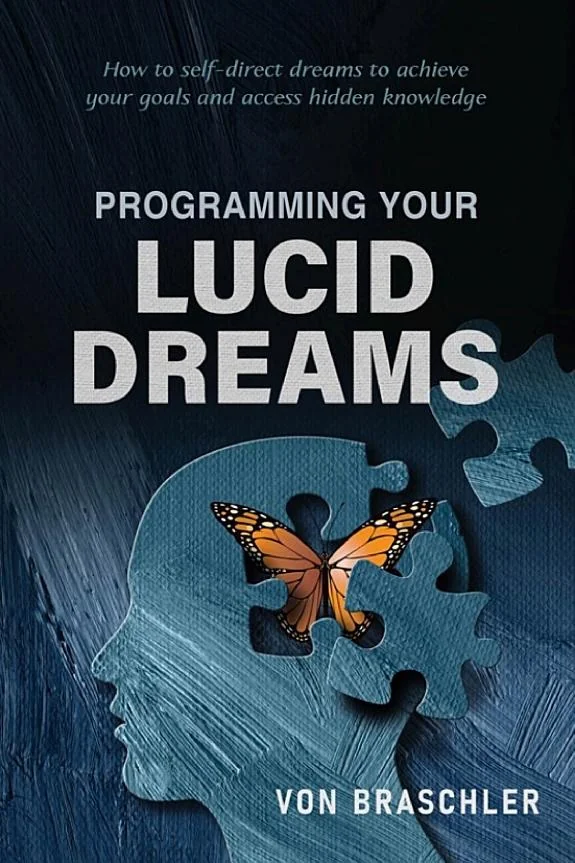
Programming Your Lucid Dreams
 76
76

Programming Your Lucid Dreams
Von Braschler's "Programming Your Lucid Dreams" distinguishes itself by treating the lucid dream state not as a rare anomaly, but as a landscape to be cultivated and directed. The book's strength lies in its systematic approach; it provides clear, actionable exercises that demystify the process of achieving lucidity and maintaining control once there. For instance, the detailed breakdown of how to analyze dream symbols, moving beyond generic interpretations to personal resonance, is particularly effective. However, the text occasionally leans into a prescriptive tone that might feel overly rigid for those whose dream experiences are more fluid and spontaneous. A more robust exploration of the liminal states between full lucidity and ordinary dreaming could have offered greater nuance. Despite this, the work offers a valuable toolkit for anyone seeking to actively engage with their inner dream world.
📝 Description
76
Von Braschler's 2025 book offers practical methods for intentionally influencing the dream state.
Programming Your Lucid Dreams provides a guide to actively participating in and directing one's own dream experiences. It moves beyond simply recalling dreams to employing them for personal insight and exploration. The book details structured techniques for gaining control within dreams and using that control to access deeper information or achieve specific goals.
This work is for anyone curious about consciousness and altered states, especially those wanting to engage directly with their dreams. It will interest practitioners of esoteric arts, students of psychology, and individuals committed to self discovery. While not requiring prior dream analysis experience, a dedication to consistent practice is helpful for maximizing the book's benefits.
This book connects to traditions that view dreams as significant sites for personal development and spiritual insight. Practices like setting intentions before sleep to influence dream content have parallels in various contemplative disciplines. The emphasis on harnessing dream clarity for self exploration aligns with esoteric paths that seek direct experience of inner realities and hidden knowledge. It bridges modern psychological interest in dreams with older methods of using them for personal transformation.
💡 Why Read This Book?
• Learn specific techniques for 'dream incubation' as detailed in Chapter 3, enabling you to set intentions for your lucid dreams before sleep, a method distinct from passive dream recall. • Develop a personal dream analysis framework using the journaling system outlined by Von Braschler, moving beyond basic recall to decode recurring symbols specific to your psyche. • Gain practical methods for self-directing lucid dream experiences, as presented in the exercises following the 2025 publication, allowing you to explore hidden aspects of your consciousness in a controlled manner.
⭐ Reader Reviews
Honest opinions from readers who have explored this book.
❓ Frequently Asked Questions
What is a 'spontaneous lucid dream' according to Von Braschler?
A spontaneous lucid dream is one where lucidity arises unexpectedly, without prior intention or preparation. The book explores how to recognize these occurrences and analyze them to foster more intentional lucid dreaming.
How does a dream journal help in programming lucid dreams?
The dream journal serves as a training ground. By regularly recording dreams, you enhance dream recall, identify personal symbols and patterns, and cultivate the mental discipline necessary to recognize the dream state while dreaming.
What does 'cultivating mind and body' mean for dream programming?
It refers to preparing your mental and physical state for dreamwork through practices like meditation, mindfulness, and establishing a regular sleep schedule. This preparation enhances receptivity and control within the dream state.
Can anyone learn to program their lucid dreams?
The book suggests that with consistent practice and dedication to the methods presented, individuals can significantly improve their ability to achieve and control lucid dreams. It's presented as a skill that can be developed.
What kind of information can be accessed in a lucid dream?
Lucid dreams can offer access to subconscious insights, creative problem-solving, exploring personal memories, and even simulating future scenarios or practicing skills within the dream environment.
When was Programming Your Lucid Dreams first published?
Programming Your Lucid Dreams by Von Braschler was first published on June 28, 2025.
🔮 Key Themes & Symbolism
Intentional Dream Control
This theme centers on the active manipulation of the dream state, moving beyond passive observation. The book posits that lucid dreams can be 'programmed' by setting specific intentions before sleep, akin to scripting a desired outcome. This involves techniques like prospective memory within the dreamscape, where the dreamer intends to perform a specific action or recognize a particular cue. It emphasizes the agency of the dreamer in shaping their nocturnal experiences for personal growth or exploration.
Dream Journaling as Analysis
The practice of dream journaling is presented not merely as a method for recall, but as a vital analytical tool. By diligently recording dream content, recurring symbols, and emotional responses, individuals can begin to decipher their personal dream language. This process helps identify patterns and themes that might otherwise remain subconscious, providing a foundation for understanding the deeper messages within one's dreams and informing the 'programming' of future lucid experiences.
Mind-Body Preparation
Achieving consistent and controlled lucid dreaming requires a prepared state of being. This theme explores the importance of cultivating both mental and physical readiness. Practices such as mindfulness, meditation, and establishing a disciplined sleep routine are highlighted as crucial for enhancing dream recall, increasing susceptibility to lucidity, and fostering the mental clarity needed to maintain awareness and control within the dream state.
Accessing Hidden Information
Lucid dreaming is framed as a gateway to veiled aspects of consciousness and reality. The book suggests that by gaining control within dreams, individuals can access subconscious knowledge, forgotten memories, or even intuitive insights that are typically obscured by waking consciousness. This theme explores the potential for lucid dreams to serve as a unique medium for self-discovery and problem-solving, offering perspectives not readily available through ordinary means.
💬 Memorable Quotes
Direct passages from the work, attributed to the author.
“Understand spontaneous lucid dreams”
— This highlights the book's approach to recognizing and learning from unexpected moments of lucidity, framing them as opportunities to develop more consistent dream control.
“Analyze your dreams and keep a dream journal”
— Emphasizes the crucial role of consistent dream recording and critical examination as a foundation for understanding dream symbolism and patterns.
“Cultivate body and mind to prepare for lucid dreaming”
— Underscores the necessity of a prepared psychological and physiological state for achieving reliable lucidity and control within the dream state.
“Access times, places, and information usually hidden from our senses”
— Suggests the profound potential of lucid dreaming to transcend the limitations of ordinary perception, offering exploration beyond the mundane.
“Self-direct your lucid dreams to their fullest potential”
— Captures the core aim of the book: empowering readers to actively shape and maximize their lucid dream experiences through learned techniques.
🌙 Esoteric Significance
Tradition
This work aligns with Western esoteric traditions that emphasize the power of the mind to shape reality, including the inner field of dreams. It draws parallels with practices found in Hermeticism and certain branches of Western magic, which explore the use of focused intention and visualization for personal transformation and knowledge acquisition. While not strictly adhering to any single lineage, it departs from purely academic psychological approaches by positing the dream state as a potent field for direct spiritual or psychological work.
Symbolism
Within the context of esoteric thought, the dream itself can be seen as a symbolic representation of the subconscious or the astral plane. Specific symbols encountered in lucid dreams, as explored in the book's analytical sections, are not merely random but can be interpreted as messages from the deeper self or archetypal forces. The act of 'programming' the dream can be viewed as a form of ritual, where the dreamer acts as both priest and initiate, consciously directing the symbolic theater of their own psyche.
Modern Relevance
Contemporary thinkers and practitioners in fields like consciousness hacking, transpersonal psychology, and modern occultism often draw upon the principles of lucid dreaming for self-exploration and personal development. Von Braschler's work provides a structured framework that appeals to these modern pursuits, offering tangible techniques for individuals seeking to actively engage with their inner worlds. It bridges the gap between theoretical interest in consciousness and practical, repeatable methods for achieving altered states and extracting meaning.
👥 Who Should Read This Book
• Aspiring dream explorers seeking practical, step-by-step methods to achieve and control lucid dreams, moving beyond passive observation. • Individuals interested in esoteric psychology and consciousness studies who wish to understand the dream state as a field for active inner work and self-discovery. • Practitioners of meditation or mindfulness seeking to integrate their existing contemplative practices with the unique potential for insight and exploration offered by lucid dreaming.
📜 Historical Context
Von Braschler's *Programming Your Lucid Dreams*, published in 2025, arrives amidst a resurgence of interest in consciousness studies and the practical application of altered states. While the exploration of dreams dates back millennia, from ancient Greek dream incubation temples to Buddhist meditative practices, the modern scientific investigation of lucid dreaming gained momentum in the late 20th century, notably with the work of researchers like Stephen LaBerge. This book builds upon that foundation, offering a more accessible, esoteric-leaning approach. It contrasts with purely psychological interpretations by integrating techniques that resonate with Western esoteric traditions, suggesting a lineage that, while not explicitly detailed here, likely draws from practices aimed at inner exploration and consciousness expansion. The work emerges in a digital age where virtual realities and simulated experiences are common, perhaps making the concept of intentionally shaping internal realities more intuitive for contemporary readers.
📔 Journal Prompts
The practice of dream journaling for analyzing dream content.
Cultivating the body and mind for dream preparation.
Recognizing spontaneous lucid dreams.
Setting intentions for dream programming.
Accessing hidden information within the dream state.
🗂️ Glossary
Lucid Dream
A dream during which the dreamer is aware that they are dreaming. This awareness can range from a fleeting recognition to full consciousness and control over the dream narrative.
Dream Programming
The intentional act of setting objectives, intentions, or parameters before sleep to influence and direct the content and experience of a subsequent lucid dream.
Dream Incubation
A technique used to intentionally induce a dream on a specific topic or to seek guidance. It involves focusing on a question or desired outcome before falling asleep.
Prospective Memory
The ability to remember to perform a planned action or recall a planned intention at some future point in time. In lucid dreaming, this applies to remembering to become lucid or perform tasks within the dream.
Dream Journal
A record kept by a person of their dreams, typically written down upon waking. Used for improving dream recall, analyzing patterns, and facilitating lucid dreaming.
Spontaneous Lucidity
The state of becoming aware that one is dreaming within a dream, occurring unexpectedly without prior conscious intention or preparation.
Dream Analysis
The process of examining dream content, symbols, and emotional responses to gain insight into the dreamer's subconscious mind, personal issues, or psychological state.
This book appears in 1 collection
🔮 Readers Also Liked
Browse all →









From the “Consciousness Expansion” Collection
View all →







More Free Occult Philosophy Books
View all →