The Path of the Devil
 76
76

The Path of the Devil
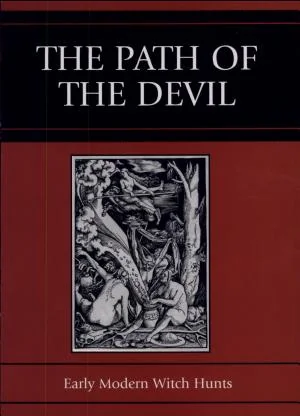
Gary F. Jensen's "The Path of the Devil" offers a bracingly analytical perspective on historical witch hunts, stripping away much of the sensationalism to reveal underlying social dynamics. The author's central argument, that these events functioned as sacrificial ceremonies and strategic persecutions, is compellingly presented through a framework of three fundamental theories. Jensen excels in differentiating the impact of various crises – war, disease, economic hardship – on the incidence of witch hunts, demonstrating how epidemic disease and economic distress could notably accelerate them, while war might inhibit them. A particular strength lies in the detailed analysis of the scapegoat phenomenon as a mechanism for social cohesion and control. However, the book's dense theoretical structure, while intellectually rigorous, occasionally risks obscuring the lived human experience of those targeted. The relentless focus on functional analysis, while valuable, could benefit from more direct engagement with the theological and folkloric elements that fueled popular belief, even if only to contextualize the 'functional' aspects. Jensen's work is a significant scholarly contribution, particularly for its methodical approach to historical causality, even if its clinical detachment can be stark.
📝 Description
76
Gary F. Jensen's 2007 book challenges simplistic views of historical witch hunts.
Gary F. Jensen's "The Path of the Devil" (2007) scrutinizes historical witch hunts, moving past supernatural causes. Jensen structures his argument around three main ideas: witch hunts as ritual sacrifice, as strategic persecution in conflict, and as mechanisms for scapegoating. He suggests that while disease, war, and economic problems often accompanied these events, their specific roles differed.
The book aims at students of history, sociology, and the occult interested in a demystifying perspective on historical persecution. Readers concerned with the psychological and social forces behind mass hysteria, ritual acts, and the identification of societal enemies will find this work useful. It is for those who question common accounts and are ready to engage with theoretical models applied to past events.
Jensen's study entered a field already shaped by scholars like Keith Thomas and Norman Cohn. In 2007, Jensen synthesized existing research and proposed a more systematic, sacrificial interpretation of witch hunts. He incorporated quantitative analysis of conflict and hardship. His distinction between war's inhibiting effect and epidemic disease or economic stress's accelerative impact provided a detailed model.
While not strictly an esoteric text itself, "The Path of the Devil" engages with historical phenomena often interpreted through esoteric lenses. Jensen's analysis of witch hunts as ritual sacrifice and as driven by societal needs and anxieties intersects with traditions that view collective behavior and persecution as ritualistic acts. His work provides a historical and sociological framework that can inform or challenge esoteric interpretations of magic, demonology, and the formation of adversarial figures within societies.
💡 Why Read This Book?
• Understand witch hunts as functional sacrificial ceremonies, a concept Jensen elaborates by analyzing societal needs for ritualistic purging and scapegoating, offering a starkly different view than purely supernatural interpretations. • Grasp the nuanced impact of societal crises, learning how Jensen differentiates the accelerative effects of epidemic disease and economic hardship from the inhibitory effects of war on persecution. • Analyze the scapegoat phenomenon through a sociological lens, as Jensen presents it as a strategic tool for social control and consolidation, moving beyond simple victimhood narratives.
⭐ Reader Reviews
Honest opinions from readers who have explored this book.
❓ Frequently Asked Questions
What are the three fundamental theories presented in "The Path of the Devil"?
Gary F. Jensen's "The Path of the Devil" is structured around three core theories: witch hunts as functional sacrificial ceremonies, realistic conflict and strategic persecution, and the scapegoat phenomenon.
How does Jensen differentiate the causes of witch hunts?
Jensen differentiates by examining epidemic disease, war, and economic hardships. He finds that while epidemic disease and economic distress tend to encourage witch hunts, war can inhibit them.
What is the role of epidemic disease in Jensen's theory?
In Jensen's framework, epidemic disease is presented as a significant factor that can 'encourage' or accelerate witch hunts, likely by intensifying societal anxiety and the need for a scapegoat.
What is the 'scapegoat phenomenon' as discussed in the book?
The scapegoat phenomenon, as explored by Jensen, refers to the societal tendency to assign blame for crises onto a specific group or individual, thereby consolidating social order and power.
When was 'The Path of the Devil' first published?
Gary F. Jensen's "The Path of the Devil" was first published in 2007, contributing to ongoing scholarly discussions on historical persecution and social dynamics.
Does the book focus on the supernatural aspects of witchcraft?
No, "The Path of the Devil" focuses on the sociological, economic, and political functions of witch hunts, treating them as human-driven phenomena rather than supernatural events.
🔮 Key Themes & Symbolism
Witch Hunts as Sacrifice
Jensen posits that historical witch hunts functioned as elaborate, albeit brutal, sacrificial ceremonies. This perspective moves beyond viewing them as mere instances of religious fervor or superstition. Instead, he analyzes how the persecution and 'purification' of accused individuals served to appease societal anxieties, reinforce social structures, and symbolically cleanse communities during times of crisis. The 'devil' becomes a construct facilitating this ritualistic purging, with the accused serving as the ritual offering that binds the community through shared fear and condemnation.
Conflict and Persecution Dynamics
This theme examines witch hunts through the lens of realistic conflict and strategic persecution. Jensen explores how power struggles, economic competition, and social tensions could be channeled into organized campaigns against perceived enemies. The 'witch hunt' is thus framed as a political and social strategy, where accusations and trials were tools for consolidating authority, eliminating rivals, or enforcing conformity. The emphasis is on the calculated, human agency involved in orchestrating and sustaining these persecutory movements.
The Scapegoat Mechanism
Jensen analyzes the scapegoat phenomenon as a fundamental element in understanding witch hunts. When societies faced epidemic disease, war, or economic hardship, a need arose to identify and expel a source of perceived evil. The accused witch or 'devil worshipper' became the convenient scapegoat, absorbing collective guilt and fear. This mechanism, Jensen suggests, provided a temporary sense of order and control by externalizing internal societal problems onto a designated 'other'.
Societal Crises as Catalysts
The book critically evaluates the role of external crises in triggering or intensifying witch hunts. Jensen differentiates the impact of factors like war, epidemic disease (e.g., plague outbreaks), and economic hardship. While these conditions created fertile ground for persecution by heightening anxiety and social instability, Jensen's work emphasizes that they acted as catalysts rather than sole causes. The response to these crises, particularly the strategic use of scapegoating, was paramount in shaping the nature and scale of witch hunts.
💬 Memorable Quotes
Direct passages from the work, attributed to the author.
“Witch hunts as functional sacrificial ceremonies.”
— This core tenet suggests that the persecution of individuals accused of witchcraft served a purpose beyond mere punishment, acting as a ritualistic act to restore societal balance or appease perceived divine/cosmic forces.
“Realistic conflict and strategic persecution.”
— Jensen frames witch hunts not just as supernatural events, but as manifestations of actual power struggles, social rivalries, and calculated campaigns designed to achieve specific social or political ends.
“Scapegoat phenomena.”
— This concept highlights the tendency to project societal anxieties and blame onto a designated group or individual during times of crisis, a central mechanism explored in the book's analysis.
“Epidemic disease and economic hardship encourage witch hunts.”
— Jensen identifies these crises as significant factors that correlate with an increase in persecutions, suggesting they create the conditions of fear and instability ripe for scapegoating.
“War inhibits witch hunts.”
— In contrast to disease and hardship, Jensen's quantitative analysis suggests that periods of open warfare tend to suppress or reduce the incidence of witch hunts.
🌙 Esoteric Significance
Tradition
While Jensen's work is primarily sociological and historical, its examination of ritual sacrifice, societal anxieties, and the construction of 'evil' appeals to darker currents within esoteric traditions. It touches upon themes of collective shadow projection and the manipulation of fear, which are areas of interest in certain occult philosophies concerned with psychological and societal control mechanisms. It departs from traditional esoteric focus on individual spiritual ascent, instead analyzing the 'occult' dynamics of mass psychology and persecution.
Symbolism
The 'Devil' in Jensen's analysis functions less as a theological entity and more as a potent symbol of societal anxieties, forbidden desires, and the projection of collective guilt. The 'witch hunt' itself becomes a symbolic act of purification or sacrifice, where the destruction of an individual or group is ritualistically performed to maintain social order. The concept of 'sacrifice' is central, representing the offering of an 'other' to appease societal fears or consolidate power structures, a theme with deep symbolic roots across many cultures.
Modern Relevance
Jensen's analytical framework for understanding scapegoating and strategic persecution remains relevant in contemporary discussions of political polarization, conspiracy theories, and the demonization of minority groups. Thinkers interested in the sociology of power, collective psychology, and the mechanisms of social control can draw upon his analysis of how societal crises are managed through the identification and persecution of an 'enemy.' His work offers a lens for deconstructing modern phenomena that mirror historical witch hunts.
👥 Who Should Read This Book
• Students of sociology and history: To gain a rigorous, theory-driven analysis of historical persecution, particularly witch hunts, and understand the functional role of conflict and scapegoating. • Researchers of occult history: For a explained perspective on the social and psychological underpinnings of historical 'devil worship' narratives and their role in societal control. • Critical thinkers interested in power dynamics: To explore how societal anxieties and crises are historically managed through strategic persecution and the creation of symbolic enemies.
📜 Historical Context
Published in 2007, Gary F. Jensen's "The Path of the Devil" entered a scholarly conversation already shaped by decades of research into European witchcraft. Contemporaries like Brian Levack had explored the social and legal history of witch hunts, while scholars such as Keith Thomas had examined the cultural and religious beliefs underpinning them. Jensen's work distinguished itself by applying a rigorous, quantitative sociological analysis, particularly focusing on the functional aspects of these persecutions as sacrificial ceremonies and strategic conflicts. He directly engaged with historical data to differentiate the impact of various societal stressors, a methodological approach that set it apart from earlier, more qualitative studies. His work provided a counterpoint to purely folkloric or demonological interpretations, aligning with social-scientific approaches while offering a unique theoretical synthesis.
📔 Journal Prompts
The functional sacrificial ceremonies aspect of witch hunts.
Realistic conflict and strategic persecution in historical events.
The scapegoat phenomena during times of crisis.
Jensen's differentiation of war vs. epidemic disease effects.
Societal anxieties channeled through persecution.
🗂️ Glossary
Functional Sacrificial Ceremonies
The theory that witch hunts served a purpose beyond punishment, acting as ritualistic acts to appease societal anxieties and reinforce social structures during times of crisis.
Realistic Conflict
An analytical approach viewing witch hunts as rooted in actual social, economic, and political power struggles rather than solely supernatural causes.
Strategic Persecution
The concept that the targeting and trial of individuals accused of witchcraft were calculated actions to achieve specific social, political, or economic goals.
Scapegoat Phenomena
The social tendency to blame and expel a designated group or individual for societal problems, particularly during periods of hardship or crisis.
Epidemic Disease
A significant factor identified by Jensen that tends to accelerate witch hunts, likely by increasing societal fear and the need for a target for blame.
Climactic Hardships
Environmental challenges such as famines or extreme weather events, which Jensen considers alongside other crises that can contribute to social instability and persecution.
Economic Hardships
Periods of financial distress and scarcity that, according to Jensen's analysis, are correlated with an increase in the incidence of witch hunts.
This book appears in 1 collection
🔮 Readers Also Liked
Browse all →









From the “Witchcraft” Collection
View all →








More Free Occult Philosophy Books
View all →