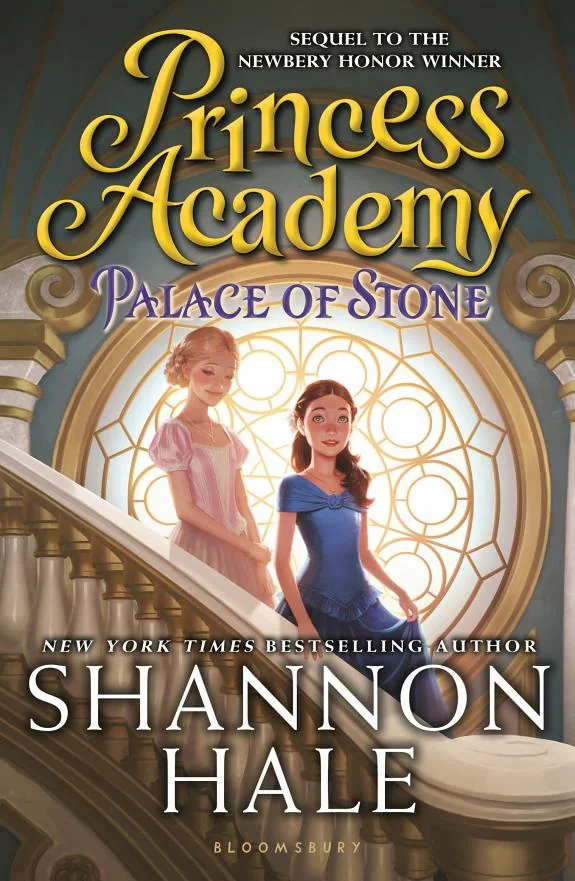
Princess Academy: Palace of Stone
 83
83

Princess Academy: Palace of Stone
Shannon Hale's Palace of Stone revisits Miri's journey, post-academy, with a commendable focus on the practical application of her education. The narrative excels in illustrating how learned rhetorical skills can be deployed to challenge systemic injustice. Miri's return to Asland and her engagement with the struggle for a new charter provides a compelling scenario where intellectual prowess meets political reality. A notable strength is the depiction of the girls’ collaborative efforts, demonstrating that advocacy is often a group endeavor. However, the resolution of the charter conflict, while satisfying, occasionally feels a touch too streamlined, underplaying the protracted nature of such historical reform movements. The passage detailing Miri’s structured debate with the council members, where she systematically dismantles their objections using logic and evidence, stands out as particularly effective. Ultimately, Palace of Stone is a capable sequel that reinforces the value of reasoned discourse in achieving societal betterment.
📝 Description
83
Princess Academy: Palace of Stone, published in 2015, follows Miri as she advocates for a new kingdom charter.
In Princess Academy: Palace of Stone, Miri returns to Asland after her academy training. She must use her skills in diplomacy, rhetoric, and critical thinking to push for an equitable new charter. The novel details the opposition Miri and her fellow graduates face from established powers within the kingdom. Their work focuses on achieving fairness and justice through structured negotiation and reasoned argument.
This book appeals to young adult readers who like strong female characters fighting for social change with their intellect. It is a good choice for those who enjoy stories about justice, equality, and the value of education. Readers who liked the first Princess Academy book will find this a satisfying continuation, with more depth in character development and political tactics. It also suits readers interested in fictional accounts of structured debate and advocacy.
While primarily a young adult novel, Princess Academy: Palace of Stone engages with the enduring tradition of political philosophy and social reform narratives. It implicitly examines how established power structures, much like those discussed in historical texts on governance since the Enlightenment, resist change. The book shows the practical application of reasoned discourse and negotiation in challenging entrenched hierarchies, echoing the principles found in works that advocate for fairer representation and legislative reform.
💡 Why Read This Book?
• Learn how foundational rhetorical strategies, as taught at the Princess Academy, can be applied to dismantle entrenched opposition and advocate for fair legislation, providing practical lessons in civic engagement. • Experience the challenges and triumphs of enacting social change through reasoned debate, understanding the complexities Miri faces when confronting established power structures in Asland. • Gain insight into the power of collective action and intellectual perseverance, as Miri and her peers unite their educated voices to strive for a new, equitable charter.
⭐ Reader Reviews
Honest opinions from readers who have explored this book.
❓ Frequently Asked Questions
What is the primary conflict in Princess Academy: Palace of Stone?
The main conflict involves Miri and her fellow academy graduates working to establish a new, fair charter for Asland, facing strong opposition from established powers who resist these proposed changes.
When was Princess Academy: Palace of Stone first published?
Princess Academy: Palace of Stone was first published on February 24, 2015.
What key skills does Miri utilize in this book?
Miri primarily utilizes her knowledge of rhetoric, persuasive argumentation, critical thinking, and diplomacy, all skills honed during her time at the Princess Academy, to navigate the political landscape.
Who are the main antagonists or opposing forces in the story?
The antagonists are those within Asland's established power structures who are resistant to the proposed new charter and the changes it would bring, particularly concerning fairness and equality.
Does this book require reading the previous Princess Academy novels?
While the story continues Miri's narrative, it is designed to be accessible. However, understanding the prior events and character development from the original Princess Academy novel would enhance the reading experience.
What is the setting for Princess Academy: Palace of Stone?
The primary setting is Asland, the kingdom where Miri previously attended the Princess Academy, now returning to advocate for legislative reform.
🔮 Key Themes & Symbolism
Applied Rhetoric and Advocacy
The novel showcases the practical application of rhetorical strategies learned at the Princess Academy. Miri's ability to construct logical arguments, understand counterpoints, and persuade others is central to her efforts to enact a new charter. This theme highlights how structured communication and reasoned discourse are essential tools for social and political reform, moving beyond mere idealism to tangible action within the fictional kingdom of Asland.
Challenging Established Hierarchies
Palace of Stone directly confronts the difficulties inherent in challenging long-standing power structures. Miri and her peers, despite their education, face significant resistance from those who benefit from the status quo. The narrative explores the courage required to question authority and the systemic obstacles that reform movements encounter, emphasizing the perseverance needed to achieve a more equitable society.
The Power of Education for Change
This installment powerfully demonstrates how education, particularly in fields like rhetoric and critical thinking, equips individuals to become agents of change. The graduates' success hinges on their intellectual training, allowing them to articulate needs and counter opposition effectively. The book reinforces the idea that knowledge is a potent force for societal improvement and empowerment, especially for those historically denied such opportunities.
Collective Action and Justice
The pursuit of a fair charter is not a solitary endeavor. Miri works alongside her fellow graduates, pooling their diverse skills and perspectives. This theme underscores the importance of collective action in achieving justice. It illustrates how unity and shared purpose can amplify individual efforts, creating a stronger front against opposition and leading to more impactful societal shifts within Asland.
💬 Memorable Quotes
Direct passages from the work, attributed to the author.
“Miri returns to Asland and calls upon all of her knowledge of rhetoric and other useful lessons learned at the Princess Academy.”
— This blurb excerpt highlights the core premise: the practical application of academic learning in a real-world political arena. It signifies a transition from theoretical study to active engagement in societal reform.
“The girls face strong opposition while working for a new, fair charter.”
— This points to the central conflict and thematic exploration of resistance to change. It emphasizes the obstacles encountered when attempting to establish more equitable systems against established interests.
“Leveraging rhetoric and reasoned argument.”
— An interpretation of Miri's method, this concept underscores the novel's focus on intellectual tools and persuasive communication as primary means of achieving her goals.
“Advocating for a new, equitable charter.”
— This expresses the specific objective of the protagonists. It signifies a move towards establishing foundational principles for a more just society within the fictional context.
“Applying lessons from the Princess Academy.”
— This phrase emphasizes the continuity of Miri's educational journey, showing how her formal training directly informs her actions and strategies in the political sphere.
🌙 Esoteric Significance
Tradition
While not explicitly aligned with a singular esoteric tradition, Palace of Stone draws upon the Hermetic principle of 'As Above, So Below,' by demonstrating how structured learning and intellectual discipline (the 'Above' of the Academy) directly influence and shape societal structures and laws (the 'Below' of Asland). It echoes Gnostic ideals of seeking knowledge and enlightenment to overcome ignorance and oppressive systems, positioning education as a pathway to liberation from societal constraints.
Symbolism
The 'Princess Academy' itself functions as a symbol of structured knowledge acquisition and the cultivation of the intellect, representing a microcosm of an ideal society built on reason. The 'fair charter' symbolizes foundational principles of justice and equity, a sacred text for a new social order. The 'Palace of Stone' can represent the enduring, yet potentially rigid, structures of power that Miri and her peers aim to reform or rebuild.
Modern Relevance
The work's emphasis on applied rhetoric and systemic reform appeals to contemporary movements focused on civic education and the deconstruction of unjust power dynamics. Thinkers and educators involved in critical pedagogy and deliberative democracy might find parallels in Miri's approach. Furthermore, the narrative's focus on empowering young women through education aligns with ongoing feminist discourse and efforts to promote female leadership in governance and public life.
👥 Who Should Read This Book
• Young adult readers interested in narratives that champion intellectualism and social reform, particularly those who appreciate strong female protagonists challenging established systems. • Students and educators of rhetoric, debate, and political science seeking fictional examples of persuasive argumentation and its impact on legislative change. • Fans of Shannon Hale's previous works who enjoy character-driven stories exploring themes of education, justice, and personal growth within a well-developed fictional world.
📜 Historical Context
Published in 2015, Shannon Hale's Princess Academy: Palace of Stone emerged during a period when young adult literature increasingly engaged with social justice themes. While fictional, the narrative's core conflict—advocating for a new charter against entrenched opposition—mirrors historical struggles for legislative reform seen across centuries, notably during periods of democratic expansion and civil rights movements. The book implicitly engages with the Enlightenment ideals of reasoned governance and representation. Hale's work can be seen in conversation with contemporary YA authors like Veronica Roth and Suzanne Collins, who also explore societal structures and rebellion. Unlike overtly allegorical works, Hale grounds her story in relatable character dynamics and educational principles, avoiding the direct political commentary of some contemporaries but still highlighting the enduring power of civic engagement.
📔 Journal Prompts
Miri's structured debates and the proposed fair charter.
The nature of opposition faced by Miri and her peers.
The application of rhetoric and diplomacy in Asland.
The significance of the Princess Academy's lessons.
Reflecting on the balance between individual effort and collective action for reform.
🗂️ Glossary
Fair Charter
A foundational document proposed within the story, designed to establish equitable rights, responsibilities, and governance principles for the kingdom of Asland, aiming to rectify existing injustices.
Rhetoric
The art of effective or persuasive speaking or writing, especially the use of figures of speech and other compositional techniques. In the book, it's a key skill Miri employs.
Asland
The fictional kingdom that serves as the primary setting for Princess Academy: Palace of Stone, where Miri and her companions strive to enact political change.
Princess Academy
The educational institution where Miri and other young women received training in diplomacy, rhetoric, and leadership, forming the basis of their later reform efforts.
Opposition
The resistance encountered by Miri and her allies from established powers within Asland who are unwilling to accept the proposed fair charter and its implications.
Diplomacy
The art and practice of conducting negotiations between representatives of states or groups. It is a skill honed at the Princess Academy and crucial for Miri's mission.
Equitable
Characterized by fairness and impartiality; just. This term describes the fundamental goal of the new charter Miri advocates for.
This book appears in 1 collection
🔮 Readers Also Liked
Browse all →









From the “Telepathy” Collection
View all →






More Free Occult Philosophy Books
View all →