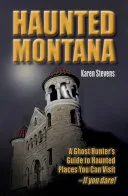
Haunted Montana
 72
72

Haunted Montana
Karen Stevens has compiled a thorough, if somewhat uncritical, survey of Montana's haunted locales in "Haunted Montana." The strength of the book lies in its sheer breadth; Stevens seems to have scoured local newspapers, historical societies, and anecdotal accounts to build an impressive list of spectral hotspots. The passage detailing the alleged hauntings at the historic Mai-Kai in Lewistown, with its specific mention of spectral figures seen near the old ballroom, is particularly evocative. However, the work occasionally falters by presenting every tale with equal weight, lacking deeper analysis into the psychological or sociological factors that might contribute to such folklore. A more critical lens, perhaps examining the oral traditions or the specific eras that produced these stories, would have elevated the text. Nevertheless, for anyone seeking a comprehensive guide to Montana's spectral side, Stevens's compilation is a solid, if unadorned, resource.
📝 Description
72
Karen Stevens cataloged spectral phenomena across Montana, from Butte hotels to eastern ranches.
Karen Stevens's "Haunted Montana" serves as a detailed catalog of reported spectral phenomena across the Treasure State. The book maps these occurrences, connecting them to specific locations, from historic hotels in Butte to remote ranches on the eastern plains. Stevens goes beyond simple ghost stories by situating these accounts within the broader geographical and historical development of Montana.
The narratives often link to significant historical periods and events, featuring tales of miners, railroad workers, and early settlers. These stories suggest lingering energies from past lives and unresolved events manifest in certain locations. The book connects these ghostly encounters to the often-turbulent history of the American West, encompassing its boomtowns and ghost towns.
Stevens categorizes reported phenomena, distinguishing between residual hauntings, intelligent hauntings, and poltergeist activity. She examines the commonalities and differences in these manifestations, offering a framework for understanding diverse reports. The work prompts readers to consider the conditions and places that appear to foster such spectral activity.
This work sits within the tradition of regional ghost lore and paranormal investigation. It documents reported supernatural occurrences, treating them as phenomena worthy of cataloging and contextualizing. By distinguishing between different types of hauntings and considering the historical backdrop, Stevens engages with a popular form of esoteric interest that bridges folklore, local history, and the study of alleged psychic or spiritual manifestations.
💡 Why Read This Book?
• Learn about specific haunted locations like the Fairmont Hot Springs Resort, understanding how its history as a grand hotel might contribute to reported spectral activity. • Gain insight into the types of hauntings documented, such as intelligent hauntings versus residual energy, as presented in the book's case studies. • Discover regional folklore tied to Montana's past, exemplified by tales of the Anaconda smelter workers whose apparitions are reportedly still seen.
⭐ Reader Reviews
Honest opinions from readers who have explored this book.
❓ Frequently Asked Questions
What are some of the most frequently reported types of hauntings in Montana according to the book?
The book categorizes hauntings into residual, intelligent, and poltergeist activity. Residual hauntings, like replays of past events, and intelligent hauntings, involving interactive spirits, are frequently documented across various Montana locations.
Does 'Haunted Montana' provide specific locations for overnight stays with reported paranormal activity?
Yes, the book explicitly guides readers to places where they can potentially experience the other side, including haunted hotels and inns across Montana, suggesting these are suitable for direct experiences.
What historical periods does 'Haunted Montana' primarily cover regarding its ghost stories?
The narratives often stem from Montana's boomtown eras, the age of mining and railroads, and the lives of early settlers. Stories frequently involve figures from the late 19th and early 20th centuries.
Are there any specific famous haunted landmarks mentioned in the book?
Indeed, 'Haunted Montana' covers numerous well-known and lesser-known sites. It details alleged hauntings at various historic hotels, old theaters, and even former correctional facilities scattered throughout the state.
Who is the author of 'Haunted Montana' and when was it first published?
The author is Karen Stevens. The book was first published on August 1, 2023, making it a contemporary exploration of Montana's spectral lore.
Can readers expect practical advice on how to interact with spirits in 'Haunted Montana'?
The book serves as a guide to locations where encounters are reported, implying that readers can seek out these experiences. It focuses on presenting the phenomena rather than offering explicit 'how-to' interaction manuals.
🔮 Key Themes & Symbolism
Regional Spectral Geography
The work meticulously maps spectral activity across Montana's diverse landscapes, from the mountainous west to the plains. Stevens connects specific reported hauntings to geographical features and historical settlements, treating the state itself as a repository of ghostly energy. This approach highlights how local history and environment shape paranormal narratives, suggesting that places like the abandoned mining towns of Butte retain unique spectral signatures due to their past industries and inhabitants.
Lingering Traces of the West
Many narratives in "Haunted Montana" are intrinsically linked to the turbulent history of the American West. Tales often feature apparitions of miners, cowboys, railroad workers, and early settlers whose lives were marked by hardship and often violent ends. The book presents these spectral presences as direct continuations of historical events, suggesting that the frontier spirit, or its unresolved conflicts, continues to manifest in the present day.
Types of Paranormal Manifestations
Stevens categorizes the spectral phenomena encountered, differentiating between residual hauntings (non-interactive replays of past events), intelligent hauntings (interactive spirits), and poltergeist activity. This classification provides a structured understanding of the various reported occurrences, allowing readers to analyze specific cases within a broader paranormal framework. The book implicitly encourages observation and discernment regarding the nature of the reported spectral interactions.
Haunted Hospitality
A significant portion of "Haunted Montana" focuses on spectral activity within hotels, inns, and other establishments that offer lodging. These locations, often steeped in history and the transient energies of many guests, are presented as prime sites for paranormal encounters. The book invites readers to consider these 'haunted hotels' not just as places to stay, but as active venues for experiencing the spectral realm.
💬 Memorable Quotes
Direct passages from the work, attributed to the author.
“Places you can stay to experience the other side.”
— This concise phrase expresses the book's practical, experiential aim. It positions the documented locations not merely as historical curiosities but as potential sites for direct engagement with the paranormal, suggesting an accessible path for readers interested in encountering spirits.
“From haunted hotels to eerie inns, this book will take you to all the spookiest spots in the state.”
— This highlights the book's function as a travel guide for the intrepid. It promises comprehensive coverage of lodging-related spectral phenomena, framing the exploration of Montana's paranormal as an adventure through its most reputedly haunted hospitality venues.
“Here’s your ghostly guide to spooks, spirits, and specters of Montana.”
— This opening statement clearly defines the book's purpose: to serve as an authoritative, yet accessible, handbook for exploring Montana's spectral inhabitants and phenomena. It sets a tone of informative guidance for the reader's paranormal pursuits.
💡 Key Ideas
Editorial paraphrase of the work's core concepts — not direct quotes.
Want to meet a phantom? Experience a poltergeist? Commune with the dearly departed?
Framed as direct questions, this passage appeals to the reader's curiosity and desire for direct experience with the supernatural. It outlines the range of potential encounters the book's locations are said to offer, from apparitions to more active phenomena.
Let Haunted Montana lead the way to places you can stay to experience the other side.
This interpretive paraphrase emphasizes the book's role as an enabler of paranormal experiences. It suggests that by following its guidance, readers can actively seek out and potentially encounter supernatural phenomena in tangible, locatable settings across Montana.
🌙 Esoteric Significance
Tradition
While not explicitly tied to a single esoteric lineage like Hermeticism or Theosophy, "Haunted Montana" engages with the broader concept of lingering psychic energy and consciousness persistence, which has roots in Spiritualism and early psychical research. The work explores phenomena that contemporary esoteric practitioners might interpret through the lens of energy fields, residual imprints, or discarnate entities, providing a collection of case studies relevant to those studying the nature of consciousness beyond the physical.
Symbolism
The primary symbolism in the book resides in the locations themselves. Historic hotels, abandoned mines, and old homesteads act as potent symbols of past lives, unresolved energies, and the veil between worlds. For instance, a spectral figure seen in a former saloon symbolizes the persistent traces of social life and potential vice, while apparitions in mining tunnels can represent the dangerous labor and potential tragedies of that era.
Modern Relevance
Contemporary paranormal investigators, ghost tour operators, and practitioners of energy work can draw from "Haunted Montana." The book provides a rich database of reported phenomena and locations that can inform modern psychical research, energy clearing techniques, and even locative meditation practices. Thinkers exploring the intersection of place, memory, and consciousness, such as those involved in psychogeography with a paranormal bent, would find its detailed accounts valuable.
👥 Who Should Read This Book
• Enthusiasts of regional folklore and history seeking supernatural narratives tied to Montana's past. • Paranormal investigators and ghost hunters looking for specific locations with documented spectral activity. • Travelers interested in unique, off-the-beaten-path destinations with intriguing local legends and potential encounters.
📜 Historical Context
Published in 2023, "Haunted Montana" emerges within a contemporary field of renewed interest in folklore, regional histories, and paranormal investigation. The work taps into a long tradition of ghost story collections that gained traction in the early to mid-20th century, exemplified by authors like Hans Holzer who popularized the concept of 'haunted houses.' Stevens's approach, however, focuses on a specific state's spectral geography, aligning with a modern trend towards localized paranormal documentation. Unlike earlier works that might have focused on sensationalism, "Haunted Montana" presents itself as a guide, implicitly encouraging readers to visit these sites. The book's reception, as a recent publication, is still unfolding, but it contributes to the broader genre of regional ghost lore that continues to find an audience seeking connection to local history through supernatural narratives.
📔 Journal Prompts
The spectral energy of Montana's boomtowns.
Encountering residual hauntings versus intelligent spirits.
The historical context of a reported apparition.
Connecting a specific location's past with its present ghostly tales.
Personal reflections on the concept of 'places you can stay to experience the other side.'
🗂️ Glossary
Residual Haunting
A type of haunting where spectral energy replays past events like a recording, without interactive consciousness. It's an imprint left on a location rather than a spirit.
Intelligent Haunting
A haunting involving conscious spirits or entities that can interact with the living, respond to questions, or manifest intentionally.
Poltergeist
Literally 'noisy ghost,' this refers to a phenomenon characterized by physical disturbances such as moving objects, loud noises, and apparitions, often associated with a living person.
Specter
A ghost or ghostlike image of someone, often appearing suddenly and causing alarm. A general term for a visible apparition.
Apparition
The appearance of something or someone, typically a ghost or phantom, that is unexpected or strange. A visual manifestation of a spirit.
Ghostly Guide
A metaphorical term for a resource, like this book, that leads or informs the reader about paranormal phenomena and haunted locations.
Commune with the dearly departed
To communicate or connect spiritually with those who have passed away, often implying a desire for direct interaction or messages from spirits.