What is Telepathy?
Telepathy refers to the purported transmission of information from one person to another without using any known sensory channels or physical interaction. It is a core concept within parapsychology, often discussed alongside clairvoyance, precognition, and psychokinesis. Historical and contemporary research has sought to establish its existence and mechanisms, with varying degrees of scientific acceptance and anecdotal evidence.
Best Books for Complete Beginners
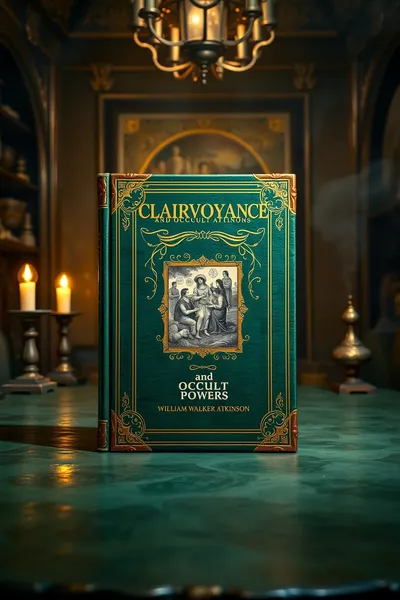
For those new to telepathy, begin with accessible introductions that blend practical advice with foundational concepts. William Walker Atkinson's 'Clairvoyance and Occult Powers' offers early insights into mental abilities. Claude M. Bristol's 'The Magic of Believing' provides motivational guidance on the power of thought. Alpheus A.'s 'Complete Hypnotism, Mesmerism, Mind-Reading and Spiritualism' covers related phenomena. Shannon Messenger's 'Neverseen' and Shannon Hale's 'Princess Academy' offer fictional explorations that can spark interest in the topic's imaginative aspects.
Intermediate Reading
Intermediate students can delve deeper into the historical context and scientific inquiry surrounding telepathy. Henry Ridgely Evans' 'Hours with the Ghosts' examines historical cases and spiritualism. The collaborative work 'Phantasms of the Living' by Gurney, Myers, and Podmore presents detailed case studies from the Society for Psychical Research. Lynne McTaggart's 'The Power of Eight' explores group intention and its potential effects. Patrick Ness's 'The Knife of Never Letting Go' and James Dashner's 'The Scorch Trials' present fictional narratives exploring advanced telepathic abilities in young protagonists.
Classical / Advanced Texts
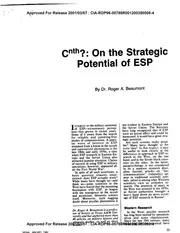
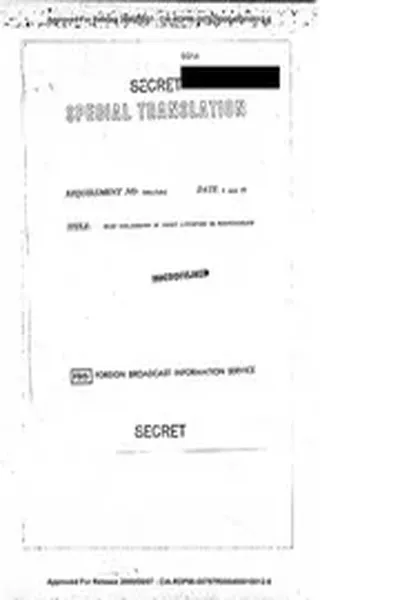
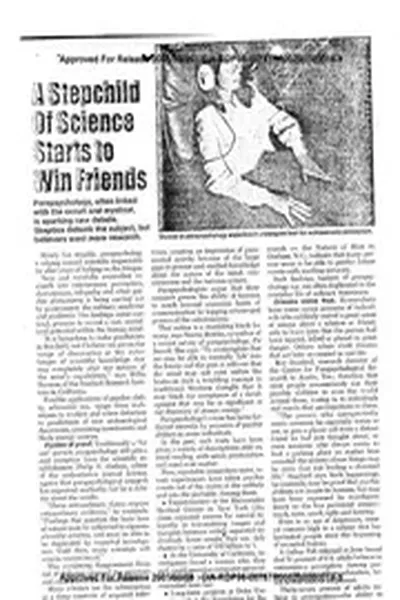
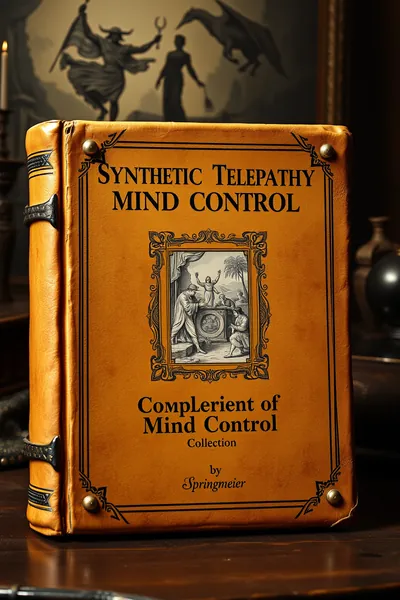
Advanced study requires engaging with primary source materials and declassified documents. The CIA Reading Room documents, such as 'CNTH?: ON THE STRATEGIC POTENTIAL OF ESP' (1982) and 'SPECIAL TRANSLATION: BRIEF BIBLIOGRAPHY OF SOVIET LITERATURE ON PARAPSYCHOLOGY' (1978), offer glimpses into government interest and research. 'Physical Control Of The Brain Synthetic Telepathy Radio Mind Control' and related compilations by Springmeier study alleged clandestine applications. Edmund Gurney, Frederic William Henry Myers, and Frank Podmore's 'Phantasms of the Living' remains a foundational text for rigorous case collection and analysis.
Reading Order — Step by Step
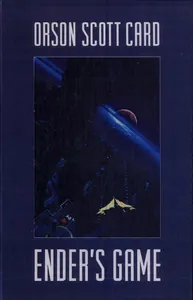
Begin with accessible introductions like Atkinson's 'Clairvoyance and Occult Powers' and Bristol's 'The Magic of Believing' in Month 1. In Month 2, move to historical case studies with 'Phantasms of the Living' and Evans' 'Hours with the Ghosts'. Explore related practices in Alpheus A.'s 'Complete Hypnotism'. Month 3 can be dedicated to modern interpretations and speculative fiction, such as McTaggart's 'The Power of Eight' or fictional works like 'Ender's Game' by Orson Scott Card. Finally, engage with declassified documents and compilations on synthetic telepathy for advanced study.
Frequently Asked Questions
Which telepathy book should I read first?
For a beginner, start with 'Clairvoyance and Occult Powers' by William Walker Atkinson. It offers accessible insights into mental abilities and lays a good foundation for further study.
Is telepathy scientifically proven?
Scientific consensus is that telepathy has not been definitively proven. While research in parapsychology continues, results are often debated and lack consistent replication under rigorous conditions.
What is the difference between telepathy and empathy?
Telepathy is the direct transmission of thoughts or feelings, while empathy is the ability to understand and share the feelings of another, often through observation and emotional resonance rather than direct mental transfer.
Are there fictional books that explore telepathy well?
Yes, many fictional works explore telepathy. 'Ender's Game' by Orson Scott Card, 'Neverseen' by Shannon Messenger, and 'The Knife of Never Letting Go' by Patrick Ness offer compelling narratives featuring telepathic characters.
What are 'synthetic telepathy' theories?
'Synthetic telepathy' refers to concepts, often found in fringe literature and conspiracy theories, suggesting the technological creation or manipulation of telepathic communication, sometimes linked to government or military projects.
Where can I find historical accounts of telepathy?
Historical accounts are detailed in works like 'Phantasms of the Living' by Gurney, Myers, and Podmore, which compiled numerous case studies from the Society for Psychical Research in the late 19th century.
Do government documents discuss telepathy?
Declassified documents, such as those from the CIA Reading Room, indicate historical government interest in extrasensory perception (ESP), including telepathy, for potential strategic applications, as seen in reports from the 1970s and 1980s.
What is the relationship between mesmerism and telepathy?
Mesmerism, an early form of hypnosis, was often associated with phenomena like mind-reading and suggestion. Its study, as seen in Alpheus A.'s work, contributed to the broader exploration of mental influence and potential non-sensory communication.