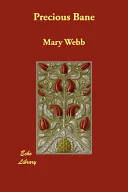
Precious Bane
 77
77

Precious Bane
Mary Webb's *Precious Bane* offers a potent, if occasionally overwrought, portrayal of rural English life dominated by superstition and primal forces. The novel excels in its evocation of the Shropshire landscape, which becomes a character in itself, mirroring the internal turmoil of its inhabitants. The central figure of Prudence, burdened by the 'bane' of her family, is a compelling creation, her struggle against inherited misfortune forming the core of the narrative's dramatic tension. While Webb's prose can be luxuriant, sometimes verging on the melodramatic, the sheer atmospheric power of the work is undeniable. A notable limitation is the occasional difficulty in parsing the more archaic dialect and narrative voice, which can create a slight distance for the modern reader. Nevertheless, the book's exploration of how ancestral curses and local beliefs manifest in everyday lives, as seen in the tragic trajectory of Prudence, remains its singular strength. *Precious Bane* is a haunting exploration of fate and inherited darkness.
📝 Description
77
Mary Webb's 1926 novel, Precious Bane, scrutinizes the hold of ancient curses on a rural English community.
Set in the mist-covered hills of Shropshire, Mary Webb's 1926 novel, Precious Bane, immerses readers in a world shaped by superstition and the harsh realities of country life. The story centers on the intricate lives and hidden desires of its characters, whose relationships often fracture under the weight of inherited beliefs and local folklore. Webb's prose, while grounded in a stark realism, possesses a lyrical quality that evokes the mythic power of the land.
The novel examines how deeply ingrained fears, particularly the concept of a 'bane' or curse, can dictate the fate of individuals and families. It questions the persistence of inherited sin and the profound influence of landscape on human character. Webb contrasts these old traditions with the encroaching modernity of the early 20th century, demonstrating their continued sway over everyday lives.
Precious Bane taps into the vein of rural gothic literature, where the supernatural is not always overtly explained but felt as a pervasive force within the community and landscape. Webb's work often touches upon a deep connection to the land, suggesting an animistic or pagan undercurrent to the lives of her characters. The novel's focus on a 'bane' or curse speaks to older, folkloric beliefs about malevolent energies and the consequences of transgressing natural or ancestral laws, placing it within a tradition that explores the darker, elemental aspects of human experience and belief.
💡 Why Read This Book?
• You will understand the potent influence of 'bane'—a specific ancestral curse or ill-fortune—on individual lives, as depicted through Prudence's struggle in Shropshire. • You will experience the powerful, almost sentient, role of the Shropshire landscape in shaping characters' destinies, a key element Webb emphasizes. • You will gain insight into early 20th-century rural beliefs, contrasting ancient superstitions with the encroaching modern world, a theme central to the novel's setting.
⭐ Reader Reviews
Honest opinions from readers who have explored this book.
❓ Frequently Asked Questions
What is the primary 'bane' affecting the characters in Mary Webb's *Precious Bane*?
The primary 'bane' is a specific, inherited curse or ill-fortune that afflicts Prudence and her family, shaping their destinies and the events within the novel.
What geographical region is the setting for *Precious Bane*?
The novel is set in the Shropshire countryside of England, a region known for its rugged landscapes and deep-rooted folklore.
When was Mary Webb's novel *Precious Bane* first published?
Mary Webb's *Precious Bane* was first published in 1926, offering a glimpse into rural English life and beliefs of the era.
How does the landscape of Shropshire influence the story in *Precious Bane*?
The Shropshire landscape is depicted as almost alive, mirroring the characters' emotional states and acting as a powerful force that influences events and shapes their perceived destinies.
What kind of literary style does Mary Webb employ in *Precious Bane*?
Webb employs a lyrical, romantic, and often gothic style, rich in sensory detail and atmospheric descriptions, particularly concerning the natural world.
What are the main themes explored in *Precious Bane*?
The novel explores themes of inherited curses, fate versus free will, the power of superstition, the influence of the land, and the dark undercurrents of rural community life.
🔮 Key Themes & Symbolism
The Weight of Inheritance
The concept of 'bane'—an inherited curse or ill-fortune—is central to *Precious Bane*. This isn't merely psychological but a palpable force that dictates the lives and choices of the characters, particularly Prudence. Webb explores how ancestral sins and predestined paths can feel inescapable, manifesting in tragic events and shaping the very identity of the afflicted. The novel questions whether one can truly escape the shadow of their lineage, even when striving for a different future.
Landscape as Destiny
The Shropshire countryside is not a passive backdrop but an active participant in the unfolding drama. Webb imbues the land with a primal energy, its ruggedness, mists, and ancient character reflecting and amplifying the characters' internal struggles and the pervasive sense of doom. This connection between place and fate suggests that the environment itself holds a form of consciousness or power that influences human lives, making escape from one's origins profoundly difficult.
Superstition and Folklore
The novel is saturated with the folklore and superstitions of rural England. Belief in curses, omens, and the supernatural is presented not as mere ignorance but as a potent force that shapes social interactions and individual perceptions. Webb examines how these deeply ingrained beliefs can become self-fulfilling prophecies, trapping characters in cycles of fear and misfortune. The 'bane' itself is a manifestation of these ancient fears given concrete power within the narrative.
The Conflict of Old and New
Published in 1926, *Precious Bane* captures a society on the cusp of modernity, yet deeply rooted in ancient traditions. Webb contrasts the persistence of old ways of thinking—superstition, rural isolation, ancestral burdens—with the encroaching influence of a changing world. This tension highlights the enduring power of the past and the difficulty of shedding deeply ingrained cultural and personal histories, even as new technologies and ideas begin to emerge.
💬 Memorable Quotes
Direct passages from the work, attributed to the author.
“The bane of the Greedies was on her.”
— This concise statement captures the central theme of inherited curse or ill-fortune that permeates Prudence's life and the narrative's tragic trajectory, linking her suffering directly to her family's past.
“She was a child of the moor, and the moor was in her.”
— This highlights the profound, almost elemental connection between the protagonist and her environment, suggesting that the wild, untamed range of Shropshire is an intrinsic part of her being.
“There are things in the country that the town knows nothing of.”
— This suggests a hidden world of ancient beliefs, superstitions, and primal forces that exist in rural areas, unknown or dismissed by urban dwellers, forming a core element of the novel's atmosphere.
“The past is never dead. It's not even past.”
— This concept, though often attributed to Faulkner, reflects the novel's exploration of how ancestral curses and historical burdens continue to exert influence on the present, shaping characters' lives.
“She was like a wild creature that had been tamed.”
— This image speaks to Prudence's initial state of being, shaped by the harshness of her environment and the 'bane,' and hints at the potential for her to be molded or broken by external forces.
🌙 Esoteric Significance
Tradition
While not strictly adhering to a named esoteric tradition, *Precious Bane* draws heavily from a deep well of British folk magic and animistic beliefs, often found in pre-Christian European spiritualities. Its exploration of the 'bane' as an inherited, almost sentient curse aligns with concepts of ancestral karma or psychic inheritance found in various occult traditions. The novel can be seen as an exploration of the 'genius loci'—the spirit of place—a concept central to many nature-based spiritualities, where the land itself possesses a potent, often dark, consciousness.
Symbolism
The central symbol is the 'bane' itself, representing an inherited spiritual or psychic affliction that dooms individuals and families. The rugged, often mist-shrouded Shropshire landscape functions symbolically as a manifestation of this inherent darkness and the primal forces that govern human lives. The wild creatures and plants of the region also carry symbolic weight, representing untamed nature and the instinctive, often destructive, aspects of the human psyche that lie beneath the veneer of civilization.
Modern Relevance
Contemporary practitioners of folk magic, animism, and earth-based spiritualities find resonance in Webb's depiction of the profound connection between land and spirit. Her work speaks to modern eco-spiritual movements that emphasize the sentience of nature and the consequences of human actions upon the earth. Thinkers and writers interested in the psychological impact of ancestral trauma and the persistence of ancient belief systems in modern society also draw upon Webb's evocative portrayals.
👥 Who Should Read This Book
• Readers interested in rural gothic literature who seek novels that explore the darker aspects of folklore and superstition, particularly those fascinated by inherited curses. • Students of early 20th-century British literature who want to understand regionalist writing and its focus on landscape as a powerful thematic element. • Those drawn to nature-based spiritualities and folk magic who appreciate narratives that depict the land as possessing its own consciousness and influence over human lives.
📜 Historical Context
Mary Webb's *Precious Bane* emerged in 1926, a period when rural novels were still a significant force in English literature, often celebrating or lamenting the vanishing traditions of the countryside. While authors like D.H. Lawrence explored the spiritual and psychological dimensions of rural life and nature, Webb’s approach leaned towards a more romantic, gothic sensibility. The novel was published in the wake of the First World War, a time of societal introspection and a questioning of established norms, yet Webb's focus remained on older, more elemental struggles. Her work was noted by figures such as Sir Edward Marsh, who championed her writing, and Stanley Baldwin, a prominent Conservative politician who publicly praised her novels, lending them a certain cultural cachet. This reception contrasted with more modernist literary currents like T.S. Eliot's 'The Waste Land' (1922), which reflected a more fragmented and urbanized disillusionment, highlighting Webb's unique position in capturing a different, more mythic aspect of English identity.
📔 Journal Prompts
Prudence's struggle against the 'bane': Reflect on inherited burdens.
The symbolic power of the Shropshire landscape: How does place shape character?
The pervasive influence of superstition: Examine the boundary between belief and reality.
The contrast between ancient folklore and early 20th-century life: What endures?
The concept of the wild creature within: Explore primal instincts versus societal constraints.
🗂️ Glossary
Bane
In the context of the novel, 'bane' refers to a specific, inherited curse, ill-fortune, or affliction passed down through a family, profoundly impacting their lives and destinies.
Shropshire
A county in England bordering Wales, known for its varied landscape including hills, rivers, and agricultural land, serving as the primary, atmospheric setting for the novel.
Rural Gothic
A subgenre of Gothic literature that applies Gothic themes of horror, mystery, and the supernatural to rural settings, often exploring the dark undercurrents of isolated communities.
Folklore
The traditional beliefs, customs, and stories of a community, passed through the generations by word of mouth, which heavily influence the characters' worldview in the novel.
Superstition
An excessive belief in or observance of the supernatural, particularly in the context of luck, fate, and omens, which plays a significant role in the characters' actions and fears.
Genius Loci
Latin for 'spirit of place,' referring to the unique atmosphere or perceived consciousness of a location, a concept relevant to the novel's portrayal of the Shropshire landscape.
Inheritance
The passing down of qualities, characteristics, or property from parents to offspring, which in *Precious Bane* extends to curses and destinies.
This book appears in 1 collection
🔮 Readers Also Liked
Browse all →









From the “Superstition” Collection
View all →

![The secrets of black arts!: A key note to witchcraft, devination [sic], omens, forwarnings, apparitions, sorcery, dæmonology, dreams, predictions, visions, and the Devil's legacy to earth mortals, compacts with the Devil! With the most authentic history of Salem witchcraft](/img/thumb/the-secrets-of-black-arts-b-a-key-note-to-witchcraft-devination-sic-omens-forwarnings-apparitions-sorcery-d-monology-dreams-predictions-visions-and-the-devil-s-legacy-to-earth-mortals-compacts-with-th.webp)


More Free Occult Philosophy Books
View all →