The principal Upanisads

 78
78

The principal Upanisads
Radhakrishnan's scholarly approach to the Principal Upanishads offers a rigorous examination of texts that form the bedrock of Hindu philosophical inquiry. His introductions and commentaries, penned with a scholar's precision, clarify complex metaphysical arguments for a Western audience, a feat few could manage with such authority. The strength lies in his ability to connect ancient concepts to modern philosophical discourse, particularly evident in his discussions on Brahman and Atman. However, the sheer density of the scholarship can be daunting for newcomers; the academic tone, while accurate, sometimes overshadows the devotional or mystical dimensions for which the Upanishads are also revered. A particular strength is the way Radhakrishnan unpacks the dialogue between the guru and disciple, revealing the pedagogical structure of these profound teachings. The work serves as a crucial bridge between Sanskrit textual traditions and global philosophical study. Ultimately, it is an indispensable, if demanding, resource for serious students of Vedanta.
📝 Description
78
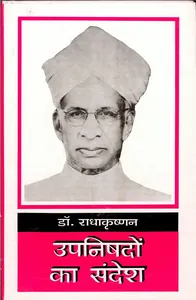
Sarvepalli Radhakrishnan published his principal Upanishads translation and commentary in 1953.
This volume contains Sarvepalli Radhakrishnan's scholarly interpretation of key Upanishadic texts, which are central to Hindu philosophy. Radhakrishnan, a significant figure in 20th-century Indian thought, offers extensive introductions and detailed commentaries on these ancient Sanskrit dialogues. The book focuses on the philosophical and spiritual core of the Upanishads, aiming to make their meaning clear for readers today interested in Vedanta.
It is suited for students of comparative religion, philosophy, and Eastern spirituality who want to study primary source material. Academics and individuals interested in the history of Indian thought will find Radhakrishnan's learning valuable. This work is not a simple introduction but a serious study for committed readers.
Published in 1953, the book appeared during a time of growing interest in Eastern philosophies in the West. Radhakrishnan, a respected philosopher and later President of India, brought an informed perspective to Western scholarship that was beginning to engage with Indian thought, influenced by figures like Swami Vivekananda.
The Upanishads represent a core tradition within Hindu Vedanta, a school of philosophy that seeks to understand the relationship between the individual soul and the ultimate reality. Radhakrishnan's work places these texts within the broader landscape of Indian spiritual thought, emphasizing their role in the quest for liberation (moksha) through knowledge of the self (Atman) and its unity with the absolute (Brahman). This compilation serves as a guide to a tradition that has long been a subject of study for those interested in non-dualistic philosophies and contemplative practices.
💡 Why Read This Book?
• You will gain a nuanced understanding of the central tenet of Vedanta, the identity of Atman and Brahman, as expounded by Radhakrishnan's meticulous scholarship, allowing for a deeper grasp of this core philosophical concept than general introductions provide. • You will learn about the historical milieu of the Upanishads' composition, understanding their role in the development of Indian philosophical thought from the Vedic period, a context crucial for appreciating their evolutionary significance. • You will encounter the concept of Karma and Samsara through the lens of a leading 20th-century Indian philosopher, gaining insights into how these ideas were interpreted and presented for a broader, international audience in 1953.
⭐ Reader Reviews
Honest opinions from readers who have explored this book.
❓ Frequently Asked Questions
What is the primary focus of Sarvepalli Radhakrishnan's 'The Principal Upanishads'?
Radhakrishnan's work focuses on providing scholarly introductions and detailed commentaries on key Upanishadic texts, illuminating their philosophical and spiritual core for a contemporary audience interested in Vedanta.
When was 'The Principal Upanishads' by Radhakrishnan first published?
The Principal Upanishads by Sarvepalli Radhakrishnan was first published in 1953, positioning it within a period of increasing global interest in Eastern philosophies.
What philosophical concepts are central to the Upanishads as discussed by Radhakrishnan?
Central concepts include Brahman (ultimate reality), Atman (the self), their identity, Karma (action and consequence), Samsara (cycle of rebirth), and Moksha (liberation).
Is this book suitable for beginners in Eastern philosophy?
While comprehensive, the book's scholarly depth and academic tone make it more suitable for serious students and scholars rather than absolute beginners seeking a light introduction.
What is the relationship between Brahman and Atman in the Upanishads according to this book?
Radhakrishnan explains that a primary teaching of the Upanishads is the non-dualistic realization that Atman, the individual self, is identical to Brahman, the universal consciousness or ultimate reality.
Does the book discuss different paths to spiritual realization?
Yes, Radhakrishnan's commentary explores various paths mentioned in the Upanishads, such as Jnana Yoga (the path of knowledge) and Dhyana (meditation), for achieving self-realization.
🔮 Key Themes & Symbolism
The Unity of Atman and Brahman
This compilation deeply explores the Upanishadic assertion of the fundamental oneness between Atman, the individual soul or self, and Brahman, the absolute, cosmic spirit. Radhakrishnan meticulously unpacks the philosophical arguments that lead to this non-dualistic conclusion, emphasizing that realizing this unity is the ultimate goal of spiritual pursuit. The texts presented illustrate various dialogues and meditations designed to transcend the illusion of separation and experience this profound interconnectedness, a core part of Advaita Vedanta philosophy.
The Nature of Reality and Illusion (Maya)
The Upanishads, as interpreted by Radhakrishnan, grapple with the nature of existence, distinguishing between the ultimate, unchanging reality (Brahman) and the perceived, phenomenal world. The concept of Maya, often translated as illusion, is explored as the power that veils the true nature of reality, creating the appearance of multiplicity and individuality. Understanding Maya is presented as a crucial step in the journey towards liberation, allowing one to see beyond superficial appearances to the underlying unity.
Paths to Liberation (Moksha)
Central to the Upanishadic teachings is the concept of Moksha, liberation from the cycle of birth and death (Samsara). Radhakrishnan highlights the various yogic and meditative practices discussed in the texts that facilitate this liberation. These include Jnana Yoga (the path of knowledge through wisdom and discrimination), Karma Yoga (performing duties without attachment to results), and Dhyana (meditation and contemplation), all aimed at purifying the mind and realizing the Atman's true divine nature.
The Role of the Guru and Disciple
Many Upanishadic dialogues presented in this work unfold as conversations between a spiritual teacher (Guru) and a student (disciple). Radhakrishnan's commentaries underscore the importance of this master-disciple relationship in transmitting profound spiritual knowledge. The format itself emphasizes the transformative power of guided inquiry and direct instruction in unraveling the mysteries of existence and achieving self-realization, a tradition deeply embedded in Indian spiritual pedagogy.
💬 Memorable Quotes
Direct passages from the work, attributed to the author.
“The Upanishads declare that 'That thou art' (Tat tvam asi).”
— This foundational Mahavakya, or 'great saying,' from the Chandogya Upanishad, is central to Advaita Vedanta. Radhakrishnan uses it to illustrate the direct identity between the individual self (Atman) and the supreme reality (Brahman), emphasizing that true knowledge lies in recognizing this inherent unity.
“Brahman is the one without a second.”
— This phrase captures the monistic essence of Upanishadic thought. Radhakrishnan explains that it signifies the absolute, undifferentiated nature of ultimate reality, asserting that nothing exists independently of Brahman; all is a manifestation of this singular, ultimate ground of being.
“The Self is to be heard of, reflected on, and meditated upon.”
— This concept, elaborated by Radhakrishnan, outlines the stages of spiritual practice. It involves first hearing the teachings (Shrvana), then rationally contemplating them (Manana), and finally engaging in deep meditation (Nididhyasana) to internalize and realize the truth of the Self.
“He who knows the Self conquers the worlds.”
— Radhakrishnan interprets this statement to mean that true conquest is not of external territories but of the internal limitations and ignorance that bind the individual. Self-knowledge leads to freedom and mastery over one's destiny, transcending worldly concerns.
“The world is the manifestation of Brahman.”
— This interpretation by Radhakrishnan clarifies the Upanishadic view of cosmology. It suggests that the diverse universe we perceive arises from Brahman, not as a separate creation, but as an unfolding or expression of its inherent potentiality, maintaining Brahman's ultimate reality.
🌙 Esoteric Significance
Tradition
While the Upanishads are foundational to the orthodox Hindu tradition (Vedanta), Radhakrishnan's interpretation positions them as a source for universal spiritual and metaphysical inquiry. His work appeals to those within esoteric traditions like Theosophy and later New Age movements who seek ancient wisdom. It offers a philosophical underpinning that complements more ritualistic or devotional practices, providing a conceptual framework for understanding consciousness, reality, and the self, often seen as a precursor to later mystical philosophies.
Symbolism
Key symbols explored include the 'Om' (Aum) mantra, representing the primordial sound and the entirety of existence, which Radhakrishnan details as a profound meditative object. The 'Sun' is often depicted as a symbol of Brahman, the source of all light and knowledge, and the 'cave of the heart' symbolizes the inner sanctum where the Atman resides, accessible through introspection and meditation.
Modern Relevance
Contemporary thinkers and practitioners in fields ranging from consciousness studies and transpersonal psychology to mindfulness and meditation draw heavily on Upanishadic concepts as presented by Radhakrishnan. His work provides a scholarly basis for exploring non-dual awareness, the nature of the self, and the potential for inner transformation, influencing modern spiritual leaders, therapists, and researchers seeking to integrate ancient wisdom with contemporary understanding of the human mind and existence.
👥 Who Should Read This Book
• Students of comparative philosophy and religion: You will gain direct access to primary texts that have shaped one of the world's major philosophical systems, with expert guidance from a leading 20th-century Indian scholar. • Seekers of spiritual wisdom: You will explore profound concepts like Brahman, Atman, and Maya, learning about the philosophical underpinnings of practices aimed at self-realization and liberation from suffering. • Academics and researchers in Indology: You will find a rigorous, well-annotated edition of key Upanishads, offering critical textual analysis and historical context essential for scholarly work in the field.
📜 Historical Context
Sarvepalli Radhakrishnan's *The Principal Upanishads*, first published in 1953, arrived at a key moment for Indian philosophy's global reception. The post-World War II era saw a surge in interest in Eastern thought, partly fueled by the disillusionment with Western materialism and the groundwork laid by earlier scholars and spiritual figures. Radhakrishnan, already a renowned philosopher who had lectured at Oxford and elsewhere, was uniquely positioned to bridge the gap between ancient Sanskrit texts and Western academic discourse. His work engaged with, and often corrected, the interpretations of Orientalist scholars and countered the popular, sometimes superficial, interpretations promoted by certain spiritual movements of the time. This was also a period when Indian independence had been achieved, fostering a renewed scholarly interest in indigenous philosophical traditions. Radhakrishnan's scholarly yet accessible presentation of the Upanishads offered a definitive account for an international audience, solidifying their place within global philosophical studies.
📔 Journal Prompts
The concept of 'Tat Tvam Asi' (That Thou Art): How does recognizing the identity of Atman and Brahman challenge your current understanding of self?
The role of Maya: Reflect on an instance where the perceived world obscured a deeper reality for you.
The Guru-Disciple relationship: What qualities make for effective spiritual transmission of profound knowledge?
The path of Jnana Yoga: How can the pursuit of knowledge about the Self be integrated into daily life?
The symbolism of the Sun: Consider its representation of ultimate reality and its connection to consciousness.
🗂️ Glossary
Brahman
The ultimate, unchanging, absolute reality or cosmic consciousness that underlies all existence. It is the source, sustainer, and end of all phenomena in Hindu philosophy.
Atman
The individual soul, self, or essence. In Advaita Vedanta, the Atman is considered identical to Brahman, a fundamental tenet explored extensively in the Upanishads.
Samsara
The continuous cycle of birth, death, and rebirth, driven by karma. Liberation from Samsara is the ultimate spiritual goal.
Karma
The law of cause and effect, where actions (karma) in this life and past lives determine future circumstances and rebirths. It encompasses both actions and their consequences.
Moksha
Liberation or release from the cycle of Samsara. It signifies spiritual freedom, enlightenment, and the realization of one's true nature.
Maya
An illusion or cosmic deception that veils the true nature of reality (Brahman), making the phenomenal world appear real and diverse. It is often described as the power by which Brahman manifests the universe.
Jnana Yoga
The yoga or path of knowledge, characterized by discrimination, wisdom, and intellectual understanding aimed at realizing the true nature of the Self and its identity with Brahman.
🔮 Readers Also Liked
Browse all →








More by Sarvepalli Radhakrishnan
All books →




More Free Occult Philosophy Books
View all →