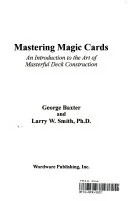
Mastering Magic Cards
 71
71

Mastering Magic Cards
Baxter and Smith's Mastering Magic Cards offers a refreshingly practical approach to deck creation, moving beyond mere interpretation to the active construction of magical tools. The book's strength lies in its detailed exploration of deck architecture, presenting a compelling argument for the intentional design of card assemblages for specific magical outcomes. The section on 'energetic blueprinting' is particularly insightful, providing a framework for imbuing a custom deck with purpose. However, the text could benefit from more concrete examples of deck layouts for specific magical operations, rather than focusing solely on the theoretical underpinnings. A notable passage details how the placement of a 'challenge' card adjacent to a 'goal' card can be used to psychically prepare for obstacles. While the 1995 publication date means some references feel dated, the core principles remain sound. This work is a valuable resource for the serious practitioner looking to craft their own specialized magical instruments.
📝 Description
71
Published in 1995, Mastering Magic Cards teaches how to construct potent decks for magic and divination.
Mastering Magic Cards offers a guide for creating effective decks for magical or divinatory use. The book moves past simple card collection to explain the principles behind a deck's energetic qualities. It argues that a deck is a carefully made tool, designed to achieve specific results or aid in personal exploration. The authors detail methods for choosing, arranging, and altering cards to match particular magical aims. These aims can include personal growth, ritual work, or predictive arts.
This book is mainly for practitioners of esoteric arts who use cards, such as Tarot readers, oracle users, or those involved in spellcraft with symbolic elements. It is also useful for people wanting to create their own decks or understand card systems more deeply. Readers interested in symbol psychology and its use in focused practice will find value, as will those who want to move beyond general interpretations to create personal magical constructs.
Emerging in 1995, a time of growing interest in esoteric studies, Mastering Magic Cards addressed a developing niche. While many books focused on Tarot readings or divination systems, Baxter and Smith focused on the *creation* of the magical tool itself. Their work predates the significant influence of digital communities on esoteric practices, emphasizing more traditional, hands-on methods for preparing magical tools and setting intent. This book fits within traditions that view physical objects as conduits for magical energy and focused will.
💡 Why Read This Book?
• Learn to imbue your card decks with specific intent by understanding the concept of 'energetic blueprinting,' as detailed in the book's construction methods. • Gain practical techniques for selecting and arranging cards to create a personalized magical tool, moving beyond standard decks as described in the 1995 edition. • Develop a deeper connection to your chosen symbolic systems by exploring 'attuned symbolism,' allowing for more potent and tailored divination or ritual work.
⭐ Reader Reviews
Honest opinions from readers who have explored this book.
❓ Frequently Asked Questions
What is the primary focus of George Baxter and Larry W. Smith's Mastering Magic Cards?
The book's primary focus is on the art of constructing magical decks. It teaches practitioners how to intentionally select, arrange, and imbue card sets with specific energies and purposes for divination or ritual work, rather than just using pre-made decks.
When was Mastering Magic Cards first published, and what does this suggest about its context?
Mastering Magic Cards was first published in 1995. This places it within a period of growing interest in esoteric subjects, offering a perspective on deck construction that predates the widespread digital influences seen in contemporary occult literature.
Does the book discuss specific types of card systems, like Tarot or Oracle decks?
While not explicitly limiting itself, the principles discussed in Mastering Magic Cards are highly applicable to systems like Tarot and Oracle decks. The focus is on the underlying mechanics of deck construction applicable to any symbolic card system.
What does 'energetic blueprinting' mean in the context of this book?
Energetic blueprinting refers to the process of intentionally imbuing a constructed deck with a specific purpose or energetic signature. It's about designing the deck's composition to align with desired magical outcomes or spiritual work.
Is Mastering Magic Cards suitable for beginners in esoteric studies?
Yes, it is suitable for beginners who are interested in actively creating their own tools for esoteric practice. It provides a foundational understanding of deck construction principles that can be applied even before mastering complex divination systems.
What is the significance of 'attuned symbolism' as discussed by Baxter and Smith?
Attuned symbolism emphasizes the importance of selecting card imagery and archetypes that personally resonate with the practitioner or align precisely with the intended magical work. It's about tailoring the deck's symbolic language for maximum efficacy.
🔮 Key Themes & Symbolism
Intentional Deck Design
The core of Mastering Magic Cards lies in the philosophy that a deck is a deliberately constructed magical instrument. The authors detail methods for moving beyond random chance in card selection, emphasizing that each card and its placement contribute to the deck's overall energetic blueprint. This approach highlights how practitioners can tailor their tools to specific needs, whether for divination, spellcasting, or personal development, ensuring the deck actively supports the practitioner's goals rather than merely acting as a passive conduit.
Energetic Resonance and Symbolism
This theme explores how individual cards and their combinations generate specific energetic frequencies. Baxter and Smith discuss how to select cards based on their inherent symbolic meanings and energetic properties to create a desired resonance. The concept of 'attuned symbolism' is crucial here, encouraging practitioners to select imagery that aligns not only with universal archetypes but also with their personal magical systems and the immediate purpose of the deck. It's about making the symbolism work *for* the practitioner.
The Practitioner as Architect
Mastering Magic Cards positions the user not just as a reader or diviner, but as an architect of their own magical instruments. It empowers individuals to take an active role in creating their tools, fostering a deeper connection and understanding of the forces they work with. By learning to construct and imbue decks, practitioners develop a more personalized and potent relationship with their esoteric practice, moving from passive reception to active creation and control.
Practical Application of Esoteric Principles
The book translates abstract esoteric concepts into tangible practices for deck creation. It bridges the gap between theoretical knowledge of symbolism and practical magical application. By providing frameworks for building functional magical decks, it offers a hands-on approach to esoteric study, demonstrating how symbolic systems can be actively manipulated and utilized to achieve specific aims in the practitioner's life or work.
💬 Memorable Quotes
Direct passages from the work, attributed to the author.
“A deck is not merely a collection of images; it is an energetic construct designed for a specific purpose.”
— This statement captures the book's central thesis: that card decks should be intentionally built and imbued with meaning, acting as active tools rather than passive objects for interpretation.
“The careful selection and arrangement of symbols create a resonance that amplifies intent.”
— This highlights the practical application of esoteric principles, suggesting that the deliberate choice and order of cards in a deck can directly influence and magnify the practitioner's magical will or divinatory focus.
“Consider the challenge card placed beside the goal card as preparation for overcoming obstacles.”
— This represents a concrete example of deck architecture, illustrating how the juxtaposition of specific symbolic cards can be used to psychically prepare for and address anticipated difficulties in a reading or ritual.
“Imbuing your deck with its purpose is as vital as the symbols it contains.”
— This emphasizes the importance of the 'energetic blueprinting' concept, suggesting that the conscious infusion of intent and purpose is a critical component in creating a potent magical deck, on par with the visual elements.
“Your personal magical system can inform the very design of your working decks.”
— This encourages a personalized approach to esoteric practice, advocating for the integration of an individual's unique beliefs and magical framework into the construction of their card tools.
🌙 Esoteric Significance
Tradition
Mastering Magic Cards draws heavily from the practical magical traditions within Western Esotericism, particularly those that emphasize the creation and utilization of ritual tools. While not explicitly tied to a single lineage like Hermeticism or Kabbalah, its principles of intentional creation, sympathetic resonance, and symbolic manipulation align with the broader hermetic dictum 'As Above, So Below.' It fits within a contemporary stream of esoteric thought that seeks to explain magical practice and empower individual practitioners by providing concrete methods for tool-making.
Symbolism
The book engages with symbolism on multiple levels. It implicitly references the archetypal symbolism found in systems like Tarot, where figures like The Magician or The High Priestess possess inherent meanings. More specifically, it discusses the symbolism of arrangement and intent. For example, the juxtaposition of cards representing 'challenge' and 'goal' creates a symbolic narrative of overcoming adversity, while the overall 'energetic blueprinting' imbues the entire deck with a symbolic representation of its intended function, acting as a microcosm of the desired outcome.
Modern Relevance
Contemporary practitioners focused on personalized magical systems and the creation of custom divination tools often find resonance with the principles outlined in Mastering Magic Cards. Modern witchcraft, chaos magic, and certain branches of New Age spirituality, which emphasize individual authority and the creation of unique magical frameworks, can directly apply Baxter and Smith's teachings. Thinkers and practitioners who advocate for the intentional design of ritual objects and tools for psychological and spiritual work continue to draw upon the foundational concepts presented in this 1995 work.
👥 Who Should Read This Book
• Aspiring deck creators seeking to understand the principles behind crafting a custom magical or divinatory card set. • Tarot and Oracle readers who wish to move beyond standard decks and develop personalized tools aligned with their specific magical practices or readings. • Practitioners of Western Esotericism interested in the tangible construction of magical instruments and the intentional imbuing of tools with purpose.
📜 Historical Context
Published in 1995, George Baxter and Larry W. Smith's Mastering Magic Cards emerged during a period of significant growth in popular interest in esoteric and occult studies. The mid-1990s saw a diversification of spiritual inquiry beyond traditional religious frameworks, with many seeking alternative paths through magic, divination, and metaphysics. This era was marked by a burgeoning of self-published and independent occult literature, alongside more established publishers exploring these themes. While authors like Rachel Pollack were revolutionizing Tarot interpretation with works like 'Seventy-Eight Degrees of Wisdom' (first published 1980, widely influential in the 90s), Baxter and Smith carved a niche by focusing on the *creation* of the magical artifact itself. Their work offered a practical, hands-on approach to deck construction, distinguishing itself from purely interpretive guides and catering to a growing desire for personalized magical tools.
📔 Journal Prompts
The concept of 'energetic blueprinting' for your custom decks.
How 'attuned symbolism' can be applied to your personal magical system.
The specific purpose you envision for a magically constructed deck.
Reflecting on the 'challenge' and 'goal' card juxtaposition from page X.
Designing a deck that represents your personal esoteric journey.
🗂️ Glossary
Energetic Blueprinting
The deliberate process of imbuing a constructed magical deck with a specific purpose, intention, or energetic signature to guide its function in divination or ritual.
Attuned Symbolism
The practice of selecting symbols and imagery for a magical deck that align not only with universal archetypes but also with the practitioner's personal magical system and the specific aims of the deck.
Sympathetic Resonance
The principle of creating connections between objects or symbols based on shared qualities or perceived energetic similarities, used here to link selected cards to desired outcomes.
Deck Architecture
The underlying structure and design of a magical or divinatory card deck, including the selection, arrangement, and thematic coherence of its constituent cards.
Magical Tool Construction
The act of creating a physical object, such as a card deck, with the intention of using it as an instrument for focused magical work, ritual, or divination.
Symbolic Amplification
The concept that the careful arrangement and combination of symbolic elements within a deck can enhance and magnify the intended magical effect or divinatory message.
Intentional Selection
The conscious and purposeful choice of individual cards and their placement within a deck, guided by specific magical or divinatory objectives.
This book appears in 1 collection
🔮 Readers Also Liked
Browse all →








From the “Enchantment” Collection
View all →




More Free Occult Philosophy Books
View all →