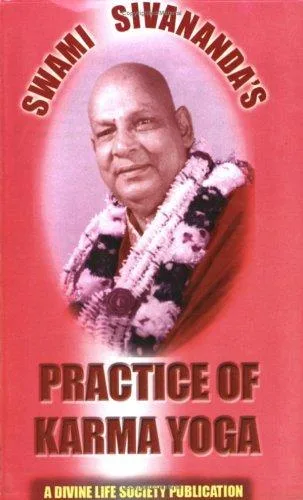
Practice of karma yoga
 73
73

Practice of karma yoga
Sivananda Swami's "Practice of Karma Yoga" offers a rigorous, no-nonsense approach to a path often obscured by sentimentalism. The strength lies in its directness; it treats action not as an obstacle to spirituality but as its very crucible. The author meticulously breaks down how to approach duty, from the mundane to the significant, with an unwavering focus on selflessness. A passage detailing the transformation of everyday chores into potent spiritual practice, by simply altering one's internal attitude, is particularly striking. However, the sheer volume of instruction can feel overwhelming for absolute beginners; the book assumes a certain level of existing discipline or philosophical grounding. It is a demanding guide, but one that rewards persistent study with clarity on how to integrate the sacred into the secular.
📝 Description
73
Sivananda Swami's 1974 volume details Karma Yoga, the path of selfless action.
This book presents Sivananda Swami's teachings on Karma Yoga, the discipline of acting without attachment to outcomes. It serves as a guide for those seeking spiritual progress through everyday tasks, showing how ordinary duties can lead to inner peace and realization. The text offers a structured way to understand spiritual growth within worldly activities.
It is written for sincere individuals, especially those looking to blend spiritual practice with active lives. Readers interested in yogic philosophy, ethical living, and applying spiritual ideas to reduce ego and attachment will find it useful. It speaks to anyone wishing to discover meaning and transcendence in their work and responsibilities.
Published in 1974, this work appeared during a time of growing interest in Eastern spirituality in the West. Following figures like Swami Vivekananda, Sivananda Swami's teachings distill ancient Vedanta and Yoga philosophies for a contemporary audience. The book addresses spiritual needs in an age marked by secularism and materialism, providing a path of spiritual discipline.
💡 Why Read This Book?
• Learn to transform everyday duties into spiritual practice by understanding the principle of Nishkama Karma, as detailed in Sivananda's explanations of selfless action. • Discover practical methods for detaching from the fruits of your labor, a core tenet of Karma Yoga, helping to reduce anxiety and ego-driven outcomes. • Gain insight into how performing actions as a form of service (Seva) can purify the mind and lead to inner peace, a concept thoroughly explored throughout the text.
⭐ Reader Reviews
Honest opinions from readers who have explored this book.
❓ Frequently Asked Questions
What is the core principle of Karma Yoga as presented by Sivananda Swami?
The core principle is Nishkama Karma, or performing actions without attachment to their results. Sivananda Swami explains this as offering all deeds to the Divine, thereby purifying the mind and ego.
When was Sivananda Swami's 'Practice of Karma Yoga' first published?
The book was first published in 1974, reflecting a significant period of Western interest in Eastern spiritual philosophies.
How does Karma Yoga differ from other paths of Yoga?
While other paths focus on meditation (Dhyana Yoga) or devotion (Bhakti Yoga), Karma Yoga integrates spiritual practice into daily activities and work, emphasizing action and duty.
Can someone with a busy secular job practice Karma Yoga?
Absolutely. Sivananda Swami's work is specifically designed for individuals in worldly life, showing how to consecrate all actions, regardless of their nature, to spiritual ends.
What is the ultimate goal of practicing Karma Yoga according to the book?
The ultimate goal is self-realization, achieving inner peace, and liberation from the cycle of birth and death by transcending ego and attachment through selfless action.
Does the book offer specific techniques for selfless action?
Yes, the work provides detailed guidance on cultivating detachment, understanding Dharma (duty), performing actions as service (Seva), and maintaining mental equanimity amidst life's challenges.
🔮 Key Themes & Symbolism
Nishkama Karma: Action Without Attachment
The central tenet explored is Nishkama Karma, the performance of duty without any expectation of reward or attachment to the outcome. Sivananda Swami meticulously details how this principle, when applied to all aspects of life—from professional duties to personal relationships—acts as a powerful purifier of the mind. By focusing on the action itself and its performance with sincerity and dedication, rather than on the anticipated fruits, the practitioner begins to dissolve the ego and its inherent desires, paving the way for spiritual awakening.
Dharma: The Nature of Duty
This theme looks at the concept of Dharma as one's inherent duty or righteous path. The book emphasizes that understanding and fulfilling one's Dharma is a crucial aspect of Karma Yoga. It's not about external obligations alone, but about acting in accordance with one's true nature and responsibilities in life. By performing one's Dharma diligently and selflessly, individuals contribute to cosmic order while simultaneously advancing on their spiritual journey, aligning their actions with universal principles.
Detachment and Mental Purity
A significant focus is placed on cultivating detachment from the results of actions and the sensory world. Sivananda Swami guides readers on how to observe their thoughts and desires without being consumed by them, thereby fostering mental purity. This detachment is not indifference but a state of inner freedom, allowing one to act effectively in the world while remaining inwardly calm and centered, unperturbed by success or failure.
Seva: Action as Service
The practice of Seva, or selfless service, is presented as a direct application of Karma Yoga. The book illustrates how dedicating one's actions to the welfare of others or to a higher cause can be a profound spiritual discipline. This selfless service helps to break down the barriers of the individual ego, fostering compassion, humility, and a sense of unity with all beings. It transforms work from a personal endeavor into a sacred offering.
💬 Memorable Quotes
Direct passages from the work, attributed to the author.
“Perform all actions without attachment to the results.”
— This concise instruction captures the essence of Nishkama Karma, urging the practitioner to focus on the act of doing rather than on the rewards or consequences it might bring.
“Duty is worship.”
— This phrase highlights the transformative potential of approaching one's responsibilities not as a burden, but as a sacred offering or form of devotion.
“Let the fruits of action be offered to the Divine.”
— This interpretation suggests a method for cultivating detachment: by mentally dedicating the outcomes of one's efforts to a higher power, one relinquishes personal claim and egoistic investment.
“See the Divine in all beings and in all actions.”
— This concept encourages a shift in perception, viewing every interaction and task as an opportunity to connect with the sacred, thereby elevating mundane activities to a spiritual level.
“The mind is purified through selfless work.”
— This statement posits that engaging in Karma Yoga, particularly through acts of service, is a direct route to inner cleansing and spiritual progress, clearing away impurities of ego and desire.
🌙 Esoteric Significance
Tradition
This work is firmly rooted in the Vedanta tradition, specifically the Yoga school of Hindu philosophy, with a strong emphasis on the practical application of its principles. It draws heavily from the Bhagavad Gita's teachings on Nishkama Karma. While Vedanta is a profound philosophical system, Sivananda Swami's approach makes it accessible as a lived practice, bridging the gap between abstract metaphysical concepts and daily existence, fitting within the broader esoteric interest in achieving liberation (Moksha) through disciplined living.
Symbolism
While less reliant on overt symbolic imagery compared to some esoteric texts, the book implicitly uses the concept of the 'field' (Kṣetra) and 'knower of the field' (Kṣetrajña) from Vedanta, symbolizing the individual's consciousness and the underlying Self. The 'action' (Karma) itself becomes a symbol of the practitioner's engagement with the material world, and the 'result' (Phala) symbolizes attachment and ego. The goal of 'unity' (Yoga) symbolizes the ultimate merging of the individual consciousness with the Universal.
Modern Relevance
Contemporary mindfulness movements and secularized approaches to yoga often echo the core tenets of Karma Yoga, focusing on present-moment awareness in action and stress reduction through detachment. Thinkers and practitioners in fields like positive psychology and ethical leadership draw on principles of selfless service and duty. The book's emphasis on finding spiritual meaning in work continues to resonate with individuals seeking to reconcile their professional lives with their inner spiritual aspirations in an increasingly materialistic world.
👥 Who Should Read This Book
• Individuals seeking to integrate spiritual principles into their daily work and responsibilities, particularly those feeling conflicted between worldly duties and spiritual aspirations. • Students of Yoga and Vedanta who wish to move beyond theoretical knowledge to practical application, understanding how to live the philosophy daily. • Anyone struggling with attachment to outcomes, stress related to performance, or a desire to find deeper meaning and purpose in their everyday activities.
📜 Historical Context
Published in 1974, "Practice of Karma Yoga" emerged during a period when Eastern philosophies, particularly Vedanta and Yoga, were gaining significant traction in Western spiritual circles. Following the groundbreaking introductions by figures like Swami Vivekananda at the 1893 Parliament of Religions, a generation later, Sivananda Swami's work offered a practical, accessible distillation of these complex ideas. This era saw a counter-cultural curiosity about alternative spiritual paths, moving beyond the purely intellectual to embrace experiential practices. While movements like Transcendental Meditation (TM) offered mantra-based approaches and the Hare Krishna movement emphasized devotional chanting (Bhakti Yoga), Sivananda's focus on integrating spirituality into everyday work provided a distinct, actionable pathway for householders and professionals. His teachings built upon the Advaita Vedanta tradition, emphasizing non-dualism and the inherent divinity within all actions and beings.
📔 Journal Prompts
The principle of Nishkama Karma and its application to a recurring challenging task.
Reflecting on one's current Dharma and how it aligns with selfless action.
Identifying specific actions that can be offered as Seva in daily life.
Examining the ego's attachment to the fruits of labor.
Cultivating detachment from outcomes through a specific, recent event.
🗂️ Glossary
Karma Yoga
The path of selfless action; a discipline that integrates spiritual growth with daily duties and work, performed without attachment to results.
Nishkama Karma
Action performed without desire for its fruits or personal gain. It is considered a key practice for purifying the mind and ego.
Dharma
One's duty, righteousness, or essential nature. Fulfilling one's Dharma with sincerity is a core aspect of Karma Yoga.
Seva
Selfless service; performing actions for the benefit of others or a higher cause, as a form of spiritual practice.
Attachment
An excessive emotional bond or desire for persons, objects, or outcomes, which the book identifies as a primary source of suffering and ego.
Detachment
A state of mental freedom from excessive desire or emotional dependence on the results of actions or external conditions.
Ego
The sense of individual self, often associated with pride, selfishness, and a false identification with the body and mind, which Karma Yoga aims to transcend.
🔮 Readers Also Liked
Browse all →








More by Sivananda Swami.
All books →


More Free Occult Philosophy Books
View all →