The Law of Attraction
 83
83

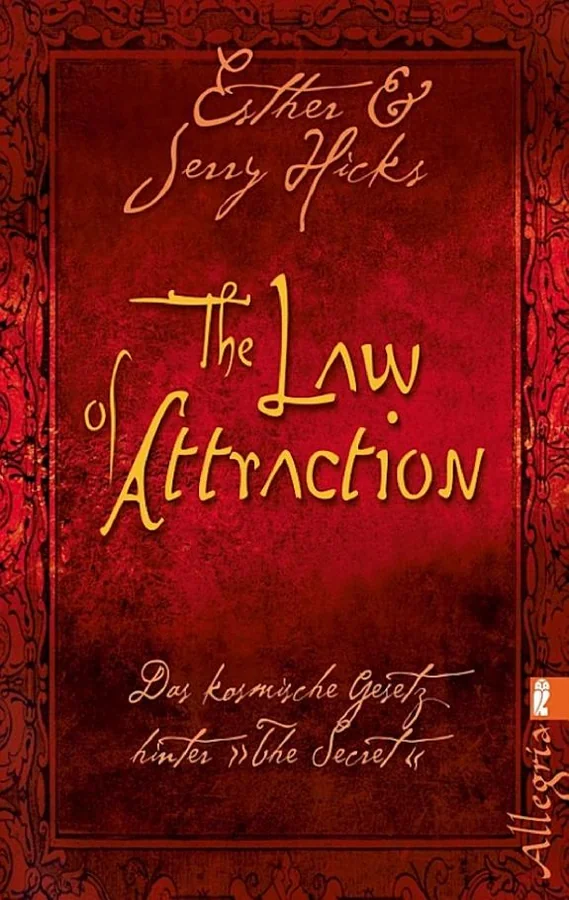
The Law of Attraction
Esther and Jerry Hicks' *The Law of Attraction* offers a direct, if somewhat simplified, exposition of a core New Thought principle. The strength of the book lies in its accessible language and the consistent emphasis on personal agency. The authors' contention that one's internal state is the primary architect of external reality is compellingly presented. However, the work occasionally skirts over the psychological complexities of deeply ingrained negative patterns, presenting manifestation as a purely cognitive or energetic exercise. A notable passage details the 'process of deliberate creation,' which, while conceptually clear, might oversimplify the emotional work required for deep change. The ultimate verdict on its efficacy rests with the reader's commitment to consistent application and belief.
📝 Description
83
Esther and Jerry Hicks published The Law of Attraction in 2009, stating that thoughts attract corresponding experiences.
The Law of Attraction, by Esther and Jerry Hicks, explains that individuals attract into their lives whatever they focus their thoughts upon. The book posits that these thoughts, whether positive or negative, are like energetic signals that draw similar circumstances back to the person. It offers a method for directing one's thinking to achieve desired results, moving beyond simple wishing to a practical application of mental and emotional energy.
This work is for people who want practical ways to change their lives by altering their perspective and intentions. It will appeal to anyone feeling stuck or unhappy, looking for a philosophical or spiritual path to self-improvement and achieving goals. Those interested in personal growth, manifestation methods, and the energetic basis of reality will find its advice useful.
Published in 2009, *The Law of Attraction* built on New Thought philosophies from the early 20th century, notably figures like Wallace Wattles and William Walker Atkinson. The Hicks' approach, which gained popularity through media appearances, centers on the idea that 'like attracts like' through 'vibrational frequency.' This concept suggests that aligning one's internal state with desired outcomes can bring them into physical reality. The book situates itself within traditions that emphasize the power of the mind to shape experience and manifest external reality.
💡 Why Read This Book?
• Understand the 'Vortex' concept as explained by Esther and Jerry Hicks, learning how to consciously direct your energetic output to align with your desires, a unique framing of energetic attraction. • Grasp the 'Rampage of Appreciation' technique, a specific method detailed in the book for boosting positive vibration, offering a practical tool beyond general affirmations. • Explore the implications of the 'Law of Attraction' as presented by the Hicks in the context of their extensive teachings, gaining insight into their specific interpretation within the broader New Thought movement.
⭐ Reader Reviews
Honest opinions from readers who have explored this book.
❓ Frequently Asked Questions
When was 'The Law of Attraction' by Esther and Jerry Hicks first published?
The book 'The Law of Attraction' by Esther and Jerry Hicks was first published on September 9, 2009, entering the self-help and esoteric literature market.
What is the central concept presented in 'The Law of Attraction'?
The central concept is that your dominant thoughts and feelings attract corresponding experiences into your life; what you focus on, you draw to yourself.
Are there practical exercises or techniques recommended in the book?
Yes, the book provides techniques such as the 'Rampage of Appreciation' and the 'Process of Deliberate Creation' to help readers consciously apply the Law of Attraction.
Who are Esther and Jerry Hicks?
Esther and Jerry Hicks were American inspirational authors and speakers who channeled Abraham, an entity that provided teachings on the Law of Attraction.
What is the 'Vortex' in the context of this book?
The 'Vortex' refers to a non-physical space where all your desires already exist in their perfect vibrational form, and the goal is to align your vibration to enter it.
How does this book relate to other New Thought philosophies?
It builds upon established New Thought principles of positive thinking and spiritual creation, offering a specific framework and terminology for understanding universal laws.
🔮 Key Themes & Symbolism
Vibrational Alignment
This theme posits that the universe operates on vibrational frequencies, and by consciously aligning one's own thoughts and emotions with the desired outcome, an individual can attract it into their reality. The Hicks explain that positive emotions indicate alignment, while negative emotions signal discord. This concept is central to understanding how desires are manifested, suggesting a dynamic interplay between internal states and external circumstances. The work encourages readers to become aware of their vibrational output and to actively cultivate positive feelings as a means of attracting what they want.
Deliberate Creation
The book outlines a three-step process for deliberate creation: 1) Ask, 2) Visualize/Feel, and 3) Allow. 'Ask' involves clearly identifying what you want. 'Visualize/Feel' requires immersing yourself in the feeling of already having it, thereby sending a clear signal to the universe. 'Allow' means releasing resistance and trusting the process, letting the manifestation unfold. This structured approach aims to empower individuals by providing a clear roadmap for intention setting and energetic broadcasting, moving beyond passive wishing to active participation in co-creation.
The Power of Emotion
Emotions are presented not merely as feelings but as indicators of one's vibrational state. The Hicks emphasize that emotions serve as a guidance system, signaling whether one is in alignment with their desires or not. By learning to interpret and manage emotions, particularly by cultivating feelings of joy, love, and appreciation, readers can effectively steer their vibrational frequency towards positive outcomes. This perspective reframes emotional experience as a critical tool for manifestation and personal well-being.
Resistance and Allowing
A significant aspect of the teachings involves understanding and releasing resistance. Resistance, often stemming from doubt, fear, or limiting beliefs, is seen as the primary obstacle to manifestation. The concept of 'Allowing' encourages readers to let go of the need to control the 'how' and 'when' of their desires, trusting that the universe will orchestrate the details. This involves cultivating faith and surrendering to the natural flow of creation, thereby opening oneself to receive what has been energetically sent out.
💬 Memorable Quotes
Direct passages from the work, attributed to the author.
“Your physical circumstances are a reflection of your vibrational frequency.”
— This highlights the belief that one's external reality is not random but a direct manifestation of their internal energetic state, emphasizing the power of thoughts and emotions.
“You are the creator of your own reality.”
— This empowering statement underscores the agency individuals possess in shaping their lives, asserting that through conscious thought and feeling, they actively co-create their experiences.
“Emotions are the feedback that tells you where you are vibrationally.”
— This interpretation frames emotions as a crucial guidance system, indicating alignment or misalignment with one's desires and thus providing essential information for energetic adjustment.
“When you are a vibrational match to your desire, it must come to you.”
— This statement explains the mechanism of attraction: achieving a consistent vibrational state that mirrors the desired outcome is presented as the key to its inevitable manifestation.
💡 Key Ideas
Editorial paraphrase of the work's core concepts — not direct quotes.
The Law of Attraction states that whatever you are giving your attention to is what you are bringing to you.
This quote expresses the core principle: the focus of your attention, whether on desired outcomes or their absence, dictates what you attract into your life through energetic resonance.
🌙 Esoteric Significance
Tradition
The teachings of Esther and Jerry Hicks, channeling 'Abraham,' align closely with the New Thought movement, a spiritual movement that emerged in the 19th century. This tradition emphasizes the power of thought and belief in shaping reality, drawing inspiration from Christian Science, Transcendentalism, and Eastern philosophies. The Hicks' work can be seen as a modern iteration of these principles, focusing on practical application and energetic mechanics, specifically through the concept of vibrational frequencies.
Symbolism
While not heavily reliant on traditional symbolic systems, the Hicks' work employs potent conceptual symbols. The 'Vortex' serves as a powerful metaphor for the energetic realm where desires pre-exist, representing a state of perfect vibrational alignment. 'Abraham' itself functions as a symbolic conduit for universal wisdom, a channeled entity that provides guidance. The concept of 'vibrational frequency' acts as a symbolic language for explaining energetic interactions, translating esoteric concepts into a more tangible, albeit abstract, framework.
Modern Relevance
The Law of Attraction, as presented by the Hicks, remains highly relevant in contemporary self-help and spiritual communities. Its principles are echoed in practices like vision boarding, mindfulness, and positive psychology interventions. Modern thinkers and influencers in the manifestation space, such as those in the 'manifestation coach' industry, frequently cite or draw upon the Hicks' concepts, adapting them for online courses, workshops, and social media content, demonstrating the enduring appeal of their framework.
👥 Who Should Read This Book
• Individuals new to manifestation principles seeking a clear, step-by-step guide to understanding and applying the Law of Attraction. • Practitioners of positive psychology or self-improvement who wish to explore the energetic and metaphysical underpinnings of goal achievement. • Those feeling stuck in their current circumstances and looking for a philosophical framework to empower them to consciously shape their future reality.
📜 Historical Context
The Law of Attraction, as popularized by Esther and Jerry Hicks, emerged in the early 21st century, a period marked by a resurgence of interest in metaphysical and New Thought philosophies. This era saw a proliferation of self-help literature, often disseminated through online platforms and media appearances. The Hicks' work built upon foundational concepts established by earlier thinkers like Wallace Wattles, whose 1910 book 'The Science of Getting Rich' also explored principles of abundance through thought. While the Hicks' teachings gained mainstream visibility, particularly through their appearances on The Oprah Winfrey Show, they also faced scrutiny. Critics sometimes compared their approach to more established psychological principles or questioned the empirical basis of their claims, situating their work within a broader discourse on positive psychology and manifestation that continues to evolve.
📔 Journal Prompts
The 'Vortex' as a manifestation space: What desires reside within your Vortex?
Abraham's teachings on allowing: How can you practice releasing resistance today?
Your emotional guidance system: Identify a recent emotion and its vibrational message.
The Ask, Visualize, Allow process: Detail a recent desire through these three stages.
Rampage of Appreciation: List five things you are grateful for right now.
🗂️ Glossary
Vortex
A non-physical space where all desires are already in existence in their perfect vibrational form. The goal is to align one's vibration to enter this space and receive.
Abraham
A group of non-physical teachers channeled by Esther Hicks, providing teachings on the Law of Attraction and universal principles.
Vibrational Frequency
The concept that everything in the universe, including thoughts, emotions, and physical objects, emits a unique energetic vibration that influences attraction.
Allowing
The practice of releasing resistance, doubt, and the need to control the 'how' and 'when' of manifestation, trusting the universe to deliver.
Rampage of Appreciation
A technique involving focusing on and articulating appreciation for many things to deliberately raise one's vibrational frequency towards positivity.
Deliberate Creation
A conscious process of manifesting desires through focused intention, visualization, and emotional alignment, typically involving three steps: Ask, Visualize, Allow.
Emotional Guidance System
The system of emotions that indicates one's vibrational alignment with their desires, serving as feedback on whether one is attracting or repelling.
This book appears in 1 collection
🔮 Readers Also Liked
Browse all →









From the “Law of Attraction” Collection
View all →








More Free Occult Philosophy Books
View all →