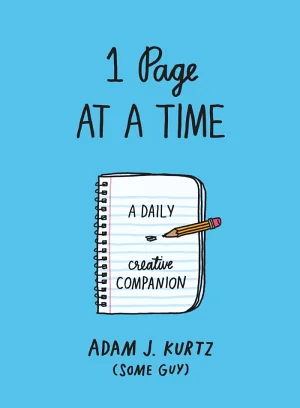
1 Page at a Time (Blue)
 72
72

1 Page at a Time (Blue)
Adam J. Kurtz’s "1 Page at a Time (Blue)" sidesteps the usual self-help platitudes by offering a pragmatic, day-by-day framework for creative engagement. Its strength lies in the sheer volume and variety of prompts, ensuring that the user is consistently challenged without feeling overwhelmed by choice. The 2016 publication date places it within a period of renewed interest in analog, mindful practices. While the prompts are generally effective, some can feel a touch generic, relying on the user's interpretation to imbue them with deeper meaning. A passage encouraging users to "draw, write, list, reflect, and share" encapsulates the book's direct, multi-modal approach. Ultimately, "1 Page at a Time" is a reliable tool for anyone seeking to cultivate a consistent creative or reflective habit.
📝 Description
72
Adam J. Kurtz published '1 Page at a Time (Blue)' in 2016, a daily prompt journal.
Published in 2016, '1 Page at a Time (Blue)' by Adam J. Kurtz is a daily creative practice guide. It presents 365 distinct prompts designed to encourage users to engage with their thoughts and experiences through writing, drawing, listing, and reflection. Unlike a blank journal, each day offers a specific, actionable prompt, promoting regular engagement with personal introspection and creative output. The "Blue" edition denotes a particular print run or aesthetic of this popular format.
This book suits individuals looking for a structured yet adaptable method for daily self-exploration and creative development. It appeals to those who welcome guided exercises but desire the liberty to interpret prompts in their own way. Artists, writers, students, or anyone interested in mindfulness and personal growth will find value in its daily challenges. It is especially useful for people who have previously found it hard to maintain a journaling habit because of a lack of direction or the intimidation of a blank page.
Emerging in 2016, '1 Page at a Time' responded to a growing cultural interest in analog creative practices and digital detox. Its publication coincided with a period where mindfulness and self-help literature were popular, creating an audience receptive to tools for personal reflection. Kurtz's work acts as a physical counterpoint to transient digital content, offering a concrete space for daily creation. This aligns with traditions that value manual artistic expression and handwriting for their therapeutic and developmental benefits.
💡 Why Read This Book?
• You will learn to transform abstract thoughts into concrete expressions through 365 distinct daily prompts, fostering a consistent practice of personal reflection and creativity. • You will feel empowered by the book's core philosophy, "Things are what you make of them," encouraging daily self-creation and a unique approach to your experiences. • You will gain a structured yet flexible method for daily engagement, moving beyond blank pages with Kurtz's specific prompts designed for writing, drawing, and listing.
⭐ Reader Reviews
Honest opinions from readers who have explored this book.
❓ Frequently Asked Questions
What is the primary purpose of Adam J. Kurtz's '1 Page at a Time (Blue)'?
The book provides 365 daily prompts designed to encourage users to draw, write, list, reflect, and share, fostering consistent creative practice and self-exploration.
When was '1 Page at a Time' first published?
The book was first published on May 3, 2016, positioning it within a contemporary interest in analog creative tools.
Does '1 Page at a Time (Blue)' require artistic skill?
No, the prompts encourage drawing, writing, and listing, emphasizing personal expression over technical skill, making it accessible to all levels.
How does the 'Blue' edition differ from other versions?
The 'Blue' designation typically refers to a specific aesthetic or print run of the book, often indicating a particular cover color or design, rather than content differences.
Can '1 Page at a Time' be used for spiritual or esoteric reflection?
Yes, the prompts can be adapted for esoteric exploration by users interested in personal symbolism, introspection, and creative interpretation of spiritual concepts.
Is this book suitable for beginners in journaling?
Absolutely. Its structured prompts offer clear direction, making it an excellent starting point for individuals new to daily journaling or creative exercises.
🔮 Key Themes & Symbolism
Daily Creative Habit
The book's central theme is the cultivation of a consistent daily creative practice. With 365 unique prompts, it guides users through a year-long engagement with introspection and artistic output. The emphasis is on the regularity of the act—drawing, writing, listing—rather than achieving a perfect final product. This consistent engagement, as promoted by Kurtz since 2016, aims to build discipline and make creativity an integral part of daily life, transforming abstract intentions into tangible, daily accomplishments.
Personal Agency and Interpretation
A core tenet is the empowerment of the individual, encapsulated in the idea that 'things are what you make of them.' Each prompt serves as a starting point, with the user given significant latitude to interpret and execute it. This encourages a personal connection to the material, fostering self-discovery through unique responses. The book champions subjective experience, valuing the user's individual perspective and creative choices as the primary drivers of insight and personal growth.
Tangible Self-Expression
In an increasingly digital world, '1 Page at a Time' offers a concrete, physical space for self-expression. The act of filling a page—whether with words, drawings, or lists—creates a tangible record of one's thoughts and feelings. This physical output can serve as a powerful tool for self-reflection, allowing users to revisit their progress and gain perspective over time. The book encourages a deliberate, analog approach to processing experiences and ideas.
Mindful Engagement
Each prompt is designed to draw the user into a moment of focused attention on their inner world or immediate surroundings. This mindful engagement can serve as a form of daily meditation or contemplative practice. By dedicating a small portion of each day to these structured exercises, individuals can cultivate greater self-awareness and presence, using the book as a tool to anchor themselves in the present moment.
💬 Memorable Quotes
Direct passages from the work, attributed to the author.
“Things are what you make of them.”
— This phrase underscores the book's central philosophy of personal agency. It suggests that the meaning and value derived from any situation or creative act are determined by the individual's own perception and effort.
“Every day is a chance to create something new for yourself.”
— This highlights the book's focus on daily renewal and creation. It positions each new day as an opportunity for personal development and artistic expression, encouraging a proactive approach to life.
“Each of the 365 prompts ... will encourage you to draw, write, list, reflect, and share.”
— This outlines the multi-modal approach of the book. It specifies the types of activities users can expect, offering a clear picture of the practical engagement required by the prompts.
“The prompts encourage you to draw, write, list, reflect, and share.”
— This concise summary emphasizes the diverse methods of engagement offered by the book, promoting a holistic approach to self-expression and introspection.
“The book provides 365 prompts for daily creative practice.”
— This statement clearly defines the structure and core function of the book: a year's worth of guided exercises to foster ongoing creativity.
🌙 Esoteric Significance
Tradition
While not explicitly tied to a single esoteric tradition, "1 Page at a Time" functions as a secular grimoire for personal development. Its 365 prompts can be viewed as daily 'spells' or 'invocations' designed to shape the user's inner landscape. It aligns with the Hermetic principle of "As Above, So Below," encouraging users to manifest internal states through external creative acts. The emphasis on consistent practice echoes alchemical processes of refinement and transformation, applied to the self rather than base materials.
Symbolism
The act of filling a page itself becomes symbolic, representing the user's conscious creation and ordering of their inner world. The 'Blue' in the title can be interpreted esoterically as representing intuition, clarity, and the ethereal areas of thought and spirit. The number 365, representing a full solar cycle, imbues the daily practice with a sense of cosmic rhythm and completion, encouraging alignment with natural temporal patterns.
Modern Relevance
Contemporary practices in art therapy, mindfulness coaching, and even some forms of secular spirituality draw upon the principles embodied in "1 Page at a Time." Thinkers and practitioners focused on habit formation, creative well-being, and intentional living find value in its structured approach. Its influence can be seen in digital apps that offer daily creative challenges and in the continued popularity of physical journals and planners that encourage consistent self-reflection.
👥 Who Should Read This Book
• Individuals seeking to establish a consistent daily creative practice, particularly those who benefit from structured guidance rather than entirely blank pages. • Aspiring artists, writers, or thinkers who wish to explore their inner world and develop their expressive skills through diverse mediums like drawing, writing, and listing. • Those interested in mindfulness and personal development who want a tangible tool for self-reflection and cultivating a greater sense of agency in their daily lives.
📜 Historical Context
Published in 2016, Adam J. Kurtz's "1 Page at a Time (Blue)" emerged during a period marked by a significant cultural turn towards analog practices and digital mindfulness. The early to mid-2010s saw a proliferation of self-help and wellness literature, alongside a growing awareness of the potential downsides of constant digital connectivity. Kurtz’s work offered a tangible counterpoint to the ephemeral nature of online content, providing a physical space for structured reflection and creative output. It arrived at a time when practices like bullet journaling and adult coloring books were gaining traction, signaling a broader societal interest in hands-on, introspective activities. The book’s straightforward, prompt-driven approach distinguished it from more open-ended journaling methods, appealing to individuals seeking clear guidance. While not directly engaging with specific intellectual movements, it tapped into the zeitgeist of seeking balance and personal meaning through deliberate, offline engagement, diverging from purely academic or esoteric traditions by focusing on accessible, daily application.
📔 Journal Prompts
The concept of 'things are what you make of them' applied to a recent challenge.
A drawing or list representing your current emotional state.
Reflect on the symbolism of the color blue in relation to your inner world.
Share one thing you created today that felt new.
Describe a daily ritual you aspire to build.
🗂️ Glossary
Prompt
A specific instruction or question provided by the book designed to stimulate creative output, reflection, or personal exploration by the user.
Daily Practice
The consistent, regular engagement with the book's prompts on a day-to-day basis, aiming to build a habit of creativity and introspection.
Self-Expression
The act of conveying one's thoughts, feelings, or ideas through creative means such as writing, drawing, or listing, as encouraged by the book.
Reflection
The process of deeply considering one's experiences, thoughts, and emotions, often facilitated by the prompts provided in the journal.
Tangible Output
The physical result of engaging with a prompt, such as a written entry, a sketch, or a list, which creates a concrete record of the user's activity.
Personal Agency
The sense of control and the ability to make one's own choices and direct one's own life, a concept central to the book's philosophy.
Blue Edition
Refers to a specific aesthetic version of the book, often indicated by the cover color, without altering the core content of the 365 prompts.
This book appears in 1 collection
🔮 Readers Also Liked
Browse all →









From the “Affirmations” Collection
View all →







More Free Occult Philosophy Books
View all →