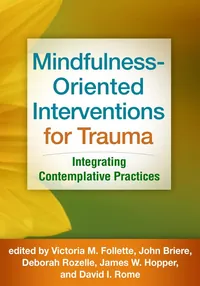
Pocket Palmistry Quiz
 73
73

Pocket Palmistry Quiz
Kim Penfold’s Pocket Palmistry Quiz offers a pragmatic, if somewhat rudimentary, entry point into chiromancy. Its strength lies in its unpretentious Q&A structure, which genuinely lowers the barrier to entry for anyone intimidated by the subject. The direct mapping of observations to interpretations, as seen in the section detailing variations of the Head Line, is commendably straightforward. However, this very simplicity becomes its limitation; the depth of interpretation is sacrificed for ease of use. Readers seeking nuanced psychological or predictive insights will find the conclusions here necessarily broad. The work’s attempt to distill decades of experience into a quiz format is admirable, but it leaves one wanting more granular detail. Penfold’s method is a functional tool for initial familiarization, but it is not a substitute for deeper study.
📝 Description
73
Kim Penfold's 2005 Pocket Palmistry Quiz uses a question-and-answer format to teach palm reading.
This book offers a direct way to learn palmistry. It moves away from complicated books by using a simple question-and-answer system. Readers are asked questions about their hands, and the answers lead them to specific meanings. This makes it easy for anyone, even someone new to palm reading, to understand what their hands might say.
The approach is practical for people who want to read their own palms or understand common hand markings. It is designed for those who might find traditional books on the subject too difficult or time-consuming. The goal is to make learning palmistry accessible and straightforward, focusing on immediate insights rather than deep study.
Published in 2005, Pocket Palmistry Quiz emerged during a time of renewed interest in personal spiritual practices. While figures like Cheiro popularized palmistry in the 20th century, Penfold's work focuses on user-friendliness. It differs from more scholarly or complex traditions by offering a simplified, instructional method for beginners, prioritizing ease of use over historical detail.
💡 Why Read This Book?
• Learn a question-and-answer method to interpret your own hand lines, directly engaging with concepts like the Head Line's clarity as presented in the book's quiz format. • Gain immediate, accessible insights into common palmistry interpretations without needing to memorize complex charts, making the practice feel achievable from the first page. • Understand the foundational approach to palmistry that Penfold developed, offering a clear alternative to more academic or tradition-bound texts first published around 2005.
⭐ Reader Reviews
Honest opinions from readers who have explored this book.
❓ Frequently Asked Questions
What is the primary method used in Pocket Palmistry Quiz?
The book utilizes a simple question-and-answer format. Readers answer questions about their palm lines, and based on their responses, they receive direct interpretations, making palmistry accessible without prior study.
Who is Kim Penfold and what is their experience?
Kim Penfold is the author, drawing on over two decades of personal experience in palmistry. Their aim was to create an easy-to-understand method for the general public.
Can someone with absolutely no palmistry knowledge use this book?
Yes, the book is specifically designed for individuals with no prior knowledge. The quiz structure guides the user step-by-step through interpreting their own hand.
What specific lines of the hand does the quiz focus on?
The quiz primarily focuses on the major lines of the hand, including the Life Line, Head Line, and Heart Line, detailing common variations and their meanings.
When was Pocket Palmistry Quiz first published?
The book was first published on February 28, 2005, positioning it within the early 21st-century wave of accessible esoteric literature.
What makes this book different from other palmistry guides?
Its primary difference is the quiz-based approach. Instead of lengthy explanations, it uses direct questions and answers to provide immediate interpretations, simplifying the learning curve significantly.
🔮 Key Themes & Symbolism
Accessible Divination
This work champions the idea that esoteric practices like palmistry should be readily available to everyone, not just initiated scholars. Penfold’s Q&A format strips away jargon and complex theoretical frameworks, offering a direct conduit to interpretation. It democratizes the art of chiromancy, suggesting that profound personal insights derived from the lines of the hand are achievable through simple, guided self-inquiry, a stark contrast to the often arcane methods found in older grimoires.
Self-Interpretation Through Questioning
The core of the book lies in its interactive methodology. By posing specific questions about the observable features of one's own palm – such as the length and clarity of the Head Line or the curvature of the Heart Line – readers are guided to actively participate in their own interpretation. This process encourages personal engagement and empowers the individual to discover meanings within their own hands, fostering a sense of autonomy over spiritual or divinatory tools.
Simplification of Complex Systems
Penfold addresses the perceived complexity of traditional palmistry, which often requires extensive study of various mounts, minor lines, and hand shapes. The Pocket Palmistry Quiz streamlines this by focusing on the most significant lines and presenting their variations in a digestible, quiz-like structure. This approach aims to make the practice less intimidating and more immediately rewarding for those who might otherwise be deterred by the sheer volume of information in comprehensive palmistry manuals.
Practical Application of Chiromancy
Beyond theoretical knowledge, the book emphasizes the practical application of palmistry for personal understanding. The insights gained from the quiz are framed as useful information that can illuminate personality traits, potential challenges, and life paths. The author's stated intention is to equip readers with a functional tool for self-discovery, moving palmistry from an esoteric curiosity to a tangible method for everyday introspection.
💬 Memorable Quotes
Direct passages from the work, attributed to the author.
“The Palmistry Quiz is based on the lines of the hand and presented in a simple Question/ Answer process.”
— This statement expresses the book's central innovation: translating complex palmistry into an accessible, interactive Q&A format. It highlights the direct correlation between observable hand features and their interpreted meanings, making the practice approachable for novices.
“The author noticed that palmistry was predominantly written in a fashion which required many hours of study to understand.”
— This observation articulates the problem Penfold sought to solve. It acknowledges the historical density of palmistry literature and establishes the author's motivation to create a more user-friendly, less time-intensive method for learning chiromancy.
“Decided to create a method anyone could use.”
— A concise summary of the author's mission. It speaks to a desire to democratize knowledge and make the practice of palmistry widely available, moving it from specialized circles to the general public.
“Based on more than two decades of the author's own experience.”
— This highlights the practical, experience-driven foundation of the book's methodology. It assures the reader that the simplified system is rooted in extensive real-world application rather than pure theory.
💡 Key Ideas
Editorial paraphrase of the work's core concepts — not direct quotes.
It allows anyone to obtain the same useful information that former clients have received, and the ability to do this without any previous knowledge.
This quote emphasizes the book's goal of empowering ordinary individuals with the same insights previously accessible only through professional palmists. It underscores the book's commitment to universal access and self-sufficiency in divination.
🌙 Esoteric Significance
Tradition
While palmistry itself has roots in ancient Hellenistic and Indian practices, Penfold's work fits within a modern, secularized esoteric tradition focused on psychological insight and self-discovery. It departs from strict Hermetic or Kabbalistic interpretations often found in Western esotericism, prioritizing immediate personal application over complex symbolic systems. The book aligns with a contemporary desire for accessible tools for personal growth, secularizing divination from its more overtly spiritual or magical contexts.
Symbolism
The primary symbols are the major hand lines: the Life Line, Head Line, and Heart Line. The Life Line, in Penfold's simplified system, broadly relates to vitality and life path, while the Head Line signifies mental faculties and approach to thought. The Heart Line typically represents emotional life and relationships. Variations in their depth, length, and clarity are the core interpretive elements, acting as direct markers of personal characteristics and potential life experiences.
Modern Relevance
Penfold's accessible, clarified approach speaks to contemporary wellness and mindfulness movements that encourage self-reflection and personal insight. Thinkers and practitioners in fields like intuitive development, life coaching, and even comparative divination studies can find value in its straightforward methodology. It serves as an entry-level model for understanding how symbolic systems can be applied practically for self-understanding in the digital age.
👥 Who Should Read This Book
• Curious individuals seeking a low-barrier introduction to palmistry without committing to extensive study. • Those who find traditional esoteric texts daunting and prefer a practical, question-driven learning method. • Readers interested in self-discovery tools that offer immediate, actionable insights into personality and life paths through personal divination.
📜 Historical Context
Published in 2005, Kim Penfold's Pocket Palmistry Quiz emerged during a period of renewed interest in practical spirituality and self-help, facilitated by the burgeoning internet. While palmistry has ancient roots, the early 21st century saw a shift towards making esoteric knowledge more accessible and less academic. This era followed significant works by figures like Cheiro (whose prolific writings on palmistry were popular throughout the 20th century) and Elsie Wheeler Wilcox. Penfold's approach, however, deliberately sidesteps the detailed analyses found in many 20th-century texts, opting instead for a simplified Q&A format. This method distinguished it from more traditional or scholarly approaches to chiromancy that often demanded considerable study, positioning it as a quick-start guide for the casual inquirer rather than a comprehensive treatise.
📔 Journal Prompts
The clarity of your Head Line, as explored in the quiz, and its implications for your thinking patterns.
Reflecting on the interpretation of your Heart Line based on the book's Q&A, consider your emotional expression.
Your Life Line's characteristics and how they might relate to your perceived vitality and life direction.
Comparing the quiz results for different lines to identify dominant personal traits.
How the simplified Q&A method has changed your perception of palmistry.
🗂️ Glossary
Chiromancy
The practice of divination or fortune-telling through the study of the palm of the hand. It involves interpreting lines, mounts, and shapes of the hand to understand personality and predict future events.
Life Line
One of the major lines on the palm, typically curving around the base of the thumb. In this context, it is interpreted in relation to vitality, general health, and significant life events.
Head Line
A prominent line on the palm that runs horizontally across the middle of the hand. It is generally associated with mental abilities, intellect, communication style, and learning.
Heart Line
The uppermost horizontal line on the palm, running across the hand beneath the fingers. It is traditionally interpreted as relating to emotional capacity, romantic relationships, and overall emotional well-being.
Interpretation
The act or process of explaining the meaning of something. In palmistry, it refers to the analysis of hand features to derive insights about a person's character or future.
Q&A Process
A method of learning or diagnosis that involves a series of questions posed to the user, followed by answers that lead to specific conclusions or interpretations. This book uses it for palmistry.
Esoteric
Intended for or likely to be understood by only a small number of people with a specialized knowledge or interest. In this context, refers to mystical or occult subjects.
This book appears in 1 collection
🔮 Readers Also Liked
Browse all →








From the “Palmistry” Collection
View all →








More Free Occult Philosophy Books
View all →