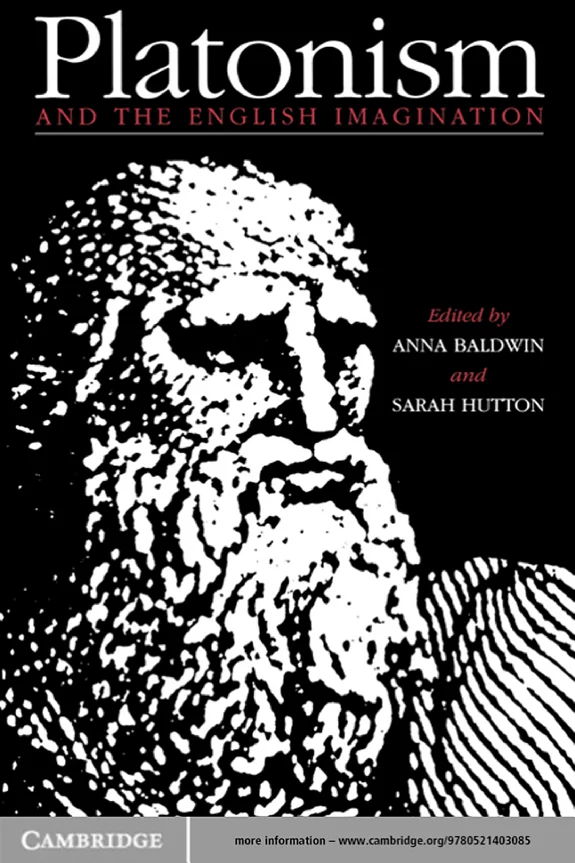
Platonism and the English Imagination
 72
72

Platonism and the English Imagination
Baldwin's "Platonism and the English Imagination" performs a vital service by charting the often-subterranean flow of Platonic thought through English letters. Its strength lies in the sheer breadth of its survey, connecting disparate figures from Chaucer to Yeats with a consistent analytical thread. The chapter discussing Wordsworth's engagement with Platonic ideas of nature and the mind, for instance, offers a nuanced understanding of the poet's spiritual landscape. However, the book occasionally feels more like an exhaustive catalogue than a deeply interpretive study. While it meticulously documents the presence of Platonic themes, it sometimes stops short of fully articulating their transformative power within individual works. The discussion of Blake's complex symbology, while informative, could benefit from a more focused exploration of how his unique visual and poetic language both embraced and subverted Platonic ideals. Ultimately, Baldwin provides an essential, if somewhat dry, cartography of a crucial intellectual inheritance.
📝 Description
72
Anna Baldwin's 1994 book traces Plato's ideas through English literature.
Anna Baldwin's "Platonism and the English Imagination," published in 1994, examines how Plato's philosophy has shaped English literary works. The book does not celebrate Plato but instead analyzes how his ideas, such as metaphysical dualism and the theory of Forms, were adopted and adapted by English writers over centuries. Baldwin shows how these Platonic concepts became structural and thematic elements in poetry, drama, and prose.
This study is for students of literature, philosophy, and intellectual history. It is particularly useful for scholars of English literature from the Renaissance to modernism. Readers interested in the philosophical basis of Western art and culture will also find value here, as will anyone wanting to understand the often hidden Platonic influences on English writing.
While Platonism itself is a philosophical tradition, its reception in England often touched upon currents that might be considered esoteric. This includes the Neoplatonic interpretations that emphasized mystical ascent and the soul's connection to the divine, ideas that resonated with certain English poets and thinkers. Baldwin's work, by tracing these influences across centuries, implicitly maps the historical presence of these more mystical or spiritually oriented interpretations of Plato within a major national literature.
💡 Why Read This Book?
• Understand how Plato's Theory of Forms, a cornerstone of Western philosophy, was reimagined by poets like Wordsworth to explore the nature of perception and memory. • Discover the specific ways Neoplatonic concepts, particularly those of Plotinus, informed the mystical and aesthetic sensibilities of 20th-century figures like W.B. Yeats. • Grasp the ethical and existential dimensions of Platonic philosophy as interpreted by Iris Murdoch in her novels, offering a unique perspective on virtue and beauty.
⭐ Reader Reviews
Honest opinions from readers who have explored this book.
❓ Frequently Asked Questions
When was Platonism and the English Imagination first published?
Platonism and the English Imagination by Anna Baldwin was first published on March 24, 1994.
Which English authors are discussed in relation to Platonism?
The book analyzes the influence of Platonism on authors including Chaucer, Shakespeare, Milton, Blake, Wordsworth, Yeats, Pound, and Iris Murdoch.
What is the Theory of Forms?
The Theory of Forms, a central Platonic concept, posits that the physical world is not the real world; instead, ultimate reality exists beyond our physical world in the realm of perfect, eternal Forms or Ideas.
Does the book cover Neoplatonism as well as Platonism?
Yes, the work explores the influence of Neoplatonism, particularly through thinkers like Plotinus, alongside direct Platonic thought on English literary traditions.
What is anamnesis according to Plato?
Anamnesis, or the theory of recollection, is the Platonic idea that learning is essentially the remembering of knowledge the soul possessed before its incarnation in a physical body.
What kind of influence does the book examine?
The book examines how Platonic themes and images were adopted and integrated into the imaginative and creative works of English writers across different literary periods.
🔮 Key Themes & Symbolism
The Theory of Forms in Literature
Baldwin meticulously traces how Plato's concept of perfect, eternal Forms, existing in a transcendent realm, influenced English writers. This theme explores how authors used the distinction between the imperfect material world and the ideal spiritual realm to structure their narratives, develop characters, and imbue their works with philosophical weight. For instance, the idealization of beauty or truth in a poem can be seen as a literary manifestation of the Platonic Form of Beauty or the Good.
Anamnesis and the Soul's Journey
The book investigates the Platonic notion of anamnesis, the idea that the soul possesses innate knowledge and learning is a process of recollection from a pre-existence. This concept is shown to inform literary explorations of memory, intuition, and spiritual awakening. Writers utilized this to depict characters who seem to recall forgotten truths or experience sudden moments of clear insights, suggesting a connection to a higher, incorporeal reality.
Beauty as Divine Ascent
A significant thread is the Platonic and Neoplatonic idea that the perception of physical beauty can serve as a ladder to apprehending divine or spiritual beauty. Baldwin demonstrates how English poets and thinkers used this concept to elevate aesthetic appreciation to a spiritual practice, viewing art and natural beauty as potentially leading the soul towards ultimate truth and the Good.
Dualism and the Spiritual World
The inherent dualism in Platonic thought—the separation of the material, corruptible body from the immortal, pure soul—is a recurring motif. The book illustrates how this philosophical stance provided a framework for exploring themes of transcendence, spiritual struggle, and the quest for purification within English literary works, often contrasting the limitations of the physical world with the possibilities of the spiritual.
💬 Memorable Quotes
Direct passages from the work, attributed to the author.
“The Theory of Forms as a blueprint for ideal realities.”
— This highlights how the abstract philosophical concept of perfect Forms provided a conceptual model for writers seeking to represent ultimate truths or perfect states within their imaginative works.
“Wordsworth's use of recollection to explore the mind's connection to nature.”
— This points to a specific instance where the Platonic idea of anamnesis is applied by a major poet to understand subjective experience and the profound relationship between human consciousness and the natural world.
“The Platonic conception of beauty as a guide to the Good.”
— This expresses the aesthetic and ethical dimension of Platonism discussed, suggesting that appreciating beauty in the world can be a spiritual path toward higher understanding and virtue.
“The influence of Plotinus on English mystical poetry.”
— This highlights the specific role of Neoplatonism, particularly Plotinus, in shaping mystical and spiritual themes within English verse, extending beyond Plato's original formulations.
💡 Key Ideas
Editorial paraphrase of the work's core concepts — not direct quotes.
The enduring presence of Platonic ideas across centuries of English writing.
This paraphrased concept underscores the central thesis: that Plato's philosophy wasn't a fleeting influence but a foundational element continuously reinterpreted and applied by diverse English literary figures.
🌙 Esoteric Significance
Tradition
While Platonism itself is a philosophical tradition, its Neoplatonic developments, particularly through Plotinus, form a crucial bridge to esoteric thought. This work fits within the broad Western Esoteric Tradition by examining how these abstract metaphysical ideas were adapted and utilized not just for intellectual discourse but for spiritual and imaginative ends, influencing mystical poetry and visionary literature.
Symbolism
Key symbols include the Allegory of the Cave, representing the ascent from ignorance (shadows) to enlightenment (the Sun/Form of the Good), and the concept of the Soul's tripartite division (reason, spirit, appetite), which informs character psychology and ethical struggles. The Form of Beauty itself acts as a potent symbol, a divine spark igniting the soul's return to its source.
Modern Relevance
Contemporary thinkers in fields ranging from depth psychology to new materialism implicitly or explicitly engage with Platonic dualisms and idealism. Practices like certain forms of contemplative meditation, which seek to transcend the material world, echo Platonic ideals. Furthermore, literary critics and philosophers continue to draw on Baldwin's framework to understand how foundational metaphysical concepts shape artistic expression.
👥 Who Should Read This Book
• Students of Comparative Literature and Philosophy seeking to understand the cross-pollination of ideas between ancient Greece and English literary history. • Scholars specializing in Renaissance, Romantic, or Modernist English literature who require a comprehensive overview of Platonic influence on their chosen periods. • Independent readers interested in the philosophical underpinnings of Western art and culture, particularly how abstract concepts like the Forms shape concrete literary works.
📜 Historical Context
Published in 1994, Anna Baldwin's "Platonism and the English Imagination" emerged in an era of robust literary scholarship, following significant critical re-evaluations of the Romantic and Victorian periods. The study engaged with a broad intellectual tradition, moving beyond the earlier focus on specific schools like the Cambridge Platonists of the 17th century. It situated itself against a backdrop where post-structuralist theory often questioned notions of authorial intent and stable meaning, offering instead a historical and philosophical grounding for understanding literary influence. While not directly engaging with a specific contemporary controversy, Baldwin’s comprehensive survey implicitly countered any notion that Platonic thought had become irrelevant to literary analysis, building upon the work of scholars who had explored its presence in figures like T.S. Eliot and W.B. Yeats.
📔 Journal Prompts
The Allegory of the Cave's depiction of shadows and the Sun.
Blake's reinterpretation of the soul's journey.
Wordsworth's concept of anamnesis.
The role of Beauty as a pathway to the Good.
Iris Murdoch's ethical application of Platonic ideas.
🗂️ Glossary
Forms (or Ideas)
In Platonic philosophy, perfect, eternal, and unchanging archetypes that exist in a transcendent realm, of which the physical objects we perceive are mere imperfect copies.
Anamnesis
The Platonic doctrine that knowledge is a form of recollection; the soul, having existed before birth, has knowledge of the Forms which it 'remembers' through experience.
The Good
In Plato's philosophy, the highest Form, analogous to the sun, which illuminates all other Forms and is the ultimate source of reality, truth, and goodness.
Neoplatonism
A school of philosophy that developed from Plato's philosophy, most notably through the work of Plotinus, emphasizing mystical and ecstatic union with the divine One.
Dualism
The philosophical concept that reality consists of two fundamental, irreducible substances or principles, typically mind/spirit and matter/body, as seen in Plato's separation of the soul and the physical world.
Chaucer
Geoffrey Chaucer (c. 1343–1400), widely considered the greatest English poet of the Middle Ages, whose works Baldwin examines for early instances of Platonic influence.
Iris Murdoch
Iris Murdoch (1919–1999), an Irish-born British novelist and philosopher whose works Baldwin analyzes for their engagement with contemporary Platonic ethics and metaphysics.
This book appears in 1 collection
🔮 Readers Also Liked
Browse all →





![The Complete Tales & Poems of Edgar Allan Poe [67 stories, 50 poems, 5 essays]](/img/thumb/the-complete-tales-poems-of-edgar-allan-poe-67-stories-50-poems-5-essays-edgar-allan-poe-994433.webp)


From the “Neoplatonism” Collection
View all →








More Free Occult Philosophy Books
View all →