Clinical acupuncture
 83
83

Clinical acupuncture
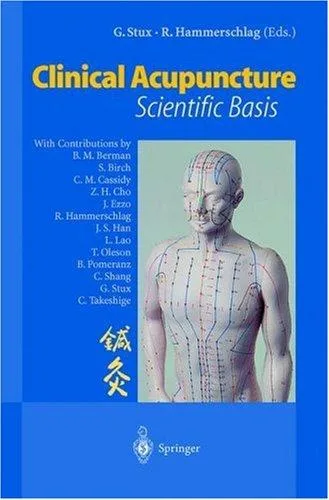
Stux and Berman's Clinical Acupuncture arrives with the weight of its authors' considerable experience, offering a text that attempts to bridge the chasm between ancient practice and modern empirical science. The strength lies in its detailed clinical protocols and its earnest effort to present acupuncture through a Western scientific lens. However, this very focus, while laudable for its intent, sometimes feels like it’s dissecting the spirit out of the practice. For instance, the meticulous breakdown of physiological responses to needling, while informative, can overshadow the holistic energetic considerations central to traditional understanding. The work excels in detailing how acupuncture might function biomechanically, but the intuitive, energetic flow that many practitioners and patients experience remains somewhat less articulated. It is a valuable reference for the scientifically minded practitioner, but perhaps less so for those seeking a deeper exploration of its philosophical underpinnings.
📝 Description
83
Gabriel Stux and Brian Berman published Clinical Acupuncture in 2000, focusing on scientific investigation.
Clinical Acupuncture, released in 2000 by Gabriel Stux and Brian Berman, offers a thorough look at acupuncture as a medical treatment. It moves past just history or philosophy to emphasize practical use and scientific study. The authors detail specific methods, ways to diagnose, and treatment plans suitable for modern medical settings. This book targets acupuncture practitioners, including those who use traditional methods and those wanting to combine them with Western medicine. It is also for medical professionals interested in the evidence for acupuncture, researchers studying its effectiveness, and students of complementary medicine looking for a solid understanding of the topic. The text connects the body's physical reactions to stimulating specific points, looking at ideas like Qi and meridians from Traditional Chinese Medicine. It also examines how science supports these traditional ideas, showing research results and clinical data for acupuncture's effectiveness in treating various conditions. The book aims to bridge the gap between ancient practices and contemporary scientific inquiry.
While Clinical Acupuncture engages with scientific validation, it arises from a tradition often considered esoteric. Traditional Chinese Medicine, with its concepts of Qi and meridians, operates on principles distinct from conventional Western physiology. This book acknowledges that lineage, placing the scientific study of acupuncture within the context of these older, often less empirically demonstrable, frameworks. It represents a bridge, acknowledging the historical and philosophical underpinnings while demanding rigorous modern evidence.
💡 Why Read This Book?
• Understand the physiological mechanisms proposed for acupuncture's effects, as detailed in the research presented by Berman and Stux, offering a scientific rationale for its use. • Grasp specific treatment protocols for common conditions, providing practical knowledge that goes beyond generalized theory, as outlined in the clinical sections. • Evaluate the evidence base for acupuncture, enabling a more informed clinical judgment and discussion with patients regarding its efficacy and application, informed by the studies cited.
⭐ Reader Reviews
Honest opinions from readers who have explored this book.
❓ Frequently Asked Questions
What is the primary focus of Clinical Acupuncture by Stux and Berman?
The book primarily focuses on the clinical application and scientific investigation of acupuncture. It details specific techniques, diagnostic methods, and treatment protocols, aiming to present acupuncture as a verifiable therapeutic modality within a Western medical framework.
Who are the authors of Clinical Acupuncture?
The authors are Gabriel Stux and Brian Berman. Their collaboration brought together expertise in acupuncture practice and scientific research, with the book first published in 2000.
Does Clinical Acupuncture discuss the history of acupuncture?
While the book's main emphasis is on contemporary clinical practice and research, it implicitly draws upon the historical development of acupuncture. The context provided by its 2000 publication date situates it within a period of increasing Western scientific interest in Traditional Chinese Medicine.
What kind of scientific evidence is presented in the book?
The work explores and presents findings from clinical trials and scientific studies investigating acupuncture's efficacy for various conditions. It aims to provide an evidence-based perspective on its therapeutic benefits and physiological effects.
Is Clinical Acupuncture suitable for beginners?
While it offers a thorough overview, its detailed clinical focus and scientific approach might be more directly applicable to practitioners or students with some foundational knowledge. Beginners may find it a valuable reference but might benefit from introductory texts first.
What traditional concepts are explored in Clinical Acupuncture?
The book addresses core Traditional Chinese Medicine concepts such as Qi (vital energy) and meridians (energy pathways), but it primarily seeks to understand and validate these through physiological and scientific investigation.
🔮 Key Themes & Symbolism
Empirical Validation of Energetic Concepts
The work meticulously examines traditional concepts like Qi and meridians not merely as philosophical constructs but as phenomena potentially explicable through Western scientific frameworks. It details how physiological changes, such as neurotransmitter release or immune system modulation, might correlate with the stimulation of acupoints. This approach aims to bridge the gap between subjective energetic experiences and objective, measurable biological responses, making it a crucial text for understanding how esoteric notions of vital force are interrogated by empirical research.
Bridging Traditional Chinese Medicine and Western Medicine
Clinical Acupuncture stands as a significant attempt to integrate the ancient art of Chinese medicine with the rigorous methodologies of Western biomedical science. It presents diagnostic methods and therapeutic protocols derived from TCM, such as meridian theory and point selection, but frames them within the language of physiology and pathology familiar to Western practitioners. This synthesis is vital for fostering interdisciplinary understanding and facilitating the acceptance of acupuncture within conventional healthcare systems.
Evidence-Based Acupuncture Protocols
Rather than relying solely on historical precedent or anecdotal evidence, this book emphasizes the development of evidence-based protocols for acupuncture treatment. It synthesizes findings from clinical trials and research studies to guide practitioners on the most effective point combinations and techniques for specific conditions. This focus on empirical data and quantifiable outcomes is central to its clinical utility and its appeal to a scientifically-oriented audience.
The Physiology of Acupuncture
A core theme is the exploration of the underlying physiological mechanisms through which acupuncture exerts its effects. This involves examining how needling stimulates sensory nerves, leading to the release of endorphins, enkephalins, and other neurochemicals. The book discusses the impact on the autonomic nervous system and the potential modulation of inflammatory and immune responses, providing a scientific basis for acupuncture's analgesic and therapeutic properties.
💬 Memorable Quotes
Direct passages from the work, attributed to the author.
“The physiological effects of acupuncture are many-sided, involving complex neurochemical and hormonal pathways.”
— This statement highlights the book's commitment to explaining acupuncture's efficacy through measurable biological processes, moving beyond purely energetic or spiritual interpretations towards a scientific understanding.
“Evidence-based practice in acupuncture requires rigorous clinical trials and systematic reviews.”
— This reflects the authors' dedication to establishing acupuncture's legitimacy through scientific methodology, emphasizing the importance of empirical data in clinical decision-making.
“Acupuncture's analgesic effects are mediated, in part, by the activation of descending inhibitory pain pathways.”
— This specific interpretation points to the book's detailed exploration of how acupuncture influences the nervous system to produce pain relief, grounding the effect in neurobiology.
“Understanding Qi requires examining its observable correlates in physiological function.”
— This concept suggests that while acknowledging the traditional term 'Qi,' the authors aim to understand its manifestation through tangible biological processes studied by science.
💡 Key Ideas
Editorial paraphrase of the work's core concepts — not direct quotes.
Meridian pathways represent functional channels whose activity can be correlated with specific physiological responses.
This paraphrased concept suggests an attempt to map traditional energetic pathways onto observable bodily systems, seeking scientific validation for the ancient concept of meridians.
🌙 Esoteric Significance
Tradition
While not strictly adhering to a single esoteric lineage, Clinical Acupuncture engages with the principles of vitalism and energetic medicine that underpin many esoteric traditions, most notably Traditional Chinese Medicine (TCM). It attempts to translate TCM's core concepts, such as Qi and meridians, into a framework understandable within a Western scientific paradigm. It departs from purely mystical interpretations by demanding empirical validation, yet it retains the esoteric goal of understanding and manipulating subtle life forces for healing.
Symbolism
The concept of Qi (vital energy) and meridians (energy pathways) are central symbolic systems explored. Qi, traditionally representing life force, is examined for its physiological correlates like nerve impulses and hormonal activity. Meridians, visualized as channels, are investigated as functional pathways influencing physiological systems. The book endeavors to explain these symbols by grounding them in biological function, aiming to bridge the esoteric understanding of energetic flow with scientific understanding of bodily systems.
Modern Relevance
Contemporary thinkers and practitioners in integrative medicine and evidence-based complementary therapies frequently draw upon the research-oriented approach exemplified by Clinical Acupuncture. Modern schools of acupuncture training often incorporate its emphasis on scientific validation and physiological mechanisms. Furthermore, discussions around psychosomatic medicine and the mind-body connection continue to find relevance in the book's exploration of how physical stimulation can trigger complex physiological and neurological responses.
👥 Who Should Read This Book
• Acupuncturists and TCM practitioners seeking to understand and articulate the scientific basis for their practice, thereby enhancing their professional credibility and patient communication. • Western medical professionals curious about the evidence supporting acupuncture, aiming to integrate it safely and effectively into patient care or understand its role in complementary medicine. • Researchers in fields like neuroscience, physiology, and pain management interested in the biological mechanisms underlying traditional healing modalities like acupuncture.
📜 Historical Context
Published in 2000, Clinical Acupuncture emerged during a period of intense Western scientific scrutiny and growing acceptance of Traditional Chinese Medicine (TCM). The late 20th century witnessed key figures like Ted Kaptchuk popularizing TCM concepts through accessible writing, and institutions began integrating acupuncture into pain management and oncology support. This era saw a divergence: some practitioners emphasized pure traditional methods, while others, like Stux and Berman, sought to translate TCM principles into the language of Western biomedical research. The work countered skepticism by presenting empirical data, a necessary step as acupuncture moved from esoteric practice towards evidence-based complementary therapy, facing debates with purely pharmacologically-driven medical paradigms.
📔 Journal Prompts
The physiological correlates of Qi, as explored in Clinical Acupuncture, invite reflection on personal experiences of vital energy.
Consider the concept of meridians: how might these functional pathways be understood in relation to your own bodily sensations?
Reflect on the integration of traditional diagnostic methods with scientific research presented in the book.
Analyze the evidence-based protocols for a condition discussed by Stux and Berman. How do they align with your understanding?
The exploration of neurochemical pathways in acupuncture prompts a question about the body's innate healing responses.
🗂️ Glossary
Qi
A fundamental concept in Traditional Chinese Medicine, often translated as vital energy or life force. The book explores its potential physiological manifestations and correlates within a Western scientific framework.
Meridians
Hypothetical pathways in the body through which Qi is believed to flow in TCM. Clinical Acupuncture investigates these as functional channels linked to specific physiological systems and responses.
Acupoint
Specific locations on the body, typically along meridians, where acupuncture needles are inserted to stimulate or sedate Qi. The book details their physiological stimulation effects.
Deqi Sensation
A subjective sensation experienced by patients upon successful stimulation of an acupoint, often described as soreness, numbness, heaviness, or tingling. The book discusses its significance and physiological basis.
Evidence-Based Practice
An approach to healthcare that emphasizes the use of treatments supported by rigorous scientific research and clinical trials. This is a core principle guiding the authors' presentation of acupuncture.
Neurotransmitters
Chemical messengers that transmit signals from a neuron across a synapse to a target cell. The book discusses their role in mediating acupuncture's analgesic effects, such as endorphins.
Autonomic Nervous System
The part of the nervous system that controls involuntary bodily functions like heart rate, digestion, and respiration. The book explores acupuncture's influence on this system.
🔮 Readers Also Liked
Browse all →








More by Gabriel Stux, Brian Berman
All books →
More Free Occult Philosophy Books
View all →