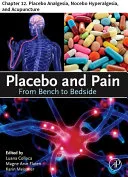
Placebo and Pain
 75
75

Placebo and Pain
Kong and Gollub's "Placebo and Pain" offers a sobering look at the scientific evidence for acupuncture, challenging prevailing assumptions about its unique efficacy. By meticulously reviewing meta-analyses, the authors reveal that while acupuncture offers moderate benefits for certain pain conditions, a significant portion of its effect appears attributable to non-specific factors, akin to the placebo effect. This is a crucial distinction for anyone invested in evidence-based medicine. The strength of the work lies in its rigorous statistical approach and its commitment to data. A limitation, however, is that the dense statistical analysis might alienate readers less familiar with meta-analytic methodologies. The discussion of how 'therapeutic ritual' contributes to outcomes, contrasting ancient practices with modern scientific inquiry, is particularly noteworthy.
This book provides a data-driven perspective on therapeutic efficacy that is both valuable and, at times, uncomfortable.
📝 Description
75
In 2019, Jian Kong and Randy L. Gollub questioned the quantifiable benefits of specific medical interventions.
Jian Kong and Randy L. Gollub's 2019 book, "Placebo and Pain," examines how subjective experiences and physiological responses intertwine, especially in managing pain. The authors analyze treatments like acupuncture, using recent meta-analyses to show how general therapeutic factors play a large role. They move past simple effectiveness measures to look at the complicated psychosomatic aspects of recovery. This work is for researchers, clinicians, and students in pain management, psychosomatic medicine, and medical history. It also interests those who study the philosophy of healing rituals and the mind-body link, especially those curious about the science behind old healing methods.
The book places the study of acupuncture and placebo within the larger scientific effort to measure and understand therapeutic results, which became prominent in the late 20th century. While acknowledging the thousands of years these practices have existed, the authors contrast their long cultural presence with their more recent scientific examination. They cite meta-analyses, a statistical technique that became more common in scientific research during the 1990s. The core idea is that non-specific therapeutic components, such as the ritual of care, patient-practitioner interaction, and the patient's belief in a treatment, significantly contribute to healing. These factors are shown to influence outcomes in conditions like osteoarthritis, headaches, and musculoskeletal pain.
This work engages with traditions that have long explored the mind-body connection, predating modern scientific inquiry. Practices like acupuncture, central to this book's analysis, are rooted in ancient philosophies that view the body and its energies as interconnected systems. The book acknowledges the historical depth of these healing modalities, which were often embedded within broader spiritual or philosophical frameworks before Western scientific methods were applied to quantify their effects. It bridges the gap between historical, often esoteric, understandings of healing and contemporary scientific investigation into therapeutic outcomes.
💡 Why Read This Book?
• Understand the quantitative role of non-specific factors in healing, as detailed in the meta-analyses referenced, allowing you to critically assess treatment claims beyond mere ingredient efficacy. • Gain insight into the scientific investigation of acupuncture, a practice with millennia of history, by understanding how its efficacy is measured against sham treatments since the late 20th century. • Explore the concept of 'therapeutic ritual' as a tangible component of treatment outcomes, moving beyond a purely biochemical understanding of medicine as presented in the book's analysis.
⭐ Reader Reviews
Honest opinions from readers who have explored this book.
❓ Frequently Asked Questions
What is the primary focus of "Placebo and Pain"?
The book primarily investigates the efficacy of treatments like acupuncture, particularly for pain disorders, by analyzing scientific data and highlighting the significant contribution of non-specific therapeutic components, such as the placebo effect and ritualistic elements.
Who are the authors of "Placebo and Pain"?
The authors are Jian Kong and Randy L. Gollub. The work was first published in August 2013.
What kind of pain conditions does the book discuss?
The book specifically mentions pain disorders such as osteoarthritis, headache, musculoskeletal pain, and shoulder pain when discussing the efficacy of treatments like acupuncture.
What does the book suggest about acupuncture's effectiveness?
Recent meta-analyses suggest that acupuncture treatment is only moderately more effective than sham treatment for certain pain disorders, indicating that non-specific components play an important role in its therapeutic effect.
What are 'non-specific components' in the context of the book?
Non-specific components refer to factors in therapy that are not directly related to the specific mechanism of the treatment itself, such as the therapeutic ritual, patient-practitioner interaction, and the patient's belief in the treatment's effectiveness.
What is the historical significance of the practices discussed?
The book notes that both acupuncture and placebo, as therapeutic rituals, have been used for thousands of years, contrasting this long history with the recent scientific efforts to rigorously investigate their efficacy.
🔮 Key Themes & Symbolism
The Efficacy of Ritual
The work scrutinizes the efficacy of treatments like acupuncture, suggesting that for certain pain disorders, the ritualistic aspects of care contribute significantly to observed outcomes. This challenges a purely mechanistic view of medicine, positing that the context, belief, and interaction surrounding a treatment can be as potent as the intervention itself. The book contrasts the millennia-old use of such rituals with contemporary scientific methods for quantifying their effects, particularly through meta-analyses.
Mind-Body Connection in Pain
Kong and Gollub examine the psychosomatic dimensions of pain, exploring how subjective experiences and psychological factors influence physiological responses. By examining the placebo effect, they illustrate the powerful connection between the mind's perception of healing and the body's actual response. This perspective is crucial for understanding why treatments that lack specific biological mechanisms can still yield tangible results for patients suffering from various pain conditions.
Scientific Scrutiny of Ancient Practices
The book highlights the ongoing scientific effort to rigorously investigate traditional healing methods, such as acupuncture. It showcases how modern research, particularly through meta-analysis, seeks to quantify the benefits of these ancient practices and disentangle specific effects from non-specific ones. This process reveals the complex interplay between historical therapeutic traditions and contemporary evidence-based medicine.
Contribution of Non-Specific Factors
A core concept explored is the significant contribution of non-specific components to therapeutic outcomes. These include the patient-practitioner relationship, the patient's expectations, and the context of treatment. The authors use data from studies on conditions like osteoarthritis and headache to demonstrate that these elements are not mere side effects but integral parts of the healing process, often accounting for a substantial portion of treatment success.
💬 Memorable Quotes
Direct passages from the work, attributed to the author.
“Acupuncture treatment is only moderately more effective than sham treatment on some pain disorders...”
— This statement underscores the central argument that while acupuncture shows some benefit, its effectiveness is not vastly superior to placebo interventions for conditions like osteoarthritis and headache, pointing to the importance of non-specific therapeutic elements.
“For thousands of years, both acupuncture and placebo (as a therapeutic ritual) have been used in healing.”
— This highlights the deep historical roots of practices that engage the mind and body in healing, contrasting the long tradition with the relatively recent scientific endeavor to quantify their efficacy and understand their mechanisms.
“...non-specific components are important contributors to the therapeutic effect.”
— This emphasizes that elements beyond the direct physiological action of a treatment, such as the context of care and patient belief, play a central role in healing outcomes, a key finding from the meta-analyses discussed.
“Scientists have begun rigorously investigating the efficacy of acupuncture treatment.”
— This points to the shift in medical research towards empirical validation of traditional practices, moving from anecdotal evidence to data-driven analysis of therapeutic interventions.
“Recent meta analysis suggests that acupuncture treatment is only moderately more effective than sham treatment...”
— This specific finding from the research indicates that for certain pain conditions, the observed benefits of acupuncture are not dramatically greater than those achieved through simulated treatments, suggesting the power of placebo and context.
🌙 Esoteric Significance
Tradition
While "Placebo and Pain" is primarily a scientific and medical text, its examination of therapeutic rituals and the mind-body connection can be seen as indirectly engaging with esoteric traditions that emphasize the power of belief, intention, and symbolic action in healing. It approaches these concepts from a materialist, scientific perspective, seeking to quantify effects that many esoteric traditions accept as fundamental, thereby bridging a perceived gap between subjective experience and objective measurement.
Symbolism
The book's core concepts, 'placebo' and 'ritual,' can be viewed as symbolic. 'Placebo' symbolizes the power of belief and expectation – the mind's capacity to influence the body's reality. 'Therapeutic ritual' symbolizes the structured, often symbolic, actions that facilitate healing, incorporating elements of ceremony, practitioner authority, and patient participation, all of which carry deeper meaning beyond their literal application.
Modern Relevance
Contemporary thinkers and practitioners in fields like psychosomatic medicine, integrative health, and even certain branches of psychology continue to draw on the understanding of placebo and non-specific effects. The work's emphasis on the patient experience and the broader context of care speaks to modern approaches that seek to move beyond a purely biomedical model, acknowledging the holistic nature of healing and the patient's active role.
👥 Who Should Read This Book
• Pain management specialists and researchers seeking to understand the evidence base for various treatments and the role of psychological factors. • Students of medical history and philosophy interested in the evolution of therapeutic practices and the scientific validation of ancient healing methods. • Clinicians and therapists aiming to enhance patient outcomes by understanding the impact of therapeutic context, ritual, and belief systems on healing.
📜 Historical Context
Published in 2013, "Placebo and Pain" emerged during a period of intense scientific scrutiny of complementary and alternative medicine (CAM). The late 20th and early 21st centuries saw a growing emphasis on evidence-based practice, prompting researchers to rigorously test modalities like acupuncture, which had been used for millennia. This era was marked by the increasing sophistication of statistical methods, particularly meta-analysis, allowing for the synthesis of data from multiple studies. This approach, pioneered by figures like Archie Cochrane, aimed to provide robust evidence for or against treatment efficacy. The work engages with a scientific discourse that often contrasted the perceived efficacy of CAM with the established principles of Western biomedicine. While not directly engaging with censorship, the book's findings, suggesting moderate efficacy for acupuncture and significant placebo effects, contributed to ongoing debates within medical communities about the integration of CAM and the definition of therapeutic value.
📔 Journal Prompts
The concept of 'non-specific components' in therapeutic rituals.
The contrast between acupuncture's historical use and recent scientific investigation.
The role of 'therapeutic ritual' in patient outcomes.
Evidence for the moderate efficacy of acupuncture versus sham treatments.
The definition and impact of 'placebo' in healing.
🗂️ Glossary
Placebo
A substance or treatment which is not efficacious for the condition being treated but is given to a patient for its psychological effect. In this context, it also refers to the therapeutic ritual itself as a source of effect.
Acupuncture
A form of alternative medicine that involves inserting thin needles into the body. It is a key treatment modality discussed in relation to its efficacy compared to sham treatments.
Meta-analysis
A statistical procedure for combining data from multiple independent studies. It is used in the book to synthesize research findings on the efficacy of treatments like acupuncture.
Sham Treatment
A procedure designed to mimic a specific medical treatment but lacking its active therapeutic component. Used as a control in studies to isolate the specific effects of a treatment from non-specific effects.
Non-specific components
Factors in therapy that are not directly related to the specific physiological action of a treatment, such as patient expectations, practitioner interaction, and the ritualistic context of care.
Osteoarthritis
A degenerative joint disease affecting bone and cartilage, often causing pain and stiffness. It is one of the pain disorders discussed in the book.
Musculoskeletal pain
Pain that affects the muscles, bones, ligaments, tendons, and nerves. The book examines treatment efficacy for such pain conditions.