Psychometry And The Occult Arts

 78
78

Psychometry And The Occult Arts
J. W. Frings’ 'Psychometry And The Occult Arts' presents a direct, unadorned approach to a subject often shrouded in vagueness. Rather than sensationalizing, Frings grounds the practice in a methodical exposition of its purported mechanics. The strength of the book lies in its detailed breakdown of practical exercises, particularly those focusing on clearing the mind and establishing a receptive state before attempting to read an object. A notable limitation, however, is the author's tendency to assert the reality of psychometry without extensive empirical defense, which might leave skeptical readers unconvinced. The chapter detailing the interpretation of 'cold spots' and 'warm spots' on an object offers a concrete, if speculative, framework for understanding tactile impressions. The work serves as a useful, if non-definitive, manual for the dedicated student of psychic arts.
📝 Description
78
J. W. Frings' 2005 book examines psychometry, the alleged ability to gain information from objects through touch.
Published in 2005, J. W. Frings' "Psychometry And The Occult Arts" details the principles and methods of psychometry. The book explains how tactile impressions can reveal an object's history, its owner's experiences, or even future events. It functions as both an exposition of the discipline and a practical guide for those interested.
This text suits individuals drawn to parapsychology and occult studies. It addresses those who want to grasp the theoretical basis of psychometric phenomena and those aiming to develop their own abilities. Readers familiar with mysticism, energy work, or comparative religion will find relevant material, as will anyone curious about the connection between consciousness, matter, and information.
The study of psychometry has roots in spiritualism and early parapsychology, gaining attention in the late 19th and early 20th centuries. Figures like Helena Blavatsky and the Theosophical Society explored similar ideas of intuitive perception. Frings' work appears later, building on anecdotal evidence and attempts to validate such phenomena, placing it within the broader discussion of extrasensory perception and human mental potential.
💡 Why Read This Book?
• Gain a structured approach to psychometric practice by learning Frings' specific techniques for object reading, offering a concrete method for developing tactile intuition. • Understand the theoretical framework behind psychometry as presented in the text, moving beyond anecdotal accounts to explore concepts like residual impressions and energetic imprints. • Explore the historical lineage of psychometric study, noting its connections to early parapsychology and figures who investigated similar phenomena, providing essential context.
⭐ Reader Reviews
Honest opinions from readers who have explored this book.
❓ Frequently Asked Questions
What is psychometry according to J. W. Frings?
J. W. Frings defines psychometry as the ability to obtain information about an object or person by touching it. This information can range from historical details to personal experiences associated with the item.
When was 'Psychometry And The Occult Arts' originally published?
The book 'Psychometry And The Occult Arts' by J. W. Frings was first published in 2005.
Does the book provide practical exercises for developing psychometric skills?
Yes, the book offers practical exercises and methods designed to help readers develop their psychometric abilities, focusing on mental preparation and receptive techniques.
What kind of information can one expect to gain through psychometry, as described in the book?
According to Frings, one can expect to gain insights into an object's history, the experiences of its past owners, or even future events connected to the object through tactile impressions.
Who is the intended audience for this book?
The book is intended for individuals interested in parapsychology, occult studies, and developing their own psychic or intuitive abilities, particularly those curious about extrasensory perception.
What is the historical context of psychometry discussed in the book?
Frings situates psychometry within the broader history of spiritualism and early parapsychology, noting its development alongside investigations into extrasensory perception and consciousness.
🔮 Key Themes & Symbolism
The Nature of Psychic Impressions
Frings explores the fundamental question of what constitutes a 'psychic impression' on an object. The work posits that physical objects retain energetic or psychic residues from their past interactions and owners. These impressions are not mere memories but active energetic imprints that can be perceived by a sensitive individual through touch. The book details how these impressions manifest, whether as distinct emotional echoes, visual flashes, or auditory fragments, and discusses their potential variability and interpretation.
Developing Receptivity and Focus
A significant portion of 'Psychometry And The Occult Arts' is dedicated to the practical cultivation of psychometric abilities. Frings outlines specific mental and energetic disciplines required for a practitioner to become receptive to subtle impressions. This involves techniques for quieting the conscious mind, grounding oneself, and establishing a clear channel for intuitive perception. The emphasis is on creating an internal state conducive to receiving information without personal bias or projection.
Ethical Considerations in Psychometry
The book addresses the ethical dimensions inherent in the practice of psychometry. Frings highlights the responsibility that comes with accessing potentially private or sensitive information through touch. He discusses the importance of intent, consent (where applicable), and the potential for misuse of such abilities. The work advocates for a mindful and respectful approach, ensuring that the practice serves a constructive purpose rather than infringing upon the privacy or well-being of others.
The Object as a Chronicle
Frings presents a compelling view of everyday objects as silent witnesses and keepers of history. Each item, through its creation, use, and ownership, accumulates a unique energetic signature. Psychometry, in this context, becomes a method of 'reading' this signature, unlocking the object's story. The book encourages readers to perceive the world around them as imbued with latent information, accessible through focused tactile engagement.
💬 Memorable Quotes
Direct passages from the work, attributed to the author.
“The act of touching an object is an act of communication.”
— This statement expresses the core premise of psychometry as presented by Frings. It reframes a mundane physical interaction into a profound exchange of information, suggesting that objects possess a form of sentience or stored consciousness.
“Clearing the mental slate is paramount before seeking impressions.”
— This highlights a crucial practical step in psychometric practice. Frings emphasizes that a cluttered or distracted mind acts as a barrier, preventing the subtle energetic residues on an object from being perceived accurately.
“Warmth can signify presence, coldness often indicates absence or past events.”
— This is an interpretation of tactile sensations experienced during psychometry. Frings suggests that temperature variations on an object's surface may correlate with specific types of psychic information, such as recent human contact versus historical imprints.
“Intent shapes the clarity of the psychometric reading.”
— This suggests that the practitioner's underlying purpose and focus directly influence their ability to receive clear and accurate information from an object, underscoring the role of mental discipline.
💡 Key Ideas
Editorial paraphrase of the work's core concepts — not direct quotes.
Every object carries an echo of its journey.
This paraphrased concept emphasizes the idea that items are not inert but retain energetic traces from their history, including their creation, use, and ownership, which can potentially be accessed.
🌙 Esoteric Significance
Tradition
This work fits within the broader tradition of Western Esotericism, particularly drawing from currents influenced by spiritualism and early parapsychology. It shares conceptual ground with Theosophy's exploration of subtle energies and psychic faculties. While not strictly Hermetic or Kabbalistic, it reflects the Hermetic principle of 'as above, so below' by suggesting that macrocosmic forces or historical events leave micro-imprints on physical objects, accessible through specialized perception.
Symbolism
A central symbolic motif is the 'object' itself, acting as a vessel or repository of energetic memory. The act of 'touch' becomes a symbolic gateway, bridging the mundane physical world with the unseen informational or psychic realm. 'Warmth' and 'coldness' are also symbolic, representing different qualities of psychic impression—presence and activity versus absence and historical distance, respectively.
Modern Relevance
Contemporary practitioners of energy healing, intuitive development, and even some forms of forensic psychology interested in psychic phenomena may find Frings' approach relevant. The book's focus on practical exercises and the interpretation of subtle sensory input speaks to modern mindfulness and bioenergetic awareness practices, offering a historical lens on the exploration of consciousness-based information gathering.
👥 Who Should Read This Book
• Aspiring psychometrists seeking a foundational text that outlines the principles and practical techniques for reading objects through touch. • Students of parapsychology interested in the historical development and practical application of extrasensory perception beyond telepathy. • Esoteric practitioners looking to expand their repertoire of intuitive skills and explore the energetic nature of physical objects.
📜 Historical Context
Published in 2005, J. W. Frings' 'Psychometry And The Occult Arts' emerges at a time when parapsychological research had long moved past its spiritualist roots into more academic, though often controversial, investigations. The late 19th and early 20th centuries saw significant interest in phenomena like telepathy and clairvoyance, championed by organizations like the Society for Psychical Research, with figures like Frederic W. H. Myers exploring the nature of consciousness. Frings' work engages with this legacy, offering a contemporary perspective on psychometry. While less prominent than telepathy in mainstream parapsychology, psychometry continued to be explored by independent researchers and practitioners. The book navigates a landscape where scientific skepticism often contrasted with persistent anecdotal evidence and esoteric traditions, offering a practical guide to those seeking to understand or develop these specific intuitive abilities.
📔 Journal Prompts
The object's energetic signature: what residual impressions might a cherished personal item hold?
Developing receptivity: how can the practice of mental clearing be applied to daily life?
Ethical boundaries: when is it appropriate to seek information from an object?
Interpreting tactile sensations: reflecting on the symbolic meaning of perceived warmth or coldness.
The object as a chronicle: consider an everyday item and its potential hidden history.
🗂️ Glossary
Psychometry
The purported psychic ability to gain information about an object, person, or event through physical touch.
Residual Impression
An energetic or psychic imprint left on an object by people or events associated with it, believed to be perceivable through psychometry.
Receptivity
The state of mental and energetic openness required for a psychometrist to accurately perceive subtle impressions from an object.
Energetic Signature
The unique pattern of energy or psychic residue associated with a specific object, reflecting its history and interactions.
Tactile Impressions
Sensory information, including emotional, visual, or auditory data, perceived through the sense of touch during a psychometric reading.
Mental Clearing
A practice of quieting the conscious mind and releasing distracting thoughts to achieve a state of focused awareness for psychic perception.
Parasensory Perception
A broad term encompassing purported extrasensory abilities, including psychometry, that operate beyond the known five senses.
🔮 Readers Also Liked
Browse all →









More by J. W. Frings
All books →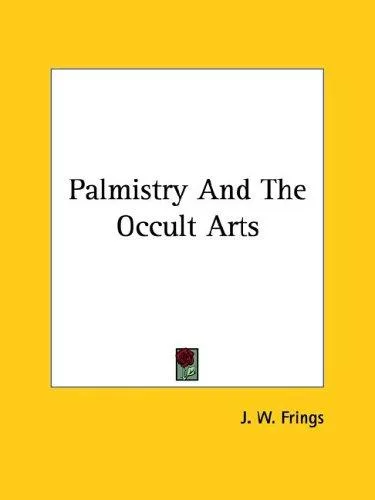


More Free Occult Philosophy Books
View all →