Letters on Demonology and Witchcraft
 80
80

Letters on Demonology and Witchcraft
Walter Scott’s "Letters on Demonology and Witchcraft" presents a fascinating, if somewhat dated, perspective on historical beliefs in the supernatural. Scott, writing in the shadow of his own mortality, brings a remarkable clarity and narrative grace to a subject often mired in sensationalism. He meticulously examines various accounts of witchcraft and spectral phenomena, attempting to discern historical fact from folklore and delusion. The strength lies in his methodical approach and engaging prose, which makes even the most outlandish tales readable. However, the work reflects the inherent biases and limited scientific understanding of the early 19th century. For instance, his discussions on the physical manifestations attributed to demonic possession, while historically accurate to the period's beliefs, now appear quaintly misinformed. Despite its limitations, the book remains a valuable artifact, offering insight into how a preeminent literary figure grappled with the enduring human fascination with the uncanny. It is a scholarly yet accessible examination of historical superstition.
📝 Description
80
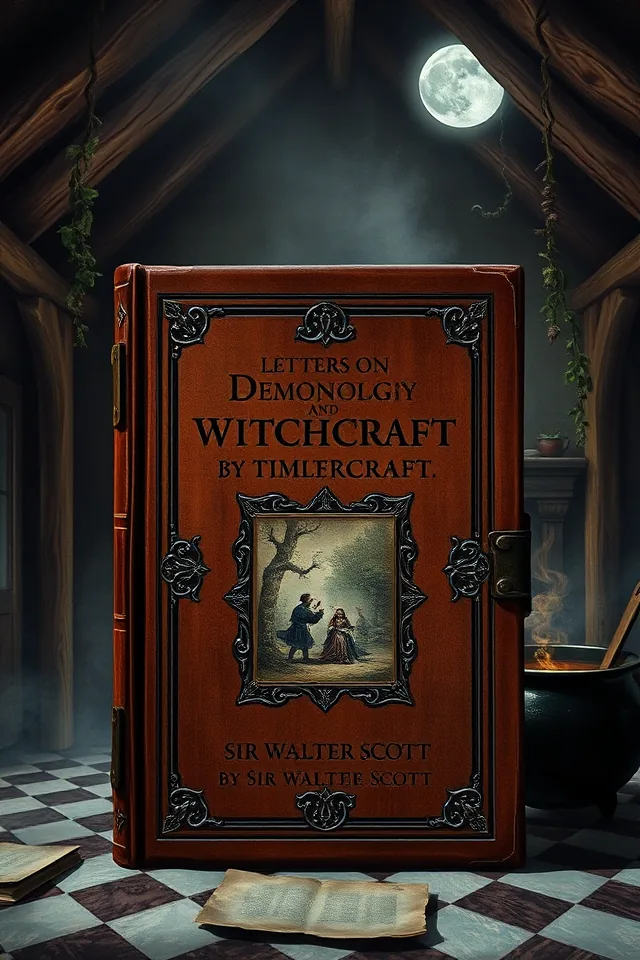
Sir Walter Scott published "Letters on Demonology and Witchcraft" in 1831, examining supernatural beliefs.
Written as a series of letters to his son-in-law, Walter Scott's "Letters on Demonology and Witchcraft" surveys historical beliefs about the supernatural. Scott, a prominent figure of the Romantic era, engaged with folklore, ghost stories, and accounts of witchcraft. He approached the subject with a scholar's eye, sifting through historical records and popular narratives. His aim was to understand the persistence and nature of these beliefs across different times and places.
The book was intended for John Murray's "Family Library" series, a collection designed for a broad audience interested in history and literature. Scott's narrative style, well known from his novels, makes the complex subject accessible. He discusses the evolution of ideas about demons, the historical witch trials, and the psychological elements that might have fueled mass delusions. Scott carefully distinguishes between documented historical events and the embellishments that often accompanied them.
Published in the early 19th century, Scott's work emerged during a period of renewed interest in folklore and the supernatural, a trend amplified by the Romantic movement. It engaged with contemporary debates about superstition and the historical reality of witchcraft. The book contributed to a growing body of literature that collected and analyzed popular tales and accounts of the uncanny, often as a counterpoint to purely rationalist explanations that dominated Enlightenment thought. Scott's approach reflects a scholarly yet accessible engagement with beliefs that were often dismissed by the scientific mainstream.
💡 Why Read This Book?
• Understand the 19th-century perspective on witchcraft and demonology, as Scott details historical accusations and folklore prevalent during his time. • Gain insight into the "Family Library" series and its aim to provide accessible historical and educational content to a broad audience in the 1830s. • Explore Scott's literary method of analyzing historical accounts of the supernatural, revealing his narrative technique applied to factual research.
⭐ Reader Reviews
Honest opinions from readers who have explored this book.
❓ Frequently Asked Questions
When was Sir Walter Scott's 'Letters on Demonology and Witchcraft' originally published?
While the book is often associated with earlier editions, the specific "Family Library" edition of Sir Walter Scott's 'Letters on Demonology and Witchcraft' was published in 1831, shortly after his death.
Who was the intended audience for 'Letters on Demonology and Witchcraft'?
The "Family Library" series, for which these letters were written, aimed to provide educational and entertaining content for a general readership, including families and students, making the subject of demonology accessible.
What historical events or periods does Scott discuss regarding witchcraft?
Scott addresses various periods of intense witch persecution, including the infamous witch trials in Europe and Scotland, examining contemporary accounts and legal records from these eras.
Does Scott believe in witchcraft and demonic possession?
Scott adopts a critical stance, seeking to explain historical beliefs through contemporary understanding, folklore, and psychological factors rather than asserting personal belief in supernatural agency.
What is the relationship between 'Letters on Demonology and Witchcraft' and other works by Sir Walter Scott?
This work showcases Scott's characteristic narrative skill applied to historical and folkloric subjects, similar to his approach in his historical novels, though focused specifically on supernatural beliefs.
Can 'Letters on Demonology and Witchcraft' be considered an academic text today?
While valuable for historical context and understanding 19th-century scholarship, it is viewed more as a historical document reflecting its era's perspectives on the occult rather than a modern academic study.
🔮 Key Themes & Symbolism
Evolution of Demonological Beliefs
Scott traces the historical trajectory of ideas about demons and their influence on human affairs. He examines how concepts of demonic pacts and influence evolved from ancient superstitions through the medieval period and into the early modern era of widespread witch trials. The work scrutinizes the societal and religious factors that fueled these beliefs, distinguishing between perceived demonic influence and natural phenomena that were often misinterpreted through a supernatural lens.
Folklore and Spectral Accounts
The letters look at a wide array of folklore, ghost stories, and accounts of spectral visitations. Scott analyzes these narratives not necessarily as literal truths but as reflections of collective anxieties, beliefs, and cultural imaginings. He pays particular attention to regional folklore, especially from Scotland, highlighting how local traditions shaped interpretations of the uncanny and the supernatural in everyday life.
Witchcraft Accusations and Trials
A significant portion of the book is dedicated to the historical phenomenon of witchcraft accusations and the subsequent trials. Scott critically examines the evidence presented in historical witch trials, often attributing confessions and accusations to delusion, coercion, or misinterpretation of natural events. He explores the legal and social mechanisms that enabled these persecutions across Europe and Britain.
Psychological Underpinnings of Superstition
Scott suggests that psychological factors, such as fear, suggestion, and mass hysteria, played crucial roles in the prevalence of beliefs in demonology and witchcraft. He explores how the human mind, influenced by cultural narratives and heightened emotional states, could perceive supernatural agency in events that might have mundane explanations. This offers an early, albeit rudimentary, psychological interpretation of historical phenomena.
💬 Memorable Quotes
Direct passages from the work, attributed to the author.
“Scott discusses the influence of religion and superstition on historical witch trials.”
— This interpretation points to Scott's analysis of how religious fervor and prevailing superstitions created an environment where witchcraft accusations could flourish and lead to severe persecution.
“The book examines spectral apparitions and their interpretation.”
— This highlights Scott's engagement with ghost stories and visions, exploring how these phenomena were understood and reported within the context of demonological belief systems.
“The letters address the origins and evolution of beliefs in the supernatural.”
— This reflects the book's broad scope, covering the historical development of ideas concerning demons, witchcraft, and other supernatural phenomena across different periods.
💡 Key Ideas
Editorial paraphrase of the work's core concepts — not direct quotes.
The author’s aim is to provide an account of the popular belief in witchcraft and demonology.
This paraphrased concept highlights Scott's stated intention to document historical beliefs rather than endorse them, positioning the work as a survey of past superstitions.
Scott differentiates between historical fact and popular legend in supernatural accounts.
This paraphrased idea emphasizes Scott's critical approach, attempting to separate verifiable historical events from embellishments and folklore that accumulated around tales of witchcraft and the demonic.
🌙 Esoteric Significance
Tradition
While not strictly adhering to a specific esoteric lineage, Scott's work engages with the broader Western tradition of demonology and occult belief systems that have roots in Neoplatonism and later Christian theological interpretations of evil. It provides a historical survey that informed later occult revivalists who sought to understand the historical underpinnings of their practices and beliefs, offering a pre-Theosophical perspective on these subjects.
Symbolism
The book dissects symbols associated with witchcraft, such as the 'sabbath,' pacts with the devil, and familiars, interpreting them as manifestations of collective delusion, fear, or misunderstood natural phenomena. These symbols, for Scott, represented the cultural anxieties and symbolic language through which societies historically articulated their understanding of evil and the unknown.
Modern Relevance
Contemporary practitioners of witchcraft and scholars of Western esotericism often consult Scott's work to understand the historical trajectory of the demonization of certain practices and beliefs. It provides context for the evolution of folklore and its influence on modern occult movements, offering a critical historical lens through which to view the origins of many contemporary esoteric concepts and their folkloric representations.
👥 Who Should Read This Book
• Students of folklore and comparative mythology seeking to understand historical narratives of the supernatural and their cultural interpretation. • Researchers of 19th-century literature and intellectual history interested in how prominent figures like Scott approached occult subjects. • Enthusiasts of historical true crime and the study of witch trials, desiring a foundational text on early modern beliefs and legal proceedings.
📜 Historical Context
Written in the twilight of Sir Walter Scott's life, "Letters on Demonology and Witchcraft" (1831) emerged from a fertile period for antiquarian studies and the Romantic engagement with the medieval past. The work appeared in John Murray's "Family Library," a series designed to disseminate knowledge to a broad, educated public, distinct from purely academic treatises. Scott’s exploration of witchcraft and demonology engaged with a burgeoning interest in folklore and national history, a trend also reflected in the works of contemporaries like Robert Southey, who similarly explored historical and supernatural themes. While Scott aimed for a rational explanation of historical beliefs, his work was received amidst ongoing debates about superstition versus genuine supernatural phenomena. The book offered a nuanced perspective, attempting to reconcile historical accounts with emerging psychological and social explanations, avoiding outright endorsement of spectral claims while acknowledging their historical impact.
📔 Journal Prompts
The historical accounts of spectral apparitions discussed by Scott.
The societal factors contributing to the prevalence of witch trials.
Scott's differentiation between historical fact and popular legend.
The psychological explanations Scott offers for superstitious beliefs.
The influence of religious doctrine on demonological concepts.
🗂️ Glossary
Demonology
The study of demons or beliefs about demons. In Scott's context, it refers to the historical and theological systems concerning the nature, origins, and activities of malevolent supernatural beings.
Witchcraft
The practice of magic or sorcery, especially by persons believed to derive power from evil spirits or the devil. Scott examines historical accusations and trials related to these beliefs.
Spectral Phenomena
Events or appearances believed to be supernatural, often involving ghosts, spirits, or apparitions. Scott analyzes historical reports of such occurrences.
Family Library
A series of books published by John Murray starting in 1829, intended to provide educational and entertaining content for a general audience, of which Scott's work was a part.
Folk-lore
The traditions, beliefs, and customs of a community, often transmitted orally. Scott draws upon and analyzes various folk tales and superstitions.
Demonic Pact
A supposed agreement, often made through a ritual, between a person and a demon or deity, in which the person exchanges their soul for supernatural powers or knowledge.
Mass Hysteria
A phenomenon in which a group of people experience similar physical symptoms or express similar fears and anxieties, often without a clear physical cause, potentially fueled by psychological suggestion.