Philosophia Hermetica

 63
63

Philosophia Hermetica



Review by Marcus Thorne (Esoteric Sciences Reviewer) — Philosophia Hermetica by A. S. Raleigh is a masterful exposition of alchemical and hermetic wisdom. Raleigh's insights into the esoteric traditions are both profound and illuminating, making this work an essential read for those interested in the mystical arts. The book's strength lies in its ability to bridge ancient knowledge with modern understanding, providing a comprehensive guide for seekers of hidden truths. Whether you are a scholar of esoteric literature or a practitioner of the occult, this treatise offers invaluable insights into the symbolism and philosophy of alchemy.
📝 Description
63
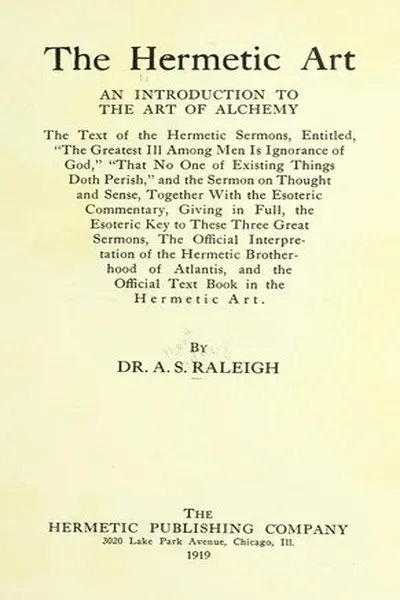
A. S. Raleigh wrote Philosophia Hermetica to explain alchemical and hermetic concepts in 1922.
Philosophia Hermetica, published in 1922, examines the principles of alchemy and hermetic philosophy. Raleigh's text discusses the symbolic language and metaphysical underpinnings of ancient alchemical traditions. The book aims to convey a sense of mystery and spiritual depth, encouraging readers to engage with its core ideas. It addresses concepts central to esoteric thought and mystical inquiry. The writing style is intended to evoke a contemplative atmosphere. Raleigh’s work is suitable for those interested in the philosophical aspects of occult traditions. It seeks to guide the reader toward a different kind of knowledge.
The author's approach is direct, focusing on the philosophical weight of alchemical pursuits. Readers will find discussions on transformation, the nature of matter, and spiritual ascent as understood within these historical systems. The book avoids overly technical jargon, instead prioritizing conceptual understanding. It is a work that demands reflection on the connections between the material and the spiritual. Raleigh’s intent appears to be the clarification of complex symbolic systems for a dedicated audience.
This book belongs to the Hermetic tradition, a philosophical and religious current influenced by the writings attributed to Hermes Trismegistus. It draws parallels with Renaissance Hermeticism, which revived ancient texts and ideas. The focus on alchemy connects it to a long history of material and spiritual transformation practices found across various cultures. Philosophia Hermetica engages with concepts of correspondence, microcosm/macrocosm, and the pursuit of gnosis, common threads in esoteric literature.
💡 Why Read This Book?
Why read Philosophia Hermetica? This book is a must-read for anyone interested in the mystical and esoteric traditions. It offers deep insights into alchemical symbolism and hermetic philosophy, making it ideal for seekers of spiritual enlightenment, scholars of mystical literature, and practitioners of the occult arts.
⭐ Reader Reviews
Honest opinions from readers who have explored this book.
❓ Frequently Asked Questions
What is the primary focus of Philosophia Hermetica?
The primary focus of Philosophia Hermetica is the exploration of alchemical and hermetic wisdom, delving into the mystical symbolism and philosophical significance of ancient alchemy.
Who is the intended audience for this book?
The intended audience includes seekers of spiritual enlightenment, scholars of mystical literature, and practitioners of the occult arts.
What makes Philosophia Hermetica unique?
Philosophia Hermetica stands out for its rich, evocative style and its ability to bridge ancient knowledge with modern understanding, providing a comprehensive guide to the mystical arts.
Are there any prerequisites for reading this book?
While not strictly necessary, a basic understanding of alchemical and hermetic concepts can enhance the reading experience.
Where can I read Philosophia Hermetica for free online?
You can read Philosophia Hermetica for free online by visiting our curated collection of mystical and occult literature.
🔮 Key Themes & Symbolism
Alchemical Transformation
Philosophia Hermetica studies the process of alchemical transformation, a journey from the base to the sublime. This theme explores the symbolic and philosophical significance of transmutation, inviting readers to understand the spiritual growth that comes from refining one's inner self.
Divine Mysteries
The book unveils the divine mysteries that lie at the heart of hermetic philosophy. It examines the symbolism and rituals that connect the human soul to the divine, offering a path to spiritual enlightenment and higher understanding.
Esoteric Symbolism
A. S. Raleigh's work is rich in esoteric symbolism, drawing from ancient alchemical and hermetic traditions. This theme explores the hidden meanings behind symbols, providing readers with a deeper understanding of the mystical arts.
💬 Memorable Quotes
Direct passages from the work, attributed to the author.
“The divine mysteries reveal themselves to those who seek.”
— It highlights the importance of seeking and the reward of finding hidden spiritual truths.
“The alchemist's work is a reflection of the soul's journey.”
— It connects the alchemical process to the spiritual journey of the individual.
💡 Key Ideas
Editorial paraphrase of the work's core concepts — not direct quotes.
The journey of the soul is one of constant transformation.
This quote emphasizes the ongoing process of spiritual growth and enlightenment.
Symbols are the language of the divine.
This line underscores the significance of esoteric symbolism in understanding the mystical arts.
Knowledge is the key to unlocking the divine mysteries.
This quote stresses the importance of seeking knowledge in the pursuit of spiritual enlightenment.
🌙 Esoteric Significance
Tradition
Philosophia Hermetica belongs to the hermetic tradition, which focuses on the pursuit of hidden knowledge and spiritual enlightenment. This tradition draws from ancient alchemical and mystical practices, aiming to uncover the divine mysteries that lie at the heart of the universe.
Symbolism
Key symbols in this book include the philosopher's stone, the alchemical process of transformation, and the divine mysteries. Each symbol carries profound meanings, inviting readers to delve deeper into the mystical arts and their significance.
Modern Relevance
Philosophia Hermetica remains relevant today for modern practitioners of the occult and seekers of spiritual enlightenment. Its insights into alchemical symbolism and hermetic philosophy continue to inspire and guide those on the path to higher understanding.
👥 Who Should Read This Book
Beginners interested in the mystical and esoteric traditions will find Philosophia Hermetica an accessible introduction to alchemical and hermetic wisdom. Scholars of mystical literature will appreciate its clear insights and strong symbolism. Spiritual seekers will benefit from its guidance on the path to spiritual enlightenment. Practitioners of the occult arts will find it a valuable resource for deepening their understanding and practice.
📜 Historical Context
Written during a time of significant esoteric exploration, Philosophia Hermetica emerged in an era when alchemy and hermeticism were at the forefront of mystical inquiry. The book's importance lies in its ability to preserve and transmit ancient knowledge to future generations. Its influence can be seen in the works of later esoteric writers and practitioners, who continue to draw inspiration from its clear insights.
📔 Journal Prompts
Reflect on the process of alchemical transformation in your own life.
How do the divine mysteries revealed in this book resonate with your spiritual journey?
Explore the significance of esoteric symbolism in your understanding of the mystical arts.
Consider the role of knowledge in your pursuit of spiritual enlightenment.
How does the alchemist's work mirror your own spiritual journey?
🗂️ Glossary
Alchemy
The ancient practice of transforming base materials into gold, symbolizing spiritual transformation.
Hermeticism
A mystical tradition focused on the pursuit of hidden knowledge and spiritual enlightenment.
Philosopher's Stone
A legendary alchemical substance believed to turn base metals into gold and grant immortality.
Divine Mysteries
Hidden spiritual truths revealed to those who seek them through esoteric practices.
Esoteric Symbolism
The use of symbols to convey hidden meanings and spiritual truths in mystical traditions.
This book appears in 3 collections
🔮 Readers Also Liked
Browse all →








More by A. S. Raleigh
All books →




From the “Hermeticism” Collection
View all →







More Free Alchemy & Hermeticism Books
View all →