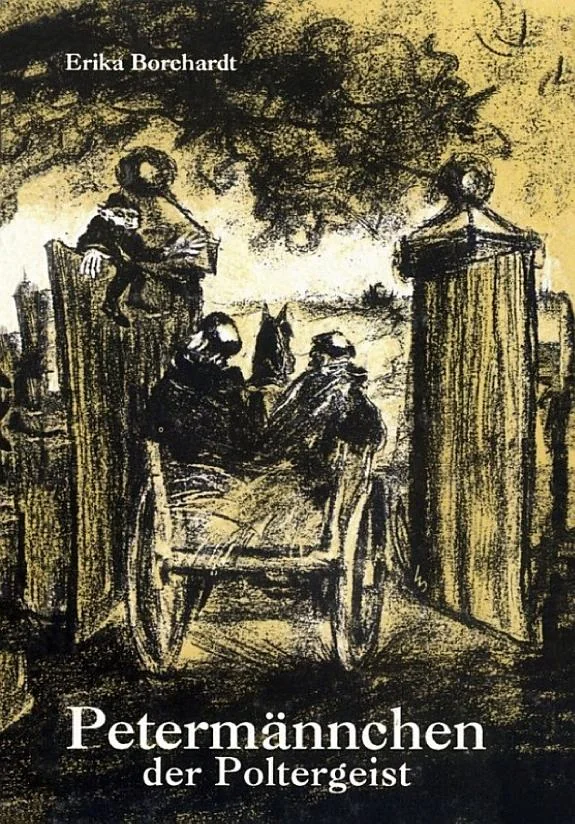
Petermännchen, der Poltergeist
 79
79

Petermännchen, der Poltergeist
Erika Borchardt’s "Petermännchen, der Poltergeist" presents an intriguing premise: the life cycle of a poltergeist. The book’s strength lies in its ambitious scope, charting this entity’s journey from the medieval Franciscan monastery to the ducal residence in Schwerin. However, the episodic structure, while necessary for covering centuries, can sometimes feel disjointed, lacking a consistent narrative drive. The passage describing Petermännchen’s desire for a "colorful, bell-adorned skirt" offers a surprisingly humanizing, albeit unusual, motivation for a supernatural being, underscoring the work's unique perspective. While the historical sweep is commendable, the work occasionally struggles to fully integrate its diverse historical settings into a cohesive whole. It is a valuable, if uneven, study of folklore’s evolving manifestations.
📝 Description
79
Erika Borchardt's Petermännchen, der Poltergeist tracks a spirit's evolution through centuries of German history.
This book follows the history of a poltergeist entity, named Petermännchen, across several hundred years. Borchardt traces its movements from a medieval Franciscan monastery in Schwerin to a ducal palace on a castle island. The narrative unfolds episodically, detailing the spectral phenomenon's development over time.
The work situates its story within a wide span of German history, from the Middle Ages up to the 19th century. It treats the poltergeist not as a fixed concept but as a character that changes. This approach was unusual for its time, focusing on the entity's motivations and interactions within monastic and ducal settings.
Readers interested in folklore, German cultural history, and less common accounts of spectral phenomena will find this book engaging. It is for those who prefer historical narratives that consider the supernatural from a viewpoint beyond standard ghost stories.
The study of poltergeists falls within the broader tradition of parapsychology and folklore investigation. While not strictly occult, it engages with phenomena often discussed in spiritualist circles. Borchardt's work contributes to an understanding of how such phenomena were perceived and documented in historical German contexts, moving beyond simple anecdotal accounts to consider the entity's perceived evolution.
💡 Why Read This Book?
• Understand the evolution of a poltergeist's narrative arc from medieval times to the 19th century, as depicted in its movements between the Franciscan monastery and the Fürstenschloß. • Gain insight into a specific German cultural history perspective on spectral entities, moving beyond generic ghost lore to explore a developing character. • Appreciate the unique portrayal of a poltergeist's motivations, such as its desire for a "colorful, bell-adorned skirt," offering a distinct approach to supernatural narratives.
⭐ Reader Reviews
Honest opinions from readers who have explored this book.
❓ Frequently Asked Questions
What is the central premise of "Petermännchen, der Poltergeist"?
The book chronicles the developmental journey of a poltergeist, tracing its existence and movements from the Middle Ages through the 19th century within various German historical settings.
Where does the poltergeist 'Petermännchen' travel in the book?
Petermännchen’s journey includes the Franciscan monastery in Schwerin and later the ducal palace (Fürstenschloß) on the castle island.
When was "Petermännchen, der Poltergeist" first published?
The book was first published on January 1, 1992.
What makes the portrayal of the poltergeist in this book unique?
Unlike typical ghost stories, the work presents the poltergeist as an evolving entity with specific desires and motivations, notably its wish for a particular skirt.
What historical periods does the book cover?
The narrative spans from the Middle Ages up to the 19th century, offering an episodic look at the poltergeist's long existence.
Who is the author of "Petermännchen, der Poltergeist"?
The author is Erika Borchardt.
🔮 Key Themes & Symbolism
Poltergeist Evolution
The work departs from static portrayals by presenting Petermännchen as an entity that develops over time. Its story, spanning from the Middle Ages to the 19th century, illustrates how such phenomena might change in character and behavior, influenced by its environment and perhaps its own nascent consciousness. This narrative approach offers a unique lens on folkloric beings.
Monastic vs. Ducal Settings
Petermännchen's movement between the austere Franciscan monastery and the more opulent Fürstenschloß highlights contrasting environments. The narrative implicitly explores how different societal structures and belief systems might interact with or perceive such a spirit, suggesting a dynamic relationship between the supernatural and human institutions.
Motivations of the Unseen
A striking aspect of the book is the attribution of specific desires to the poltergeist, most notably its interest in a "colorful, bell-adorned skirt." This detail moves beyond simple explanations of disturbance, suggesting a form of agency or even nascent personality within the spectral phenomenon, prompting reflection on the inner lives of such entities.
German Cultural History
As a work exploring German cultural history, "Petermännchen, der Poltergeist" offers a specific case study of how supernatural folklore has been conceived and narrated within a particular national context. Its focus on a localized phenomenon within historical German settings provides a valuable reference point for folklorists and historians.
💬 Memorable Quotes
Direct passages from the work, attributed to the author.
“Why does a devil-ghost end up in the Franciscan monastery with the pious brothers?”
— This question sets up the central mystery of the book: the unexpected presence of a disruptive entity within a sacred, ordered space, hinting at deeper narrative complexities.
“Why does it then flee again, and precisely into the princely castle on the castle island?”
— This poses the next stage of the poltergeist's journey, suggesting a deliberate, perhaps even strategic, movement between different centers of power and belief.
“A free and justice-loving poltergeist embarks...”
— This interpretation of the poltergeist's character suggests it is not merely a force of chaos but possesses a moral compass, seeking fairness or acting out of a sense of right.
“...for the sake of a colorful, bell-adorned skirt.”
— This specific, almost whimsical, motivation for the poltergeist's actions provides a unique and memorable character detail, humanizing the supernatural entity.
💡 Key Ideas
Editorial paraphrase of the work's core concepts — not direct quotes.
An episodic story about the development of a poltergeist from the Middle Ages to the 19th century.
This summarizes the book's core structural and thematic approach, emphasizing the entity's temporal evolution rather than a single, static haunting.
🌙 Esoteric Significance
Tradition
While not explicitly tied to a single esoteric lineage like Hermeticism or Kabbalah, "Petermännchen, der Poltergeist" engages with the broader tradition of Western folklore and demonology. It explores the concept of elemental spirits or nature spirits often discussed in occult circles, presenting a localized manifestation that interacts with human society and religious institutions.
Symbolism
The Franciscan monastery symbolizes asceticism and spiritual discipline, providing a stark contrast to the poltergeist's disruptive nature. The Fürstenschloß represents secular power and worldly concerns. The 'colorful, bell-adorned skirt' serves as a potent symbol of desire and individuality, a seemingly mundane yet profoundly significant object that motivates the spectral entity.
Modern Relevance
Contemporary discussions on animism, the sentience of non-human entities, and the psychology of hauntings can find resonance in Borchardt's work. Modern folklorists and writers exploring the 'folkloric turn' in esoteric studies might draw parallels to Petermännchen's development and its interaction with human environments.
👥 Who Should Read This Book
• Students of German folklore and cultural history seeking specific case studies of supernatural narratives. • Readers interested in comparative mythology and the portrayal of non-human entities across different historical periods. • Those intrigued by the concept of evolving spirits and the anthropomorphization of folkloric phenomena.
📜 Historical Context
Published in 1992, Erika Borchardt's "Petermännchen, der Poltergeist" emerged during a period of renewed interest in folklore and historical micro-histories. While the 1990s saw a surge in paranormal investigations and popular accounts of hauntings, Borchardt's work took a more scholarly, albeit narrative, approach. It engaged with German cultural history by examining a specific folkloric entity across centuries, from the medieval era to the 19th century. This was distinct from more sensationalist accounts and positioned itself as a contribution to understanding the evolution of such legends. Unlike contemporaries focusing on modern parapsychology, Borchardt examined historical archives and narratives, treating the poltergeist as a developing character within specific geographical and temporal settings like the Franciscan monastery in Schwerin. The work's approach was novel in its attempt to trace the 'biography' of a supernatural phenomenon within documented history.
📔 Journal Prompts
Petermännchen's desire for a colorful, bell-adorned skirt: What does this specific object signify?
The contrast between the Franciscan monastery and the Fürstenschloß environments for the poltergeist.
Consider the 'episodic' nature of the poltergeist's development. How might this differ from a continuous haunting?
Reflect on the 'free and justice-loving' aspect attributed to Petermännchen.
The journey of a 'devil-ghost' into a monastery: What does this paradox suggest?
🗂️ Glossary
Poltergeist
A type of ghost or supernatural entity in German folklore, believed to be responsible for physical disturbances such as noises, objects being moved or thrown, and physical assaults.
Franziskanerkloster
Franciscan monastery, a religious house belonging to the Order of Friars Minor, known for its mendicant and ascetic traditions.
Landesresidenz Schwerin
The ducal residence in Schwerin, Germany, historically a seat of power and nobility, contrasting with monastic life.
Fürstenschloß
Princely castle, referring to the ducal palace located on the castle island in Schwerin.
Burginsel
Castle island, specifically referring to the island in Schwerin where the castle and ducal palace are located.
Teufelsgespenst
Devil-ghost, a term suggesting a particularly malevolent or troublesome spectral entity, often associated with demonic influence.
Novum
A new thing; a novelty. In this context, it signifies the book's unique approach or contribution to German cultural history.
This book appears in 1 collection
🔮 Readers Also Liked
Browse all →









From the “Poltergeist” Collection
View all →








More Free Occult Philosophy Books
View all →