What is a Poltergeist?
A poltergeist, German for 'noisy ghost,' is a type of paranormal phenomenon involving physical disturbances such as loud noises, moving objects, and physical assaults. Unlike hauntings typically associated with a specific location or deceased individual, poltergeist activity is often linked to a living agent, usually an individual undergoing significant emotional or psychological stress. The phenomena can manifest as rapping, banging, furniture displacement, levitation of objects, and even apparitions, creating a disruptive and often frightening environment.
Best Books for Complete Beginners
For those new to poltergeist studies, starting with accessible overviews and classic fictional portrayals is recommended. 'The Haunting Darkness' by raven.brown offers a contemporary narrative. 'The World's Great Ghost and Poltergeist Stories' by Sarah Hapgood provides a broad collection of tales. Algernon Blackwood's 'Four Weird Tales' includes stories that touch upon unsettling phenomena. D. Scott Rogo's 'The Haunted House Handbook' offers a practical guide to understanding various hauntings, including poltergeist events, providing context for initial exploration without overwhelming detail.
Intermediate Reading
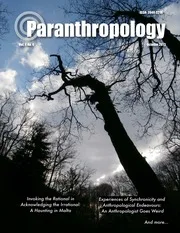
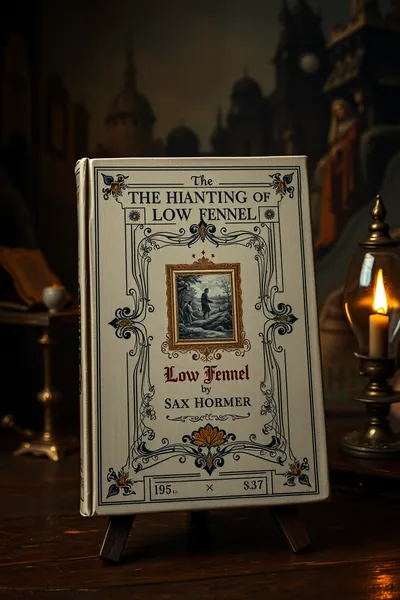
Moving beyond introductory material, intermediate readers can examine more specific investigations and theoretical frameworks. William G. Roll's 'The Poltergeist' presents detailed case studies and analysis from a parapsychological perspective. Colin Wilson's 'Poltergeist' offers a broader exploration of psychic phenomena, including poltergeists, within a wider context of human potential. Sax Rohmer's 'The Haunting of Low Fennel' provides a fictionalized, yet atmospheric, exploration of mysterious disturbances, while 'Paranthropology: Journal of Anthropological Approaches to the Paranormal' (Vol. 4 No. 4) by Jack Hunter (Editor) offers scholarly articles for deeper analysis.
Classical / Advanced Texts
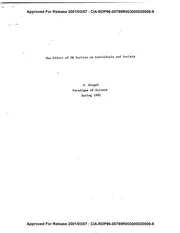
Serious students of the paranormal will benefit from examining foundational texts and primary source material. F. Marion Crawford's 'The Witch of Prague' (1885) is an early fictional work that captures the essence of poltergeist-like disturbances. 'Irish Witchcraft and Demonology' by St. John D. Seymour (1913) provides historical context for beliefs surrounding such phenomena in a specific cultural setting. The 'CIA Reading Room cia-rdp96-00789r003000020008-9: THE EFFECT OF PK PARTIES ON INDIVIDUALS AND SOCIETY' (1983) offers a glimpse into official investigations into psychokinetic phenomena.
Reading Order — Step by Step
Begin with foundational fictional explorations and general overviews. Weeks 1-2: Read Sarah Hapgood's 'The World's Great Ghost and Poltergeist Stories' and D. Scott Rogo's 'The Haunted House Handbook' for broad context. Month 2: Transition to more analytical works like William G. Roll's 'The Poltergeist' and Colin Wilson's 'Poltergeist.' Explore classic literature with F. Marion Crawford's 'The Witch of Prague.' Month 3+: Examine specialized journals like 'Paranthropology' and historical accounts such as 'Irish Witchcraft and Demonology' by St. John D. Seymour. Consider the CIA document for a different perspective.
Frequently Asked Questions
Which poltergeist book should I read first?
For a gentle introduction, begin with 'The World's Great Ghost and Poltergeist Stories' by Sarah Hapgood or D. Scott Rogo's 'The Haunted House Handbook' to grasp the breadth of the subject.
What is the difference between a haunting and a poltergeist?
Hauntings are typically tied to a location and its history, often involving apparitions. Poltergeists are characterized by physical disturbances and are frequently linked to a living person, the 'agent,' rather than a specific deceased entity.
Are poltergeists real?
The existence of poltergeists is a subject of ongoing debate. While parapsychological research has documented numerous case studies, definitive scientific proof remains elusive, with many phenomena attributed to psychological or environmental factors.
Can poltergeist activity be explained by science?
Some scientists propose explanations involving natural phenomena, such as infrasound, electromagnetic fields, or mass hysteria. Parapsychologists, however, investigate the possibility of psychokinesis (PK) as a primary cause.
What is RSPK?
RSPK stands for Recurrent Spontaneous Psychokinesis. It's a term used by researchers like William G. Roll to describe poltergeist activity that appears to occur spontaneously and repeatedly, often associated with a specific individual under stress.
Where can I find primary source material on poltergeists?
Primary sources include historical accounts, diaries, and official reports. Works like the CIA document on PK or older fictional accounts such as 'The Witch of Prague' offer insights into historical perspectives and investigations.
Are there any books that debunk poltergeist claims?
While this list focuses on exploring the phenomenon, critical evaluation is essential. Skeptical analyses often examine psychological factors, misinterpretations, and hoaxes as explanations for reported poltergeist activity.
















![A Witch of the Hills, v. 2 [of 2]](/img/thumb/a-witch-of-the-hills-v-2-of-2-warden-florence.webp)