SYMBOLISM of the TAROT
 64
64

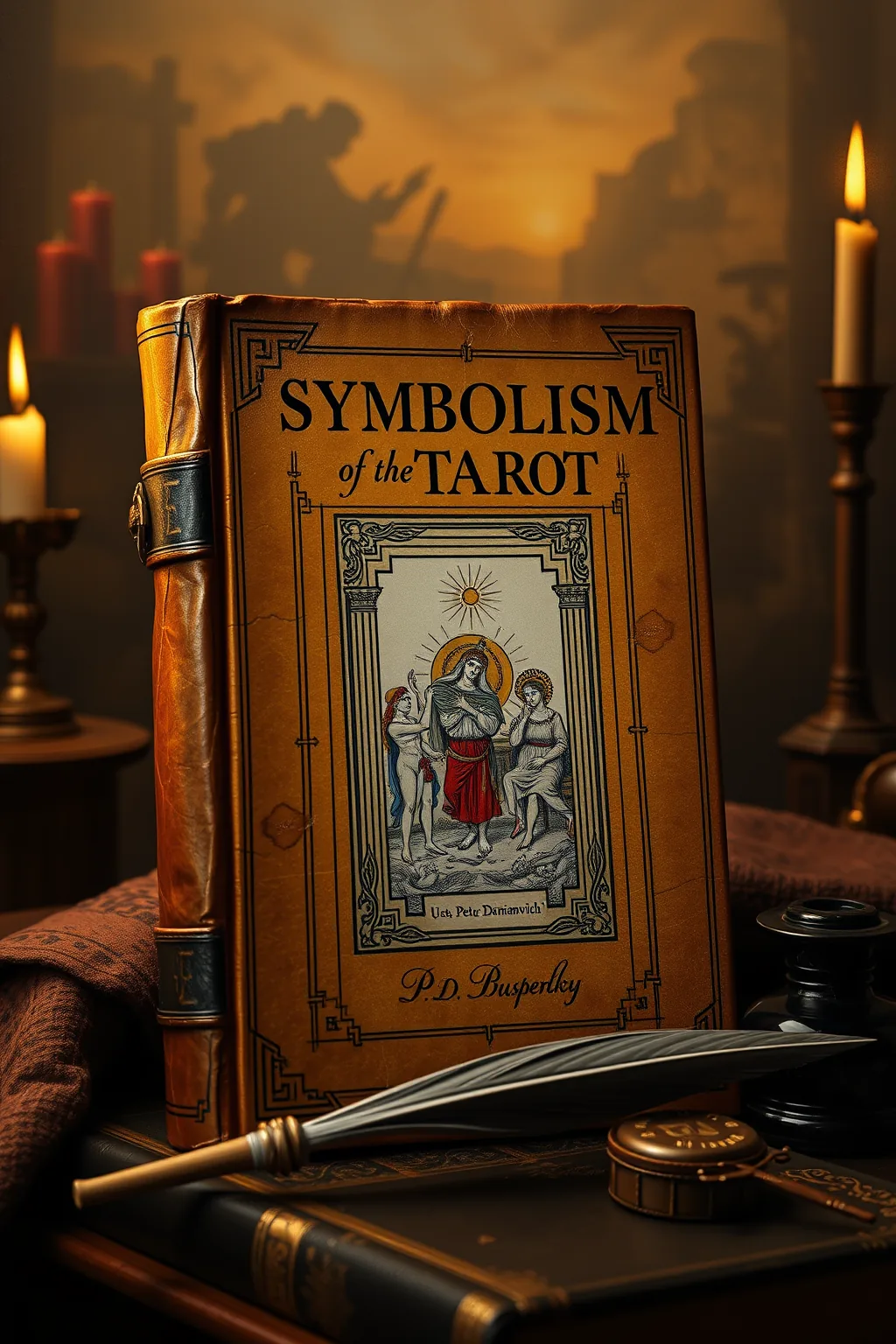
SYMBOLISM of the TAROT



Lorelei Sage, Contemplative Literature Editor — P.D. Ouspensky's 'Symbolism of the Tarot' transcends the superficiality often associated with card readings, offering a rigorous, alchemical distillation of the Major Arcana's esoteric power. Ouspensky masterfully bridges the gap between ancient symbolism and practical spiritual development, presenting the Tarot as a profound map of consciousness. His insights, rooted in a deep understanding of Gurdjieff's teachings, illuminate the archetypal forces at play within the cards and within ourselves. This text is indispensable for serious students of the Tarot, esoteric philosophy, and anyone seeking to understand the symbolic underpinnings of the human condition. It demands contemplation, rewarding the diligent reader with profound clarity and a revitalized perspective on life's grand journey.
📝 Description
64
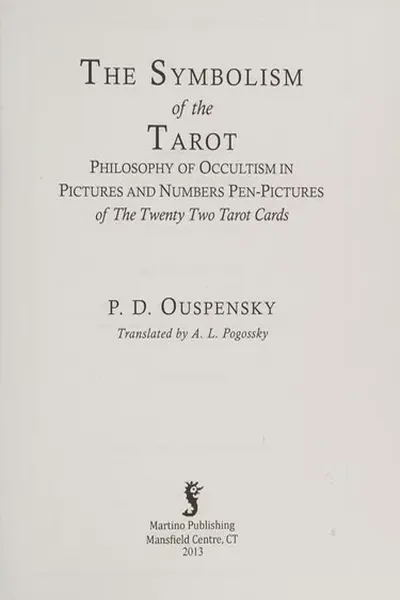
Published in 1913, P.D. Ouspensky's 'Symbolism of the Tarot' analyzes the cards beyond fortune-telling.
P.D. Ouspensky's 1913 book, 'Symbolism of the Tarot,' examines the Major Arcana not as tools for prediction, but as a symbolic language. He argues for their connection to cosmic principles, human psychology, and the path of spiritual development. The work details the symbolic structure of each card, linking them to universal laws. Ouspensky presents the Tarot as a philosophical system, using its archetypal imagery to explain the underlying structure of reality. The book aims to reveal deeper meanings within the familiar deck, encouraging a more aware perception of the self and the cosmos. It is written with intellectual seriousness and a spiritual perspective.
Ouspensky's work situates the Tarot within Western esoteric traditions, drawing connections to Kabbalah and broader mystical thought. It moves beyond simple divinatory practices to treat the cards as a complex symbolic system reflecting universal principles. This approach aligns with esoteric movements of the early 20th century that sought to uncover hidden meanings in ancient symbols and integrate them into a framework for spiritual understanding and psychological insight. The book is part of a larger inquiry into the nature of reality and consciousness through symbolic systems.
💡 Why Read This Book?
Uncover the philosophical blueprint of existence encoded within the Tarot's archetypes. 'Symbolism of the Tarot' by P.D. Ouspensky offers a rare glimpse into the symbolic language of the soul, moving beyond mere divination to reveal profound truths about consciousness and spiritual evolution. Ideal for seekers, scholars of Western esotericism, and practitioners ready to engage with the Tarot on a deeper, transformative level.
⭐ Reader Reviews
Honest opinions from readers who have explored this book.
❓ Frequently Asked Questions
Is this book a practical guide to reading Tarot cards for fortune-telling?
While the Tarot is inherently a divinatory tool, Ouspensky's focus is primarily on the philosophical and psychological symbolism of the Major Arcana, offering a deeper understanding of their archetypal significance rather than a beginner's guide to prediction.
What esoteric traditions does Ouspensky draw upon?
Ouspensky's work is deeply influenced by the teachings of G.I. Gurdjieff, incorporating elements of his system of 'The Work,' as well as drawing from Kabbalistic principles and general Western esoteric traditions.
Who is the intended audience for this book?
This book is best suited for individuals with a serious interest in esoteric philosophy, psychology, and the deeper meanings of the Tarot. It is for readers ready to engage with complex symbolic systems and their application to spiritual growth.
Does the book analyze all 78 Tarot cards?
Ouspensky's primary focus in this work is on the 22 Major Arcana, which he meticulously dissects for their profound symbolic and spiritual significance. The Minor Arcana are less extensively covered.
How does Ouspensky's interpretation differ from common Tarot readings?
Ouspensky's interpretation is less about predicting specific events and more about understanding the cosmic laws and psychological states represented by the cards, viewing them as a framework for self-awareness and spiritual development.
🔮 Key Themes & Symbolism
Archetypal Psychology and the Major Arcana
Ouspensky posits the Major Arcana as profound embodiments of universal archetypes that govern human consciousness and spiritual evolution. Each card is explored not as an isolated symbol, but as a vital stage in the soul's journey, reflecting fundamental psychological states, cosmic principles, and stages of awakening. This theme studies how these archetypes function as mirrors to our inner world, offering a roadmap for self-discovery and transformation. The book encourages readers to see the Tarot as a living system that can unlock deeper layers of self-understanding and reveal the hidden dynamics of existence.
The Tarot as a Cosmic Map and Language
This work presents the Tarot as more than a mere divinatory instrument; it is a sacred text, a cosmic map encoded with the fundamental laws of the universe and the principles of creation. Ouspensky argues that the symbolic language of the Tarot transcends ordinary communication, offering clear insights into the interconnectedness of all things and the underlying order of reality. Through its intricate imagery, the Tarot provides a framework for understanding spiritual progression, the nature of consciousness, and the subtle energies that shape our lives, inviting a dialogue with the deeper wisdom of existence.
Spiritual Evolution and the Path of the Seeker
Central to Ouspensky's exploration is the concept of spiritual evolution and the individual's journey toward higher consciousness. The Tarot's symbolism is interpreted as a guide for the 'seeker,' outlining the challenges, insights, and transformations necessary to progress on this path. The book illuminates how understanding the Tarot's archetypes can foster self-awareness, facilitate inner work, and awaken dormant potentials. It frames the Tarot as an indispensable tool for anyone committed to a path of conscious development and the quest for ultimate truth.
💬 Memorable Quotes
Direct passages from the work, attributed to the author.
“The Tarot is not a game, but a book.”
— This highlights Ouspensky's view of the Tarot as a profound repository of wisdom, rather than a trivial pastime, emphasizing its potential for deep learning and spiritual insight.
“The symbols are the language of the soul.”
— This suggests that the Tarot's imagery speaks directly to our inner being, bypassing the limitations of ordinary language and accessing deeper, intuitive levels of understanding.
“To understand the cards is to understand ourselves.”
— This underscores the deeply introspective nature of Ouspensky's approach, positioning the Tarot as a mirror reflecting our own inner landscape and psychological makeup.
“The Great Arcanum is the path of initiation.”
— This frames the Major Arcana as a sequence of transformative experiences and stages of spiritual development, akin to a sacred journey of awakening.
“Symbolism is the key to hidden worlds.”
— This emphasizes the power of symbolic language to unlock concealed knowledge and access dimensions of reality beyond ordinary perception.
🌙 Esoteric Significance
Tradition
Ouspensky's work is deeply rooted in the esoteric tradition of G.I. Gurdjieff's Fourth Way, often referred to as 'The Work.' This system emphasizes conscious evolution, self-remembering, and the understanding of cosmic laws through practical application and symbolic interpretation. The Tarot, in this context, becomes a visual representation of these laws and a tool for psychological and spiritual transformation, aligning with broader Hermetic and Kabbalistic concepts of divine order and human potential.
Symbolism
The primary esoteric significance lies in Ouspensky's interpretation of the Major Arcana as potent archetypes representing stages of spiritual awakening and cosmic principles. He sees the Fool's journey as a metaphor for the soul's descent and ascent through various areas of consciousness, with each card embodying specific forces, challenges, and lessons. The symbolism is not static but dynamic, a living language meant to be contemplated for its psychological and metaphysical implications.
Modern Relevance
In contemporary times, 'Symbolism of the Tarot' remains highly relevant for its profound psychological insights and its emphasis on conscious evolution. As individuals increasingly seek deeper meaning and tools for self-understanding, Ouspensky's rigorous, philosophical approach to the Tarot offers a valuable counterpoint to purely predictive methods. It encourages a lifelong practice of introspection and spiritual growth, making the Tarot a powerful lens through which to examine the complexities of the human condition and our place in the universe.
👥 Who Should Read This Book
This important work is essential for serious students of esoteric philosophy, psychology, and Western mystery traditions. Beginners beginning the Tarot journey will find it an invaluable, albeit challenging, foundational text that provides a profound conceptual framework. Experienced practitioners and scholars will appreciate Ouspensky's unique, Gurdjieffian lens, which elevates the Tarot beyond simple divination to a system for spiritual development. Seekers yearning for a deeper understanding of life's symbolic language and the mechanisms of consciousness will find this book a profound guide.
📜 Historical Context
P.D. Ouspensky's 'Symbolism of the Tarot' emerged during a period of intense intellectual and spiritual ferment in the early to mid-20th century. This era saw a burgeoning interest in Eastern philosophies, psychoanalysis, and esoteric traditions across Europe and America. Ouspensky himself was an important figure, deeply influenced by G.I. Gurdjieff and his unique system of spiritual development. The book reflects a broader trend of seeking deeper meaning and esoteric knowledge beyond conventional religious and scientific frameworks. It was published at a time when occultism was gaining traction among intellectuals and artists, who were exploring symbolic systems as pathways to understanding the psyche and the cosmos. The work stands as a evidence of the enduring human quest for hidden truths and the power of symbolic language to articulate profound spiritual concepts.
📔 Journal Prompts
Reflect on the 'Fool's Journey' as a metaphor for your own life's path. Where are you currently on this journey, and what lessons are you learning?
Choose one Major Arcana card that appeals to you today. What archetypal energy does it represent, and how does it manifest in your current experiences?
Consider how the symbolism of the Tarot can be applied to understanding your relationships and interactions with others. Which cards might represent the dynamics at play?
Ouspensky views the Tarot as a 'book.' What 'chapter' of this book do you feel you are currently living, and what is the underlying message?
How can the practice of contemplating Tarot symbolism enhance your self-awareness and contribute to your conscious evolution?
🗂️ Glossary
Major Arcana
The 22 trump cards of the Tarot deck, representing significant spiritual lessons, archetypal forces, and stages of human experience and consciousness.
Archetype
A universal, archaic pattern of thought or image derived from the collective unconscious and capable of producing the fundamental images of the human experience.
Esotericism
The study and practice of hidden knowledge, often involving mystical, spiritual, or occult traditions that are not widely accessible or understood by the general public.
The Fourth Way
A system of spiritual teachings developed by G.I. Gurdjieff, emphasizing conscious effort, self-observation, and the development of higher faculties for spiritual transformation.
Symbolism
The use of symbols to represent ideas and qualities, especially in art or literature, or to convey meaning beyond the literal interpretation of words or images.
This book appears in 3 collections
🔮 Readers Also Liked
Browse all →
More by Uspenskiĭ Petr Demʹi͡anovich
All books →
From the “Tarot” Collection
View all →
More Free Divination & Tarot Books
View all →