Paganistan
 83
83

Paganistan
Murphy Pizza's Paganistan presents a compelling, if sometimes understated, portrait of a community striving for spiritual self-determination. The novel's strength lies in its detailed rendering of the quotidian aspects of life within an intentional spiritual group, moving beyond abstract philosophy to show the practical, often messy, reality of communal living. One particular passage, detailing the communal effort to prepare for a seasonal festival, vividly illustrates the blend of ritual, labor, and shared purpose that binds the inhabitants. However, the narrative's subtlety can occasionally border on reticence, leaving some character motivations and conflicts feeling less developed than they might have been. The work offers a grounded, relatable perspective on Pagan community building, though it might benefit from more overt dramatization of the inherent tensions. Pizza's novel is a thoughtful examination of spiritual life enacted, rather than merely discussed.
📝 Description
83
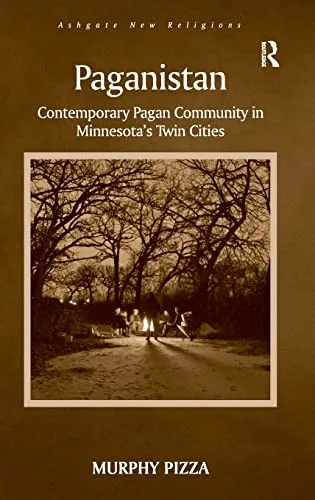
Murphy Pizza's 2016 novel, Paganistan, imagines a community built on Neo-Pagan beliefs.
Paganistan follows individuals who have formed a society around their Neo-Pagan convictions. The story centers on the lives and internal workings of these people as they build a life governed by their spiritual beliefs. It shows the difficulties and successes of creating and sustaining a unique cultural and religious identity when faced with more dominant societal norms.
The novel is for readers interested in contemporary Paganism, alternative spiritualities, and fictional portrayals of intentional communities. It will appeal to those who like character-focused stories that examine social dynamics, personal beliefs, and how spiritual ideas influence daily life. Anyone wanting to understand the potential social structures and relationships within a modern Pagan group will find this book particularly relevant.
Published in 2016, Paganistan reflects the growing visibility and discussion around Neo-Pagan movements. The late 20th and early 21st centuries saw a diversification and expansion of Pagan paths, moving from less common practices to more recognized spiritual options. Pizza's novel depicts a community that is neither fully separate nor entirely absorbed, dealing with modern life while holding to distinct spiritual principles. It presents a fictional look at how such a community might function.
💡 Why Read This Book?
• Gain insight into the practicalities of forming and sustaining an intentional spiritual community, as depicted through the founding and daily life of the community in Paganistan. • Understand the nuances of Neo-Pagan identity formation in the 21st century, moving beyond stereotypes to explore lived experiences and belief systems, as explored through the characters' personal journeys. • Appreciate a narrative that grounds esoteric concepts in relatable human interactions, demonstrating how shared rituals and beliefs, like those surrounding seasonal festivals mentioned in the text, foster connection.
⭐ Reader Reviews
Honest opinions from readers who have explored this book.
❓ Frequently Asked Questions
When was Paganistan first published?
Paganistan was first published in 2016, placing it within a contemporary wave of literature exploring alternative spiritualities and intentional communities.
What is the primary focus of Paganistan?
The book focuses on the daily lives, spiritual practices, and community dynamics of individuals living in a fictional settlement dedicated to Neo-Pagan beliefs.
Does the book offer a guide to starting a Pagan community?
While it depicts the formation and life of such a community, Paganistan is a fictional narrative and not a practical how-to guide for establishing spiritual enclaves.
Who is the author of Paganistan?
The author of Paganistan is Murphy Pizza, whose work explores themes of spirituality, community, and alternative lifestyles.
What kind of spiritual beliefs are represented in Paganistan?
The book primarily represents Neo-Pagan beliefs and practices, showcasing how these spiritual paths inform the community's structure and the inhabitants' lives.
Is Paganistan based on a real place or community?
Paganistan is a fictional creation by Murphy Pizza, designed to explore the dynamics of a Neo-Pagan community rather than to document a specific real-world location.
🔮 Key Themes & Symbolism
Intentional Community Formation
The narrative examines the intricate process of establishing and maintaining an intentional community founded on shared spiritual principles. It details the challenges of governance, resource allocation, and interpersonal relationships that arise when individuals voluntarily commit to a collective life centered around Neo-Paganism. This theme explores the practical application of esoteric ideals in creating a functional society, highlighting both the joys of shared purpose and the friction inherent in communal living. The book illustrates how a group navigates external pressures and internal disagreements to forge a cohesive, albeit imperfect, spiritual home.
Neo-Pagan Identity and Practice
Paganistan looks at the complex nature of Neo-Pagan identity in the contemporary world. It moves beyond monolithic portrayals to showcase diverse individual expressions of Pagan belief and practice within a communal context. The book explores how members integrate their spirituality into daily routines, seasonal observances, and personal relationships, illustrating the living, evolving character of modern Paganism. It highlights the importance of ritual, connection to nature, and the creation of personal mythologies as central tenets shaping the community's ethos.
Spirituality and Daily Life
A core theme is the seamless integration of esoteric spirituality into the fabric of everyday existence. The characters in Paganistan do not compartmentalize their beliefs; rather, their spiritual worldview informs their work, their relationships, and their approach to societal challenges. The book demonstrates how acts typically considered mundane—farming, building, conflict resolution—can be imbued with sacred meaning and ritual significance when undertaken within a spiritual community. This highlights a holistic approach to life where the sacred is found in the immanent.
Negotiating Belief and Culture
The work explores the ongoing negotiation between the community's distinct spiritual culture and the broader societal norms. It addresses how the inhabitants of Paganistan maintain their unique identity while interacting with the outside world, facing issues of perception, acceptance, and resource acquisition. This theme examines the dynamic tension between preserving esoteric traditions and adapting them to function within a modern, often secular, environment. The narrative illustrates the resilience and adaptability required to sustain a minority spiritual path.
💬 Memorable Quotes
Direct passages from the work, attributed to the author.
“The hearth fire was the center, not just of the physical dwelling, but of their shared intention.”
— This highlights the symbolic and practical importance of communal spaces and shared rituals in binding a spiritual community, suggesting that common activities foster unity and purpose.
“Each season brought its own demands, its own quiet lessons whispered from the turning earth.”
— This emphasizes the deep connection to natural cycles that characterizes Pagan spirituality, framing the seasons not just as temporal markers but as sources of wisdom and spiritual guidance.
“They built not just shelters, but a way of being, a shared rhythm against the world's discord.”
— This conveys the ambition of an intentional community to create a holistic lifestyle that stands apart from conventional society, prioritizing harmony and a specific spiritual ethos.
“The old stories were not just tales, but maps for reading through the present.”
— This points to the function of mythology and folklore within Pagan traditions, viewing ancient narratives as vital tools for understanding contemporary life and spiritual challenges.
“Finding consensus was less about agreement and more about shared listening.”
— This offers a perspective on communal decision-making, suggesting that true understanding and cohesion arise from attentive mutual regard rather than mere superficial accord.
🌙 Esoteric Significance
Tradition
Paganistan primarily engages with contemporary Neo-Pagan traditions, which draw eclectically from ancient polytheistic religions, nature worship, and occult philosophies. It doesn't strictly adhere to a single lineage like Hellenistic Reconstructionism or Ásatrú, but rather explores the creation of a syncretic spiritual path within an intentional community. This reflects a modern trend in Paganism where individuals and groups synthesize diverse esoteric elements to form personal or communal spiritual frameworks, moving beyond rigid historical adherence to focus on lived, spiritual experience.
Symbolism
The book frequently employs symbols tied to natural cycles and elemental forces. The turning of the seasons, particularly solstices and equinoxes, serves as a foundational motif, marking time and dictating communal activities and rituals. The hearth fire represents not just physical warmth but the spiritual heart of the community, a focal point for shared intention and connection. Earth, as the source of sustenance and grounding, is also a pervasive symbol, emphasizing the Pagan connection to the land and the material world as sacred.
Modern Relevance
Contemporary Pagan communities, witchcraft circles, and scholars of religion continue to draw inspiration from fictional and non-fictional explorations of intentional spiritual living. Works like Paganistan resonate with modern practitioners seeking to understand the social and spiritual dynamics of building and sustaining communities outside mainstream religious structures. It speaks to ongoing discussions about religious pluralism, the role of nature-based spirituality in a secularizing world, and the challenges and rewards of creating alternative social and spiritual models.
👥 Who Should Read This Book
• Individuals interested in contemporary Neo-Paganism and alternative spiritual communities, seeking a narrative that portrays their practices and social structures with nuance. • Readers of contemporary fiction who appreciate character-driven stories exploring themes of community building, belief systems, and the search for meaning outside conventional norms. • Students of sociology and religious studies interested in fictional case studies of intentional communities and the lived experience of minority spiritual groups in the 21st century.
📜 Historical Context
Murphy Pizza's Paganistan, released in 2016, emerged during a period of significant growth and public engagement with Neo-Paganism. Following the groundwork laid by figures like Gerald Gardner in the mid-20th century and the subsequent proliferation of various Pagan paths through the late 1900s, the early 21st century saw Paganism move from the fringes into more visible cultural spaces. This era was characterized by increased academic interest, online communities, and a broader acceptance of diverse spiritualities. The book reflects this context by portraying a community attempting to establish itself within contemporary society, grappling with issues of identity, practice, and public perception. While not directly engaging with academic discourse, Paganistan implicitly addresses themes explored by scholars of new religious movements, such as the construction of identity and the dynamics of intentional communities. The reception of such works often highlights the ongoing dialogue between esoteric practitioners and the wider cultural landscape, seeking to understand and integrate these spiritual expressions.
📔 Journal Prompts
The communal hearth fire's symbolic role in fostering shared intention.
Reflect on the lessons whispered from the turning earth across different seasons.
How do 'old stories' function as maps for navigating contemporary challenges?
Consider the practice of 'shared listening' in achieving consensus.
Analyze the balance between maintaining a unique spiritual rhythm and engaging with the wider world.
🗂️ Glossary
Neo-Paganism
A modern religious movement that draws inspiration from pre-Christian European pagan and polytheistic religions, often emphasizing nature worship, earth cycles, and magic.
Intentional Community
A planned residential community designed from the start to be socially, environmentally, and/or economically sustainable, often based on shared values or spiritual beliefs.
Esoteric
Relating to or accessible only by a select group of people, often involving specialized knowledge, inner experience, or hidden meanings, particularly in spiritual or mystical traditions.
Seasonal Observances
Rituals and celebrations tied to the annual cycle of seasons, such as solstices, equinoxes, and harvest festivals, central to many nature-based spiritual paths.
Mythology
A collection of myths, especially one belonging to a particular religious or cultural tradition; in a broader sense, the symbolic narratives that shape a group's understanding of the world.
Syncretism
The merging of different religions, cultures, or schools of thought, often resulting in a new, hybrid form; common in Neo-Paganism where diverse traditions are combined.
Immanence
In theology, the belief that the divine is present within the material world and human experience, as opposed to transcendence, where the divine is seen as existing beyond the physical realm.
🔮 Readers Also Liked
Browse all →







More by Murphy Pizza
All books →
More Free Witchcraft & Paganism Books
View all →