Fairy tale
 71
71

Fairy tale
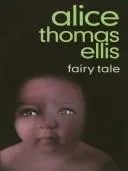
Alice Thomas Ellis’s "Fairy Tale" (1996) is a peculiar, almost mischievous, novel that works by its very refusal to be pinned down. It presents a domestic scenario that gradually reveals an undercurrent of the uncanny, a subtle distortion in the fabric of the ordinary. Ellis excels at portraying the quiet disquiet that can arise when the expected order of things falters, not through dramatic upheaval, but through a creeping sense of the strange. The author’s prose is deceptively simple, drawing the reader into a world that feels both familiar and subtly alien. A particular strength lies in its portrayal of characters whose internal lives seem to hold more weight than their external actions. However, the very subtlety that makes the book compelling can also be its limitation; readers seeking overt supernatural events or clear thematic statements might find its elusiveness frustrating. The passage where the protagonist observes an unnerving stillness in an everyday object, for instance, encapsulates this masterful evocation of unease. "Fairy Tale" offers a disquieting, yet strangely comforting, glimpse into the porous boundaries of reality.
📝 Description
71
Alice Thomas Ellis published "Fairy Tale" in 1996, a novel that blends the mundane and the uncanny.
Alice Thomas Ellis's "Fairy Tale," published in 1996, trusts its readers to uncover its meaning without explicit pronouncements. The narrative unfolds organically, inviting readers to consider the ordinary and the mystical side by side. Its prose and structure create an atmosphere that feels both familiar and subtly strange, characteristic of Ellis's singular style. This novel is for readers who seek more than a straightforward plot. Those drawn to the way the everyday meets the extraordinary, and who enjoy subtle examinations of human psychology and spiritual undertones, will find "Fairy Tale" rewarding. It appeals to those who want literary works that prompt thought without dictating conclusions, and who appreciate authors with a unique, unclassifiable voice. The book is suited for a patient reader, one attuned to implication and subtle detail.
"Fairy Tale" appeared in 1996, a time when literary fiction was broad in subject but often focused on social realism. Ellis's work consistently resisted easy labels, frequently weaving uncanny and surreal elements into grounded stories. While this era saw a renewed interest in various spiritual and esoteric paths, "Fairy Tale" does not align with any specific movement. It was published into a literary environment that, though not entirely unreceptive to metaphysical themes, often favored secular views of human experience. Ellis's distinctive approach thus offered a unique perspective.
Published in 1996, "Fairy Tale" emerged during a period of diverse literary subjects but often a focus on social realism. Ellis's work consistently defied easy categorization, incorporating uncanny and surreal elements into grounded narratives. This era saw a resurgence of interest in various forms of esotericism and spirituality, though "Fairy Tale" does not align itself with any specific movement. Its publication occurred within a literary landscape that, while not overtly hostile to metaphysical themes, often favored more secular interpretations of human experience.
💡 Why Read This Book?
• Gain an appreciation for subtle literary portrayals of the uncanny, as seen in the narrative's gentle but persistent introduction of the strange into ordinary life, a technique distinct from overt horror. • Understand how Alice Thomas Ellis, in "Fairy Tale," uses seemingly mundane settings to explore deeper metaphysical questions, offering a unique perspective on reality's hidden dimensions. • Experience a narrative that encourages personal interpretation, allowing you to draw your own conclusions about the nature of enchantment and the "fairy tale" as a mode of perception, rather than being presented with didactic answers.
⭐ Reader Reviews
Honest opinions from readers who have explored this book.
❓ Frequently Asked Questions
When was Alice Thomas Ellis's 'Fairy Tale' first published?
Alice Thomas Ellis's 'Fairy Tale' was first published in 1996, placing it within a period of diverse literary output and a growing, though often underground, interest in metaphysical and spiritual themes.
What is the primary genre of 'Fairy Tale' by Alice Thomas Ellis?
While difficult to categorize, 'Fairy Tale' by Alice Thomas Ellis blends elements of literary fiction with the uncanny and subtly surreal, exploring metaphysical themes rather than adhering strictly to genre conventions.
Does 'Fairy Tale' contain explicit supernatural events?
No, 'Fairy Tale' by Alice Thomas Ellis is characterized by subtle unease and the uncanny rather than explicit supernatural events. The strangeness often emerges from distortions in the ordinary.
Who is Alice Thomas Ellis and what is her literary style?
Alice Thomas Ellis was a British novelist known for her distinctive, often unsettling, prose that frequently incorporated elements of the supernatural or the bizarre into domestic settings. Her style is noted for its subtlety and psychological depth.
What kind of themes does 'Fairy Tale' explore?
'Fairy Tale' explores themes of the uncanny, the nature of reality, the overlooked mystical aspects of everyday life, and the ways individuals perceive or ignore these subtle dimensions.
Is 'Fairy Tale' considered an esoteric text?
While not overtly a manual of esoteric practice, 'Fairy Tale' delves into esoteric themes by exploring the hidden, often overlooked, dimensions of reality and human perception, inviting a more mystical understanding of existence.
🔮 Key Themes & Symbolism
The Uncanny in the Mundane
The narrative masterfully infiltrates the ordinary with a pervasive sense of the uncanny. Ellis does not rely on overt specters or dramatic magical occurrences. Instead, the unsettling atmosphere arises from subtle distortions in familiar settings and interactions. This approach suggests that the supernatural or the 'fairy tale' element is not an external intrusion but an inherent, albeit often unnoticed, quality of existence itself. The text invites readers to question the solidity of their perceived reality and to recognize the potential for mystery lurking beneath the surface of daily life.
Perception and Reality
A central concern of 'Fairy Tale' is the subjective nature of perception and its role in shaping our experience of reality. The characters often navigate their world with differing degrees of awareness, some seemingly oblivious to the subtle shifts in atmosphere that others might sense. This highlights how our internal states and preconceived notions can act as filters, either obscuring or revealing deeper truths. The work prompts contemplation on whether the 'magic' of a fairy tale is a delusion or a more accurate way of apprehending the world than strict rationalism.
The 'Fairy Tale' as a Mode of Being
Ellis reinterprets the concept of the 'fairy tale' beyond a mere literary genre. It becomes a lens through which to view life, acknowledging enchantment, inherent meaning, and the presence of forces that defy empirical explanation. The novel suggests that a 'fairy tale' consciousness—one open to wonder, symbolism, and the interconnectedness of things—might be a more complete way of engaging with existence than a purely materialistic worldview. This perspective encourages a re-evaluation of what constitutes the 'real' and the 'magical' in human experience.
Domesticity and the Ethereal
The novel consistently juxtaposes the deeply domestic—the routines, relationships, and settings of everyday life—with the ethereal and the inexplicable. This contrast is not presented as a conflict but as an integrated aspect of existence. Ellis demonstrates how the profound can emerge from the seemingly trivial, and how spiritual or metaphysical currents can flow through the most commonplace of circumstances. This integration suggests a holistic view of reality where the spiritual is immanent, not transcendent, pervading all aspects of human life.
💬 Memorable Quotes
Direct passages from the work, attributed to the author.
“The world felt thin, as if one could fall through it.”
— This phrase captures the novel's pervasive atmosphere of subtle unease. It suggests a breakdown in the expected solidity of reality, where the mundane can suddenly become permeable, hinting at less-obvious layers or dangers beneath the surface.
“She wondered if she had always been here, or if she had arrived quite recently.”
— This statement reflects a character's disorienting sense of self and place. It speaks to themes of identity and the uncanny, where the boundaries of personal history and present experience blur, suggesting a deeper existential questioning.
“The silence was not empty, but full of things unspoken.”
— This interpretation of silence emphasizes the hidden currents and unspoken truths within relationships and environments. It implies that what is not said can be as significant, or even more so, than what is articulated, contributing to the novel's subtle tension.
“It was a place where the ordinary seemed to hold its breath.”
— This evocative description points to the novel's characteristic ability to imbue everyday settings with an aura of anticipation and strangeness. The 'ordinary' itself becomes charged with an unusual, almost watchful, presence.
“She felt a peculiar sense of recognition for a place she had never visited.”
— This sentiment speaks to a sense of déjà vu or an intuitive connection with the unknown. It touches upon themes of destiny, past lives, or the soul's inherent knowledge, common in esoteric thought, suggesting a reality beyond linear experience.
🌙 Esoteric Significance
Tradition
While "Fairy Tale" does not overtly align with a specific esoteric lineage like Hermeticism or Kabbalah, it speaks to Gnostic sensibilities in its exploration of hidden realities and the potential for distorted perception. The narrative implies a world where the ordinary is a veil over deeper, perhaps more authentic, truths. It touches upon the idea that true understanding requires a shift in consciousness, moving beyond the material to acknowledge subtler, perhaps numinous, aspects of existence. Ellis’s work suggests an immanent spirituality, where the mystical is not separate from the everyday but interwoven within it.
Symbolism
The recurring motif of subtle distortions in the mundane serves as a primary symbol. This can represent the Gnostic concept of the 'aeons' or the subtle bodies of consciousness, which are present but often unperceived by the unenlightened. The 'thinness' of reality alluded to in the text can symbolize the veil between worlds or the fragility of material illusion. Furthermore, the concept of 'recognition' for unknown places or situations hints at the soul's inherent memory or connection to archetypal realms, suggesting a deeper, perhaps pre-existent, knowledge.
Modern Relevance
Contemporary thinkers exploring the intersection of consciousness and reality, particularly those within the fields of subtle energy, intuition, and alternative psychology, find resonance in Ellis's approach. Her work informs discussions on how perception shapes reality and the potential for accessing deeper states of awareness through subtle means. Authors and practitioners who focus on integrating spiritual or metaphysical experiences into everyday life, eschewing rigid dogma for intuitive understanding, often cite Ellis's ability to evoke the numinous in the ordinary as a significant influence.
👥 Who Should Read This Book
• Readers interested in literary fiction that subtly explores metaphysical themes and the uncanny, appreciating nuanced atmosphere over overt plot. • Students of comparative literature or spiritual studies seeking examples of how the 'supernatural' can be portrayed as an intrinsic aspect of reality rather than an external force. • Individuals drawn to introspective narratives that encourage contemplation on perception, reality, and the hidden dimensions of everyday life.
📜 Historical Context
Alice Thomas Ellis’s "Fairy Tale," published in 1996, emerged in a literary climate that, while diverse, often leaned towards realism and postmodern experimentation. Ellis herself was an anomaly, consistently charting her own course with novels that defied easy categorization. Her work frequently blended the mundane with the uncanny, a style that set her apart from many contemporaries. The 1990s saw a continued, albeit often niche, interest in spirituality and esotericism, influencing various subcultures and artistic expressions, though mainstream literary fiction generally maintained a secular bent. Ellis’s unique voice, characterized by its subtle explorations of the supernatural within domestic settings, offered a distinct perspective. While not directly engaging with specific intellectual movements like magical realism, her approach shared a certain affinity for unsettling the reader's perception of reality. The reception of her work was often marked by admiration for its distinctiveness, though its elusive nature meant it rarely fit neatly into prevailing critical trends.
📔 Journal Prompts
The feeling of reality becoming 'thin' in a familiar setting.
Moments of inexplicable 'recognition' for places or situations.
The weight of unspoken thoughts within ordinary conversations.
Perceiving the 'ordinary' as if it were holding its breath.
Reflecting on how one's internal state might alter the perception of external events.
🗂️ Glossary
The Uncanny
A psychological concept referring to the feeling of unease or strangeness evoked by something that is simultaneously familiar and unfamiliar. In 'Fairy Tale,' it manifests as subtle distortions in everyday reality.
Mundane
Relating to ordinary, everyday life; commonplace and often lacking spiritual or mystical significance. Ellis contrasts this with the subtle infiltration of the extraordinary.
Metaphysical
Concerned with the fundamental nature of reality, existence, and the universe, often exploring concepts beyond the physical and empirical.
Numinous
Describing a quality that evokes a sense of divine presence, awe, or spiritual significance, often associated with the mysterious and awe-inspiring.
Ethereal
Extremely delicate and light in a way that seems not to be of this world; heavenly or spiritual.
Archetype
In psychology and mythology, a recurring symbol, character type, or motif that represents universal patterns of human experience.
Immanent Spirituality
The belief that spiritual or divine presence is inherent within the material world and all of existence, rather than being separate or transcendent.
🔮 Readers Also Liked
Browse all →






More Free Witchcraft & Paganism Books
View all →