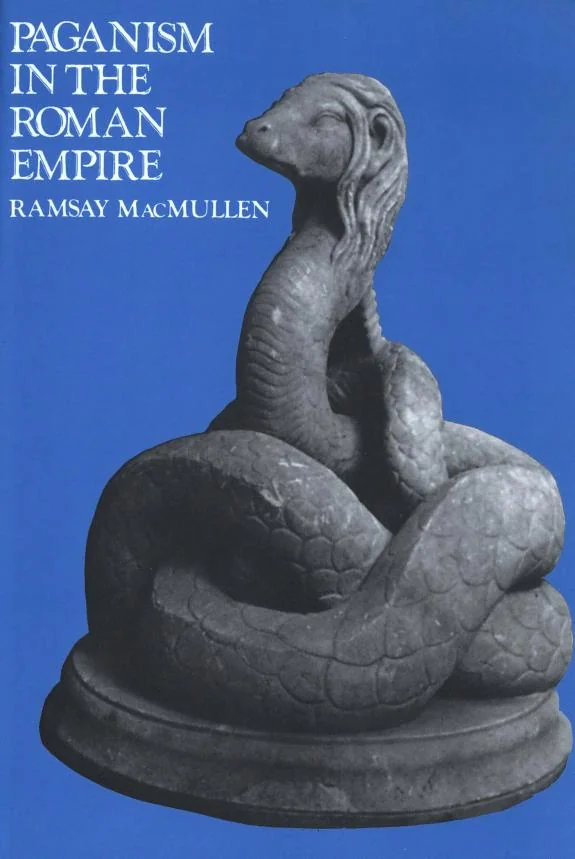
Paganism in the Roman Empire
 83
83

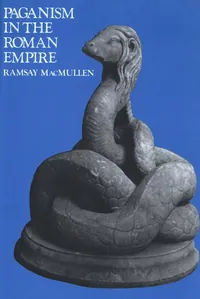
Paganism in the Roman Empire
Ramsay MacMullen’s *Paganism in the Roman Empire* dissects the multifaceted nature of ancient Roman religious life with an analytical rigor that remains compelling. The book excels in its detailed exploration of the practical application of pagan beliefs, moving beyond abstract theology to the lived experience of devotees. MacMullen’s persistent focus on the ‘how’ and ‘why’ of pagan practices, such as the widespread appeal of oracles and the function of imperial cults, is a significant strength. A limitation, however, lies in its densely academic prose, which, while precise, can make for slow reading for those less accustomed to scholarly discourse. The chapter detailing the gradual integration and eventual transformation of pagan festivals offers a particularly sharp illustration of the book’s central arguments about continuity and change. Ultimately, this is an indispensable scholarly resource for understanding the religious substrate of the Roman world before its Christianization.
📝 Description
83
Ramsay MacMullen's 1981 study examines the lived realities of Roman paganism beyond simplistic definitions.
Published in 1981, Ramsay MacMullen's book analyzes the diverse practices and beliefs that constituted Roman paganism. It moves beyond simplistic definitions to look at the lived realities of these traditions. The study scrutinizes the interactions between traditional cults, emperor worship, and the early Christian movement. MacMullen demonstrates that paganism was not a single, unchanging entity but a fluid system of worship that adapted over centuries. This work is valuable for students of ancient history, religious studies, and classical antiquity. Scholars interested in the social and cultural dynamics of religious change in the Roman world will find it particularly useful. It also speaks to readers curious about the historical relationship between pagan traditions and early Christianity, offering a perspective on their coexistence and eventual separation.
MacMullen's study arose during a time of renewed academic focus on the social history of religion. It countered earlier approaches that relied heavily on texts by highlighting archaeological evidence and the daily religious experiences of ordinary Romans. The book engaged with debates concerning the 'decline' of paganism and the rise of Christianity, proposing a more gradual and complex transition. Its release provided a counterpoint to narratives emphasizing a straightforward Christian victory.
While not strictly an esoteric text in the modern sense, MacMullen's work contributes to understanding a historical period where the boundaries between what we might now label 'magic,' 'religion,' and 'philosophy' were fluid. The book details practices like divination and the engagement with a pantheon of deities that formed the bedrock of Roman spiritual life. It addresses how these traditions interacted with and were eventually overshadowed by a new religious movement, offering insight into the dynamics of religious change and the persistence of older forms of belief and practice.
💡 Why Read This Book?
• Gain insight into the practical functions of Roman religious cults, understanding how rituals and sacrifices were performed to maintain social order and appease deities, as detailed in discussions of temple practices. • Grasp the complex interplay between local deities and the imperial cult, recognizing how Roman religious identity was shaped by both regional traditions and state-sponsored worship. • Appreciate the nuanced timeline of paganism's transformation, moving beyond simplistic narratives of decline to understand its adaptive strategies and enduring influence well into the Christian era.
⭐ Reader Reviews
Honest opinions from readers who have explored this book.
❓ Frequently Asked Questions
What does Ramsay MacMullen mean by 'paganism' in the Roman Empire?
MacMullen interprets 'paganism' not as a unified religion, but as the collective term for the diverse, polytheistic, and indigenous religious practices prevalent in the Roman Empire before Christianity's dominance, encompassing local cults, mystery religions, and emperor worship.
How did Roman paganism interact with Christianity according to the book?
The book details a complex relationship involving gradual assimilation, mutual influence, and eventual competition. It explores how Christian practices sometimes adopted pagan forms and how pagan communities responded to the rising Christian movement.
What role did the emperor cult play in Roman paganism?
The emperor cult served as a unifying force, integrating diverse regions and peoples under a shared civic and religious loyalty. It was often a matter of political expediency and social conformity as much as genuine divine worship.
Were there specific dates or periods highlighted regarding the shift from paganism to Christianity?
While not focusing on a single date, MacMullen's work implicitly covers the period from the early Empire through the 4th century CE, a critical era marked by the Edict of Milan (313 CE) and the subsequent growth of Christian influence.
Does the book discuss specific pagan deities or cults?
Yes, the work frequently references various deities and cultic practices prevalent across the Roman Empire, examining their local significance and their place within the broader Roman religious framework.
What kind of evidence does MacMullen use to support his arguments?
MacMullen draws upon a wide array of evidence, including inscriptions, archaeological findings, literary sources, and legal texts, to reconstruct the lived realities of pagan worship and its social context.
🔮 Key Themes & Symbolism
The Practicality of Pagan Worship
MacMullen emphasizes that Roman paganism was often less about abstract theology and more about tangible results. The book details how rituals, sacrifices, and the consultation of oracles were integral to daily life, aimed at securing divine favor for individuals, families, and the state. This focus on efficacy highlights a pragmatic approach to the sacred, where religious observance was a means to an end—maintaining cosmic balance and personal well-being—rather than solely an act of faith.
Syncretism and Local Cults
A central theme is the pervasive syncretism within Roman paganism. The empire absorbed and adapted deities and cultic practices from conquered territories, leading to a complex religious landscape. MacMullen illustrates how local cults, often tied to specific geographic regions or communities, coexisted with and were sometimes integrated into the broader Roman pantheon and imperial cult, demonstrating a remarkable flexibility in belief systems.
Imperial Cult as Social Glue
The worship of the emperor, both living and deceased, is presented as a crucial element in unifying the diverse Roman Empire. This cult served as a civic duty and a political statement, fostering loyalty and a shared identity across varied populations. MacMullen examines how participation in imperial ceremonies provided a common ritualistic experience, reinforcing social cohesion and the authority of the state.
Transition and Transformation
The work critically examines the gradual decline of traditional pagan practices in the face of Christianity's rise. Rather than a sudden collapse, MacMullen describes a complex process of adaptation, resistance, and eventual absorption or displacement. He highlights how pagan traditions evolved and persisted in various forms, demonstrating that the transition was not monolithic but a dynamic and protracted historical process.
💬 Memorable Quotes
Direct passages from the work, attributed to the author.
“The Roman state was accustomed to the idea of needing to placate the gods.”
— This statement underscores the deeply ingrained belief in Roman society that divine favor was essential for the state's prosperity and security. It reflects a worldview where religious observance was a vital component of governance and public welfare.
“Emperor worship was a matter of civic duty and political conformity.”
— This interpretation suggests that participation in the imperial cult was often driven by social and political pressures rather than solely by personal piety. It highlights the function of religion as a tool for reinforcing state authority and social cohesion.
“Local cults continued to hold sway even as Christianity grew.”
— This highlights the resilience and adaptability of indigenous religious traditions within the Roman Empire. It points to the persistent importance of regional identities and practices, even amidst the expansion of a new, universalizing religion.
“Divination and magic were common tools for understanding and influencing the divine.”
— This interpretation points to the prevalence of practices aimed at discerning divine will and exerting influence over supernatural forces. It illustrates a practical, often utilitarian, engagement with the sacred in Roman society.
💡 Key Ideas
Editorial paraphrase of the work's core concepts — not direct quotes.
The evidence suggests a gradual rather than abrupt shift away from pagan practices.
This paraphrased concept emphasizes MacMullen's argument against a swift end to paganism. It suggests that the transformation involved a long period of coexistence, adaptation, and slow attrition of traditional beliefs and rituals.
🌙 Esoteric Significance
Tradition
While MacMullen's work is primarily historical and sociological, it provides essential context for understanding the roots of Western esoteric traditions that emerged from or reacted against the Greco-Roman world. Its focus on the lived experience of paganism, including folk magic, divination, and mystery cults, informs later Neoplatonic, Hermetic, and Gnostic revivals, which often sought to reclaim or reinterpret these ancient practices.
Symbolism
The book implicitly touches upon symbols central to Roman religious life, such as the laurel wreath (associated with Apollo and imperial victory), the bull (a common sacrificial animal and symbol of fertility/power), and various votive offerings (ex-votos). These elements, discussed within their historical context, represent tangible connections to divine forces and the human desire for intercession, which later esoteric systems would re-examine and imbue with new meanings.
Modern Relevance
Contemporary practitioners of Neopaganism, reconstructionist traditions, and scholars of comparative religion draw heavily on MacMullen's empirical approach. His work provides a factual basis for understanding the diversity and adaptability of pre-Christian religious expressions, informing modern attempts to revive or reimagine ancient rites and beliefs with historical accuracy and cultural sensitivity.
👥 Who Should Read This Book
• Students of ancient history and classical studies seeking a factual overview of Roman religious practices beyond textbook summaries. • Comparative religion scholars interested in the dynamics of religious transition and the coexistence of diverse belief systems within a single empire. • Individuals exploring the historical origins of Western esoteric thought, providing a grounded understanding of the pagan milieu from which later mystical traditions emerged.
📜 Historical Context
Published in 1981, Ramsay MacMullen's *Paganism in the Roman Empire* emerged during a fertile period for the social history of religion. It offered a significant counter-narrative to earlier, more hagiographical accounts of Christianity's rise, challenging the notion of a simple pagan decline. MacMullen engaged with scholars like Peter Brown, whose work on late antiquity also emphasized continuity and transformation. The book's detailed examination of everyday religious practices, drawing on archaeological finds and inscriptions, provided a corrective to purely textual analyses. It implicitly debated with prevailing views that often saw paganism as a static, doomed system. MacMullen's meticulous research into the persistence of cults and rituals into the 4th century CE demonstrated the complex, drawn-out nature of religious change, offering a nuanced perspective on the transition to Christian dominance.
📔 Journal Prompts
The persistence of local cults despite imperial pressures.
The role of emperor worship in Roman social cohesion.
The pragmatic engagement with divination and magic.
Rituals and sacrifices as mechanisms for divine favor.
The gradual nature of religious transformation in antiquity.
🗂️ Glossary
Imperial Cult
The state-sanctioned worship of Roman emperors, both living and deceased, as divine or semi-divine figures. It served as a unifying element of Roman religion and a demonstration of political loyalty.
Syncretism
The blending of different religious beliefs and practices. In the Roman Empire, this often involved integrating foreign deities and cults into the existing Roman religious framework.
Mystery Cults
Religious traditions that offered secret initiation rites and promised spiritual benefits, such as salvation or a better afterlife, to their adherents. Examples include the cults of Isis, Mithras, and Dionysus.
Divination
The practice of seeking knowledge of the future or the unknown by supernatural means, such as interpreting omens, entrails of sacrificial animals (haruspicy), or through oracles.
Votive Offerings
Gifts or sacrifices made to a deity in fulfillment of a vow or in expectation of a favor. These could range from small tokens to elaborate structures.
Ex-voto
An object offered to a divinity in consequence of a vow made to obtain some benefit or in gratitude for one received. Often found in sanctuaries.
Haruspicy
A form of divination practiced by the Etruscans and adopted by the Romans, involving the examination of the entrails (especially the liver) of sacrificed animals.
🔮 Readers Also Liked
Browse all →






More by Ramsay MacMullen
All books →
More Free Witchcraft & Paganism Books
View all →