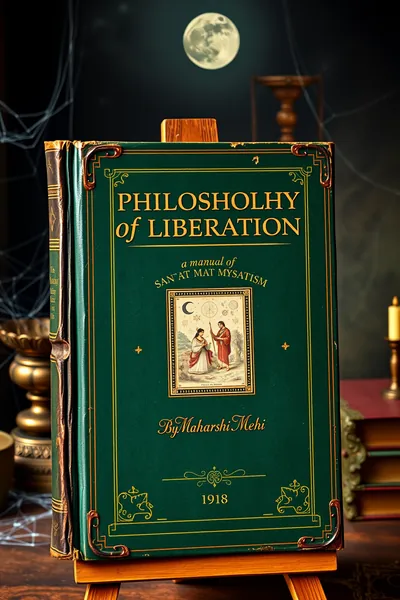
Osnovy Kabbaly

 76
76

Osnovy Kabbaly
Michael Laitman’s Osnovy Kabbaly offers a clear, if singular, entry point into the labyrinthine world of Kabbalistic thought. Laitman’s strength lies in his consistent, almost didactic, approach, breaking down intricate concepts like the Sefirot and Tzimtzum into digestible components. He frames Kabbalah not merely as a historical or philosophical system, but as a practical science of spiritual attainment, emphasizing its relevance to contemporary life. However, this singular focus can also be a limitation. The work is deeply rooted in Laitman’s specific interpretation and teaching methodology, which may not align with other Kabbalistic schools or scholarly perspectives. For instance, the explanation of the Sefirot as vessels for divine emanation, while clear, omits the rich midrashic and mystical layers found in texts like the Zohar. The book’s value is highest for those seeking Laitman's particular system, providing a coherent, albeit specialized, introduction to his interpretation of Kabbalah's foundational ideas.
📝 Description
76
Michael Laitman's Osnovy Kabbaly, published in 2003, explains Kabbalistic ideas for practical spiritual growth.
Osnovy Kabbaly offers an introduction to the Kabbalistic tradition as interpreted by Michael Laitman. The book aims to clarify complex Kabbalistic concepts, focusing on their practical use for personal spiritual development and understanding reality. It moves past academic study to provide a structure for inner change. This work is for those who want a systematic approach to Kabbalah, especially followers of Laitman's method. Beginners interested in spiritual depth and those familiar with Kabbalah from other sources but seeking a clearer explanation will find value here. Readers interested in how spirituality, consciousness, and natural laws connect will encounter relevant material.
The text discusses fundamental Kabbalistic principles such as 'Ein Sof' (the Infinite), the 'Sefirot' (divine emanations), 'Tzimtzum' (divine contraction), and the 'Kli' (receptacle for spiritual light). It highlights the interconnectedness of all things and the spiritual laws that govern the universe. The book suggests that grasping these principles is crucial for spiritual achievement and balanced living.
Published in 2003, Osnovy Kabbalah appears during a period of increased global interest in esoteric traditions. Kabbalah, originating in medieval Jewish mysticism, has undergone numerous revivals. Laitman's work is part of a modern effort to make these teachings accessible, often adapting them for broader audiences. This approach differs from earlier scholarly or strictly religious interpretations.
💡 Why Read This Book?
• Gain a foundational understanding of Laitman's specific Kabbalistic framework, including concepts like 'Ein Sof' and 'Sefirot', presented with clarity for contemporary seekers. • Learn about the principle of 'Tzimtzum' (divine contraction) as explained in the book, and its implications for understanding creation and free will. • Discover how the book connects Kabbalistic principles to practical spiritual development and achieving harmony in one's life, as outlined by Laitman.
⭐ Reader Reviews
Honest opinions from readers who have explored this book.
❓ Frequently Asked Questions
What is the primary goal of studying Kabbalah according to Osnovy Kabbalah?
The primary goal, as presented in Osnovy Kabbalah, is to achieve spiritual attainment and understand the underlying laws of reality by comprehending Kabbalistic principles. It's framed as a practical path to spiritual growth and connecting with the Creator.
When was Osnovy Kabbalah first published?
Osnovy Kabbalah was first published in 2003, reflecting a contemporary effort to make complex Kabbalistic teachings accessible to a wider audience.
Does Osnovy Kabbalah require prior knowledge of Hebrew or Jewish texts?
While prior knowledge can be helpful, Osnovy Kabbalah aims to explain Kabbalistic concepts in a way that is accessible to those without a deep background in Hebrew or traditional Jewish texts. Laitman's approach focuses on the spiritual essence.
What is the 'Ein Sof' concept discussed in the book?
'Ein Sof' refers to the Infinite, the unknowable essence of God before any emanation or creation. The work explores how this concept sets the stage for understanding the subsequent stages of divine revelation.
How does Osnovy Kabbalah explain the 'Sefirot'?
The book explains the 'Sefirot' as divine emanations or attributes that form the structure of creation. They are often described as vessels or channels through which divine energy flows into the world.
Is this book a historical survey of Kabbalah?
No, Osnovy Kabbalah is not primarily a historical survey. While it touches upon the tradition's lineage, its main focus is on presenting and interpreting Kabbalistic concepts for spiritual practice and understanding the universe.
🔮 Key Themes & Symbolism
The Nature of Reality
The work posits that reality is not solely material but is governed by spiritual laws and forces originating from the Infinite ('Ein Sof'). It explores how the structure of creation, including the 'Sefirot' and the 'Kli', is designed to facilitate the reception of divine light. Understanding this underlying spiritual architecture is presented as key to perceiving the true nature of existence and one's place within it, moving beyond superficial perceptions to grasp the interconnectedness of all phenomena.
Spiritual Attainment
Osnovy Kabbalah frames the study of its principles as a practical method for personal spiritual development. The book emphasizes that Kabbalah is not mere theory but a path towards achieving a higher state of consciousness and connection with the divine. This attainment is linked to aligning one's will with the Creator's, fostering altruism, and understanding the purpose of life through the lens of Kabbalistic wisdom.
The Creator and Creation
A central theme is the relationship between the Creator and the created world. The concept of 'Tzimtzum' (divine contraction) is explored to explain how a finite reality could emerge from an infinite source. The book discusses the 'Kli' (vessel) as the created desire to receive, and how its development and correction are integral to the spiritual process and the ultimate fulfillment of creation's purpose.
Unity and Interconnectedness
The work stresses that despite apparent separateness, all elements of creation are fundamentally unified. The 'Sefirot' represent a system of interconnected spiritual attributes that govern this unity. Readers are guided to perceive this interconnectedness, understanding that actions and intentions have repercussions throughout the entire spiritual and material matrix, fostering a sense of universal responsibility.
💬 Memorable Quotes
Direct passages from the work, attributed to the author.
“The Creator wants to bestow good upon His creations.”
— This statement captures the fundamental Kabbalistic premise of divine benevolence. It suggests that the entire structure of creation, including its perceived challenges, originates from a desire to bestow goodness, framing spiritual effort as a means to realize this inherent good.
“Everything is in the desire to receive.”
— This concept refers to the 'Kli', the vessel or attribute of reception. The work explains that the desire to receive, in its corrected form, is the means by which spiritual light and connection are achieved, forming the basis for all interactions and spiritual progress.
“Kabbalah is the wisdom of the connection between the Creator and the created.”
— This definition highlights Kabbalah's core focus: understanding the relationship between the spiritual source and the material manifestation. It positions the study as a path to bridge this perceived gap and achieve unity.
“The purpose of creation is to bestow pleasure upon the created.”
— This interpretation of the Creator's intent emphasizes the ultimate goal of existence. It suggests that the journey of creation is a process leading towards a state of ultimate fulfillment and bliss for all beings.
“We must reach the state of bestowal.”
— This directive points towards the practical aim of Kabbalistic practice. It signifies a shift from self-centered reception to altruistic giving, considered the highest spiritual attainment and the means to resemble the Creator.
🌙 Esoteric Significance
Tradition
This work is firmly rooted in the Kabbalistic tradition, specifically drawing from the Lurianic and Ari traditions but presented through the interpretative framework of Michael Laitman and his school. It departs from purely historical or religious scholarship by framing Kabbalah as a 'science' of spirituality and a practical method for personal transformation applicable to all humanity, regardless of religious background.
Symbolism
Key symbols explored include 'Ein Sof' (the Infinite), representing the ultimate, unknowable divine essence that precedes all manifestation; the 'Sefirot', often depicted as ten divine attributes or emanations forming the structure of creation, like branches of a divine tree; and the 'Tzimtzum' (contraction), symbolizing the initial divine act of withdrawal to make space for existence, a foundational concept for understanding creation ex nihilo.
Modern Relevance
Laitman's approach in Osnovy Kabbalah continues to influence contemporary spiritual seekers interested in a systematic, science-like understanding of Kabbalah. His teachings are disseminated globally, resonating with individuals exploring consciousness, interconnectedness, and personal spiritual growth outside traditional religious structures. This work serves as a gateway for those drawn to the philosophical and practical dimensions of Kabbalah in the 21st century.
👥 Who Should Read This Book
• Individuals beginning their study of Kabbalah seeking a clear, systematic introduction to its core principles as interpreted by Michael Laitman. • Seekers of personal spiritual development interested in understanding the underlying structure of reality and consciousness through an esoteric lens. • Comparative religion scholars or students of mysticism looking to understand a specific, contemporary interpretation of Kabbalistic thought and its practical applications.
📜 Historical Context
Osnovy Kabbalah, published in 2003, arrived at a time when interest in esoteric spirituality, including Kabbalah, was experiencing a significant resurgence globally, partly fueled by the internet's ability to disseminate information and connect like-minded individuals. This period saw numerous interpretations and popularizations of Kabbalistic ideas, often presented outside their traditional Jewish context. Laitman's work aligns with this trend, offering a structured, systematic approach distinct from more academic or historical analyses prevalent in the late 20th century. Contemporary figures like Philip Berg also popularized Kabbalah during this era, though often with different emphases. Laitman's specific methodology, focusing on the spiritual science aspect and practical application for all people, places his work within a particular segment of this broader revival, aiming to explain what had often been considered arcane knowledge.
📔 Journal Prompts
The concept of 'Ein Sof' and its relation to perceived limitations in your life.
Reflect on the 'Sefirot' as channels of divine energy and their manifestation in your experiences.
Analyze the principle of 'Tzimtzum' in relation to creating personal space for growth.
Consider the 'Kli' (vessel) and your capacity for receiving spiritual light or beneficial experiences.
Examine the interconnectedness of all things as presented through Kabbalistic principles.
🗂️ Glossary
Ein Sof
Literally 'Without End' or 'Infinite.' Refers to the unknowable, boundless essence of God before any emanation or creation occurred. It is the absolute, infinite Godhead.
Sefirot
Plural of Sefirah. Ten divine emanations or attributes through which the Infinite manifests and creates the universe. They form a structure often depicted as a tree.
Tzimtzum
Hebrew for 'contraction' or 'restriction.' The primordial act of divine self-limitation, creating a vacuum or space within which the created world could exist.
Kli
Hebrew for 'vessel.' In Kabbalah, it refers to the created being or the desire to receive divine light or spiritual sustenance. Its correction is key to spiritual attainment.
Ein Sof Ohr
Literally 'Light of the Infinite.' The primordial divine light emanating from Ein Sof, which is the source of all creation.
Tikkun
Hebrew for 'correction' or 'rectification.' Refers to the process of repairing the spiritual brokenness within creation, restoring harmony and elevating the soul.
Mashpia
Hebrew for 'Bestower' or 'Influencer.' Refers to the spiritual source or attribute of giving, often associated with the Creator.
🔮 Readers Also Liked
Browse all →







More by Michael Laitman
All books →





More Free Mysticism & Contemplation Books
View all →