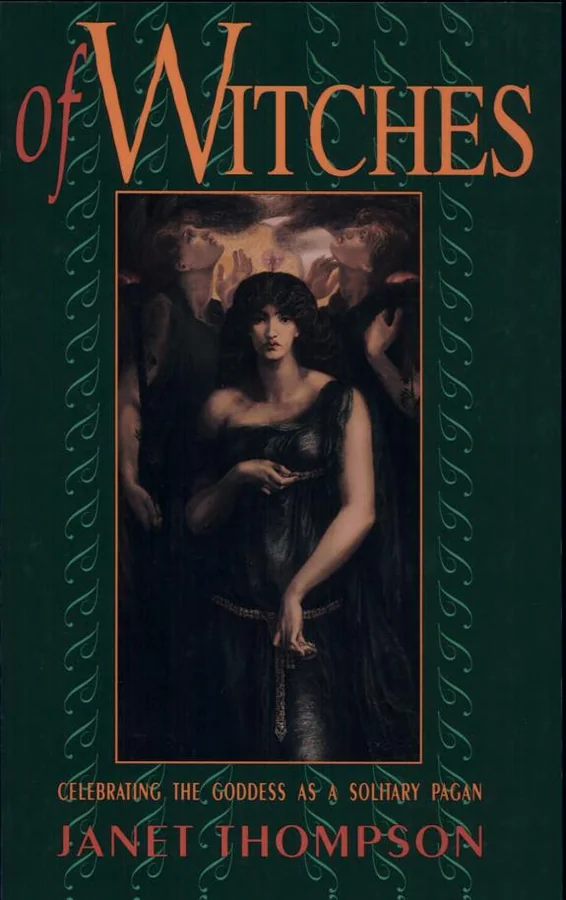
Of witches
 73
73

Of witches
Janet Thompson's 'Of Witches' offers a sober examination of how societies construct and then persecute those labeled as witches. The work meticulously traces the evolution of this designation, particularly its entanglement with religious and social anxieties. One of its strengths lies in its dispassionate analysis of the Malleus Maleficarum (1487) as a cultural artifact rather than an objective truth. However, the book occasionally feels weighed down by its academic rigor, sometimes obscuring the human element of the persecution it describes. A particularly striking passage details the economic motivations that sometimes underpinned accusations in certain European regions. While not offering spiritual guidance, it provides a solid historical framework for understanding a persistent cultural archetype.
📝 Description
73
Janet Thompson's 'Of Witches' was published in 1993, analyzing historical perceptions of witchcraft.
Janet Thompson's 'Of Witches,' published in 1993, examines the historical and cultural understandings of witchcraft. The book analyzes the societal structures that have defined and led to accusations of witchcraft through different periods. Thompson moves beyond simple depictions, aiming to grasp the complex social forces and belief systems involved. This work is for readers interested in the sociology of belief, historical studies of marginalized groups, and the development of folklore. It appeals to those who want a clear understanding of how witchcraft accusations functioned in various societies, rather than a guide to magical practice. Cultural history and anthropology scholars will find its analysis particularly useful. Thompson's work emerged during the early 1990s, a time of renewed interest in paganism and witchcraft studies, often from historical and anthropological viewpoints. Feminist scholarship was also re-examining historical narratives of female persecution. The book adds to a scholarly conversation that sought to deconstruct witch trials, shifting focus from supernatural causes to socio-political and psychological explanations. It engages with the ongoing discussion around the Malleus Maleficarum (1487) and its influence.
Published in 1993, 'Of Witches' fits within a scholarly tradition that revisited witchcraft not as inherent supernatural power, but as a social and cultural phenomenon. This approach emerged from feminist scholarship and anthropological studies, seeking to understand the historical persecution of accused individuals. Thompson's work engages with the critical re-evaluation of witch trial narratives, moving away from purely theological or demonological explanations toward socio-political and psychological interpretations. It acknowledges the historical context of texts like the Malleus Maleficarum while situating them within broader societal dynamics.
💡 Why Read This Book?
• Understand the historical framing of witchcraft accusations, learning how societal anxieties, as detailed in the analysis of 15th-century texts like the Malleus Maleficarum, shaped perceptions of 'witches'. • Gain insight into witchcraft as a social construct, recognizing how the book dissects the term's use as a tool for social control and scapegoating across different historical periods. • Appreciate the distinction between historical witch trials and modern paganism, as Thompson's work clarifies the evolution of the 'witch' archetype from a persecuted figure to a modern spiritual identity.
⭐ Reader Reviews
Honest opinions from readers who have explored this book.
❓ Frequently Asked Questions
When was Janet Thompson's 'Of Witches' first published?
Janet Thompson's 'Of Witches' was first published in 1993, a period marked by renewed academic and cultural interest in historical witchcraft.
Does 'Of Witches' provide practical magical instruction?
No, 'Of Witches' does not offer practical magical instruction. Its focus is on the historical, sociological, and cultural analysis of witchcraft beliefs and accusations.
What historical texts does 'Of Witches' reference?
The book engages with significant historical texts related to witchcraft, including notable references to the Malleus Maleficarum (1487), analyzing its role in shaping perceptions.
Is 'Of Witches' relevant to modern neopaganism?
While not focused on modern practices, the book provides essential historical context for understanding the evolution of the 'witch' archetype, differentiating historical persecution from contemporary spiritual paths.
What academic fields does 'Of Witches' draw upon?
Thompson's work draws from sociology, cultural history, anthropology, and religious studies to construct its analysis of witchcraft beliefs and accusations.
Who is the target audience for 'Of Witches'?
The book is aimed at readers interested in the history of belief, social dynamics of persecution, folklore studies, and the academic examination of witchcraft phenomena.
🔮 Key Themes & Symbolism
The Witch as Social Construct
Thompson's work critically examines the 'witch' not as an inherent magical practitioner, but as a figure constructed by societal fears and power structures. The book details how accusations served to reinforce social norms and eliminate perceived threats, particularly during periods like the European witch trials. It illustrates how the label was applied based on prevailing anxieties, religious doctrines, and political expediency, making the concept of witchcraft a lens through which to view societal control mechanisms.
Evolution of Accusation Tropes
The book traces the development and persistence of specific tropes associated with witchcraft accusations across different historical epochs. It analyzes how certain characteristics, behaviors, or circumstances became markers for identifying witches, often reflecting the prejudices and superstitions of the time. Thompson investigates the impact of texts like the Malleus Maleficarum (1487) in standardizing these accusations and their subsequent perpetuation through folklore and legal proceedings.
Societal Anxiety and Scapegoating
A central theme is the role of societal anxiety in fueling witch hunts. Thompson explores how periods of plague, famine, or political instability created fertile ground for scapegoating, with accused witches often bearing the brunt of collective fear and frustration. The work highlights how the demonization of individuals provided a perceived solution or explanation for complex societal problems, offering a psychological outlet for widespread distress.
Historical Context vs. Modern Practice
Thompson carefully distinguishes between the historical phenomenon of witchcraft accusations and the modern resurgence of witchcraft as a spiritual path. The book clarifies that its analysis pertains to the historical persecution and the social dynamics surrounding it, rather than offering insights into contemporary neopaganism or witchcraft as a lived religion. This distinction is crucial for understanding the work's scholarly intent.
💬 Memorable Quotes
Direct passages from the work, attributed to the author.
“The concept of the witch was often shaped more by the accusers' fears than by the accused's actions.”
— This statement underscores the book's central argument that 'witchcraft' was frequently a projection of societal anxieties and prejudices, rather than an objective reality of malevolent magic.
“Texts like the Malleus Maleficarum (1487) provided a framework for demonization.”
— This highlights the influence of specific influential texts in codifying beliefs and practices related to identifying and persecuting individuals accused of witchcraft during critical historical periods.
“Accusations of witchcraft often served to reinforce existing social hierarchies.”
— This interpretation points to the book's exploration of how the label 'witch' could be used to silence dissent, control marginalized populations, and maintain the status quo within communities.
“Societal upheaval frequently correlated with an increase in witchcraft accusations.”
— This suggests the book's examination of the link between widespread social instability, such as famine or plague, and the heightened persecution of individuals branded as witches.
💡 Key Ideas
Editorial paraphrase of the work's core concepts — not direct quotes.
The historical witch is a product of belief systems, not necessarily of empirical evidence.
This paraphrase emphasizes that the historical figures accused of witchcraft were primarily defined by the prevailing superstitious and religious frameworks of their eras, not by verifiable deeds.
🌙 Esoteric Significance
Tradition
While not a practitioner's manual, 'Of Witches' is significant within the study of Western Esotericism by providing crucial historical and sociological context for understanding the archetype of the 'witch'. It situates the historical figure of the witch within a lineage of societal anxieties and persecutions that have often targeted those perceived as outside the norm, which is a recurring theme in esoteric discourse. The work serves as a vital counterpoint to romanticized notions, grounding esoteric studies in historical reality.
Symbolism
The book implicitly deals with the symbolism of the 'witch' as a representation of societal fears and repressed elements. The archetypal imagery associated with historical witchcraft – such as pacts with the devil, familiars, or sabbats – is examined not as literal occurrences, but as potent symbols reflecting religious anxieties and social taboos of the eras in which accusations flourished. These symbols, while demonized historically, have been reappropriated in modern esoteric traditions.
Modern Relevance
Contemporary scholars of folklore, cultural studies, and even some modern pagan traditions draw upon works like Thompson's to understand the historical roots of witchcraft imagery. Thinkers exploring the social construction of marginalized identities and the dynamics of persecution find value in its analysis. It informs discussions on how historical narratives shape present-day perceptions and is essential for anyone studying the evolution of the 'witch' figure, from its demonized past to its complex modern interpretations.
👥 Who Should Read This Book
• Students of European history and folklore: Gain a nuanced understanding of the social and cultural factors that led to widespread accusations and persecutions of witchcraft. • Researchers of social control mechanisms: Analyze how the concept of 'witchcraft' was historically employed to enforce social norms, silence dissent, and scapegoat individuals or groups. • Individuals exploring the evolution of the 'witch' archetype: Understand the historical trajectory of the witch figure, differentiating between medieval accusations and modern spiritual identities.
📜 Historical Context
Published in 1993, Janet Thompson's 'Of Witches' emerged during a period of significant academic re-evaluation of European witch trials. The early 1990s saw a surge in feminist scholarship, historical anthropology, and cultural studies that sought to move beyond sensationalist accounts. Thompson's work contributed to a growing body of literature that analyzed witchcraft accusations not as evidence of actual diabolism, but as complex social phenomena rooted in misogyny, religious fervor, and political maneuvering. It engaged with scholars who were deconstructing the Malleus Maleficarum (1487), viewing it as a product of its time rather than an objective guide. This contrasted with earlier, more purely theological or folkloric interpretations. The book also implicitly engaged with contemporary neopagan movements, differentiating historical persecution from modern spiritual practices, a discussion gaining traction in the era.
📔 Journal Prompts
The historical construction of the 'witch' as a social Other.
Societal anxieties reflected in the Malleus Maleficarum (1487).
The function of scapegoating during periods of societal upheaval.
How historical witchcraft tropes differ from modern spiritual identities.
The motivations behind historical accusations of witchcraft.
🗂️ Glossary
Witchcraft Accusations
The process by which individuals were formally or informally charged with practicing harmful magic or making pacts with malevolent supernatural entities, often leading to persecution.
Social Construct
A concept or idea that exists because society as a whole agrees that it exists. Its meaning is shaped by cultural and historical context rather than objective reality.
Malleus Maleficarum
A treatise on witchcraft published in 1487, widely used by witch hunters and clergy. It codified beliefs and methods for identifying and prosecuting witches.
Scapegoating
The practice of blaming an individual or group for the problems or wrongdoings of others, often diverting attention from the real causes.
Archetype
A recurring symbol, character, or motif that represents a universal pattern of human nature or experience, often found in mythology and literature.
Folklore
The traditions, customs, and beliefs shared by a particular group of people, often passed down orally through generations.
Neopaganism
A modern spiritual or religious movement that draws inspiration from historical polytheistic, nature-based religions and practices, often including modern witchcraft.
🔮 Readers Also Liked
Browse all →





More by Janet Thompson
All books →


More Free Witchcraft & Paganism Books
View all →




![Magic, witchcraft, animal magnetism [&c.].](/img/thumb/magic-witchcraft-animal-magnetism-c-james-braid.webp)