Occult Guide to the Tarot
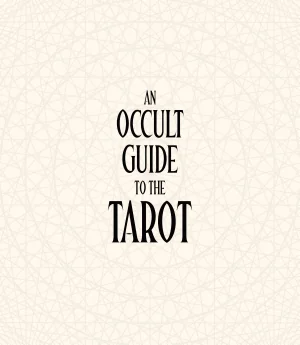
 71
71

Occult Guide to the Tarot
Travis McHenry's *Occult Guide to the Tarot* arrives with considerable fanfare, not least due to its lavish production values. The use of stark black and red inks on high-quality paper, coupled with numerous illustrations, certainly elevates it beyond the average paperback grimoire. McHenry’s strength lies in his ambition to connect the tarot's imagery directly to foundational occult principles, moving beyond mere fortune-telling. He compellingly argues, for instance, that the Fool's journey through the Major Arcana mirrors the alchemical process of *solve et coagula*. However, the book occasionally feels more like a compendium of common occult associations than a truly original interpretation. While the visual presentation is striking, the textual analysis, though thorough, sometimes lacks a distinctive voice or novel perspective, relying heavily on established esoteric frameworks. It functions best as a beautifully rendered reference for those already immersed in occult studies, rather than a singular revelation. A solid, if not revolutionary, addition to the field.
📝 Description
71
Travis McHenry's Occult Guide to the Tarot was published in 2025.
This 2025 volume by Travis McHenry examines the tarot's esoteric dimensions. It features over 300 illustrations designed to clarify the cards' symbolism and divinatory meanings. The book's physical design includes special black and red ink with full-color interiors, aiming to be both a practical resource and an aesthetically pleasing object.
Occult Guide to the Tarot is for serious students of occultism and Western magical traditions, particularly those interested in divination. It appeals to readers who value the material quality of occult books. The work seeks to provide a deeper understanding of tarot, moving beyond simple interpretation towards occult and ceremonial magic perspectives.
The tarot's use in esoteric practice evolved significantly from the 18th century onward, with figures like Eliphas Lévi connecting it to Kabbalah and magic. This 2025 guide continues that tradition, building on centuries of occult interpretation. It views the tarot not merely as a divination tool but as a system encoding universal principles and hidden knowledge.
💡 Why Read This Book?
• Gain a structured understanding of how tarot symbolism aligns with core Hermetic principles, offering a deeper interpretive framework than standard divinatory guides. • Explore over 300 detailed illustrations that visually connect card imagery to occult concepts, enhancing comprehension for visual learners. • Appreciate the tarot as a sophisticated symbolic system, moving beyond prediction to its potential as a map for spiritual and psychological development.
⭐ Reader Reviews
Honest opinions from readers who have explored this book.
❓ Frequently Asked Questions
What makes the 'Occult Guide to the Tarot' unique compared to other tarot books?
This guide distinguishes itself through its deluxe physical design, using special inks and full-color interiors with over 300 illustrations, and by specifically framing tarot interpretation within established occult and Hermetic traditions, as established by authors like Eliphas Lévi.
Who is Travis McHenry and what is his background?
Travis McHenry is recognized as a contemporary occultist and author. His works typically focus on esoteric traditions, magic, and the study of ancient symbolism, positioning him as a modern authority in the field of occult studies.
When was the 'Occult Guide to the Tarot' first published?
The 'Occult Guide to the Tarot' by Travis McHenry was first published on September 16, 2025.
Does the book offer practical divination techniques or focus solely on theory?
The book aims to be a practical resource, integrating theoretical occult principles with actionable insights for tarot readings, making it suitable for both study and application.
What kind of illustrations can be expected in the book?
The guide features over 300 full-color illustrations, specifically designed to elucidate the complex symbolism and esoteric meanings associated with each tarot card.
Is this book suitable for absolute beginners to tarot?
While beginners can benefit from its detailed explanations and illustrations, the book's deep dive into occult and Hermetic connections suggests it will be most rewarding for those with some prior interest or knowledge in esoteric subjects.
🔮 Key Themes & Symbolism
Tarot as Hermetic Cipher
This guide posits the tarot deck as a compressed symbolic language, directly mirroring the principles of Western Hermeticism. It explores how each card, from the Major Arcana's archetypal journey to the numbered cards of the suits, encodes concepts like the Seven Hermetic Principles, the macrocosm-microcosm relationship, and the path of spiritual initiation. McHenry connects specific card imagery to alchemical processes and Kabbalistic correspondences, presenting the tarot not merely as a tool for prediction but as a map of consciousness and cosmic order.
The Illustrated Esoteric Path
Central to the book's appeal is its extensive visual component, featuring over 300 full-color illustrations. These are not mere decorative elements but integral to understanding the esoteric meaning. The guide uses these visuals to highlight symbolic connections, such as the serpent imagery often found in representations of The Magician or the celestial alignments depicted in The Star. The deliberate use of black and intense red ink further enhances the visual impact, drawing parallels to traditional occult manuscripts and grimoires.
Divination and Spiritual Alchemy
McHenry frames tarot divination as a form of spiritual alchemy, suggesting that understanding the cards’ symbolic interplay can facilitate personal transformation. The book likely details how readings can reveal karmic patterns, psychological complexes, and spiritual blockages, akin to the alchemical stages of dissolution and coagulation. It encourages readers to see the cards as mirrors reflecting the inner workings of the psyche and the universe, providing guidance for navigating life's challenges with occult wisdom.
The Tarot as a Living Grimoire
This work presents the tarot deck as a potent magical instrument, a 'living grimoire' containing ancient knowledge. Beyond simple fortune-telling, the guide explores how the cards can be used in ritualistic contexts, for meditation, and as aids in the Great Work. It emphasizes the energetic and symbolic power inherent in the cards, suggesting that deep engagement with their meanings can unlock hidden potentials and facilitate contact with subtle forces, aligning with the practical magical applications found in historical occult traditions.
💬 Memorable Quotes
Direct passages from the work, attributed to the author.
“The tarot is a symbolic lexicon of the universe, a mirror to the divine mind.”
— This statement expresses the book's core thesis: the tarot is not just a divinatory tool but a profound system of symbolic knowledge reflecting cosmic order and spiritual truths.
“Each card is a stage in the alchemical journey of the soul.”
— This interpretation suggests that the book views the progression through the Major Arcana as analogous to the stages of transformation described in alchemy, offering a path to spiritual purification and enlightenment.
“The vibrant colors and stark contrasts are essential to unlocking the cards' energetic signatures.”
— This likely refers to the book's specific design choices, emphasizing how the visual elements, including the use of intense red and black ink, are intended to directly convey the symbolic and energetic properties of the tarot.
“Understanding the Qabalistic Tree of Life unlocks the deeper structure of the Minor Arcana.”
— This highlights a key conceptual link the book makes, connecting the tarot's suit and number cards to the foundational Kabbalistic framework, thereby offering a structured method for esoteric interpretation.
“Beyond prediction, the tarot offers a map for the Great Work.”
— This emphasizes the book's focus on the tarot as a tool for spiritual development and magical practice, aligning it with the practitioner's pursuit of self-mastery and union with the divine.
🌙 Esoteric Significance
Tradition
This work is firmly rooted in the Western Esoteric Tradition, particularly drawing from Hermeticism, Kabbalah, and ceremonial magic. It positions the tarot not just as a divination tool but as a symbolic language encoding universal principles foundational to these traditions. McHenry's approach aligns with the Golden Dawn's meticulous system of correspondences and Lévi's philosophical interpretations, offering a synthesis that bridges historical occultism with contemporary understanding.
Symbolism
Key symbols likely explored include the 'Fool's Journey' as an initiation path, the four elements represented in the suits (Wands-Fire, Cups-Water, Swords-Air, Pentacles-Earth), and the archetypal figures of the Court Cards. The book probably explores the numerological significance of each card, linking them to the Sephiroth on the Kabbalistic Tree of Life, thereby revealing layers of meaning related to creation, manifestation, and spiritual evolution.
Modern Relevance
McHenry's work speaks to contemporary practitioners of witchcraft, modern Hermetic orders, and individuals exploring psychological archetypes through esoteric lenses. Its emphasis on visually rich content and direct links to established occult frameworks makes it relevant for digital-native occultists and those seeking aesthetically pleasing, yet intellectually rigorous, guides to ancient symbolic systems.
👥 Who Should Read This Book
• Students of Western Esotericism: Those seeking to understand the tarot's place within Hermeticism, Kabbalah, and ceremonial magic, appreciating its role as a symbolic map. • Advanced Tarot Practitioners: Individuals looking to deepen their interpretive skills beyond basic divination, exploring occult correspondences and philosophical underpinnings. • Occult Art Enthusiasts: Readers drawn to the aesthetic and symbolic dimensions of occult literature, valuing beautifully produced books that serve as both study tools and objects of art.
📜 Historical Context
The tarot's transformation into an esoteric tool gained significant momentum in the late 18th century with Antoine Court de Gébelin's theories linking it to ancient Egyptian mysteries. This was further cemented in the 19th century by figures like Eliphas Lévi, who systematically integrated the cards with Kabbalah and ceremonial magic in works such as 'Dogme et Rituel de la Haute Magie' (1854-1856). The early 20th century saw further occult interpretations, notably by the Hermetic Order of the Golden Dawn, which developed elaborate correspondences. Travis McHenry's *Occult Guide to the Tarot*, published in 2025, arrives in an era where interest in esoteric traditions, often fueled by digital dissemination and a resurgence of interest in occult history, remains strong. It builds upon this legacy, offering a contemporary synthesis of centuries of occult thought applied to the tarot, presented in a format reflecting modern aesthetic sensibilities.
📔 Journal Prompts
How does the 'Fool's Journey' mirror your own path of spiritual development?
Reflect on the elemental correspondences of the Minor Arcana in your daily life.
What archetypal energies do the Court Cards represent for you?
Consider a tarot spread as a Kabbalistic diagram; what insights emerge?
How can the symbolic language of the tarot inform your personal 'Great Work'?
🗂️ Glossary
Hermeticism
An ancient philosophical and religious tradition based on writings attributed to Hermes Trismegistus, emphasizing divine wisdom, the interconnectedness of all things, and the principle of 'As Above, So Below'.
Kabbalah
A system of Jewish mysticism that explores the nature of God and the universe through esoteric interpretations of scripture, often visualized through the Tree of Life diagram.
Major Arcana
The 22 trump cards of the tarot deck, representing significant life lessons, archetypal figures, and spiritual milestones in the Fool's Journey.
Minor Arcana
The 56 cards of the tarot deck, divided into four suits, which typically represent everyday events, challenges, and circumstances.
Great Work (Main work)
In alchemy and esoteric traditions, the process of spiritual transformation, self-perfection, and achieving union with the divine.
Correspondences
Symbolic relationships established between elements, planets, deities, colors, numbers, and other aspects within esoteric systems, used for interpretation and ritual.
Divination
The practice of seeking knowledge of the future or the unknown by supernatural means, often utilizing tools like the tarot.
This book appears in 1 collection
🔮 Readers Also Liked
Browse all →
From the “Tarot” Collection
View all →
More Free Occult Philosophy Books
View all →