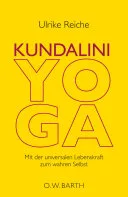
Kundalini-Yoga
 84
84

Kundalini-Yoga
Ulrike Reiche's Kundalini-Yoga presents a coherent model of the human energetic system, likening it to a multi-story dwelling with internal conduits. The strength of the book lies in its accessible explanation of complex concepts, making the abstract tangible for the uninitiated. Reiche’s approach, particularly her description of energy bodies as housing distinct aspects of personality (feelings, talents, values), offers a refreshing perspective. However, the work might feel overly simplified to seasoned practitioners of Kundalini Yoga, who may be accustomed to more intricate cosmological frameworks. The section detailing "Stromleitungen" (electrical wiring) for subtle energy, while illustrative, could be perceived as a reductionist metaphor by some. Nevertheless, Reiche provides effective exercises for self-influence and awareness. It serves as a solid introductory text for those new to energetic psychology.
📝 Description
84
Ulrike Reiche's 2012 Kundalini-Yoga details subtle energy bodies as core to consciousness.
Kundalini-Yoga, by Ulrike Reiche, explains subtle energy bodies as fundamental to human consciousness. Reiche likens these bodies to distinct 'floors' within a person, housing emotions, talents, and values. A network of subtle energy, described as the building's 'wiring,' carries vital life force throughout these structures. This work is useful for individuals seeking a structured way to understand their inner selves and energetic makeup. It is especially suitable for those wanting practical methods for personal growth via meditation and self-awareness. Readers who prefer clear explanations of complex metaphysical ideas will find this book valuable.
While not directly quoting ancient Indian scriptures, Reiche's approach to Kundalini-Yoga builds on centuries of yogic philosophy. Published in 2012, it appeared during a period of growing Western interest in Eastern spiritual practices. This era saw wider availability of teachings once limited to specific lineages, leading to more general discussion of concepts like energy bodies.
Reiche's work connects to the yogic tradition, particularly the concept of subtle body systems. While the book does not rely on direct scriptural citation, its framework of energy bodies and life force (prana/kundalini) resonates with classical yogic and tantric ideas about the energetic anatomy of the human being. The 2012 publication date places it within a contemporary revival of interest in these practices, making such concepts more accessible to a Western audience seeking systematic methods for inner development.
💡 Why Read This Book?
• Learn to perceive and influence subtle energy flow by understanding the "Energiekörper" (energy bodies) as described by Ulrike Reiche, enabling conscious interaction with your personal energetic constitution. • Gain practical meditation techniques from Reiche's coaching expertise, offering specific exercises to enhance self-awareness and personal development beyond generic mindfulness. • Explore the metaphor of "Stromleitungen" (electrical wiring) for subtle energy, providing a concrete, relatable framework for visualizing and working with your inner energetic system as presented in the book's framework.
⭐ Reader Reviews
Honest opinions from readers who have explored this book.
❓ Frequently Asked Questions
What is the core concept of "Energiekörper" in Ulrike Reiche's Kundalini-Yoga?
The "Energiekörper" (energy bodies) are presented as the fundamental spiritual and psychological makeup of a human being, comparable to the different floors of a house, each housing specific aspects like feelings and talents.
When was Ulrike Reiche's Kundalini-Yoga first published?
The book "Kundalini-Yoga" by Ulrike Reiche was first published on October 1, 2012.
What kind of exercises does the book offer?
The book provides effective exercises for personal development, focusing on meditation techniques to help individuals sense and influence their subtle energy.
Is this book suitable for beginners in yoga?
Yes, the book's clear explanations of concepts like energy bodies and subtle energy make it suitable for beginners interested in practical self-awareness through yoga.
What is the main benefit of understanding the "Stromleitungen" concept?
Understanding the "Stromleitungen" (electrical wiring) metaphor allows practitioners to visualize how subtle energy flows through their energetic system, aiding in conscious perception and influence.
Who is Ulrike Reiche in the context of this book?
Ulrike Reiche is identified as a Yoga-Coach, bringing practical, experience-based insights to her explanations of Kundalini-Yoga concepts.
🔮 Key Themes & Symbolism
The Energetic Architecture
The book posits a unique model of human consciousness built upon "Energiekörper" or energy bodies. Reiche likens these to distinct levels or "floors" within a psychic house, each dedicated to specific human faculties—emotions, talents, values. This structural metaphor provides a tangible way to grasp the otherwise ethereal aspects of our being, suggesting that our personality is an organized energetic system.
Subtle Energy as Life Force
Central to Reiche's Kundalini-Yoga is the concept of subtle energy flowing through the body's energetic "Stromleitungen" (electrical wiring). This energy is not merely a biological force but the very medium through which our feelings, talents, and values manifest. The work emphasizes that this subtle energy can be consciously perceived and modulated through targeted meditative practices.
Practical Energetic Influence
Beyond theoretical exposition, Kundalini-Yoga offers actionable techniques. Reiche, as a Yoga-Coach, provides specific exercises designed to allow individuals to "feel" and positively influence their subtle energy. The goal is to foster personal development by working directly with one's energetic constitution, moving from passive experience to active, conscious engagement with inner states.
The House of Self
The recurring metaphor of a house serves as the foundational visual aid for understanding the energetic system. Each "Stockwerk" (floor) represents a layer of the self, interconnected by "Stromleitungen" (wiring). This domestic analogy explains complex yogic principles, making the internal energetic landscape accessible for exploration and refinement through practice.
💬 Memorable Quotes
Direct passages from the work, attributed to the author.
“Durch dessen 'Stromleitungen' fließt subtile Energie.”
— This core idea emphasizes the dynamic nature of the energetic system, presenting subtle energy as a vital current flowing through interconnected 'wiring,' analogous to a building's electrical system.
“Das System der Energiekörper.”
— This key term refers to the framework of subtle bodies discussed in the book, which Reiche uses to explain the layered structure of human consciousness and its energetic components.
“Effektive Übungen für die eigene Persönlichkeitsentwicklung.”
— This phrase points to the book's utility, promising practical exercises specifically designed to facilitate personal growth by working with the principles of Kundalini-Yoga.
💡 Key Ideas
Editorial paraphrase of the work's core concepts — not direct quotes.
Man darf sich seine Gefühle, seine Talente oder seine Werte wie die Stockwerke eines Hauses vorstellen.
This paraphrased concept highlights Reiche's accessible metaphor: emotions, talents, and values are likened to distinct floors within a personal 'house' of consciousness, providing a clear structural image.
man mit Hilfe gezielter Meditationen spüren und beeinflussen kann.
This paraphrased concept underscores the practical, actionable aspect of the teachings, suggesting that the subtle energy described can be both perceived and intentionally directed through focused meditation.
🌙 Esoteric Significance
Tradition
Reiche's work interfaces with the broader Kundalini Yoga tradition, which is rooted in Tantric and yogic philosophies aiming to awaken the dormant spiritual energy (Kundalini) at the base of the spine. While not strictly adhering to the complex cosmological models found in classical Tantra, her "Energiekörper" concept aligns with the yogic understanding of subtle anatomy (nadis, chakras, prana). It offers a simplified, psychologically-oriented entry point into these ancient ideas for a contemporary audience.
Symbolism
The primary symbolism revolves around the 'house' metaphor, with 'Energiekörper' as its 'floors' and 'Stromleitungen' as its 'wiring.' This domestic imagery serves to concretize abstract energetic principles. The house symbolizes the individual self, its floors represent distinct aspects of personality and consciousness, and the wiring signifies the pathways through which vital energy flows, enabling interaction and influence.
Modern Relevance
Reiche's accessible approach to energy bodies and subtle energy appeals to contemporary fields like energy psychology, somatic experiencing, and modern mindfulness practices. Thinkers and practitioners focusing on embodied cognition, trauma-informed healing, and integrated consciousness development can find her framework a useful conceptual tool for understanding internal energetic dynamics in a relatable way.
👥 Who Should Read This Book
• Aspiring yoga practitioners seeking a clear, metaphorical understanding of subtle energy systems beyond basic postures. • Individuals interested in practical psychology and personal development who wish to explore the energetic underpinnings of their emotions and talents. • Metaphysical students looking for introductory frameworks to concepts like energy bodies and subtle anatomy presented in an accessible, non-dogmatic manner.
📜 Historical Context
Published in 2012, Ulrike Reiche's "Kundalini-Yoga" emerges within a contemporary Western landscape deeply influenced by the New Age movement and a growing interest in Eastern spiritual disciplines. This era saw a proliferation of yoga studios and metaphysical literature, making complex concepts like energy bodies more accessible than ever before. While Reiche's work draws from the broad tradition of Kundalini Yoga, its specific framework of "Energiekörper" as distinct levels within a 'house' is a pedagogical choice for clarity. It situates itself alongside other popular Western interpretations of yogic philosophy, such as those influenced by Theosophy or Integral Yoga, which often adapt traditional teachings for a Western audience. Unlike the more scripturally-focused academic studies of yoga, Reiche's approach prioritizes practical application and psychological integration, reflecting a broader trend of secularizing and personalizing spiritual practices.
📔 Journal Prompts
The "Energiekörper" as distinct personality levels: which floor feels most active today?
Reflect on the "Stromleitungen" within your energetic house; are there any blockages?
How can targeted meditation influence the "subtle energy" flowing through your system?
Consider the Yoga-Coach's perspective: what are the practical benefits of sensing your "Energiekörper"?
Mapping your inner "house": which "Stockwerk" (floor) most embodies your current challenges?
🗂️ Glossary
Energiekörper
German for 'energy bodies.' In this context, they represent the distinct layers or components of human consciousness and personality, conceptualized as 'floors' of an inner house.
Stromleitungen
German for 'electrical wiring' or 'power lines.' Used metaphorically to describe the channels or pathways through which subtle energy flows within the energetic system.
Subtile Energie
Refers to the non-physical life force or consciousness energy that permeates and animates the physical body and its energetic structures, influenced by practices like Kundalini Yoga.
Stockwerke
German for 'floors' or 'storeys' of a building. Used metaphorically to represent the distinct levels or aspects of the 'Energiekörper' (energy bodies).
Persönlichkeitsentwicklung
German for 'personality development.' The book offers exercises aimed at enhancing personal growth by working with the energetic system described.
Yoga-Coach
A professional who guides individuals in yoga practice, often with a focus on specific aspects like physical alignment, breathwork, or in this case, energetic and psychological development.
Gezielte Meditationen
German for 'targeted meditations.' Specific meditative practices recommended in the book to consciously perceive and influence subtle energy.