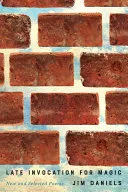
Late Invocation for Magic
 81
81

Late Invocation for Magic
Jim Daniels’ Late Invocation for Magic offers a potent distillation of a career spent observing the American landscape, particularly its industrial heartlands. The strength of this collection lies in Daniels’ remarkable clarity; he renders the grit and grace of Rust Belt life without resorting to sentimentality or jargon. Consider the poem "The American," which captures a specific kind of resilience forged in economic hardship, a recurring motif throughout the book. A limitation, however, is that some readers might yearn for more explicit engagement with the titular "magic," as the concept, while present, sometimes feels more like a framing device than a fully explored thematic current. The work consistently shines when detailing the textures of everyday struggle and aspiration. It’s a vital, unvarnished look at American life.
📝 Description
81
Jim Daniels' 2023 collection, Late Invocation for Magic, gathers poems about Rust Belt life.
Late Invocation for Magic collects poems from Jim Daniels' career, focusing on Rust Belt cities like Detroit. These poems detail the lives of Americans in places shaped by class, race, and justice issues. They unfold in everyday settings, from kitchens to garages, highlighting the gap between an imagined America and its actual economic and cultural divisions.
This volume is for readers who want poetry that directly addresses American realities. It will appeal to those interested in how social issues intersect with personal stories, especially in industrial and post-industrial areas. Readers who value clear, strong language and works that speak for those often left out of success narratives will find this collection resonant.
Daniels' writing follows a tradition of American social realism. His focus on the Rust Belt connects him with writers who documented working-class communities. The poems reflect the post-industrial era's impact, a time of deindustrialization and its social consequences across the Midwest.
In this collection, 'magic' refers not to the supernatural, but to access to opportunity, resources, and a dignified existence. Daniels contrasts this ideal with the concrete struggles of individuals in economically disadvantaged areas. The poems examine themes of work, community bonds, and perseverance, often grounded in specific locations and the personal histories they hold.
💡 Why Read This Book?
• Gain insight into the lived realities of Rust Belt communities, understanding the specific social and economic pressures that shape lives, as explored through Daniels' focus on Detroit. • Experience poetry that dissects the gap between idealized national narratives and the tangible struggles of working-class Americans, offering a grounded perspective on justice and access. • Appreciate a unique poetic voice that uses concrete imagery and accessible language to articulate complex themes of labor, class, and dignity, particularly evident in poems from the 2010s.
⭐ Reader Reviews
Honest opinions from readers who have explored this book.
❓ Frequently Asked Questions
What is the central theme of Jim Daniels' 'Late Invocation for Magic'?
The central theme revolves around the disparities between an idealized American dream and the lived realities of working-class individuals in Rust Belt cities, particularly Detroit. It contrasts this 'magic' of opportunity with the everyday struggles for survival and dignity.
When was 'Late Invocation for Magic' first published?
'Late Invocation for Magic' was first published in 2026, compiling selected poems from Jim Daniels' extensive career.
Which specific cities are frequently referenced in the poems?
The poems frequently reference Detroit and other cities within the Rust Belt region of the United States, serving as the backdrop for explorations of class, race, and justice.
How does Daniels approach the concept of 'magic' in his work?
Daniels uses 'magic' metaphorically to represent access to opportunity, economic stability, and a life free from systemic hardship. He contrasts this ideal with the difficult realities faced by those who lack such advantages.
What is Jim Daniels known for as a poet?
Jim Daniels is recognized for his courage, clarity, and accessible style. His work is noted for its honest portrayal of American life, focusing on the intersection of social issues and personal experience, particularly in industrial and post-industrial settings.
What kind of social issues does the book address?
The book addresses issues of class, race, and justice, exploring how these societal factors play out in the daily lives of Americans in Rust Belt communities.
🔮 Key Themes & Symbolism
Rust Belt Realities
The collection centers on the industrial and post-industrial landscapes of cities like Detroit. Daniels captures the texture of life in these communities, where economic shifts have profoundly impacted social structures and individual lives. His work provides an unvarnished look at the resilience and struggles inherent to places often overlooked or idealized in national narratives, grounding abstract concepts of class and justice in concrete settings.
The Metaphor of Magic
Daniels employs 'magic' not as a supernatural force, but as a symbol for access – access to opportunity, resources, and a life unburdened by systemic disadvantage. He contrasts this elusive 'magic' with the tangible, often difficult, realities faced by working-class Americans. This theme highlights the societal divides and the uneven distribution of life chances, questioning who truly benefits from an 'idealized' America.
Class, Race, and Justice
These intertwined themes are explored through the lens of everyday life in the streets, kitchens, and garages of Rust Belt cities. Daniels examines how issues of economic class, racial dynamics, and the pursuit of justice manifest in personal narratives and community interactions. The poems offer a clear-eyed perspective on the tensions between national ideals and the messy, lived experiences of those navigating cultural and economic divides.
Labor and Dignity
A significant thread in Daniels' work is the exploration of labor, both its physical demands and its role in shaping identity and dignity. The poems often focus on individuals trying to make a living, highlighting the inherent worth and resilience found in their efforts. This theme underscores the human cost of economic instability and the persistent search for respect within challenging circumstances.
💬 Memorable Quotes
Direct passages from the work, attributed to the author.
“Focusing on those who can’t afford or have access to 'magic'.”
— This highlights Daniels' concern for the marginalized and economically disadvantaged, framing their struggles as a lack of the opportunities and resources often taken for granted by others.
“Poems selected from his long career.”
— This indicates the volume is a retrospective, drawing on years of Daniels' writing and offering a comprehensive look at his enduring thematic concerns and stylistic development.
“Issues of class and race and justice play out in the streets and kitchens and backyards and garages.”
— This emphasizes the grounded, domestic, and public settings where Daniels locates profound social and political commentary, making large societal issues accessible through intimate observation.
“Known for his courage, clarity, and accessibility.”
— This points to the poet's critical reception, noting his reputation for tackling difficult subjects with directness and language that engages a broad readership without sacrificing depth.
💡 Key Ideas
Editorial paraphrase of the work's core concepts — not direct quotes.
The work explores the tension between our idealized country and the messier cultural and economic divides.
This paraphrase captures Daniels' recurring examination of the gap between national myths of prosperity and the lived realities of many Americans, particularly those in economically depressed regions.
🌙 Esoteric Significance
Tradition
While not explicitly rooted in a single esoteric lineage, Daniels' work engages with a form of secular mysticism, finding the 'magic' in the mundane struggles and resilience of ordinary lives. It operates within a tradition of social commentary that imbues everyday realities with profound significance, akin to how Gnostic texts sought hidden meaning within the material world, albeit without supernatural claims.
Symbolism
The 'streets and kitchens and backyards and garages' serve as potent symbols of the lived, material world where social forces play out. Detroit, as a specific locus, symbolizes the broader Rust Belt experience – a landscape marked by both industrial might and subsequent decline. The concept of 'magic,' or its absence, functions symbolically to represent access to societal resources and opportunities.
Modern Relevance
Contemporary writers and thinkers focused on social justice, labor studies, and the literature of economic hardship draw upon Daniels' ability to articulate the experiences of those often excluded from dominant narratives. His clear-eyed focus on the tangible consequences of policy and economic shifts remains relevant for understanding persistent inequalities and community resilience in the 21st century.
👥 Who Should Read This Book
• Readers interested in American social realism poetry, particularly those who appreciate direct engagement with themes of class, labor, and urban life, will find Daniels' unflinching portrayal of Rust Belt cities compelling. • Students and scholars of contemporary American literature and cultural studies seeking to understand the impact of deindustrialization and economic shifts on communities and individual lives. • Individuals drawn to poetry that finds profound meaning in everyday experiences and offers a grounded, accessible perspective on justice and opportunity, moving beyond abstract concepts to tangible realities.
📜 Historical Context
Published in 2026, Jim Daniels' Late Invocation for Magic arrives as a reflection on decades of American deindustrialization. The collection’s focus on Rust Belt cities like Detroit places it within a literary tradition that chronicled the impact of economic change on working-class communities, a lineage including writers like Studs Terkel and poets such as Philip Levine. Daniels’ work engages with the social consequences of shifts that began in earnest following the 1970s, exploring themes of class, race, and justice that became increasingly prominent in public discourse. While not overtly controversial, Daniels’ unflinching realism often contrasted with more sanitized portrayals of American life, offering a necessary counterpoint. His accessible style, however, ensured his work found a broad audience, diverging from more avant-garde poetic movements of the late 20th and early 21st centuries.
📔 Journal Prompts
The contrast between idealized 'magic' and lived reality.
Detroit as a symbol of industrial change and its human cost.
Moments of resilience in the face of economic hardship.
The specific settings – streets, kitchens, garages – where justice unfolds.
Identifying the 'messier cultural and economic divides' in your own context.
🗂️ Glossary
Rust Belt
A region in the Northeastern and Midwestern United States characterized by heavy industrialization and subsequent economic decline, often associated with factory closures and population loss.
Magic (Metaphorical)
In Daniels' work, 'magic' refers not to supernatural phenomena but to access to opportunities, resources, stability, and a life free from systemic disadvantage.
Social Justice
The concept of fair and just relations between the individual and society, encompassing the distribution of wealth, opportunities, and privileges within a society.
Class Issues
Concerns related to the hierarchical social structure based on economic or social status, including disparities in wealth, power, and opportunity.
Deindustrialization
The process by which a decline in industrial activity occurs in a region or economy, often leading to unemployment and economic restructuring.
Working Class
A social group characterized by manual labor or service jobs, often with lower levels of income and education compared to middle or upper classes.
Accessibility (in poetry)
The quality of poetry that makes it easily understood or appreciated by a wide audience, often through clear language and relatable subject matter.