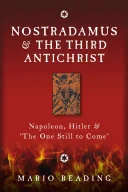
Nostradamus and the Third Antichrist: Napoleon, Hitler and the One Still to Come
 77
77

Nostradamus and the Third Antichrist: Napoleon, Hitler and the One Still to Come
Mario Reading’s "Nostradamus and the Third Antichrist" offers a compelling, if sometimes overly confident, decoding of the prophet’s most notorious predictions. Reading’s strength lies in his rigorous application of historical parallels to Nostradamus’s quatrains, particularly his convincing case for Napoleon and Hitler as the first two Antichrists. He highlights specific verses that align uncannily with the careers of these two figures. However, the book occasionally falters in its transition to the third Antichrist. While the premise that this figure is still to come is intriguing, the predictive power assigned to the period starting in 2010 feels less substantiated than the historical analyses. The work's limitation is its definitive tone regarding future events, which, by their nature, remain speculative. A particularly insightful passage details the specific geographical and temporal markers Nostradamus provides for Hitler's campaigns. Reading presents a provocative thesis that challenges readers to reconsider the historical scope of Nostradamus’s vision, but the certainty with which he approaches the future feels premature.
📝 Description
77
Mario Reading's 2013 book argues Napoleon and Hitler were Nostradamus's first two Antichrists.
Mario Reading's "Nostradamus and the Third Antichrist" examines Michel de Nostredame's prophecies concerning three Antichrists. Published in 2013, the book identifies Napoleon Bonaparte as the first and Adolf Hitler as the second. Reading bases this interpretation on Nostradamus's extensive writings dedicated to these figures, analyzing linguistic clues and historical parallels.
The work is for students of prophecy and esoteric history who understand Nostradamus's quatrains and are interested in how history aligns with predictive texts. It will appeal to those who enjoy textual analysis and deciphering ancient predictions within the context of modern history, especially the 19th and 20th centuries.
Reading's analysis situates itself within the tradition of interpreting Nostradamus, a practice that grew during political upheaval. The book engages with the historical realities of Napoleon and World War II. It argues against generalized readings, insisting on concrete historical fulfillments and identifying a third, future Antichrist.
This book continues a long tradition of interpreting Nostradamus's prophecies, a practice that intensified during periods of political instability and conflict. Many have sought to align his quatrains with significant historical figures and events, particularly rulers and wars. Reading's work specifically addresses the identification of successive Antichrists, a common theme in prophetic interpretation, and argues for a concrete, historical fulfillment of these predictions. He proposes a specific timeline for the emergence of these figures, placing the start of the third Antichrist's era around 2010.
💡 Why Read This Book?
• Understand the specific textual evidence linking Napoleon Bonaparte to Nostradamus's prophecies, moving beyond vague interpretations to concrete verse analysis. • Grasp the historical argument for Adolf Hitler as the second Antichrist, examining the quatrains Nostradamus devoted to this period of the 20th century. • Engage with the controversial claim of a third Antichrist emerging from 2010, exploring the book's specific predictions for this contemporary era.
⭐ Reader Reviews
Honest opinions from readers who have explored this book.
❓ Frequently Asked Questions
Who were the first two Antichrists according to Mario Reading's analysis of Nostradamus?
Mario Reading identifies Napoleon Bonaparte as the first Antichrist and Adolf Hitler as the second Antichrist. He bases these claims on the extensive prophecies Nostradamus dedicated to each figure, citing specific details and historical alignments.
When does Mario Reading suggest the Third Antichrist's era begins?
Reading's interpretation of Nostradamus's prophecies suggests that the period of the Third Antichrist begins around the year 2010, initiating a new phase of global consequences.
What kind of evidence does Mario Reading use to support his interpretations of Nostradamus?
Reading uses a combination of linguistic analysis of Nostradamus's quatrains, historical parallels, geographical references, and chronological markers found within the prophecies themselves.
Is this book a biography of Napoleon or Hitler?
No, the book is not a biography. It uses the historical lives and impact of Napoleon and Hitler as evidence to interpret Nostradamus's prophecies concerning the Antichrists.
What makes Nostradamus's prophecies about the Third Antichrist unique?
The prophecies concerning the Third Antichrist are considered unique because they are interpreted by Reading to describe events and consequences that are still unfolding in the contemporary period, starting around 2010.
What is the main argument of Nostradamus and the Third Antichrist?
The main argument is that Nostradamus accurately predicted the advent of three specific Antichrists, two of whom have already appeared (Napoleon and Hitler), with the third being a figure whose era commenced around 2010.
🔮 Key Themes & Symbolism
The Tripartite Antichrist
The central thesis posits Nostradamus's prophecies are structured around three distinct Antichrist figures. Reading meticulously identifies Napoleon Bonaparte as the first, citing the extensive quatrains dedicated to his campaigns and empire. Adolf Hitler is presented as the second, with analysis focusing on the prophecies that foresaw the global conflict and his destructive impact. The work then pivots to the yet-to-come Third Antichrist, arguing that this figure's era commenced around 2010, marking a new phase of fulfilled prophecy with significant global consequences.
Historical Fulfillment
This theme drives the book's methodology: interpreting Nostradamus not as abstract symbolism but as direct prediction of historical events. Reading grounds his analysis in verifiable historical facts, such as Napoleon's military campaigns across Europe and Hitler's role in World War II. The book argues that the accuracy of these past identifications validates the predictions for the future, particularly concerning the Third Antichrist and the timeline starting in 2010.
Chronological Decoding
A critical element is Nostradamus's use of temporal and geographical markers within his prophecies. Reading emphasizes how these clues allow for precise dating and location of prophetic events. The book highlights how specific dates and places mentioned in the quatrains align with the rise and fall of Napoleon and the devastating period of Hitler's regime. This chronological approach is then applied to the prophecies concerning the Third Antichrist, suggesting an unfolding sequence of events beginning in the early 21st century.
The Future Antichrist
The book dedicates significant attention to the prophecies concerning the 'one still to come.' Reading argues that this Third Antichrist represents a future threat whose influence began to manifest around 2010. The interpretation focuses on the potential dates, global ramifications, and specific challenges posed by this figure, urging readers to consider the implications of these predictions for contemporary society and future events.
💬 Memorable Quotes
Direct passages from the work, attributed to the author.
“The first of Nostradamus's three Antichrists is clearly Napoleon Bonaparte.”
— This statement captures the book's foundational argument, asserting a direct and undeniable link between Napoleon's historical career and specific Nostradamus prophecies.
“The second Antichrist is Adolf Hitler.”
— This direct assertion frames Hitler as the next fulfillment of Nostradamus's predictions, emphasizing the prophet's focus on this specific historical figure and era.
“The third of his Antichrists is the 'one still to come'.”
— This highlights the book's forward-looking aspect, identifying a future figure whose prophecies are yet to be fully realized, pointing towards contemporary or near-future events.
“They include dates and consequences: the period starts in 2010.”
— This interpretation emphasizes the predictive specificity of the Third Antichrist prophecies, focusing on the defined timeframe and the associated global impact beginning in the early 21st century.
“Nostradamus devoted an inordinate amount of space to Hitler's effect on the world stage.”
— This suggests that the sheer volume of prophetic text dedicated to Hitler indicates his significant role in Nostradamus's grand predictive scheme.
🌙 Esoteric Significance
Tradition
Reading’s work engages with the Western esoteric tradition, specifically the lineage of prophetic interpretation that has long been associated with figures like Nostradamus. While not strictly Hermetic or Kabbalistic, it draws upon the idea of hidden knowledge and divinely inspired foresight. It departs from purely astrological or alchemical interpretations by focusing on historical personages and geopolitical events as the primary fulfillment of prophecy, positioning itself as a more grounded, historical form of esoteric analysis.
Symbolism
The primary 'symbol' Reading decodes is the concept of the 'Antichrist' itself, which he interprets not as a purely spiritual or theological adversary, but as a specific, powerful historical figure who brings immense upheaval. The quatrains themselves, with their dense symbolism, are treated as coded historical documents. Specific motifs like geographical locations (e.g., Italy, Germany, France) and temporal markers (e.g., specific years or centuries) are treated as direct clues for identifying individuals and eras within the prophetic narrative.
Modern Relevance
Contemporary interest in predictive texts and geopolitical analysis continues to draw on the framework established by works like Reading's. Thinkers and groups focused on end-times prophecy, preparedness, and understanding historical cycles through esoteric lenses often reference or build upon the identified patterns of the first two Antichrists. The book's argument for a Third Antichrist beginning around 2010 remains relevant for those seeking to interpret current global events through the lens of Nostradamus's predictions.
👥 Who Should Read This Book
• Students of prophetic literature: Those interested in how ancient texts are interpreted to predict historical events, particularly the works of Nostradamus. • Esoteric history enthusiasts: Readers fascinated by the intersection of history, prophecy, and the occult, seeking connections between major historical figures and esoteric traditions. • Individuals exploring geopolitical cycles: Those who look for patterns and potential future trends in world events through non-conventional analytical frameworks.
📜 Historical Context
Published in 2013, Mario Reading's "Nostradamus and the Third Antichrist" emerged during a period of renewed interest in apocalyptic prophecies and geopolitical uncertainty. The early 21st century, marked by events such as the September 11th attacks and subsequent global conflicts, provided fertile ground for such interpretations. Reading’s work places itself within the long tradition of Nostradamus exegesis, a practice that has ebbed and flowed since the 16th century, often intensifying during times of crisis. Unlike more mystical or allegorical approaches, Reading’s method is strongly tied to historical materialism, seeking concrete correlations between Nostradamus's cryptic verses and documented historical figures and events. He directly engages with the historical periods of Napoleon Bonaparte and Adolf Hitler, two figures who have frequently been identified as Antichrists by various interpreters. The book's reception, while not marked by significant censorship or major academic prizes, contributed to the ongoing popular fascination with Nostradamus's predictive capabilities, particularly as a counterpoint to secular historical narratives.
📔 Journal Prompts
The specific quatrains Nostradamus dedicated to Napoleon Bonaparte.
Hitler's role as the second Antichrist in the context of the 20th century.
The concept of the Third Antichrist and its start date of 2010.
Nostradamus's use of geographical markers in prophecy.
The consequences of the Third Antichrist's predicted era.
🗂️ Glossary
Antichrist
In the context of Nostradamus's prophecies, as interpreted by Reading, a powerful, destructive historical figure who brings about significant global conflict and change.
Quatrain
A verse of four lines, which is the primary poetic form used by Nostradamus in his prophetic work, 'Les Prophéties'.
Exegesis
Critical explanation or interpretation of a text, particularly a religious or ancient one. In this book, it refers to the interpretation of Nostradamus's prophecies.
Esoteric
Intended for or likely to be understood by only a small number of people with a specialized knowledge or interest; dealing with hidden or secret knowledge.
Third Antichrist
The final and future Antichrist predicted by Nostradamus, whose era, according to Reading's interpretation, began around 2010.
Historical Parallel
A similarity between events or figures in different historical periods, used here to match Nostradamus's prophecies with documented history.
Geopolitical
Relating to politics, especially international relations, as influenced by geographical factors. Reading applies this to Nostradamus's predictions of global events.
This book appears in 1 collection
🔮 Readers Also Liked
Browse all →









From the “Nostradamus” Collection
View all →






More Free Occult Philosophy Books
View all →