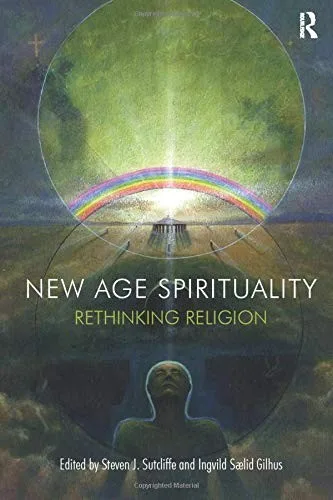
New Age Spirituality
 75
75

New Age Spirituality
Gilhus and Sutcliffe's *New Age Spirituality* provides a necessary academic counterpoint to more hagiographic accounts of the movement. The authors are particularly adept at dissecting the ideological underpinnings of self-spirituality, challenging the notion that it represents a coherent, unified tradition. Their analysis of spiritual consumerism, demonstrating how market forces shape belief and practice, is a potent observation that pierces through much of the movement's mystique. However, the work occasionally feels overly focused on Western manifestations, with less attention paid to how New Age ideas have been indigenized in non-Western contexts. The section discussing the influence of the Human Potential Movement offers a particularly sharp critique of its emphasis on individual transformation divorced from social responsibility. Ultimately, this is a sober and critical assessment, essential for contextualizing the broad impact of New Age ideas.
📝 Description
75
Ingvild Saelid Gilhus and Steven J. Sutcliffe critically examine the New Age spiritual movement in their 2006 work.
This academic study dissects the New Age spiritual movement, moving beyond surface-level descriptions to analyze its diverse beliefs, practices, and social structures. The authors investigate the historical development and changing characteristics of New Age thought, showing it not as a single entity but as a dynamic and varied spiritual phenomenon. They consider how modernity and postmodernity shaped this movement, tracing its roots through 20th-century counter-cultures and intellectual trends like the Human Potential Movement and self-help philosophies. The book also addresses the impact of global media and communication on its spread and adaptation in various cultures.
Scholars of religious studies, sociology of religion, and cultural history will find this book a valuable resource. It is also suitable for anyone interested in the evolution of alternative spiritualities in the late 20th and early 21st centuries. Readers looking for a detailed perspective on contemporary religious movements, separate from devotional material, will find it useful. The analysis centers on concepts like spiritual consumerism, the individualization of religion, and the blending of Eastern and Western esoteric traditions, noting how New Age spirituality often emphasizes personal experience and self-discovery outside established religious institutions. The influence of popular culture on its aesthetics and narratives is also considered.
This book situates New Age spirituality within broader Western esoteric traditions, particularly its manifestation in the late 20th and early 21st centuries. It acknowledges the movement's roots in earlier esoteric currents and counter-cultural phenomena, such as the Human Potential Movement. The authors analyze how these traditions adapted and reconfigured themselves under the influence of modernity, postmodernity, and globalization, often emphasizing personal spiritual development and the integration of diverse practices. The work examines the shift towards individual spiritual seeking and the role of consumer culture in shaping these contemporary spiritual expressions.
💡 Why Read This Book?
• Gain an understanding of the academic framing of New Age spirituality, recognizing it as a complex field of study rather than a single doctrine, as detailed in the book's analysis of its diverse components. • Learn about the concept of spiritual consumerism, which explains how market dynamics influence the formation and dissemination of New Age beliefs, a key focus of the work. • Appreciate the historical linkage between the New Age movement and the Human Potential Movement, understanding how the latter's focus on self-discovery paved the way for later developments.
⭐ Reader Reviews
Honest opinions from readers who have explored this book.
❓ Frequently Asked Questions
When was the first edition of New Age Spirituality by Gilhus and Sutcliffe published?
The first edition of *New Age Spirituality* by Ingvild Saelid Gilhus and Steven J. Sutcliffe was published in 2014, offering a scholarly perspective on the movement.
What is the academic approach of Gilhus and Sutcliffe in their book?
The authors employ a critical and analytical approach, examining New Age spirituality through the lenses of sociology, religious studies, and cultural history, rather than a devotional perspective.
Does the book focus on a single type of New Age practice?
No, the work intentionally explores the diversity within New Age spirituality, presenting it as a multifaceted phenomenon with varied beliefs and practices, not a monolithic tradition.
What historical movements are discussed in relation to New Age Spirituality?
The book contextualizes New Age spirituality by referencing earlier movements such as the Human Potential Movement and various counter-cultural trends of the 20th century.
What is spiritual consumerism according to the book?
Spiritual consumerism, as analyzed in the book, refers to the way New Age beliefs and practices are shaped by market forces and become commodities available for individual acquisition.
Is this book suitable for someone seeking practical New Age techniques?
This book is primarily for academic study and critical understanding of the New Age phenomenon. It is not a guide for practicing New Age techniques but rather an analysis of the movement itself.
🔮 Key Themes & Symbolism
Spiritual Consumerism
The work meticulously dissects the concept of spiritual consumerism, illustrating how New Age ideas and practices have been commodified and marketed. It highlights how individuals select and assemble spiritual beliefs and practices akin to shopping, often detached from traditional religious communal structures. This theme underscores the influence of late capitalist culture on contemporary spirituality, where the self is often positioned as the ultimate arbiter of spiritual truth and value.
Privatization of Religion
A significant focus is placed on the privatization of religious experience within the New Age movement. This theme examines how spiritual seeking has become increasingly individualized, moving away from institutionalized religion towards personal quests for meaning and well-being. The book explores the implications of this trend, including the blurring of lines between therapy, self-help, and spiritual practice, and the emphasis on subjective experience as the primary source of spiritual authority.
Syncretism and Hybridity
The book analyzes the characteristic syncretism of New Age spirituality, where diverse elements from Eastern religions, Western esotericism, psychology, and popular culture are blended. It explores how this hybridity allows for flexible and adaptable spiritual identities, catering to a wide array of individual preferences and needs. The authors investigate the historical pathways through which these disparate traditions have been integrated and reinterpreted for a modern audience.
The Human Potential Movement
Gilhus and Sutcliffe critically engage with the legacy of the Human Potential Movement of the mid-20th century as a significant precursor to New Age spirituality. They examine how its emphasis on self-actualization, personal growth, and the exploration of consciousness laid the groundwork for many New Age tenets. The analysis highlights the movement's focus on therapeutic techniques and the pursuit of individual fulfillment, often in contrast to collective or social-oriented spiritualities.
💬 Memorable Quotes
Direct passages from the work, attributed to the author.
“New Age spirituality is characterized by a privatization of religion and a focus on individual experience.”
— This statement captures the essence of the book's argument regarding the shift from institutionalized faith to personal spiritual journeys. It highlights how the emphasis lies on the individual's subjective encounters with the sacred or meaningful.
“Spiritual consumerism has led to a marketplace of beliefs and practices.”
— This highlights the authors' critical perspective on how New Age ideas function in contemporary society. It suggests that spiritual offerings are often treated as commodities, available for selection and purchase by consumers.
“The movement draws heavily on a wide range of traditions, creating a syncretic spiritual landscape.”
— This points to the eclectic nature of New Age thought, which often blends elements from diverse religious and philosophical systems. It underscores the flexibility and adaptability inherent in many New Age expressions.
“The legacy of the Human Potential Movement is evident in the New Age emphasis on self-discovery.”
— This interpretation connects the New Age movement to its historical roots, specifically the mid-20th century focus on personal growth and self-actualization. It shows how earlier psychological and self-help trends influenced contemporary spirituality.
“Understanding New Age spirituality requires examining its social and cultural contexts.”
— This emphasizes the book's methodological approach. It argues that a comprehensive understanding of New Age phenomena necessitates looking beyond individual beliefs to the broader societal forces and cultural trends that shape them.
🌙 Esoteric Significance
Tradition
While not strictly adhering to a single esoteric lineage, *New Age Spirituality* analyzes a movement that draws eclectically from numerous traditions, including Western Hermeticism, Gnosticism, Theosophy, and Eastern philosophies like Buddhism and Hinduism. It fits within the broader study of modern esoteric movements that emerged in the 19th and 20th centuries, often characterized by their syncretic nature and focus on personal spiritual development outside of orthodox religious structures.
Symbolism
The book touches upon how New Age spirituality often reinterprets existing symbols or creates new ones to represent concepts like personal transformation, universal consciousness, and interconnectedness. For instance, symbols associated with chakras and auras, originating from Eastern traditions, are frequently employed to map energetic states and facilitate self-awareness. The mandala, a universal symbol of wholeness, is also a recurring motif representing cosmic order and the integrated self.
Modern Relevance
Contemporary thinkers and practitioners in fields like positive psychology, mindfulness studies, and wellness culture often engage with concepts that have roots in New Age spirituality, even if they don't explicitly use the label. The emphasis on self-care, personal growth, and the integration of mind-body practices can be traced back to New Age frameworks. Furthermore, scholars studying the sociology of religion continue to draw on the analytical tools developed for understanding New Age phenomena to analyze other emergent spiritual or secular belief systems.
👥 Who Should Read This Book
• Students of comparative religion and sociology of religion seeking to understand contemporary spiritual formations and their relationship to broader cultural trends. • Individuals interested in the intellectual history of the late 20th century, particularly the development of counter-cultural movements and the Human Potential Movement. • Critical thinkers interested in analyzing the intersection of spirituality, consumer culture, and individual identity in the modern West.
📜 Historical Context
Published in 2014, *New Age Spirituality* emerged during a period of intense academic and popular interest in alternative religions and spirituality. The late 20th and early 21st centuries witnessed the widespread dissemination of New Age ideas through media, self-help literature, and the internet. The book situates itself within ongoing scholarly debates, engaging with earlier analyses of the counter-culture of the 1960s and the Human Potential Movement. It implicitly responds to scholars like Wade Clark Roof, who documented the 'spiritual marketplace' in the United States. The work analyzes how New Age ideas evolved from fringe movements into mainstream cultural influences, becoming a significant area of study for sociologists and religious historians. Unlike more celebratory accounts, Gilhus and Sutcliffe offer a critical perspective, examining the commodification and privatization inherent in the movement.
📔 Journal Prompts
Reflection on the concept of spiritual consumerism in one's own life.
Analyze the influence of the Human Potential Movement on personal development ideals.
Consider instances where religious privatization manifests in contemporary society.
Explore personal engagement with syncretic spiritual ideas.
Evaluate the role of media in shaping perceptions of New Age spirituality.
🗂️ Glossary
New Age Spirituality
A broad and diverse spiritual movement that emerged in the late 20th century, characterized by a blend of Western esoteric traditions, Eastern religions, psychology, and self-help principles, emphasizing personal transformation and holistic well-being.
Spiritual Consumerism
The practice of individuals selecting and purchasing spiritual beliefs, practices, or commodities from a marketplace, often prioritizing personal preference and immediate gratification over traditional religious dogma or community.
Privatization of Religion
The trend whereby religious and spiritual meaning-making becomes increasingly individualized and detached from institutional religious frameworks, focusing on personal experience and subjective truth.
Syncretism
The merging or blending of different, often contrasting, religious or philosophical beliefs, symbols, and practices into a new, hybrid system.
Human Potential Movement
A social and intellectual movement, prominent in the mid-20th century, that emphasized the development of human capabilities through psychological techniques, self-awareness, and personal growth.
Holistic
An approach that considers the whole system, entity, or person, rather than its individual parts, emphasizing the interconnectedness and interdependence of all elements, particularly in mind-body-spirit contexts.
Esotericism
Systems of thought and practice that are concerned with hidden knowledge, spiritual illumination, and often involve initiation or secret teachings intended for a select group.
🔮 Readers Also Liked
Browse all →


![The Tipperary (or Clonmel) witch case : [transcripts of newspaper reports &c. concerning Bridget Cleary, burned as a witch, and the trial of her husband and neighbours for murder, in 1895]](/img/thumb/the-tipperary-or-clonmel-witch-case-transcripts-of-newspaper-reports-c-concerning-bridget-cleary-burned-as-a-witch-and-the-trial-of-her-husband-and-neighbours-for-murder-in-1895.webp)



![Disputatio physica qua magiam doemoniacam [sic] ceu illicitam, & naturalem ceu licitam, ... 1667: Iss 181](/img/thumb/disputatio-physica-qua-magiam-doemoniacam-sic-ceu-illicitam-naturalem-ceu-licitam-1667-iss-181-bugges-laurentius.webp)
More by Ingvild Saelid Gilhus, Steven J. Sutcliffe
All books →
More Free Witchcraft & Paganism Books
View all →