Neoplatonism and Contemporary Thought
 78
78

Neoplatonism and Contemporary Thought
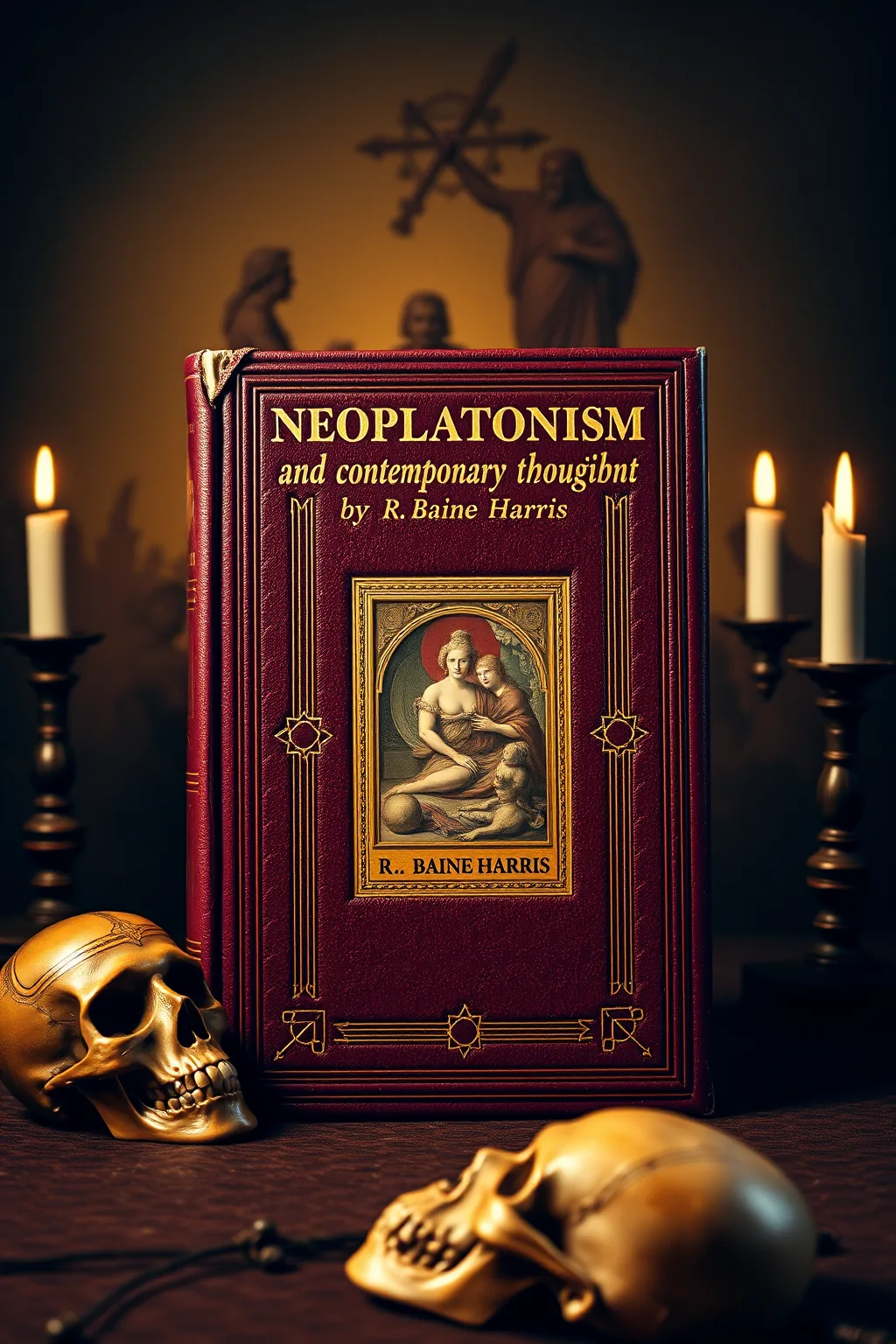
R. Baine Harris’s compilation, "Neoplatonism and Contemporary Thought," offers a robust examination of Plotinus's enduring legacy. The strength lies in its diverse scholarly voices, each adeptly connecting ancient metaphysical tenets to 21st-century concerns. For instance, the discussion linking Neoplatonic concepts of divine beauty to contemporary aesthetic theory provides a compelling case study. However, the collection occasionally suffers from academic insularity; some essays assume a deep familiarity with both Neoplatonism and specific contemporary theorists, potentially alienating readers not deeply versed in both fields. A particularly engaging section explores the concept of the 'One' not as a static entity but as a dynamic source, offering a fresh lens on monotheistic and pantheistic debates. While not a light read, it serves as a valuable resource for those tracing philosophical lineages.
📝 Description
78
Published in 2001, R. Baine Harris's collection examines Neoplatonism's connection to contemporary thought.
This 2001 volume gathers essays that trace the continued relevance of Neoplatonic philosophy, originating with Plotinus in the 3rd century CE, to modern intellectual and spiritual currents. The contributors connect ancient metaphysics with current discussions in social theory, aesthetics, and various spiritual practices. The collection is intended for academics, graduate students, and researchers focused on the history of philosophy, comparative religion, or the reception of ancient ideas. It is especially useful for those studying critical theory, post-structuralism, or contemporary spiritual movements, and who wish to understand their philosophical roots.
The essays consider Neoplatonism's influence from late antiquity through the 20th century, acknowledging the lineage from Plotinus, Porphyry, and Iamblichus. The book was released during a time of sustained academic interest in classical philosophy and its less conventional interpretations, following scholarship on Neoplatonism's links to Renaissance Hermeticism and later mystical traditions. The publication date of 2001 situates it within a period of renewed scholarly attention to the connections between philosophy, religion, and cultural studies.
Neoplatonism, a philosophical system that emerged in the 3rd century CE, has long been a significant current within esoteric traditions. Its focus on a transcendent, ineffable divine principle (the One) and its hierarchical emanations has influenced mystical thought across various cultures and epochs. Thinkers like Plotinus, Porphyry, and Iamblichus laid the groundwork for systems of spiritual ascent and knowledge that resonated with Gnostic, Hermetic, and later Kabbalistic and Christian mystical traditions. This collection acknowledges that enduring lineage, showing how these ancient metaphysical and spiritual frameworks continue to inform contemporary discussions.
💡 Why Read This Book?
• Gain insight into how Plotinus's concept of the One, as explored in the essays, informs modern discussions on ultimate reality and consciousness, offering a philosophical anchor beyond purely materialistic explanations. • Understand the Neoplatonic theory of emanation, specifically how the hierarchical unfolding of being from the One is recontextualized by scholars to analyze social structures and individual psychology in the 21st century. • Discover the application of Neoplatonic aesthetics, the pursuit of divine beauty, to contemporary art criticism and the philosophy of art, as detailed by contributors examining its influence since antiquity.
⭐ Reader Reviews
Honest opinions from readers who have explored this book.
❓ Frequently Asked Questions
What specific philosophical school does "Neoplatonism and Contemporary Thought" primarily focus on?
The book primarily focuses on Neoplatonism, a philosophical system that emerged in the 3rd century CE, with its foundational figure being Plotinus. It examines the ideas of Plotinus and subsequent Neoplatonists and their relevance today.
When was "Neoplatonism and Contemporary Thought" first published?
"Neoplatonism and Contemporary Thought" was first published on November 29, 2001. This date places its scholarly discussions within the early 21st century intellectual landscape.
Which contemporary fields of study are linked to Neoplatonism in this book?
The book links Neoplatonism to contemporary social theory, aesthetics, and spirituality. Scholars explore how ancient metaphysical concepts can illuminate modern discussions in these diverse areas.
Who are some key figures associated with Neoplatonism discussed or referenced in the book?
Key Neoplatonic figures whose ideas are explored include Plotinus, the founder of the school, and potentially others like Porphyry or Iamblichus, as their works form the basis of Neoplatonic thought.
What is the 'One' in Neoplatonic philosophy as presented in this work?
The 'One' is the supreme, ineffable principle in Neoplatonism, the ultimate source from which all reality emanates. The book explores how this concept is interpreted and applied in contemporary philosophical discourse.
Is this book suitable for beginners in philosophy?
While accessible to those with some philosophical background, the book is primarily aimed at scholars and advanced students. It assumes familiarity with both classical philosophy and contemporary theoretical frameworks.
🔮 Key Themes & Symbolism
The Neoplatonic One
The concept of the 'One' as the ultimate, transcendent source of all existence is a central theme. Scholars in the collection investigate its implications for understanding ultimate reality, divine presence, and the nature of being itself. This ancient metaphysical principle is examined not just as a historical doctrine but as a potent framework for contemporary ontological and cosmological debates, offering alternatives to purely materialist or immanentist worldviews. The essays often grapple with the ineffability and paradoxical nature of the One as it relates to our understanding of creation and consciousness.
Emanation and Hierarchy
The doctrine of emanation, where reality flows forth from the One in a hierarchical structure (e.g., Intellect, Soul, Matter), is another critical focus. The book explores how this model of descent and potential ascent informs contemporary discussions on consciousness, the soul's journey, and the organization of reality. Contributors analyze how these ancient ideas about interconnectedness and graded existence can offer perspectives on social stratification, psychological development, and spiritual liberation, providing a philosophical basis for understanding order and relationship.
Aesthetics and the Divine
The Neoplatonic connection between beauty, truth, and the divine is a significant thread. Essays examine how the pursuit of beauty, both in art and in the contemplation of the cosmos, aligns with the Neoplatonic ascent towards higher realities. This theme bridges ancient philosophy with contemporary aesthetic theory, exploring how the appreciation of form, harmony, and sublimity can be understood as a pathway to spiritual insight. The collection considers the Neoplatonic critique of superficial beauty in favor of an apprehension of true, divine forms.
Spirituality and Inner Experience
The book looks at the spiritual practices and inner contemplative disciplines central to Neoplatonism, such as the purification of the soul and the ecstatic union with the divine. It investigates how these ancient methods of achieving spiritual realization find echoes or parallels in modern spiritual movements and psychological approaches to self-understanding. The emphasis is on the transformative potential of Neoplatonic thought for cultivating inner life and achieving a deeper connection to transcendent realities.
💬 Memorable Quotes
Direct passages from the work, attributed to the author.
“Beauty draws the soul upward.”
— This reflects the Neoplatonic idea that aesthetic experience is not merely sensory but can be a catalyst for spiritual ascent. The perception of beauty in the material world is seen as a pointer to the higher, ideal forms and ultimately to the Divine.
“Reality unfolds in a hierarchy, emanating from a single source.”
— This concisely explains the Neoplatonic doctrine of emanation. It posits that the diverse realities we experience are not independently existing but flow sequentially from a supreme, unified origin, forming a structured cosmos.
“The soul seeks to return to its origin.”
— This captures the Neoplatonic goal of spiritual life: the soul, having descended into the material world, strives to purify itself and ascend back to its divine source, the One, through philosophical contemplation and ethical living.
“Understanding the forms of things leads to understanding the Intellect.”
— This highlights the Platonic and Neoplatonic belief that the intelligible area of Forms (or Ideas), apprehended by the intellect, is fundamental to true knowledge and understanding the structure of reality.
💡 Key Ideas
Editorial paraphrase of the work's core concepts — not direct quotes.
The One is beyond being and utterance.
This paraphrase captures the Neoplatonic emphasis on the absolute transcendence of the ultimate principle. It highlights that the One cannot be described using conventional language or conceptual frameworks, pointing to its ineffable and supra-rational nature.
🌙 Esoteric Significance
Tradition
This work engages deeply with the Neoplatonic tradition, a major branch of Hellenistic philosophy that significantly influenced esoteric thought. While originating as a philosophical school, its emphasis on mystical experience, hierarchy of being, and the ascent of the soul positioned it as a precursor and foundational element for later esoteric systems, including Hermeticism, Gnosticism, and certain Kabbalistic interpretations. The book examines how Neoplatonic principles, particularly the concept of the One and emanation, serve as a metaphysical bedrock for many mystical and occult worldviews.
Symbolism
Central symbols explored include the 'One' (representing ultimate unity and transcendence), the 'Nous' or Intellect (the area of Forms and divine thought), and the 'Soul' (the intermediary principle through which the material world is animated and to which spiritual ascent is possible). The concept of 'emanation' itself functions as a key symbolic process, illustrating the generative outflow from the divine to the manifest world, and the inverse 'ascent' symbolizes the soul's return to its divine source.
Modern Relevance
Contemporary thinkers and movements in fields such as consciousness studies, depth psychology, and certain branches of postmodern philosophy continue to draw upon Neoplatonic frameworks. The book highlights how concepts like the transcendent self, the critique of materialism, and the importance of contemplative practice resonate with modern spiritual seekers and philosophers exploring alternative ontologies and epistemologies. It shows Neoplatonism's continued relevance for those questioning conventional scientific paradigms and seeking deeper meaning.
👥 Who Should Read This Book
• Students of comparative philosophy: Those seeking to understand the historical roots and intellectual lineage of Western metaphysical and spiritual traditions will find value in tracing Neoplatonism's impact. • Scholars of religious studies: Researchers interested in the philosophical underpinnings of mystical experiences and esoteric doctrines across various religions will benefit from this work's cross-disciplinary approach. • Contemporary spiritual practitioners: Individuals exploring consciousness, inner transformation, and transcendent realities may find Neoplatonic concepts offer a sophisticated theoretical framework for their practices.
📜 Historical Context
Published in 2001, "Neoplatonism and Contemporary Thought" emerged during a period of robust academic engagement with classical philosophy and its enduring influence. The essays grapple with a tradition that began with Plotinus in the 3rd century CE, profoundly shaping Western thought through figures like Porphyry and Iamblichus. This collection stands in dialogue with a long scholarly tradition that has explored Neoplatonism’s connections to Gnosticism, Hermeticism, and medieval mysticism. Unlike purely historical accounts, this volume actively seeks to demonstrate Neoplatonism's conceptual utility for contemporary issues, moving beyond the earlier 20th-century focus on figures like Emile Bréhier's critical analyses. The contributors engage with the reception of Neoplatonic ideas by thinkers who were themselves influential in the late 20th century, such as Michel Foucault or Gilles Deleuze, implicitly or explicitly tracing philosophical lineages and challenging established paradigms.
📔 Journal Prompts
The Neoplatonic 'One' as a source of ultimate reality.
Emanation as a model for understanding creation and interconnectedness.
The role of beauty in spiritual ascent.
The soul's journey from the material back to the divine.
Applying Neoplatonic thought to contemporary social theory.
🗂️ Glossary
Neoplatonism
A school of philosophy originating in the 3rd century CE with Plotinus, characterized by its mystical interpretations of Plato's dialogues and its complex metaphysical system involving a supreme, transcendent 'One' from which all reality emanates.
The One
The ultimate, ineffable, and transcendent principle in Neoplatonic metaphysics. It is the absolute source of all existence, beyond being, thought, and description, from which all reality emanates.
Emanation
The Neoplatonic doctrine that all of reality flows or proceeds from the One in a hierarchical series of levels or hypostases (e.g., Intellect, Soul, Matter), without diminishing the One itself.
Hypostasis
In Neoplatonism, one of the fundamental levels or subsistences in the hierarchy of reality that emanates from the One, such as the Intellect (Nous) or the Soul (Psyche).
Ascent of the Soul
The Neoplatonic spiritual goal, involving the purification and liberation of the soul from its entanglement with the material world, enabling it to return to its divine origin, the One.
Nous
Greek for 'Intellect' or 'Mind'. In Neoplatonism, it is the second hypostasis emanating from the One, the area of divine thought and the Platonic Forms.
Psyche
Greek for 'Soul' or 'Spirit'. In Neoplatonism, it is the third hypostasis, mediating between the intelligible realm (Nous) and the material world, and capable of both descent and ascent.