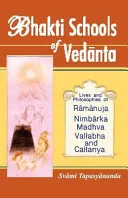
Bhakti Schools of Vedanta
 82
82

Bhakti Schools of Vedanta
Swami Tapasyananda’s "Bhakti Schools of Vedanta" offers a scholarly yet lucid exposition of the devotional streams within the Vedanta tradition. The author’s strength lies in his ability to present complex philosophical arguments regarding Bhakti’s place within Vedanta without resorting to overly academic jargon. For instance, his explanation of how devotion complements, rather than contradicts, the non-dualistic outlook of Advaita Vedanta is particularly illuminating. A limitation, however, is the book's dense focus on theological exposition, which might leave readers seeking more biographical detail on the saints themselves wanting. The section detailing the philosophical distinctions between various Bhakti acharyas, while precise, could benefit from more illustrative examples of their devotional poetry or practices. Nonetheless, it serves as a rigorous guide to the doctrinal foundations of these influential schools.
📝 Description
82
Swami Tapasyananda's 1984 work examines devotional traditions within Vedanta.
This book details the devotional traditions that developed within the Vedanta philosophical system. It looks at the history and theological ideas of major Bhakti movements, following their origins and intellectual contributions. The focus is on the spiritual practices and devotional ideals that have shaped Hindu religious life for centuries, presenting this material in a way that is both understandable and scholarly.
The text is intended for students of Hinduism, especially those drawn to the devotional (Bhakti) approach. It will interest readers wanting to grasp the theological subtleties and historical growth of Vedanta as it appears in devotional practices. Academics of comparative religion, philosophy students, and spiritual seekers looking for a deeper understanding of Hindu devotionalism will find it useful.
Swami Tapasyananda places the Bhakti movements in the wider context of Indian religious history, noting their rise and establishment. It covers the period after the Upanishads and early Vedanta schools, explaining how intense devotion offered a more accessible way to spiritual fulfillment for ordinary people. The book acknowledges the role of various saints and teachers who organized these traditions, making them available beyond academic circles.
Within the broader landscape of Vedanta philosophy, this book focuses on the Bhakti tradition, which emphasizes heartfelt devotion as a primary means to spiritual realization. It discusses how this devotional current, often seen as an accessible path for the masses, was systematized and integrated into the Vedanta framework by various acharyas. The text examines the theological underpinnings that support devotional practices, distinguishing between worship of the divine with attributes (saguna) and without attributes (nirguna), and situates these within the larger goal of liberation (moksha).
💡 Why Read This Book?
• Gain a structured understanding of the theological underpinnings of Bhakti traditions within the Vedanta framework, as detailed by Swami Tapasyananda. • Learn about the historical development of key Bhakti schools, tracing their lineage from figures like Ramanujacharya and Chaitanya Mahaprabhu. • Explore the philosophical integration of devotion (Bhakti) with other paths like knowledge (Jnana) as presented in the Vedanta context.
⭐ Reader Reviews
Honest opinions from readers who have explored this book.
❓ Frequently Asked Questions
What is the primary focus of Swami Tapasyananda's "Bhakti Schools of Vedanta"?
The book primarily focuses on the devotional traditions (Bhakti) within the Vedanta philosophical system, examining their historical evolution, theological arguments, and spiritual practices.
When was "Bhakti Schools of Vedanta" first published?
The book was first published in October 2011.
Which major philosophical schools are discussed in relation to Bhakti?
The book discusses the integration and philosophical underpinnings of Bhakti within the broader Vedanta tradition, often contrasting or harmonizing it with schools like Advaita and Vishishtadvaita Vedanta.
Who are some key figures associated with the Bhakti schools mentioned?
The work explores the contributions of various acharyas and saints, potentially including figures like Ramanujacharya, Madhvacharya, and Chaitanya Mahaprabhu, who systematized and propagated these devotional paths.
Is this book suitable for beginners in Vedanta studies?
While scholarly, the book aims for accessibility. Beginners interested in the devotional aspects of Vedanta will find it a valuable, albeit detailed, introduction to the subject.
What is the significance of the term 'Vedanta' in this context?
Vedanta refers to the philosophical conclusions drawn from the Upanishads. This book examines how devotional practices and schools developed and are interpreted within this foundational philosophical framework.
🔮 Key Themes & Symbolism
Theology of Devotion
This theme centers on the philosophical justification and conceptualization of devotion (Bhakti) as a valid, even supreme, path to spiritual realization within the Vedanta framework. It dissects how different Bhakti traditions reconcile the concept of a personal, loving God with the ultimate reality as described in the Upanishads. The work examines the nature of divine grace and the role of surrender in devotional practice, presenting Bhakti not merely as emotional fervor but as a sophisticated theological system.
Acharyas and Lineage
A crucial aspect is the exploration of the great spiritual preceptors (Acharyas) who founded and propagated distinct Bhakti schools of Vedanta. The text traces the lineage of thought, highlighting how figures like Ramanujacharya, Madhvacharya, and Chaitanya Mahaprabhu established specific interpretations and practices. Understanding these lineages is presented as key to grasping the nuances and historical development of devotional Vedanta, emphasizing the importance of guru-shishya parampara (teacher-disciple tradition).
Bhakti as a Path to Moksha
This theme addresses how the path of devotion offers a means to achieve liberation (Moksha) from the cycle of birth and death. The book contrasts and compares Bhakti with other traditional paths like Jnana Yoga (path of knowledge) and Karma Yoga (path of action), often presenting Bhakti as a more accessible and potent means for the common devotee. It looks at the psychological and spiritual efficacy of devotional practices in transforming the individual and leading them towards divine union.
Forms of the Divine
The work investigates the diverse ways the Divine is conceived and worshipped within the Bhakti schools of Vedanta. This includes the distinction between Saguna Brahman (God with attributes, often worshipped in personal forms like Vishnu or Krishna) and Nirguna Brahman (God without attributes, the attributeless Absolute). It explores the devotional significance of various avatars and divine manifestations, and how focusing on these forms aids the devotee's spiritual journey towards understanding the ultimate reality.
💬 Memorable Quotes
Direct passages from the work, attributed to the author.
“The essence of Bhakti lies in an intense love and self-surrender to the Divine.”
— This highlights the core of devotional practice as described in the text, emphasizing that true Bhakti transcends mere ritual and involves a profound emotional and volitional commitment to God.
“Vedanta provides the philosophical scaffolding upon which the edifice of Bhakti is built.”
— This suggests that the philosophical tenets of Vedanta, particularly concerning the nature of reality and the soul, are essential for understanding the theological depth and coherence of Bhakti traditions.
“The Guru's guidance is indispensable for reading through the path of devotion.”
— This points to the critical role of a spiritual teacher (Guru) in the Bhakti traditions, underscoring their importance in interpreting scriptures and directing the devotee's spiritual progress.
“Devotion can purify the mind and prepare it for higher spiritual realization.”
— This reflects the concept that consistent devotional practices have a transformative effect on the practitioner's inner state, making them more receptive to spiritual truths.
“The choice between worshipping God with form (Saguna) or without form (Nirguna) depends on the devotee's temperament.”
— This illustrates the book's exploration of different approaches to the Divine, acknowledging that both personalistic and impersonalistic devotional models are valid within the Vedanta context.
🌙 Esoteric Significance
Tradition
This work is firmly rooted in the Indic esoteric traditions, specifically the Vedanta and Bhakti lineages of Hinduism. It examines how these traditions, which explore the nature of ultimate reality, consciousness, and liberation, have manifested through devotional practices. While Vedanta itself is a broad philosophical system, its integration with Bhakti introduces a potent spiritual technology focused on divine love and surrender, often seen as a direct pathway to mystical union.
Symbolism
Key symbols include the lotus, often representing purity, spiritual awakening, and the divine unfolding of consciousness. The conch shell (shankha) symbolizes the primordial sound and the call to spiritual awareness. The divine forms themselves, such as Vishnu's blue complexion or Krishna's flute, serve as focal points for meditation and devotional absorption, acting as symbolic representations of divine attributes and cosmic principles.
Modern Relevance
Contemporary spiritual seekers, particularly those within Hindu diaspora communities and Westerners drawn to Indic paths, continue to find profound relevance in the Bhakti schools discussed. Thinkers and practitioners exploring devotional yoga, mantra repetition, and the concept of divine grace as a means of spiritual acceleration draw directly from these traditions. The emphasis on accessible, love-based spirituality continues to resonate with modern sensibilities seeking personal connection with the Divine.
👥 Who Should Read This Book
• Students of comparative religion seeking to understand the diverse expressions of spirituality within Hinduism, particularly the devotional dimension. • Practitioners of yoga and meditation interested in the philosophical underpinnings and theological frameworks that support practices of devotion and surrender. • Scholars of Indian philosophy and history looking for a detailed account of the development and doctrinal nuances of the major Bhakti movements within Vedanta.
📜 Historical Context
Published in 2011, Swami Tapasyananda's "Bhakti Schools of Vedanta" emerges in an era where scholarship on Indian religions is robust and global interest in Hinduism's diverse traditions is high. The book engages with a long intellectual tradition dating back to the synthesis of Vedanta philosophy with devotional practices initiated by figures like Ramanujacharya in the 11th century. This period saw the rise of sophisticated theological systems that aimed to reconcile Upanishadic monism with the worship of a personal God, often in response to or in dialogue with other schools of thought like Advaita Vedanta, which emphasized the non-dual nature of reality. The work implicitly addresses the reception of these devotional schools, which, despite their popular appeal, sometimes faced philosophical critiques from more ascetic or knowledge-centric traditions. While no specific contemporary author's direct engagement is detailed in the provided information, the book contributes to the ongoing academic and spiritual discourse on the evolution of Hindu thought.
📔 Journal Prompts
The concept of Saguna Brahman as presented in the text.
Reflect on the role of the Guru in the lineage of the Bhakti schools.
Consider the relationship between Bhakti and Moksha as explored in the book.
Examine the symbolism of the lotus or conch shell within devotional contexts.
How does the text differentiate Bhakti from Jnana as a path to realization?
🗂️ Glossary
Vedanta
Literally 'the end of the Vedas,' this is one of the six orthodox schools of Hindu philosophy, focusing on the Upanishads, Bhagavad Gita, and Brahma Sutras as its scriptural basis.
Bhakti
A Sanskrit term meaning 'devotion' or 'love,' referring to a spiritual path characterized by intense love and surrender to a personal God.
Acharya
A spiritual teacher or preceptor who expounds and upholds a particular philosophical or religious tradition; a founder of a school of thought.
Moksha
Liberation or release from the cycle of birth and death (samsara), the ultimate goal in many Indian religions.
Saguna Brahman
The Absolute Reality conceived as having attributes, often worshipped as a personal God (Ishvara) with a specific form.
Nirguna Brahman
The Absolute Reality conceived as without attributes, the impersonal, transcendent, and unmanifest Absolute.
Samsara
The continuous cycle of birth, death, and rebirth, influenced by karma, from which liberation (Moksha) is sought.