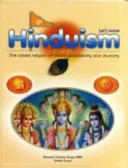
Let's Know Hinduism
 80
80

Let's Know Hinduism
The Dogras' 'Let's Know Hinduism' presents a vibrant, if somewhat generalized, primer on a tradition spanning millennia. Its primary strength lies in its full-color illustrations, which genuinely aid in visualizing deities, rituals, and symbolic representations that might otherwise remain abstract. A notable passage detailing the concept of *Atman* (the self) and its relation to *Brahman* (the ultimate reality) is handled with commendable clarity for a lay readership. However, the work's ambition to cover such a vast subject in an introductory format leads to a certain superficiality; nuanced philosophical debates within Hinduism, such as the various interpretations of Advaita Vedanta, are necessarily condensed. The book's comprehensive scope means it sometimes sacrifices depth for breadth, leaving advanced students wanting more rigorous analysis. Despite this limitation, it serves as a visually rich and accessible starting point for those unfamiliar with Hindu traditions.
📝 Description
80
First published in 2004, 'Let's Know Hinduism' introduces the world's oldest continuous religion with illustrations.
R. C. Dogra and Urmila Dogra's 2004 book, 'Let's Know Hinduism,' presents the fundamental aspects of Hindu philosophy, practices, and history for a general audience. Its design incorporates full-color illustrations to clarify complex ideas and make the subject more accessible. The work is intended for those new to Hinduism, including students of comparative religion and cultural historians interested in major spiritual traditions. The authors provide a gentle introduction, avoiding the density of purely academic texts.
The book situates Hinduism within its ancient origins, highlighting its enduring development over millennia. It contrasts this longevity with newer religious movements, aiming for a broad understanding rather than focusing on specific philosophical schools. The Dogras cover essential concepts like Dharma, Karma, Moksha, and Samsara, alongside the roles of deities such as Brahma, Vishnu, and Shiva. References to the Vedas and Upanishads establish the scriptural basis for Hinduism's diverse beliefs and customs.
While not strictly an esoteric text, 'Let's Know Hinduism' approaches its subject with an eye toward the underlying principles that have sustained a major world religion for thousands of years. It touches upon concepts like Moksha, the pursuit of liberation, which aligns with spiritual paths seeking ultimate truth beyond the material world. The book's focus on ancient scriptures and continuous development suggests an interest in the perennial philosophies that inform Hindu thought, making it a gateway for understanding traditions that explore deeper spiritual realities.
💡 Why Read This Book?
• Gain a foundational understanding of Dharma, the ethical and cosmic order central to Hindu life, as presented through the book's explanations, allowing you to grasp the principles guiding Hindu conduct. • Explore the visual representation of key deities like Vishnu and Shiva, understanding their iconography and roles as detailed in the book's illustrated sections, enriching your grasp of Hindu cosmology. • Comprehend the concept of Karma and Samsara, as elaborated in the text, providing insight into the cyclical view of existence and the law of cause and effect that underpins Hindu philosophy.
⭐ Reader Reviews
Honest opinions from readers who have explored this book.
❓ Frequently Asked Questions
What is the earliest historical period covered by 'Let's Know Hinduism'?
The book delves into the ancient origins of Hinduism, tracing its roots back to the Vedic period, which is generally considered to have begun around 1500 BCE, making it one of the world's oldest continuously practiced religions.
Are the illustrations in 'Let's Know Hinduism' historically accurate?
The illustrations aim to provide clear visual representations of deities, symbols, and practices as commonly understood and depicted within Hindu traditions, offering a helpful visual aid for understanding the subject matter.
Does the book explain the caste system?
The work addresses the historical and social context of Hinduism, which includes discussions on societal structures. It likely touches upon the varna system, explaining its traditional role within Hindu society.
What is the primary goal of 'Let's Know Hinduism'?
The primary goal is to provide a fully colored and illustrated overview of Hinduism, detailing its history, philosophy, and practices for readers seeking an accessible introduction to this ancient religion.
Is 'Let's Know Hinduism' suitable for academic study?
While it serves as an excellent introductory text, its comprehensive and accessible approach is more suited for general readers and introductory students rather than advanced academic research requiring in-depth textual analysis.
When was 'Let's Know Hinduism' first published?
The book was first published in 2004, offering a contemporary perspective on the ancient traditions of Hinduism.
🔮 Key Themes & Symbolism
Dharma and Righteous Living
The concept of Dharma is presented as the fundamental principle of cosmic order and individual duty within Hinduism. The book likely explores how Dharma guides actions, social responsibilities, and one's path through life. It's not merely about rules, but about living in accordance with the natural and moral order, ensuring individual and collective well-being. Understanding Dharma is crucial for grasping the ethical framework of Hindu philosophy and practice.
The Cycle of Samsara and Karma
Central to Hindu cosmology is the understanding of Samsara, the continuous cycle of birth, death, and rebirth, and Karma, the law of cause and effect governing these transitions. The work elaborates on how actions in this life influence future existences, shaping one's destiny. This theme underscores the interconnectedness of all beings and the long-term consequences of one's deeds, offering a framework for understanding spiritual progression and liberation.
Iconography of Major Deities
The book provides detailed, illustrated explanations of prominent Hindu deities, such as Brahma, Vishnu, and Shiva, and their consorts. It elucidates their symbolic attributes, forms, and the myths associated with them. Understanding these divine figures is essential for comprehending the diverse devotional practices and the philosophical concepts they embody, representing different aspects of the ultimate reality.
Sacred Texts and Authority
The foundational scriptures of Hinduism, particularly the Vedas and the Upanishads, are highlighted for their spiritual and philosophical significance. The work likely discusses their role in shaping Hindu thought, rituals, and understanding of the divine. Recognizing the authority of these ancient texts provides context for the vast body of Hindu literature and tradition that has evolved over centuries.
💬 Memorable Quotes
Direct passages from the work, attributed to the author.
“The oldest religion of the world.”
— This phrase, from the original blurb, anchors Hinduism's historical significance, emphasizing its continuous tradition and profound influence over millennia, setting the stage for understanding its complex philosophies.
“Fully coloured and illustrated.”
— This highlights the book's pedagogical approach, using visual aids to explain complex theological and philosophical concepts, making Hinduism more accessible to a general audience through engaging imagery.
“Details of the oldest religion of the world.”
— This suggests a focus on providing specific information about Hinduism's origins, core tenets, and historical development, aiming for factual presentation rather than purely abstract philosophical discourse.
“Karma dictates the cycle of rebirth.”
— This captures the essence of the law of cause and effect in Hinduism, explaining how actions in the present life directly influence future existences within the framework of Samsara.
💡 Key Ideas
Editorial paraphrase of the work's core concepts — not direct quotes.
Understanding Dharma guides righteous living.
This paraphrased concept emphasizes the practical ethical dimension of Hinduism, portraying Dharma not just as a philosophical idea but as a principle for daily conduct and moral order.
🌙 Esoteric Significance
Tradition
While Hinduism itself is a vast civilization of spiritual thought rather than a singular esoteric lineage, this book functions as an introduction to its core tenets, which have influenced numerous Western esoteric movements. It serves as a gateway to traditions like Vedanta and Yoga, which have been interpreted and integrated into Western Hermeticism, Theosophy, and various forms of New Age spirituality since the late 19th century.
Symbolism
The book likely elucidates key Hindu symbols such as the Om (Aum) mantra, representing the primordial sound and the ultimate reality, and the Lotus flower, symbolizing purity, spiritual awakening, and divine beauty. These symbols are central to Hindu iconography and meditation practices, serving as visual anchors for profound metaphysical concepts.
Modern Relevance
Contemporary practitioners of yoga, mindfulness, and comparative spirituality often draw directly from the foundational concepts presented in works like this. Thinkers and spiritual teachers who synthesize Eastern philosophies with Western psychology or therapeutic practices frequently reference the principles of Karma, Dharma, and the nature of consciousness as explored within Hindu traditions.
👥 Who Should Read This Book
• Beginners exploring world religions: Individuals seeking a clear, visually supported introduction to the foundational beliefs, deities, and practices of Hinduism will find this book an accessible starting point. • Students of comparative mythology and religion: Those studying the historical development and diverse expressions of spiritual traditions will benefit from its overview of Hindu cosmology and scripture. • Cultural historians and anthropologists: Readers interested in understanding the societal impact and historical evolution of one of the world's oldest living religions will find valuable context and visual references.
📜 Historical Context
Published in 2004, 'Let's Know Hinduism' emerged during a period of increased global interest in Eastern spiritual traditions, often fueled by Westerners seeking alternatives to secular materialism or conventional religious paths. While academic circles had long debated the nuances of Indic philosophies, with scholars like Wendy Doniger publishing influential works such as 'The Implied Spider: Politics and Theology in Myths' (1998), popular introductions aimed at a broader audience were crucial for disseminating knowledge. This book's approach, prioritizing accessibility and illustration, distinguished it from denser scholarly texts and sought to engage readers who might be intimidated by purely academic discourse. It arrived in a market where Theosophy and New Age interpretations of Hinduism had already gained traction, yet it positioned itself as a more direct, factually oriented overview of the tradition's historical and philosophical foundations.
📔 Journal Prompts
Reflection on the concept of Dharma in daily life.
Mapping personal actions to the principle of Karma.
Visualizing the symbolism of the Om mantra.
Considering the role of Samsara in understanding life's continuity.
Exploring the narrative of a chosen deity from the book.
🗂️ Glossary
Dharma
The principle of cosmic order, righteousness, duty, and law that governs all things. It encompasses one's personal obligations, ethical conduct, and the natural order of the universe.
Karma
The law of cause and effect, where actions (karma) performed in this life determine the nature of future existences within the cycle of rebirth (Samsara).
Samsara
The continuous cycle of birth, death, and reincarnation that sentient beings undergo in Hinduism, driven by karma and desire, until liberation (Moksha) is achieved.
Moksha
Liberation or release from the cycle of Samsara. It represents the ultimate spiritual goal in Hinduism, achieving union with the divine or ultimate reality.
Vedas
The oldest and most sacred scriptures of Hinduism, considered to be divinely revealed. They contain hymns, rituals, and philosophical insights.
Upanishads
A collection of philosophical texts within the Vedas that form the core of Hindu philosophical thought, exploring concepts like Brahman, Atman, and the nature of reality.
Atman
The individual self or soul, considered to be eternal and unchanging. In many Hindu philosophies, Atman is ultimately identical with Brahman.