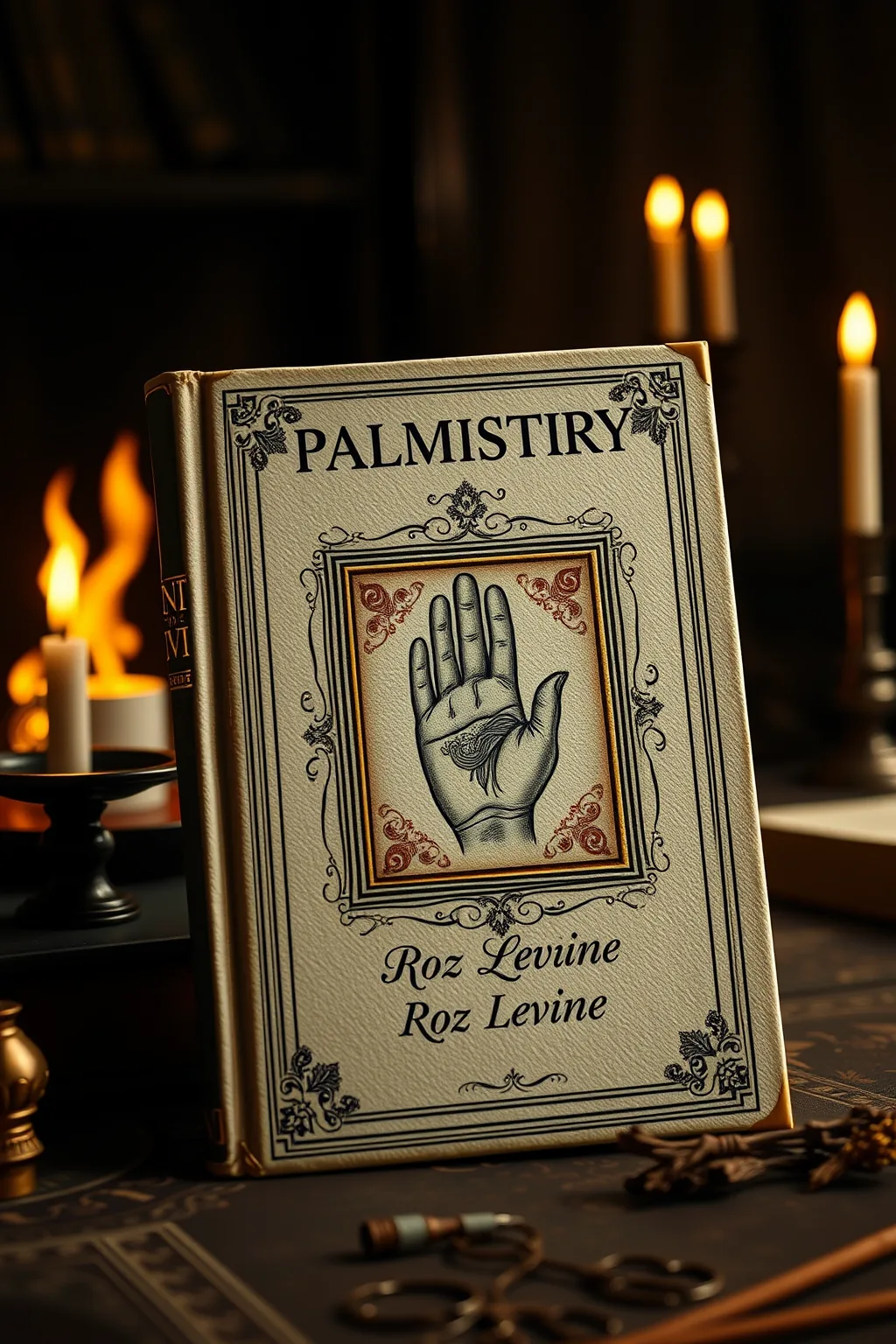
Palmistry
 75
75

Palmistry
Roz Levine's "Palmistry" offers a straightforward entry into the art of hand analysis, a subject often clouded by overly complex or mystical jargon. The book's strength lies in its clear, accessible presentation, supported by the promised 75 four-color line drawings, which are crucial for understanding the practical application of the concepts. Levine avoids the pitfalls of many modern interpretations by sticking to a grounded, symbolic approach. A notable passage discusses the interpretation of the Head Line's variation, linking its shape to cognitive styles – a concrete example of how hand features correlate to mental processes. However, the book, first published in 1992, occasionally feels dated in its illustrative style and the breadth of its coverage, perhaps lacking the depth some advanced practitioners might seek. It serves best as an introductory primer rather than an exhaustive treatise. Overall, it’s a functional and visually aided guide for those beginning their study of chiromancy.
📝 Description
75
Roz Levine's 1992 book demystifies palmistry as a symbolic language for self-awareness.
Roz Levine's work presents palmistry not as rigid fortune-telling, but as a method for understanding personal traits and life paths through hand analysis. The book details how the physical characteristics of the palm, fingers, and the lines etched upon them form a symbolic map of an individual's inner world and circumstances. This approach encourages self-discovery and heightened awareness.
This text is suitable for individuals interested in esoteric subjects and personal growth. It will appeal to those who study comparative symbolism, are new to divination, or seek a structured way to examine their own strengths and challenges. The book's utility is further enhanced by numerous line drawings, supporting a visual learning style.
Palmistry, or chiromancy, has ancient roots in India, China, and Greece. It saw a notable revival in late 19th and early 20th century Europe, aligning with movements like Spiritualism and Theosophy. Authors such as Cheiro contributed to its popularization. Levine's 1992 publication engages with this historical practice, adapting its principles for a modern audience interested in divination and self-understanding.
💡 Why Read This Book?
• Gain practical skills in hand analysis, learning to identify and interpret specific palm lines and mounts like the Mount of Venus, as detailed in Levine's guide, enabling a new lens for self-understanding. • Explore the symbolic language of the hands, moving beyond generic advice to understand how features like finger lengths, as discussed in the book, can represent unique personality traits and potentials. • Understand palmistry within its historical resurgence, appreciating how works like Levine's, published in the 1990s, continue a tradition that gained significant traction during the late 19th-century occult revival.
⭐ Reader Reviews
Honest opinions from readers who have explored this book.
❓ Frequently Asked Questions
When was Roz Levine's Palmistry first published?
Roz Levine's "Palmistry" was first published in 1992, positioning it as a contemporary guide within the enduring practice of chiromancy.
What kind of illustrations are included in the book?
The book features 75 four-color line drawings, specifically designed to help readers visualize and understand the various lines, mounts, and shapes of the hand for interpretation.
Does the book focus on fortune-telling or self-understanding?
While it addresses interpreting one's fate, the book emphasizes palmistry as a tool for self-discovery, analyzing personal characteristics and potential rather than strict predictions.
What are the 'mounts' in palmistry?
In palmistry, mounts are the fleshy, raised areas on the palm, located at the base of the fingers and the thumb. Each mount is associated with a planet and represents different personality traits and energies.
Are the interpretations in the book deterministic?
No, the book presents the interpretations of hand features as guides and symbolic languages for awareness and potential, rather than fixed, deterministic prophecies.
How does this book relate to the history of palmistry?
Published in 1992, Levine's work is part of the continued modern exploration of palmistry, a practice with ancient roots that saw a significant revival in the late 19th century.
🔮 Key Themes & Symbolism
Lines as Life Narratives
The intricate lines on the palm are presented not as random marks but as a symbolic script detailing an individual's life journey. Major lines like the Heart Line are explored for emotional patterns, while the Head Line offers insight into cognitive processes. The book guides readers to see how variations in these lines can reflect different life experiences, challenges, and potentials, framing them as narrative elements rather than fixed destinies. This perspective encourages a more nuanced understanding of personal history and future possibilities.
The Symbolism of Hand Shapes
Beyond the lines, the very shape of the palm and fingers carries significant meaning in this system. Levine's work likely details the classification of hand types (e.g., Earth, Air, Fire, Water hands) and their associated characteristics. This includes the proportions of finger length to palm width and the shape of individual fingers. Understanding these forms provides a foundational layer to palmistry, offering insights into core personality traits and innate tendencies before exploring the more dynamic readings of the lines.
Mounts and Planetary Influences
The fleshy pads on the palm, known as mounts, are mapped to planetary influences in traditional chiromancy. Levine's book would explain how the prominence or flatness of mounts like Jupiter, Saturn, Apollo, and Venus correspond to aspects of ambition, wisdom, creativity, and love, respectively. These areas act as focal points for understanding energetic expressions and specific life areas where an individual might experience particular strengths or challenges, adding another dimension to the palm's symbolic language.
Palmistry as Self-Awareness Tool
The ultimate aim, as suggested by the blurb, is to make interpreting one's fate 'fun and easy' through self-analysis. This implies a focus on palmistry as a practical tool for enhancing self-awareness and personal growth. By learning to read the hands, individuals are empowered to better understand their own nature, relationships, and life path, fostering a proactive approach to personal development rather than passive acceptance of predetermined outcomes.
💬 Memorable Quotes
Direct passages from the work, attributed to the author.
“The shapes of our hands and fingers and the lines on our palms hold secrets about every aspect of our lives, from our chances of career success to matters of health and of the heart.”
— This foundational statement captures the book's premise: that the physical hand is a complex symbolic map of an individual's entire existence, covering vocational, physical, and emotional domains.
“Analyzing the messages hidden there and interpreting one's fate is both fun and easy.”
— This suggests Levine aims to explain palmistry, presenting it as an accessible practice for personal insight rather than an arcane art reserved for specialists.
“75 four-color line drawings.”
— This factual detail highlights the book's visual approach, indicating a strong reliance on illustrations to clarify the complex patterns and features of the palm for the reader.
“The hand's features serve as a unique cartography of an individual's inner landscape and external circumstances.”
— This interpretation frames the hand not just as a physical object but as a symbolic representation, akin to a map, detailing both internal psychological states and external life events.
💡 Key Ideas
Editorial paraphrase of the work's core concepts — not direct quotes.
Palmistry offers a way to understand personal characteristics and potential life trajectories.
This paraphrased concept emphasizes the book's focus on using hand analysis for gaining insight into inherent traits and possible future paths, rather than strict prediction.
🌙 Esoteric Significance
Tradition
Palmistry, or chiromancy, is deeply rooted in ancient divinatory traditions, with historical links often traced to Vedic India and classical Greece. It shares common ground with Hermeticism in its exploration of correspondences between the microcosm (the human being) and the macrocosm (the universe). The mapping of hand features to planetary influences aligns with astrological principles, a key component of Western esotericism. Levine's work contributes to this lineage by presenting a systematized approach to reading these 'celestial' signs imprinted on the human hand.
Symbolism
Central symbols in palmistry include the lines (e.g., the Heart Line symbolizing emotional capacity, the Head Line representing intellect) and the mounts (fleshy pads named after planets like Venus, Mars, Jupiter, signifying associated energies). The shape of the hand itself is also symbolic, often categorized into elemental types (Earth, Air, Fire, Water) reflecting fundamental temperaments. Levine's book likely deciphers these symbols, explaining how their presence, absence, or specific formations reveal aspects of personality, potential, and life experiences.
Modern Relevance
Contemporary interest in self-help, mindfulness, and personalized growth practices has revitalized interest in traditional divinatory arts like palmistry. Modern practitioners and authors often draw upon foundational works to offer accessible interpretations. Schools of thought focusing on psychological astrology, archetypal symbolism, and embodied wisdom may find value in palmistry's approach to reading the body as a text. Levine's book, with its visual clarity, serves as a gateway for those exploring these connections in contemporary esoteric studies and personal development.
👥 Who Should Read This Book
• Aspiring diviners and practitioners of esoteric arts seeking a foundational text on hand analysis, offering clear explanations of lines and mounts. • Individuals interested in self-discovery and personal growth who want a symbolic system to explore their own characteristics and life patterns. • Students of comparative symbolism and history of divination looking to understand the modern presentation of a practice with ancient roots.
📜 Historical Context
The late 19th century witnessed a surge of interest in occult and esoteric subjects across Europe and America, a phenomenon often termed the 'occult revival'. This period saw the popularization of spiritualism, theosophy, and various divinatory arts, including palmistry. Figures like the French occultist Eliphas Lévi and later, the British writer Cheiro (William John Warner), were instrumental in codifying and disseminating palmistry. Cheiro, in particular, published extensively from the 1890s onwards, contributing significantly to the art's widespread appeal. This milieu provided fertile ground for works that sought to make these practices accessible. Roz Levine's "Palmistry," first published in 1992, emerged decades after this initial boom but continued the tradition of presenting chiromancy in a clear, approachable manner, catering to a contemporary audience interested in self-exploration and esoteric symbolism, albeit in a post-modern context.
📔 Journal Prompts
Reflect on the described characteristics associated with your dominant hand's shape and finger lengths.
Analyze the starting point and trajectory of your Heart Line as depicted in the book's diagrams.
Consider how the prominence of a specific mount, such as the Mount of Apollo, might manifest in your life.
Map the major lines—Life, Head, Heart—on your non-dominant hand and compare them to your dominant hand.
Explore the potential meanings of any minor lines or markings mentioned in the text that stand out on your palm.
🗂️ Glossary
Chiromancy
An alternative name for palmistry, referring to the practice of interpreting the lines, mounts, and other features of the hand to understand character and predict future events.
Mounts
The fleshy, raised pads on the palm, typically located at the base of the fingers and the thumb. Each mount is associated with a planet and represents specific personality traits and potentials.
Life Line
A major line on the palm that typically curves around the base of the thumb. It is traditionally interpreted as relating to physical vitality, well-being, and significant life events, rather than the literal length of life.
Head Line
Another major palm line, usually running horizontally across the middle of the palm. It is interpreted as reflecting a person's mental faculties, thinking style, intellect, and approach to learning.
Heart Line
The uppermost of the major horizontal lines on the palm, typically running from the edge of the palm beneath the little finger towards the center. It is associated with emotional life, romantic relationships, and heart health.
Fate Line
A vertical line, often starting near the base of the palm and extending upwards towards the fingers. It is generally interpreted as representing influences on a person's life path, career, and sense of purpose.
Hand Types
Classifications of hands based on their overall shape and proportions, often linked to the four elements (Earth, Air, Fire, Water). Each type is associated with a core set of personality characteristics and tendencies.